SHOCKING LIVE: HE SAID IT WAS ALL STAGED BASED ON THIS VIDEO?!
YouTube · pP7gO6mrf6U
Quick Read
Summary
Takeaways
- ❖A significant percentage of voters, including former Trump supporters, believe assassination attempts against him were staged, a phenomenon the host attributes to Trump's 'war on truth'.
- ❖Recent Secret Service incidents, such as an agent's arrest for indecent exposure, are cited as evidence of potential incompetence, contributing to public skepticism about security failures.
- ❖Lindsey Graham is criticized for contradictory statements regarding military action in Iran, advocating for taking 'Car Island' then later denying it.
- ❖Trump's interactions with children are highlighted as examples of his disregard for truth, promoting false claims about election victories.
- ❖Marjorie Taylor Greene recounted Trump's callous response to death threats against her son, where he blamed her for being a 'traitor', revealing a perceived lack of empathy.
- ❖The host warns that the inability to agree on a common reality threatens democracy, as political debate becomes impossible without shared facts.
Insights
1Trump's Role in a 'Post-Truth' World
The host asserts that Donald Trump intentionally cultivated a 'post-truth' environment by discrediting media and factual reporting. This strategy aimed to make his followers immune to negative stories, but has resulted in a broader societal distrust where people 'manufacture' their own realities, even questioning legitimate events like assassination attempts against Trump himself.
Trump admitted to Leslie Stahl that he attacks media to prevent followers from believing negative stories (). A Bull Work focus group showed two-time Trump voters believing the White House correspondents' dinner assassination attempt was staged ().
2Secret Service Competence Under Scrutiny
The episode raises concerns about the competence of the Secret Service, citing multiple security failures around presidential events. A specific incident involving an agent arrested for indecent exposure is presented as a potential indicator of broader staffing issues, suggesting incompetence rather than conspiracy might explain security lapses.
A Secret Service officer, John Spilman, was arrested in Miami for masturbating naked in a hotel hallway after working security for President Trump (, ). This follows other 'close calls' like the Butler assassination attempt and the White House Correspondents' Dinner incident ().
3Political Polarization and the Erosion of Shared Reality
The host warns that the increasing tendency for opposing political factions to operate within entirely different 'realities' — where facts are selectively chosen or invented to fit narratives — poses a fundamental threat to democracy. This prevents meaningful debate and governance, as there's no common ground on which to discuss issues or solutions.
The host describes how both the right and left might invent narratives around an event, like an attack on him, rather than seeking concrete evidence (). He states that if sides are 'literally looking around in their echo chamber and seeing a different world, then there's no ability to govern' ().
Key Concepts
Hanlon's Razor
The principle that one should 'never attribute to malice that which is adequately explained by stupidity.' The host applies this to the Trump administration, suggesting many perceived 'conspiracies' are better explained by incompetence rather than intentional schemes.
Notable Moments
Discussion of a Secret Service agent arrested for indecent exposure in a hotel hallway while on duty for Trump's security.
This incident is used to question the overall competence and professionalism of some Secret Service personnel, potentially contributing to public skepticism about security failures around high-profile individuals.
Marjorie Taylor Greene's account of Trump's text messages blaming her for death threats against her son.
This reveals a deeply personal and callous side of Trump's character, highlighting a perceived lack of empathy and a willingness to blame allies for negative consequences, even those involving their families.
Critique of Lindsey Graham's contradictory statements on military action against Iran, specifically regarding taking 'Car Island'.
This exemplifies political figures shifting their stances on critical foreign policy issues, potentially due to public backlash, and highlights the perceived recklessness of some hawkish proposals.
Trump's press conference with children where he falsely claimed to have won the 2020 election.
This illustrates Trump's continued propagation of false narratives, even to a young, impressionable audience, reinforcing the host's argument about the erosion of truth and its impact on future generations.
Quotes
"I think it's his fault that so many people believe assassination attempts against him are staged. Yeah, that's right. You heard me correctly."
"Trump has annihilated and created this new world where truth is kind of a creative process. It's sort of what can you manifest? How can you manufacture a certain reality?"
"If I can get people to believe that no amount of empirical factual reporting is true, if I say that it's not true, then I will be invincible to bad stories."
"It doesn't make sense. One of them said that somebody should be able to get that close this many times in that way to the president of the United States."
"He proceeded to tell me that it was my fault and that I deserve it. If my son gets killed, I deserve it because I was a traitor to him."
Q&A
Recent Questions
Related Episodes

🚨 LEFTISTS ARE F*CKING SEETHING 😂😂😂
"The host aggressively celebrates perceived 'wins' for the right-wing, from global conflicts and domestic politics to cultural shifts, framing them as a 'humiliation' for the 'leftist world order' and a testament to Donald Trump's influence."
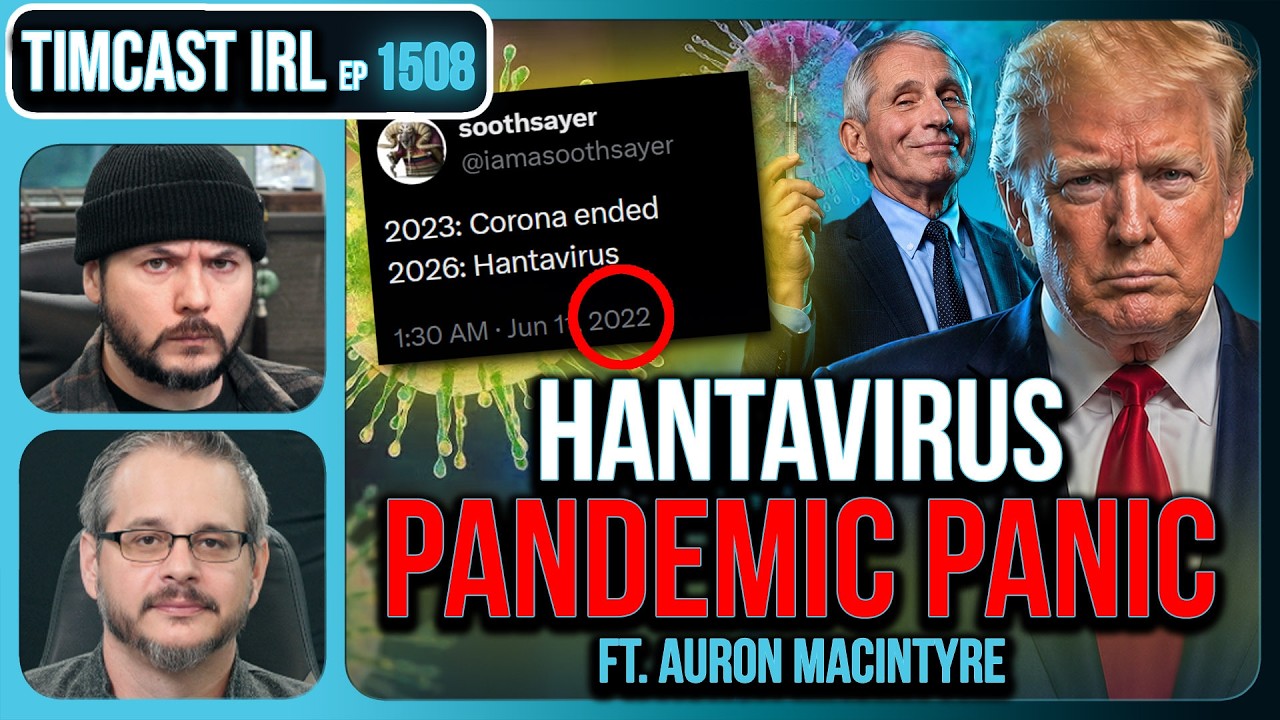
HANTAVIRUS PANDEMIC PANIC, Human To Human Spread Feared | Timcast IRL
"Tim Pool and his guests dismiss the Hantavirus panic as media desperation, pivot to discussing escalating political polarization, the rise of technocracy, and the weaponization of social issues."
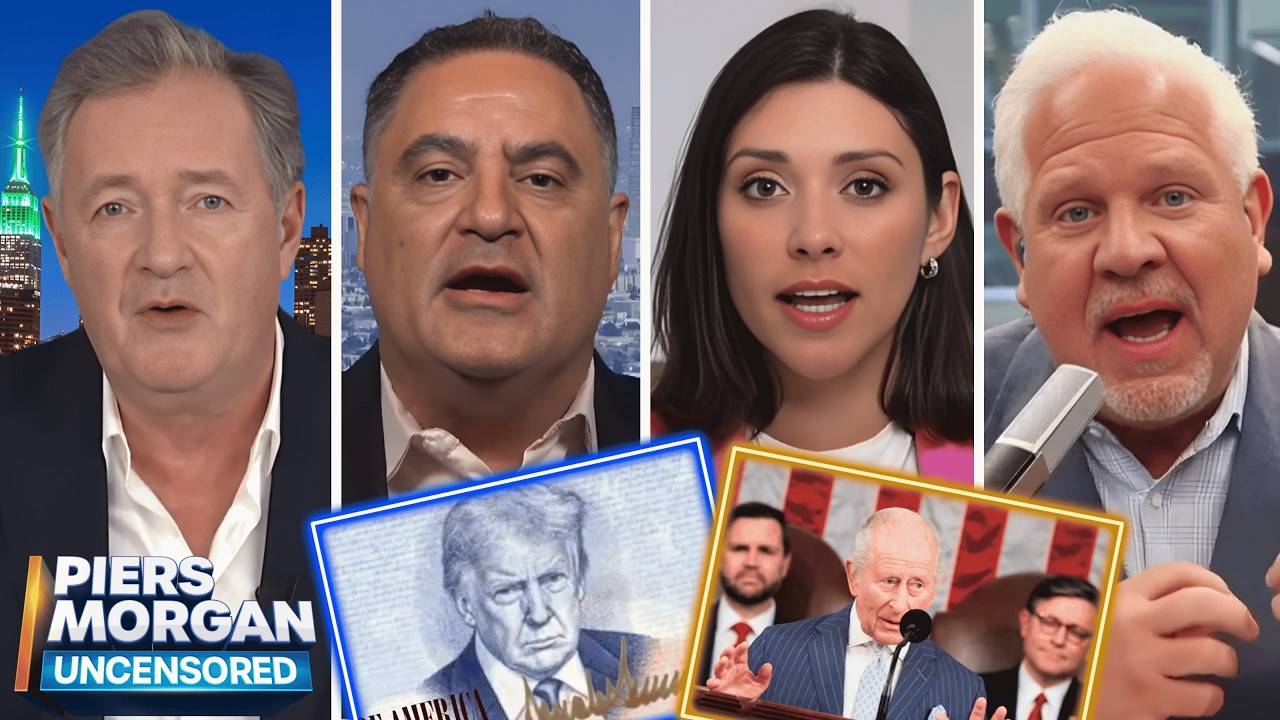
“You’re A JOKE!” Trump Shooting Debate & Free Speech ‘Hypocrisy’ | With Cenk Uygur & Glenn Beck
"Piers Morgan and guests debate the political implications of King Charles's US visit, the Secret Service's failures in protecting Donald Trump, the surge in political violence, and the controversial figure of Tommy Robinson."
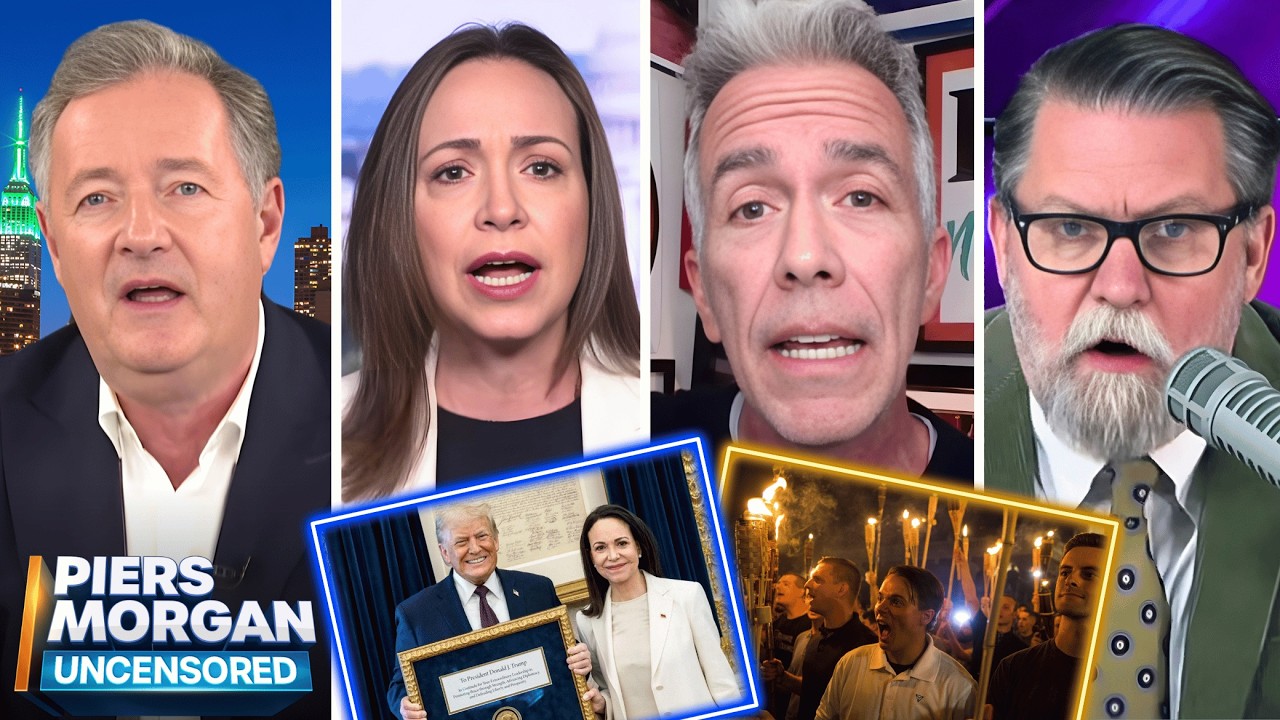
"Fighting Solves EVERYTHING!" Who's To Blame For Political Violence? + Maria Machado On Trump
"This episode dissects the escalating political violence in the US, with panelists fiercely debating the role of partisan rhetoric and media in radicalization, alongside an interview with Venezuelan opposition leader Maria Machado on US intervention and her country's future."