BREAKING: Tomahawk MISSILES Strike IRGC Targets, U.S.-Tehran Negotiations Progress | TBN Israel
YouTube · p_16N6nLtKA
Quick Read
Summary
Takeaways
- ❖The US conducted widespread Tomahawk missile strikes on Iranian coastal military targets, including radar, communications, and air defense systems, to dismantle Iran's ability to control the Strait of Hormuz.
- ❖Iran claimed retaliatory strikes on US bases in Kuwait, Bahrain, and Jordan, but the US reported no significant damage, indicating Iran's limited effective response capabilities.
- ❖Despite military hostilities, US-Iran negotiations are ongoing, with discussions centered on the release of frozen Iranian assets worth billions.
- ❖The US revealed a secret operation that secured the passage of over 200 commercial ships and 100 million barrels of oil through the Strait of Hormuz, demonstrating US control over the waterway.
- ❖Israel and the US maintain air superiority over Iran, capable of striking any target, and are actively dismantling Iran's proxy network (Hezbollah, Hamas, Houthis) to eliminate its deterrence strategy.
Insights
1US Dismantles Iranian Coastal Defense Infrastructure
The United States launched a second wave of strikes against Iranian targets, described as 'wider, more organized, and clearer.' These attacks, including 49 Tomahawk missiles from the USS Michael Murphy and precision munitions from air and naval platforms, specifically targeted Iran's radar systems, observation communications, command and control, and air defensive systems along its southern coast, particularly facing the Strait of Hormuz. The objective was to dismantle Iran's ability to detect, coordinate, and respond to attacks, and to remove its capacity to threaten global shipping.
Reports spoke of 49 such missiles. And at the same time, aircraft and also platforms from the air from the navy and from the marines struck additional targets using precision munitions. The targets were radar systems, observation communications, and command and control. and also air defensive systems...
2US Secretly Secures Strait of Hormuz Amidst Iranian Threats
Despite Iran's announcement of closing the Strait of Hormuz and threatening any vessel attempting passage, the US revealed a secret operation over the past month. This operation secured the movement of over 200 commercial ships and more than 100 million barrels of oil through the Strait, demonstrating US control over the vital waterway and ensuring freedom of navigation. This directly contradicted Iran's claims and aimed to stabilize global oil markets.
The president of the United States revealed that his military is secretly securing the movement of ships in the strait. According to him, in a secret operation over the past month, more than 100 million barrels of oil and more than 200 commercial ships passed through the Strait of Huz under the American security.
3US-Iran Negotiations Continue Despite Military Escalation
Even as the US and Iran engaged in direct military exchanges, diplomatic negotiations between Washington and Tehran continued. A senior American diplomatic official confirmed ongoing talks, with Iranian sources indicating 'understandings in principle' had been reached. Key issues under discussion include the mechanism for releasing frozen Iranian assets abroad, estimated at tens of billions of dollars, and a potential temporary agreement.
And despite the exchange of file between the American military and Iran, a senior American diplomatic official said this morning that the negotiations are still continuing. ...Iranian sources told the revolutionarian the Reuters news agency that the sides have already reached understandings in principle but several issues are still being discussed. Amongst these issues are the mechanism for releasing frozen Iranian assets abroad worth tens of billions of dollars.
4Iran's Proxy Warfare Doctrine is Failing
The hosts argue that Iran's long-standing 'ring of fire' defense doctrine, relying on proxies like Hezbollah, Hamas, and the Houthis, is no longer an effective deterrent against US and Israeli attacks. Extensive US and Israeli campaigns have significantly weakened these proxy forces, reducing their ability to retaliate effectively. This diminished proxy threat allows the US and Israel to strike directly within Iran with greater impunity.
What's happened in recent years is that is no longer the same threat it was in the past because Israel has been fighting against in Lebanon. Kamas is no longer a threat to Israel because of this 2 and a half year war. ...The same applies to the Houthis who've taken a substantial beating. ...Israel and the United States attack in Iran anytime they want without any real fear of retaliation from the proxies.
Lessons
- Monitor the Strait of Hormuz for continued US naval presence and any further Iranian attempts to disrupt shipping, as this remains a critical chokepoint for global energy.
- Observe US-Iran negotiation progress, particularly regarding frozen assets, as any agreement could signal a de-escalation or a new phase of strategic maneuvering.
- Assess the impact of US and Israeli strikes on Iran's military capabilities and its proxy networks, as their weakening directly affects regional power dynamics and the likelihood of direct conflict.
- Consider the 'coercive diplomacy' model as a framework for understanding how major powers might use targeted military action to achieve diplomatic objectives without full-scale war.
- Evaluate the stability of the Iranian regime given reported internal divisions, as this could influence its response to external pressures and its willingness to negotiate.
Quotes
"If you mess with us or our friends, the response is coming today and every day."
"Israel and the United States can live without an agreement. An agreement will be easier, especially for the Trump administration, but we can live without it."
"Pretty much any target anywhere in Iran is permeable to American and Israeli strikes."
"Iran's doctrine has failed. They thought they would be able to deter Israel and the United States indefinitely. That hasn't been working anymore."
"In the Pentagon, they call it coercive diplomacy. In the Middle East, we call it something simpler, speaking to Iran in a language that it actually understands, but without losing control of the fire."
Q&A
Recent Questions
Related Episodes

BREAKING: Iran Threatens To END Talks; U.S. Vows Retaliation; Hezbollah Collapsing? | TBN Israel
"Iran is leveraging Hezbollah and the Strait of Hormuz to manipulate US negotiations, while Israel asserts its right to dismantle Hezbollah's eroding but still dangerous infrastructure in Lebanon, independent of international talks."

Patrick Henningsen: Hezbollah JUST Fired Back at Israel - Iran Vows to “Crush” All Attacks
"Patrick Henningsen argues that the US and Israel initiated an illegal war against Iran, driven by Trump's incompetence and Israeli influence, leading to an inevitable escalation with severe global economic repercussions."

Pentagon Prepares For EXTENDED War With Iran
"This episode dissects the geopolitical maneuvers surrounding potential US-Iran conflict, revealing strategic leaks, Netanyahu's diplomatic sabotage playbook, and the true intent behind economic sanctions."
BREAKING: Protests ERUPT In Iran Over IRGC Surrendering To Trump - Infighting Clashes In Tehran
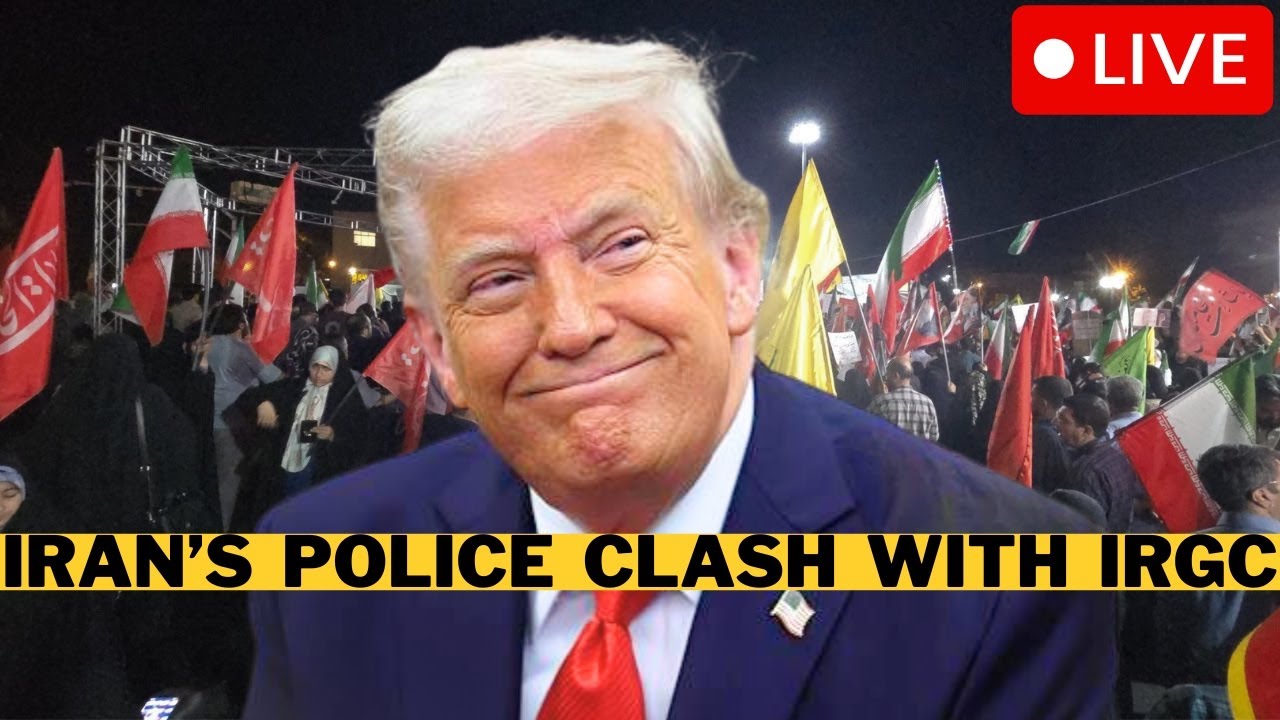
"Iran is experiencing severe internal infighting and protests as hardline IRGC elements clash with government figures over a perceived 'surrender' to the US, while mainstream Western media misrepresents the situation."