
Trump Wants $1 BILLION in Taxpayer Money for His Ballroom | Morning Shots Live
YouTube · pt1yZevPY7E
Quick Read
Summary
Takeaways
- ❖Senate Judiciary Republicans included a $1 billion provision for 'security adjustments and upgrades' related to the East Wing modernization project in a reconciliation bill.
- ❖This funding is for a White House ballroom, initially promised to be privately funded and estimated at a fraction of the current cost.
- ❖The hosts characterize the ballroom funding as a 'vanity project' and a 'bait and switch' that Republicans will be forced to defend.
- ❖Democrats are expected to force an 'up and down vote' on stripping the ballroom funding, putting Republicans on record.
- ❖The US is undertaking 'Project Freedom' to help shepherd ships through the Strait of Hormuz amidst Iranian aggression.
- ❖The administration is attempting to maintain that a 'ceasefire' with Iran holds, despite military exchanges, to avoid triggering a war powers debate.
- ❖Rising diesel prices, now above $5 a gallon nationwide, indicate significant economic pressure from the Strait of Hormuz situation.
- ❖Ukraine has shown remarkable resilience and self-sufficiency, improving drone technology and securing partnerships despite diminished US support.
Insights
1Taxpayer-Funded Vanity Project: The $1 Billion Ballroom
Senate Judiciary Republicans have proposed a $1 billion allocation in a reconciliation bill for 'security adjustments and upgrades' related to the East Wing modernization project. The hosts argue this is a taxpayer-funded vanity project for a White House ballroom, originally promised by Trump to be privately funded and estimated at a much lower cost. This move forces Republicans to defend an unpopular expenditure, contradicting their past criticisms of Democratic spending.
The hosts read the specific language from the reconciliation bill () and recall Trump's initial promises for private funding and lower costs (). They also mention a focus group of two-time Trump voters who were 'blown away' by the ballroom funding ().
2Iran Standoff and the 'Ceasefire' Illusion
The US is engaged in a tense situation with Iran over the Strait of Hormuz, launching 'Project Freedom' to ensure navigation. Despite recent military exchanges, the administration insists a 'ceasefire' is still in effect. This narrative is maintained to avoid triggering a war powers debate in Congress, which would require a vote on the use of force. The economic impact is severe, with diesel prices rising nationwide, indicating global supply chain disruptions.
Pete Hexath's briefing claims the ceasefire holds () while also admitting the goal is to restore the prior status quo (). Senator Tim Kaine challenges the administration's interpretation of the 60-day war powers clock (). Gas Buddy's tweet shows all states now have average diesel prices above $5 a gallon ().
3Ukraine's Unexpected Resilience and Self-Reliance
Despite significantly reduced US support under the current administration, Ukraine has demonstrated remarkable resilience and self-sufficiency. European nations have stepped up with aid, and Ukraine has advanced its drone technology, even forging new partnerships with wealthy Middle Eastern countries to share its innovations. This suggests Ukraine is becoming a more independent power center, capable of defending itself and innovating militarily without full reliance on traditional allies.
Bill Crystal notes Ukraine's 'amazing performance' and 'stepping up by European nations' (). He highlights Ukraine's improvement in drone technology and Zelenskyy making deals to share technology with wealthy Middle Eastern countries ().
Bottom Line
The $1 billion ballroom funding provides Democrats with a 'te-ball' political opportunity to force Republicans on record for an unpopular vanity project.
This allows Democrats to highlight Republican hypocrisy on fiscal conservatism and expose their subservience to Trump's personal agenda, potentially swaying voters in upcoming elections.
Democrats can strategically use this vote to frame Republicans as out of touch with taxpayer concerns, linking it to other issues where funding was denied (e.g., Obamacare subsidies).
The administration's insistence on a 'ceasefire' with Iran, despite active military engagements, is a tactic to avoid a congressional war powers debate.
This sidesteps constitutional checks on presidential power regarding military action, allowing the executive to continue operations without explicit legislative authorization, potentially escalating conflict without public or congressional consensus.
Congress, particularly the opposition party, can challenge this interpretation more aggressively, forcing a vote to either authorize or cease military action, thereby reasserting its constitutional role.
Key Concepts
Megalomania Overcoming Political Constraints
This model describes how a leader's extreme self-regard and desire to leave a personal stamp on things can override normal political considerations and public opinion, leading to unpopular or self-serving policies.
Imperial Presidency Mode
This refers to a presidential style where the executive seeks to centralize all power and events within the presidential complex, reducing interaction with external institutions and controlling narratives, akin to less democratic nations.
Lessons
- Monitor congressional votes on reconciliation bills, specifically looking for amendments related to the East Wing modernization project, to understand how representatives vote on controversial spending.
- Track the economic impact of geopolitical events, such as the Strait of Hormuz tensions, by observing changes in fuel prices and broader economic indicators.
- Analyze how political leaders frame military actions and 'ceasefires' to discern underlying motivations, such as avoiding war powers debates or managing public perception.
Notable Moments
The hosts predict how congressional Republicans would defend the $1 billion ballroom funding, anticipating arguments about 'security' and 'Secret Service needs' for future presidents.
This moment highlights the predictable nature of political spin and how partisan loyalty can lead to defending controversial projects with generic, often disingenuous, justifications.
A focus group of two-time Trump voters believed the White House correspondents' dinner 'assassination attempt' was a 'scup and a false flag' orchestrated by Trump to justify the ballroom project.
This reveals the depth of distrust and conspiracy theories even among former supporters, indicating a significant challenge for political discourse and public perception of official narratives.
Quotes
"There is a provision in there for 1 billion, that's with a B billion dollars to allow for security adjustments and upgrades related to the what they call the East Wing modernization project."
"The megalomania, the narcissism, uh, the the the wanting to put his stamp on things, uh, for the future has overcome the kind of normal political constraints."
"This is a billion dollars and it's taxpayer money and it's for a vanity project that no one needed and that Trump pledged would be done with private funds."
"No, the ceasefire is not over. Uh, ultimately, this is a separate distinct project. Uh, and we expected there would be some uh some churn at the beginning, which which happened, and we said we would defend and defend aggressively, and we absolutely have."
"I do not believe the statute would support that. I think the 60 days runs maybe tomorrow and it's going to pose a a really important legal question for the administration there."
Q&A
Recent Questions
Related Episodes

Patrick Henningsen: Hezbollah JUST Fired Back at Israel - Iran Vows to “Crush” All Attacks
"Patrick Henningsen argues that the US and Israel initiated an illegal war against Iran, driven by Trump's incompetence and Israeli influence, leading to an inevitable escalation with severe global economic repercussions."

🚨 HOLY F*CK HE WAS RIGHT 😂😂😂
"The host celebrates perceived conservative victories and the exposure of 'leftist' and 'communist' elements in American politics and culture, from Trump's enduring influence to alleged government fraud and societal decay."

BREAKING: MAGA RIGS VIRGINIA As Trump THREATENS NUCLEAR HOLOCAUST & Kyle EXPLODES!!!
"Host Kyle Kulinski vehemently condemns Republican actions, from alleged gerrymandering and voter suppression to environmental negligence, while sharply criticizing Trump's rhetoric on Iran and other controversial political figures and policies."
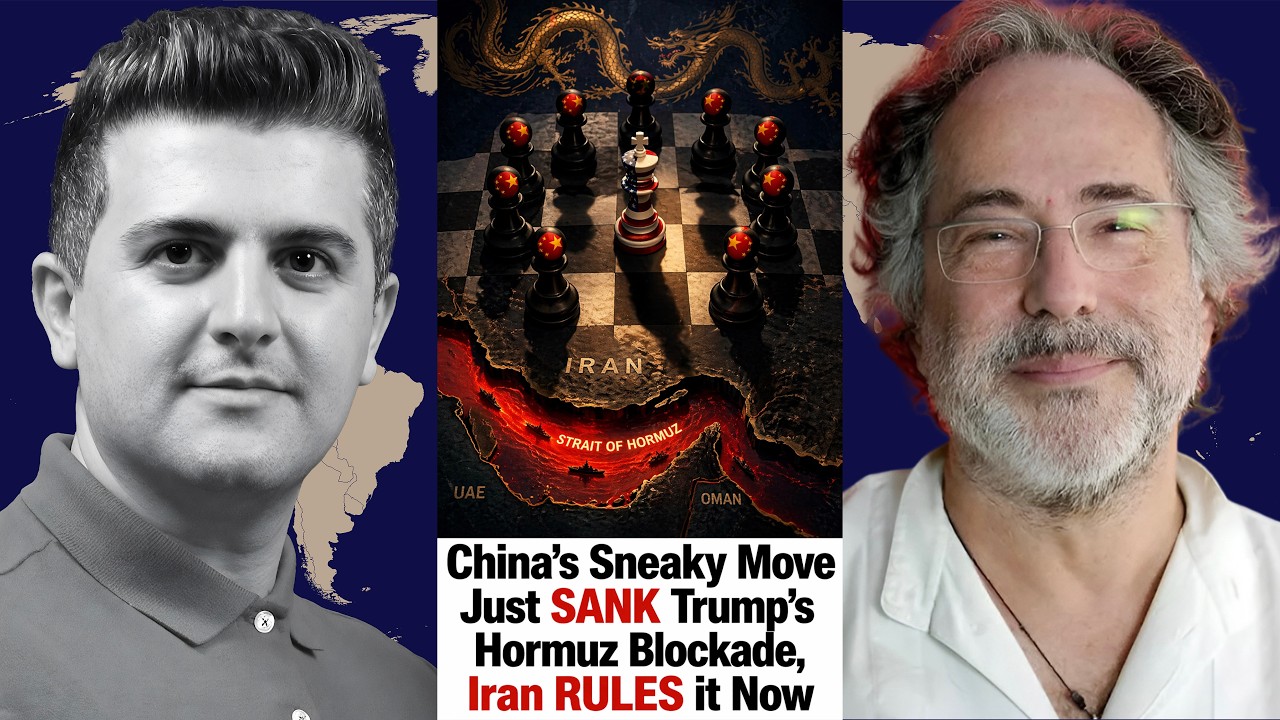
Pepe Escobar: “Total Failure”: Trump’s Blockade Just Backfired Disastrously
"Pepe Escobar argues that the US blockade against Iran, spearheaded by Donald Trump, has utterly failed and backfired, accelerating global economic chaos and challenging US geopolitical dominance."