LIVE: Marco Rubio Testifies on State Department Budget Request
YouTube · pvIVJRZSIN0
Quick Read
Summary
Takeaways
- ❖The State Department's FY27 budget prioritizes 'America First' by realigning programs for greater returns on taxpayer investment.
- ❖Secretary Rubio asserts significant diplomatic successes, including de-escalating nuclear conflicts and forming new security alliances like the 'Shield of the Americas' with 14 Western Hemisphere countries.
- ❖Rubio claims 'Operation Epic Fury' effectively destroyed Iran's conventional navy and air force, degraded missile launchers, and reduced drone stockpiles by 80-90%.
- ❖The administration has shifted foreign aid from broad NGO funding to bilateral 'health compacts' with 32 countries, aiming to build domestic health capacity rather than foster perpetual aid dependency.
- ❖Democratic members accuse the administration of taking a 'wrecking ball' to diplomacy, citing over 100 vacant ambassador posts and the firing of 1,300 career professionals.
- ❖Critics allege the 'war in Iran' has led to increased gas and food prices, inflation, and alienated allies, while the president is accused of profiting from energy and defense stock purchases.
- ❖Rubio denies presidential conflicts of interest, stating Trump never discussed personal economics in relation to policy and that he has never witnessed such indications.
- ❖The administration is actively working to diversify critical mineral supply chains away from China, hosting ministerials with over 30 countries and supporting initiatives like Pacilica for AI supply chain protection.
- ❖U.S. policy on Taiwan remains unchanged, with the administration executing the largest arms sale in history ($11 billion) in December, and another $14 billion deal currently under review.
- ❖Mass migration is viewed as a national security threat, fueling transnational criminal and terrorist groups, with the administration implementing policies to reduce it across the Western Hemisphere.
- ❖The administration has ceased cooperation with UNRWA due to alleged ties with Hamas and concerns about aid diversion, seeking alternative organizations for humanitarian relief in Gaza.
Insights
1Iran's Military Capabilities Decimated by 'Epic Fury'
Secretary Rubio detailed that 'Operation Epic Fury' successfully destroyed Iran's conventional navy and air force, significantly degraded its missile launchers, and reduced its drone stockpiles by 80-90%. This action was taken to prevent Iran from building a 'conventional shield' behind which it could develop nuclear weapons, asserting that the U.S. will not allow Iran to obtain a nuclear weapon.
Rubio: 'Today the Iranian Navy sits at the bottom of the sea. They do not have a navy. It no longer exists. They have no air force either. Their missile launchers have been significantly degraded. Their defense industrial base has suffered upwards of 80 to 90% of attrition. It will take years for them to rebuild it. Those are facts. That is the reality. That was the purpose of Epic Fury. It achieved its purpose in degrading that conventional shield and it has brought them to the negotiation table that hopefully will will lead to the point stop sponsoring terrorism around the world.'
2Shift in Foreign Aid to Bilateral Health Compacts
The administration has moved away from traditional foreign aid models, which often involved NGOs, towards bilateral 'health compacts' with 32 countries, predominantly in Africa. This new approach aims to empower native and domestic health industries and national health systems, allowing recipient governments more control over funds and building long-term self-sufficiency, rather than fostering perpetual aid dependency.
Rubio: 'We are partnering with 32 countries, many of them in the African continent, in which we will empower their native and domestic health industries and and national health systems so that they can not not only are we treating the the the acute situations on the ground of people that are sick, we are helping them be build the capacity and the capability to do this for themselves. This is what these countries want. They do not want to be perpetual aid recipients.'
3Accusations of Presidential Conflicts of Interest
Democratic members raised concerns about alleged conflicts of interest involving President Trump and his family. Accusations included the president's stock purchases in energy and defense companies that allegedly profited from the 'war in Iran,' and his son-in-law Jared Kushner's private equity firm receiving significant foreign investments from countries involved in U.S. foreign policy discussions.
Meeks: 'He disclosed purchases of stocks and energy and defense companies in the first quarter of this year that were made just as those companies profits were soaring from the war in Iran.' () Stanton: 'Jared Kushner. His private equity firm, Affinity Partners, has raised more than $6 billion since it was founded in 2021, including 1.2 billion just over the last year. Mr. Secretary, are you aware of how much of that 6 billion has been raised from foreign nationals?… The answer is 99%. These include sovereign wealth funds operated by Saudi Arabia, UAE and Qatar.'
4Venezuela's Oil Revenue Transparency and Audit
Secretary Rubio clarified the process for Venezuelan oil revenues, stating that sales are now at market price, with proceeds deposited into a blocked account at Citibank. This account is audited by KPMG, paid for by the Venezuelan government from those funds, with a pre-agreed list of allowable expenditures, ensuring transparency and preventing individual financial benefit.
Rubio: 'That money and those proceeds are are deposited in a treasury blocked account at City Bank. That account, by the way, is audited by KPMG. KPMG has been hired and paid for paid by the Venezuelan government out of those funds to audit every single expenditure. There is a list that's been agreed to by both sides, the Venezuelan side and the US side on what the allowable expenditures are for.'
5U.S. Commitment to Taiwan's Defense
The U.S. maintains its 'One China' policy and commitment to Taiwan's defense, as demonstrated by an $11 billion arms sale in December, the largest ever to Taiwan. Another $14 billion deal is currently under review, with the delay attributed to stock availability and procurement balancing, not a 'pause' in sales or consultation with China.
Bar: 'First of all, the 11 million in December was the single largest arm sales ever to Taiwan. And it was more than happened cumulatively under four years of President Biden.' () Bar: 'That second deal, the $14 million one that's currently under review. Uh, and that would be not that would not be unusual for something.'
Bottom Line
The U.S. is actively seeking to re-industrialize its shipbuilding capacity and reduce reliance on Chinese-built ships, exploring partnerships with countries like Finland (for icebreakers) and South Korea (for general shipbuilding) to rebuild this lost industrial base.
This indicates a strategic pivot towards shoring up critical industrial capabilities outside of China, which could lead to significant investments in allied shipbuilding sectors and potentially new U.S. domestic manufacturing jobs, impacting global maritime trade and defense.
Companies in allied nations with strong shipbuilding capabilities, or those capable of developing such, could find new opportunities for partnerships and contracts with the U.S. government as it seeks to diversify its maritime industrial base.
The administration is exploring options for Afghan allies currently in the U.S. to relocate to third-party safe countries, rather than returning them to Afghanistan or allowing them to remain in the U.S. indefinitely, due to migratory policy shifts and security concerns.
This policy creates uncertainty and potential hardship for Afghan allies who assisted U.S. forces, raising questions about U.S. commitments to its partners and potentially impacting future willingness of foreign nationals to cooperate with the U.S. military.
Humanitarian organizations and countries willing to host Afghan refugees could engage with the U.S. State Department to facilitate relocation efforts, potentially receiving support or resources for these endeavors.
Key Concepts
America First Policy
A foreign policy doctrine prioritizing U.S. national interests, economic prosperity, and security above multilateral agreements or globalist agendas, often involving re-evaluating alliances and foreign aid commitments.
Peace Through Strength
A foreign policy approach that advocates for maintaining a strong military and assertive posture to deter adversaries and achieve diplomatic objectives from a position of power, rather than relying solely on diplomacy or concessions.
Lessons
- Monitor the State Department's new bilateral 'health compacts' to understand their effectiveness in building local health infrastructure and compare outcomes against previous NGO-led aid models.
- Track the ongoing negotiations regarding Iran's nuclear program and the reopening of the Strait of Hormuz, paying close attention to the specific terms on enrichment, highly enriched uranium, and economic sanctions relief.
- Examine the U.S. strategy for diversifying critical mineral supply chains and re-industrializing key sectors like shipbuilding, as these efforts present potential investment and partnership opportunities for businesses and allied nations.
Notable Moments
Democratic members present videos alleging President Trump fell asleep during cabinet meetings and a Memorial Day ceremony, questioning his cognitive abilities and fitness for office. Secretary Rubio vehemently denies these claims, asserting the President's high energy and work ethic.
This exchange highlights a significant political attack on the President's health and capacity to lead, directly impacting perceptions of U.S. leadership and stability on the global stage. Rubio's strong defense underscores the administration's narrative of a highly active leader.
A Democratic representative accuses the administration of causing the deaths of over 500,000 children due to cuts in foreign aid, presenting a photo of a child who allegedly died of malnutrition. Secretary Rubio dismisses the number as 'false' and refutes the direct causation.
This moment encapsulates the intense moral and humanitarian debate surrounding the administration's 'America First' foreign aid policies. The stark disagreement on facts and responsibility highlights the deep partisan divide on the human cost of policy decisions.
Secretary Rubio clarifies the financial oversight of Venezuelan oil revenues, stating that proceeds are deposited in a Citibank account, audited by KPMG, and spent according to pre-agreed allowable expenditures, directly refuting claims of corruption and lack of transparency.
This provides specific details on a highly scrutinized aspect of U.S. foreign policy in Venezuela, aiming to counter accusations of illicit financial dealings and demonstrating a mechanism for accountability in a sensitive geopolitical context.
Quotes
"We appreciate your attendance. I can give you a foreshadowing of what you're about to experience. My Democrat colleagues are going to sit up here and say that they haven't heard from the administration."
"In just 18 months, the Trump administration has taken a wreck ball to all three. This administration has involved and have invoked a world view from years past that has left the United States isolated and struggling economically."
"Today the Iranian Navy sits at the bottom of the sea. They do not have a navy. It no longer exists. They have no air force either. Their missile launchers have been significantly degraded. Their defense industrial base has suffered upwards of 80 to 90% of attrition."
"What people call conflicts of interest, Steve and I call experience and trusted relationships that they have throughout the world."
"Mass migration is a national security threat to any country that experiences it. It's bad for the transit countries too by the way because it fuels and feeds these transnational groups that traffic not just in human beings. They traffic in drugs, they traffic in weapons and anything else you can imagine."
"You promised children weren't going to die. You said that to me right here. You promised peace as well. Instead, your illegal war of choice with Iran is driving up fuel prices and grocery costs while putting millions more at risk of hunger worldwide."
"Every dollar we spend today is 100 times more effective, efficient, and aligned with the American interest than it was uh when President Trump took office."
Q&A
Recent Questions
Related Episodes

LIVE: Trump HIDES FROM PUBLIC as US SOLDIER KILLED!!! 6/2/2026
"The host exposes alleged government cover-ups regarding military casualties, Trump's unexplained public absence, and questionable political appointments, arguing these reflect a 'regime of loser babies' and a failing foreign policy."
🚨 THEY… F*CKING... FOUND… OUT… 😂😂😂
"The host delivers a fiery, unfiltered commentary on global and domestic political events, framing them as a battle between a 'collapsing globalist order' and a 'resurgent new right' that prioritizes national sovereignty and traditional Western values."
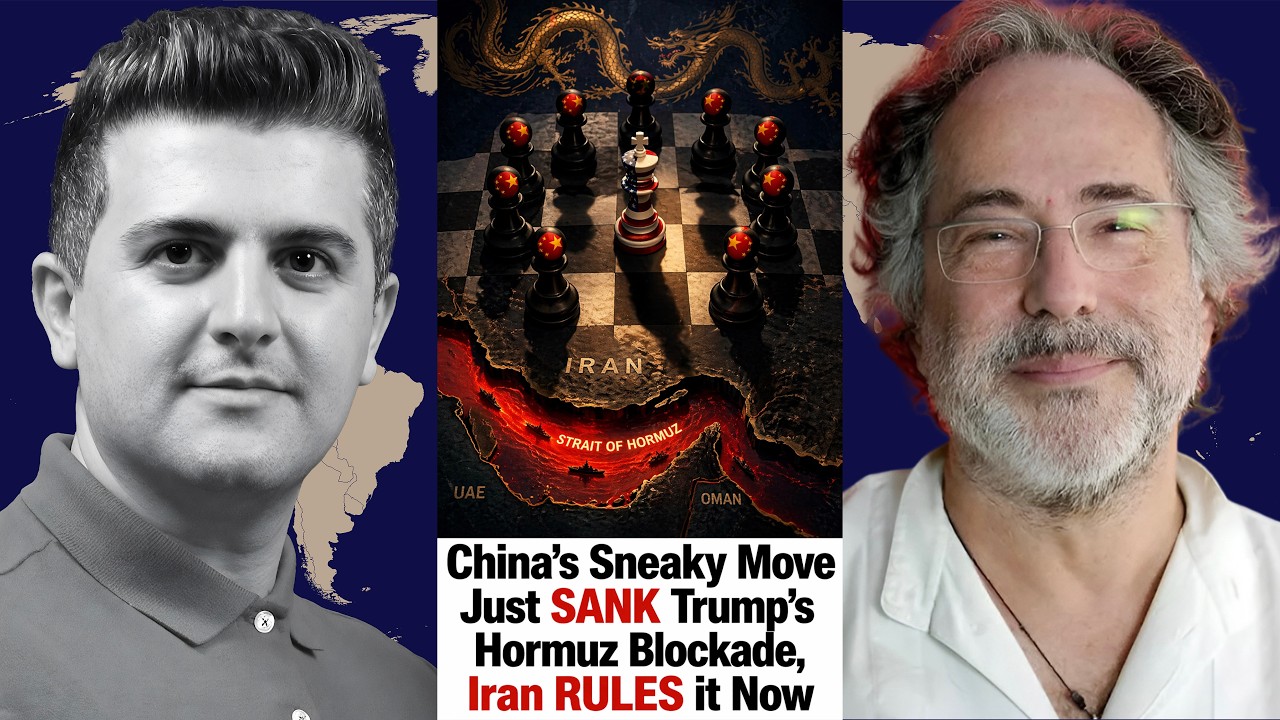
Pepe Escobar: “Total Failure”: Trump’s Blockade Just Backfired Disastrously
"Pepe Escobar argues that the US blockade against Iran, spearheaded by Donald Trump, has utterly failed and backfired, accelerating global economic chaos and challenging US geopolitical dominance."

MAGA Stooge Freezes After My Question on CNN
"Adam Mockler dissects the Trump administration's claims of 'total victory' in foreign conflicts and its alleged attempts to politicize the Department of Justice, arguing these actions undermine democratic institutions and moral leadership."