
Mark Sleboda: Trump & Iran’s Final Move – Deal Within REACH?
YouTube · qDaPP-gewPU
Quick Read
Summary
Takeaways
- ❖Skepticism abounds regarding a US-Iran deal, given Trump's history of announcing imminent deals that never materialize.
- ❖Iran and the US are exchanging messages through intermediaries, not direct negotiations, indicating a lack of trust and fundamental disagreement.
- ❖Israel has consistently denied previous ceasefire agreements extending to Lebanon and continues military operations in Southern Lebanon.
- ❖Iran has established a new strategic equation: direct attacks on Beirut will result in Iranian strikes on Israel, a departure from previous proxy engagement.
- ❖Iran's ability to control the Strait of Hormuz via 'service fees' demonstrates significant geo-economic leverage, despite US attempts to guide tankers through.
- ❖The US military's attack on Iranian water reservoirs is framed as a war crime and a sign of desperation, not strength.
- ❖Iran's retaliatory strikes on US military bases in Kuwait, Bahrain, and Jordan demonstrated escalatory dominance and superior capability against military targets.
- ❖US diplomacy is characterized by incompetence, with key negotiations handled by unqualified individuals like Jared Kushner and Steve Witkoff.
- ❖The proposed merger of US and Israeli militaries is seen as disastrous for US foreign policy, tying it to Israel's regional conflicts and accelerating the decline of US hegemony.
- ❖The concept of 'all wars are one war' suggests that conflicts in Ukraine and Iran are interconnected battlefields in a larger struggle for the future global order, benefiting US adversaries.
Insights
1Iran's New Strategic Equation with Israel
Iran has established a new red line: direct attacks on Beirut by Israel will trigger direct Iranian missile or drone strikes on Israel. This marks a significant shift from previous engagements where Iran primarily used proxies, indicating increased confidence and a willingness to directly deter Israeli aggression against Lebanese capital.
Israel's return to airstrikes on Beirut's Dahieh stronghold prompted Iranian strikes on Israel, with Iran warning Israel to stop attacks on Lebanon. While Israel resumed strikes on southern Lebanon, Iran's non-response indicated Beirut as the primary red line.
2Iran's Asymmetric Leverage over the Strait of Hormuz
Iran maintains significant geo-economic leverage by controlling the Strait of Hormuz, effectively imposing 'service fees' on transiting tankers. Despite US attempts to guide tankers through by 'going dark,' Iran selectively allows passage while still disrupting the vast majority of normal traffic, demonstrating its ability to impact global energy flows.
The US was reportedly sneaking 2-3 tankers a day through the Strait by shutting off transponders, significantly less than the 120-130 daily before the conflict or the 25 Iran selectively allowed after paying a 'service fee'. Iran also hit a US Apache helicopter providing guidance to a tanker.
3US Diplomatic Incompetence and Israeli Sabotage
The US approach to diplomacy with Iran is characterized by incompetence, with critical negotiations handled by unqualified individuals like Jared Kushner. This, combined with Israel's vested interest in preventing any real peace deal to maintain US engagement against Iran, makes a genuine, lasting agreement highly improbable.
Trump's use of 'slimy real estate buddy' Witkoff and 'twink son-in-law' Jared Kushner for diplomacy, rather than the State Department, is cited as evidence of incompetence. An Israeli official called any agreement a 'shitty agreement,' confirming their intent to sabotage.
4Decline of US Hegemony and Emergence of a Multipolar Alliance
The US is experiencing a significant decline in its global hegemonic status, evidenced by its failures in both the proxy war in Ukraine and the direct conflict with Iran. This decline fosters a de facto alliance among countries like Russia, China, and Iran, who benefit from each other's engagements against the US, collectively challenging the existing global order.
Sleboda states the US is 'losing a proxy war against Russia in Ukraine' and 'launched a declared regime change war against Iran and failed.' He notes that Iran's success was partly due to US military attrition in Ukraine, and that 'any enemy of Iran is an enemy of ours' is a direct statement from Russian security officials to Israelis.
Bottom Line
The US's attack on Iranian water reservoirs, deemed a war crime, did not provoke Iran to retaliate against Gulf Arab states' desalination plants, despite this being a major escalatory card. This suggests Iran's strategic restraint or a calculated decision to avoid a humanitarian crisis that could alienate regional players.
Iran's decision not to target desalination plants, despite the US hitting its water infrastructure, reveals a nuanced and possibly more sophisticated strategic calculus than a simple quid pro quo. This restraint could be aimed at maintaining a degree of regional legitimacy or reserving this 'ultimate' weapon for a more existential threat, rather than immediate retaliation.
Analysts should closely monitor Iran's future retaliatory patterns for deviations from expected quid pro quo, as this could signal evolving strategic doctrine or a shift in its regional objectives. This restraint might also open avenues for back-channel de-escalation if understood correctly by adversaries.
Trump's 'Plan B' for dealing with Hezbollah involves enlisting Al-Qaeda (Al-Julani, ruler of 'the new Islamic state in Syria') to fight Hezbollah for the US and Israel, even sending Al-Julani Trump-branded cologne as a gift.
This surreal and ethically questionable strategy highlights the extreme and desperate measures the US might consider to achieve its objectives in the Middle East, potentially empowering terrorist organizations against other non-state actors. It also suggests a deep transactional and non-ideological approach to foreign policy under Trump.
This reveals a potential long-term destabilizing factor in the region, as empowering groups like Al-Qaeda could lead to unintended consequences and further radicalization. It also indicates a potential point of leverage for Turkey, which has significant influence over the Al-Qaeda regime in Syria.
Key Concepts
Escalatory Dominance
The ability of one party in a conflict to respond to an opponent's actions with a more damaging or strategically significant counter-action, thereby controlling the escalation ladder. Sleboda argues Iran possesses this over the US and Israel in the region.
Asymmetric Leverage
The use of disproportionate means to achieve an advantage, often by exploiting an opponent's vulnerabilities or reliance on specific resources. Iran's control over the Strait of Hormuz and its ability to impose 'service fees' is cited as a prime example of this against global oil trade.
All Wars Are One War
A geopolitical framework suggesting that seemingly disparate conflicts involving a major power (e.g., the US) are interconnected and contribute to a single, overarching struggle for global order. Success or failure in one theater (e.g., Ukraine) impacts capabilities and outcomes in another (e.g., Iran).
Lessons
- Monitor US-Iran communications for concrete, verifiable agreements rather than public statements, as official positions often contradict private negotiations.
- Observe Israel's military actions in Lebanon, particularly against Beirut, as this is a confirmed red line for direct Iranian retaliation, indicating a heightened risk of escalation.
- Track shipping and oil transit patterns through the Strait of Hormuz and Bab el-Mandeb Straits for signs of Iran's continued asymmetric leverage and any 'service fees' imposed, which could impact global energy markets.
- Evaluate the diplomatic capacity and consistency of US foreign policy, especially concerning the Middle East, given the perceived incompetence and reliance on non-traditional negotiators.
- Analyze the evolving relationships between Gulf Arab states (e.g., UAE, Qatar) and Iran, as their independent deals and 'modus vivendi' indicate a shift away from sole reliance on US security guarantees.
Notable Moments
The host notes that the Iranian Foreign Minister mentioned Lebanon as a key point for ending the war on all fronts, while Israel immediately denied any commitment to this.
This highlights a fundamental divergence in expectations and commitments from the outset, underscoring the difficulty of reaching a comprehensive agreement that satisfies all parties.
Mark Sleboda recounts a CNN clip showing Trump has stated 'a deal is imminent' or 'we have a deal' 37 times (later 39) since the ceasefire began.
This statistic serves to immediately establish Sleboda's skepticism about the current 'deal' talks, framing them within a pattern of unfulfilled promises and political posturing by Trump.
Russian security officials reportedly told detained Israeli-Russian dual citizens at Moscow Airport, 'Any enemy of Iran is an enemy of ours.'
This direct quote, attributed to high-level Russian government approval, unequivocally demonstrates the depth and strategic alignment of the de facto multipolar alliance between Russia and Iran, underscoring the 'all wars are one war' concept.
Quotes
"If Israel attacks Lebanon, really Hezbollah, let's you know, but Lebanon. Um then that is not acceptable to Iran and Iran will strike back at Israel. That isn't That has not happened before. That is a new strategic equation."
"Depriving 20,000 civilians of you know, at least running drinking water, you know, potable water, for what? I don't... Now if Iran were to adhere to the quid pro quo type of retaliation they have kept to. You would expect them you could expect them to hit back at Gulf Arab state, you know, allied with the US from which the US is allied, water infrastructure. Which would likely mean desalination plants."
"I mean I mean do Americans really understand that their president is talking like a cartoonish Bond villain? I mean I mean actually quite seriously, I think most of the Bond villains have better dialogue. I mean more serious dialogue than than than Trump does."
"All that leaves is a position of strength in dealing with Trump. You need to keep your jackboot on that orange mofo's neck or you can't count on anything."
"Is there anything that will hasten the end of the US even more than they're already doing than doing that? Right? Because it will tie them down to fighting Israel's wars against all of its neighbors in the Middle East."
"All wars are one war now. Right? Um at least anything that involves the US in any way. So, the conflict in Ukraine and the conflict in Iran are really just different battlefields of the same war for the global order of the future."
Q&A
Recent Questions
Related Episodes

Patrick Henningsen: Hezbollah JUST Fired Back at Israel - Iran Vows to “Crush” All Attacks
"Patrick Henningsen argues that the US and Israel initiated an illegal war against Iran, driven by Trump's incompetence and Israeli influence, leading to an inevitable escalation with severe global economic repercussions."

BREAKING: Iran Threatens To END Talks; U.S. Vows Retaliation; Hezbollah Collapsing? | TBN Israel
"Iran is leveraging Hezbollah and the Strait of Hormuz to manipulate US negotiations, while Israel asserts its right to dismantle Hezbollah's eroding but still dangerous infrastructure in Lebanon, independent of international talks."
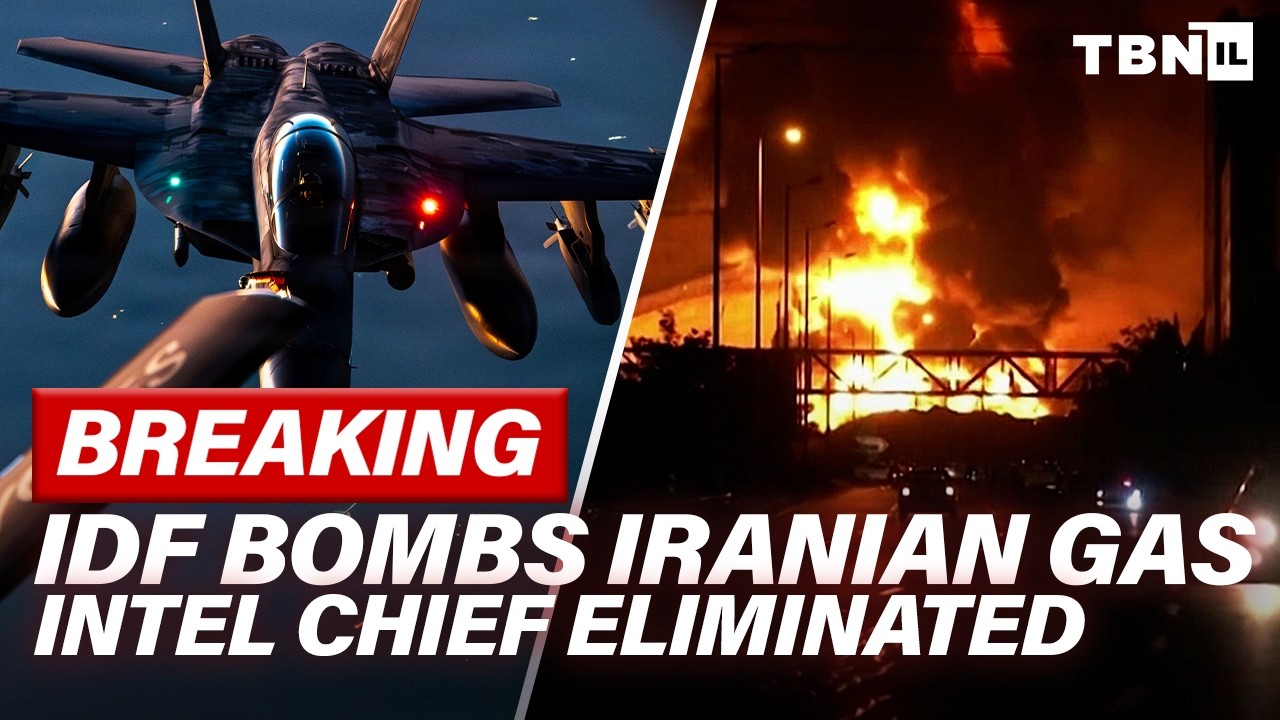
BREAKING: Israel BOMBS Major Iran Gas Site; Top Mullah ELIMINATED; Iran Vows VENGEACE | TBN Israel
"Israel and the United States have escalated their 'Roaring Lion War' against Iran, striking its largest gas facilities, eliminating key intelligence and military figures, and disrupting missile production, while Iran threatens a broader energy war in the Gulf."

Iran Update: Israel’s Newest Bombing Campaign, the Oncoming War With China and How to Avoid It
"Colonel Wilerson reveals how the US and Israel are actively bombing China's strategic infrastructure in Iran, escalating a covert economic war that Beijing intends to win without direct military conflict by dismantling the dollar's global dominance."