What is in Nancy Guthrie suspect’s pocket? Walkie talkie? Signal jammer? Day 28 on the scene
YouTube · qZ2ghZu4QcU
Quick Read
Summary
Takeaways
- ❖FBI and Pima County Sheriff's Office have reduced on-site personnel, with FBI now reviewing video footage in Phoenix.
- ❖The item in the suspect's pocket is theorized to be either a walkie-talkie for a getaway driver or a signal jammer, not a cell phone.
- ❖The suspect's full backpack likely contained items like zip ties, tape, or tarps to subdue Nancy Guthrie or transport her body.
- ❖A former FBI/CIA agent believes the $1 million reward is unlikely to move the needle now, stating it would have been more effective earlier.
- ❖Initial handling of the crime scene, including its early release, is criticized by a former FBI/CIA agent as problematic and compromising to the case.
- ❖US Attorneys visited the crime scene to understand the case for potential prosecution, a standard practice, not an indicator of imminent arrest.
- ❖Polygraphs are being used to thin leads and eliminate individuals, not as court evidence, and are typically short (30-60 minutes) for this purpose.
- ❖Ransom notes sent to media outlets are believed to be unrelated to the actual case, adding unnecessary delays to the investigation.
- ❖The incident is strongly believed to be a targeted abduction, possibly related to an obsession with Savannah Guthrie, rather than a burglary gone wrong.
- ❖The act of covering a camera with grass, rather than disabling it, suggests the suspect was not a professional criminal like a cartel member or seasoned burglar.
Insights
1Suspect's Pocket Item: Walkie-Talkie or Signal Jammer
Tracy Walder, a former FBI agent and CIA officer, analyzed the suspect photo, suggesting the antenna-like object in his pocket is either a walkie-talkie for short-range communication with a getaway driver (avoiding cell phone tracking) or a signal jammer. She dismisses the possibility of it being a regular cell phone, as its presence would likely have led to an earlier apprehension via geo-fencing.
Discussion of suspect photo showing an antenna-like object; comparison to geo-fencing in the Cobberger case.
2Backpack Contents Point to Subduing or Body Transport
Walder hypothesizes that the suspect's notably full backpack contained items intended to subdue Nancy Guthrie, such as zip ties or tape, or even tarps for body transport. This suggests a premeditated plan for abduction and potentially a grim outcome.
Observation of the suspect's 'big full backpack'; Walder's 'hypothesis that he is arriving with things to subdue her... blankets or tarps to put her in... zip ties, tape'.
3Shifting Law Enforcement Resources
After 28 days, both the FBI and Pima County Sheriff's Office have reallocated resources. Many FBI agents returned to Phoenix to review thousands of hours of video (presumed traffic camera footage), while the Sheriff's Office reduced the number of detectives exclusively assigned to the case to address other local crimes.
Host's learned information about 'change in resources behind the scenes'; FBI going 'back to Phoenix' to review 'thousands of hours of video'; Pima County 'keeping a number of detectives' but 'it won't be all the detectives like it was'.
4Polygraphs Used for Lead Triage, Not Court Evidence
Tracy Walder explains that the polygraphs administered in the case are likely short (30-60 minutes) and used by investigators to quickly 'thin this lead herd' and prioritize individuals, rather than to gather admissible court evidence. She notes that polygraph results cannot be used in court.
Walder's explanation: 'giving them a very quick poly... 30 to 60 minutes... to eliminate people... to help sort of thin this lead herd... you can't use them in court'.
5US Attorneys' Presence at Crime Scene is Standard Practice
The presence of US Attorneys at Nancy Guthrie's home for a final walkthrough was not an indicator of an imminent arrest, but rather a standard procedure. Walder states that attorneys need to understand the crime scene before it is released to the family, enabling them to properly prosecute the case if a suspect is found.
Walder's explanation: 'they need to have an understanding of the case... not uncommon... a good thing because you want them to have a look at the crime scene before it's sent back to the family'.
6Debunked Theories and Unrelated Leads
The host debunks several circulating theories: a 911 call about a woman yelling from a moving vehicle was investigated and found unrelated; Google searches related to the case were confirmed as not legitimate by Google; and a local gem show had no indicated connection to the disappearance. Additionally, the ransom notes sent to media are believed by Walder to be unrelated, causing unnecessary investigative delays.
Host's sources confirming the 911 call was unrelated (); Google confirming searches 'are not legit' (); 'no indication' of connection to gem show (); Walder's belief that ransom notes 'are unrelated' ().
Bottom Line
The $1 million reward, while substantial, is likely ineffective at this stage of the investigation because potential informants who might have come forward earlier are now less inclined, believing law enforcement has failed to solve the case and fearing personal legal repercussions.
Large rewards have a diminishing return over time; their impact is highest in the immediate aftermath of a crime. Delay in offering a substantial reward can reduce its efficacy, as the perceived risk for informants increases relative to the perceived chance of a quick resolution.
For future high-profile cases, law enforcement agencies and supporting organizations should consider offering significant rewards much earlier to capitalize on immediate information flow and leverage the initial public and internal pressure for resolution.
The initial handling of the crime scene, specifically its early release and perceived lack of proper investigation, is seen by a former FBI/CIA agent as a critical misstep that compromised the case, contrasting sharply with the more controlled Idaho investigation.
Procedural errors in the critical early stages of a criminal investigation can have long-lasting, detrimental effects on case solvability, regardless of subsequent resource allocation or public pressure. This suggests a potential systemic issue or lack of coordination in the initial response.
Law enforcement agencies should conduct thorough internal reviews of initial crime scene management protocols, especially in high-stakes cases, to ensure best practices are consistently applied and to minimize the risk of compromising evidence or investigative pathways.
Lessons
- Understand that polygraphs are investigative tools for narrowing leads, not definitive proof of guilt or innocence in court.
- Recognize that initial handling of a crime scene is critical; early missteps can significantly compromise an investigation.
- Be aware that large rewards may have limited impact if offered too late in a prolonged investigation, as potential informants weigh risk against perceived success.
Quotes
"The problem is is that now it's been what three going on a month I guess now um of this and no one has come forward. And so I think the people involved now are like well they can't figure this out. So what does it matter even if I I do come forward and get this million dollars and then I go to jail uh you know for that they haven't been able to figure this out. So I don't know that it's going to move the needle now. I think it would have in the first weeks of the investigation."
"In this case, I feel that from day one, it's been handled in ways that I think a lot of law enforcement officers, officials disagree with, like releasing the crime scene too soon. All all of those things are problematic and do compromise the case."
"I definitely don't think that this is a burglary gone wrong because even to your point like you can't believe that this is this house on this street. they there are so many other houses to pick from and also in a burglary we don't tend to see them taking a victim with them."
"I do think that this is someone that was either upset with something Savannah Guthrie had done or had some obsession uh with her and that's why they targeted this family."
Q&A
Recent Questions
Related Episodes
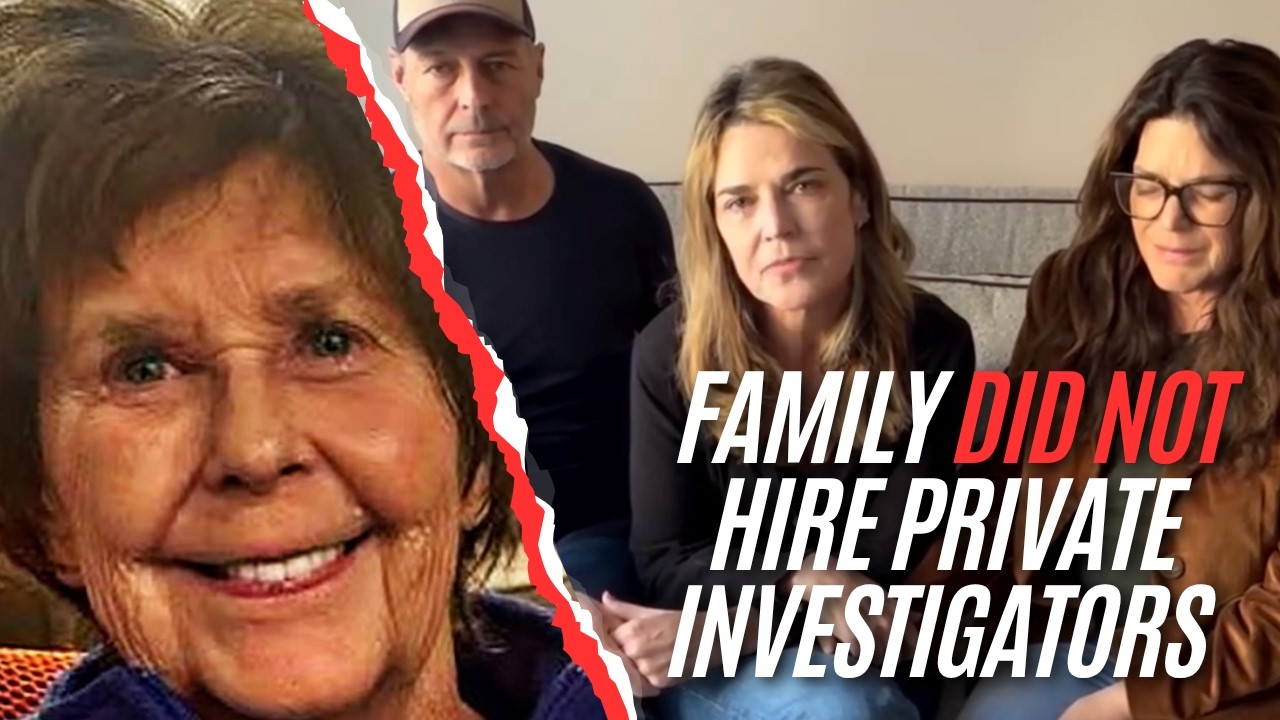
Savannah Guthrie did not spend 500k on private investigators in Nancy Guthrie case
"This episode debunks a major rumor in the Nancy Guthrie disappearance and provides critical updates on the Lynette Hooker missing person case, highlighting inter-agency conflicts and forensic challenges."

Sheriff not talking to Nancy Guthrie’s family, acknowledges ‘frustration’ according to reports
"New reports reveal Pima County Sheriff Nanos is no longer directly communicating with Nancy Guthrie's family, acknowledging their frustration, while an expert analyzes the stalled investigation's DNA and video evidence."

New ransom note claims to know where Nancy Guthrie is — but is it real? Day 65 in the search
"A new ransom note surfaces on the day Savannah Guthrie returns to work, raising questions about its authenticity and the ongoing, politically fraught investigation into Nancy Guthrie's disappearance."

Surveillance video with possible timing connection to Nancy Guthrie disappearance - on the scene
"New surveillance video emerges with timing that aligns with Nancy Guthrie's pacemaker disconnection, while law enforcement prepares to return her house to the family, fueling speculation about a burglary gone wrong and the case's potential to remain unsolved."