
NANCY GUTHRIE SEARCH AT CHILLING TURNING POINT
YouTube · qvvTgu8H_po
Quick Read
Summary
Takeaways
- ❖FBI confirmed DNA from a rootless hair found in Nancy Guthrie's bedroom.
- ❖Astrea Forensics specializes in extracting SNIP DNA from rootless hair, a technique previously thought impossible.
- ❖The MVAC system is a highly effective wet vac technique for collecting DNA from challenging surfaces.
- ❖Analyzing a single hair is a destructive process, limiting testing opportunities.
- ❖Pima County Sheriff Nanos faces perjury allegations and is criticized for inconsistent communication, impacting morale.
- ❖Ransom notes suggesting Nancy Guthrie is in Sonora, Mexico, are deemed unreliable due to search complexities and corruption.
Insights
1Rootless Hair DNA is a Game Changer
The FBI confirmed obtaining DNA from a rootless hair found in Nancy Guthrie's bedroom. This type of evidence, once considered unusable for traditional nuclear DNA analysis, can now yield SNIP profiles critical for genetic genealogy, thanks to techniques developed by Astrea Forensics.
CeCe Moore states, 'If they had it since February, I certainly would think they would have already sent that off to Estraa much earlier because they're the ones who've had so much success extracting snips from rootless hair.' She later adds, 'Dr. Ed Green proved everyone wrong by developing a technique to extract snip DNA, which is what we need for genetic genealogy from those hairs.'
2MVAC System for DNA Collection
The MVAC forensic DNA collection system, a wet vac technique, is highly effective for recovering DNA from porous and challenging surfaces like fabric and hardwood, outperforming traditional swabbing by covering a greater area. This method could explain the recent discovery of the hair.
Nancy Grace explains, 'The MVAC forensic DNA collection system is extremely effective on both fabric and hardwood. It's for particularly recovering DNA from porous or even challenging surfaces. And what it is is a wet vac technique. It sprays liquid very gently and then suctions it back into the MVAC.'
3Astrea Forensics' Proven Expertise
Astrea Forensics, led by Dr. Ed Green, has a track record of successfully extracting SNIP DNA from rootless hair, solving dozens of cases, including six personally by genetic genealogist CeCe Moore, and notably contributing to the Gilgo Beach serial killer conviction.
CeCe Moore states, 'Estraa Forensics has had one success after another with rootless hair. And they are the ones that originally developed this technique to extract snips from rootless hair after scientists have been saying for decades that it was not possible.' She also mentions, 'I personally have helped solve six cases using rootless hair alone working with Estraa Forensics.'
4Fragility of Single-Hair Evidence
Analyzing a single hair for DNA is a destructive process, making multiple attempts or re-sequencing impossible. This places immense pressure on the lab, especially if initial attempts by other labs were unsuccessful or if the hair is short or chemically treated.
CeCe Moore confirms, 'Yeah, that's a real issue because the hair is destroyed when it is being analyzed in that manner.' She adds, 'I don't believe there could have already been a lot of testing on that hair, unless it's a very long hair.'
5Sheriff Nanos's Distractions Hinder Investigation
Pima County Sheriff Nanos's alleged perjury and inconsistent communication regarding leads (e.g., a one-word 'nope' response to detention inquiries) are causing public and internal frustration, demoralizing investigators, and potentially harming the search for Nancy Guthrie.
Dave Mack reports that Nanos gave a 'very tur one word answer. Nope' when questioned about a detained subject. Brian Fitzgibbons states, 'When you have the leader, the public facing leader of this investigation, spending the majority of his time defending his reputation, answering questions about his past, battling political pressure, it inevitably demoralizes the detectives on the ground who are doing the actual day-to-day work.'
6Mexico Ransom Notes Lack Credibility
Recent ransom notes claiming Nancy Guthrie was seen and is dead in Sonora, Mexico, are largely dismissed by experts due to the extreme challenges of searching vast desert areas, rampant corruption within Mexican law enforcement, and cartel influence, making cooperation nearly impossible.
Brian Fitzgibbons states, 'I don't think that this note will be taken seriously for a number of reasons.' He elaborates on challenges: 'significant collaboration and cooperation between the US and Mexican governments' would be needed, 'very limited buyin from the local populace,' 'huge swaths of desert virtually impossible to search,' 'extreme corruption within the law enforcement there,' and 'cartel influence on all of the citizens.'
Bottom Line
The delayed transfer of critical DNA evidence (rootless hair) from a less successful lab (DNA Labs International) to a specialized, proven lab (Astrea Forensics) highlights a potential systemic issue in how complex forensic evidence is initially handled.
This delay could have cost valuable time in a 'hot case' where every moment counts, suggesting a need for standardized protocols to quickly route highly specialized evidence to the most capable facilities.
Develop a national or regional rapid assessment network for highly specialized forensic evidence (e.g., rootless hair, degraded samples) that immediately directs samples to the leading experts, bypassing less equipped local labs to accelerate investigations.
The public and media's 'compassion fatigue' and the tendency to sensationalize or dismiss leads, partly fueled by inconsistent communication from law enforcement, can inadvertently undermine ongoing investigations and isolate victims' families.
This creates a toxic feedback loop where public trust erodes, and genuine leads might be overlooked or not reported, making the already difficult job of investigators even harder.
Law enforcement agencies should implement proactive, transparent, and consistent communication strategies, possibly leveraging dedicated public information officers trained in crisis communication, to manage expectations and maintain public engagement without over-sensationalizing or dismissing leads.
Lessons
- Advocate for standardized protocols in law enforcement to ensure highly specialized forensic evidence, like rootless hair, is immediately routed to labs with proven expertise (e.g., Astrea Forensics) to avoid critical delays.
- Support and demand transparent, consistent communication from law enforcement leadership during ongoing investigations to maintain public trust and investigator morale, avoiding 'hot and cold' information releases.
- Recognize the immense emotional toll on families of missing persons, especially when investigations face public scrutiny, conspiracy theories, and leadership controversies, and offer support beyond just following case updates.
Quotes
"If they had it since February, I certainly would think they would have already sent that off to Estraa much earlier because they're the ones who've had so much success extracting snips from rootless hair."
"Dr. Ed Green proved everyone wrong by developing a technique to extract snip DNA, which is what we need for genetic genealogy from those hairs."
"When you have the leader, the public facing leader of this investigation, spending the majority of his time defending his reputation, answering questions about his past, battling political pressure, it inevitably demoralizes the detectives on the ground who are doing the actual day-to-day work."
"When it comes to our mothers, it's never a cold case. We always want to have our mothers safe and with us."
Q&A
Recent Questions
Related Episodes

True-crime cases with recent developments | 48 Hours Full Episodes
"This episode reconstructs four complex true-crime cases, detailing the harrowing searches for missing persons, the challenges of prosecuting murders without bodies, and the enduring quest for justice in cold cases spanning decades."

Amanda Knox and John Ramsey - Megyn Kelly's "Double Feature" of Fascinating Interviews
"This episode features two individuals, Amanda Knox and John Ramsey, whose lives were irrevocably altered by tragic crimes and subsequent wrongful accusations, revealing systemic failures in justice and media manipulation."

Who took Nancy Guthrie? Savannah Guthrie's mother missing and police call her home a crime scene
"The 84-year-old mother of TV host Savannah Guthrie has vanished from her Arizona home, with police declaring the residence a crime scene and suspecting foul play rather than a simple disappearance."
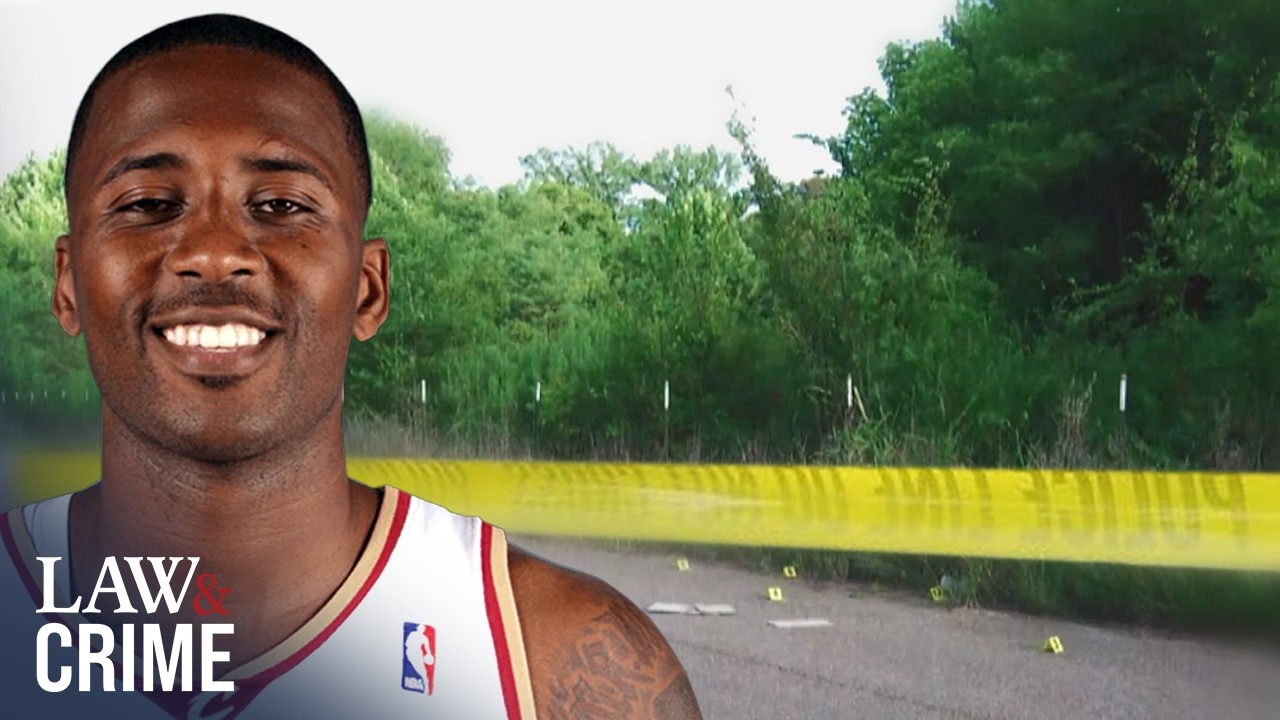
Killer Cases: NBA Star Lured to Execution In Rural Tennessee
"The decade-long cold case of NBA star Lorenzen Wright's murder was cracked through a persistent mother, a jailed informant, and a covert police operation that recovered the murder weapon from a lake and exposed a conspiracy driven by greed."