Nos sentenciaron a pena de muerte: vivimos esperando nuestra ejecución | Rosy y Dora #Penitencia 187
YouTube · r2PoXaCwWN0
Quick Read
Summary
Takeaways
- ❖Rosy and Dora were sentenced to death in the U.S., a penalty not present in Mexico or Latin America.
- ❖Early death row conditions involved extreme isolation in 'cages,' with minimal privileges and constant supervision.
- ❖Both women describe profound struggles with guilt and self-forgiveness related to their crimes.
- ❖Dora's death sentence was commuted to life imprisonment, but she perceived little difference, as both mean dying in prison.
- ❖Prison conditions have evolved, offering more activities and social interaction, but adjusting to these changes after decades of isolation is challenging.
- ❖Family support is a critical 'motor' for inmates like Rosy, while Dora's family avoids visiting due to denial of her incarceration.
Insights
1The Psychological Burden of Death Row and Life Imprisonment
Rosy and Dora describe the immense psychological impact of their sentences. Rosy, still on death row after 32 years, struggles with self-forgiveness and relies on her family as her 'motor' to continue living. Dora, whose death sentence was commuted to life, found the change almost negligible, stating that both sentences ultimately mean dying in prison. This highlights that for long-term inmates, the distinction between death and life imprisonment can blur into a shared fate of permanent confinement.
Rosy: 'hasta este día yo no me he perdonado.' [] 'La culpa que a veces es lo que me me a veces quiero terminar todo, pero pienso en mi familia.' [] Dora: 'La verdad, a mí para mí fue casi lo mismo. Es no no hubo cambio alguno.' []
2Evolution of Prison Conditions and Adjustment Challenges
Both women detail the drastic changes in prison conditions over their 30+ years. Initially, they lived in 'cages' with extreme isolation, no activities, and constant restraints. Over time, the system introduced more privileges, such as working, recreational activities (karaoke, painting), and more freedom of movement. However, Rosy, who recently moved out of the 'cage' in April, describes the adjustment as a 'shock' and experiences anxiety around more people, likening the previous experience to being an 'animalito en una jaula.'
Rosy: 'vivía en una jaula, jaula jaula.' [] 'no teníamos muchos privilegios.' [] Dora: 'acá tenemos podemos ver el el zacate, podemos ver el cielo... podemos salir en la noche hasta las 8 de la noche.' [] Rosy: '32 años en una jaula que y luego salir de repente así es un shock.' []
3The Role of Guilt and External Support in Incarceration
Guilt is a central theme for both women. Rosy admits she committed her crime while under the influence of drugs and struggles deeply with self-forgiveness, finding her family to be her only motivation. Dora's guilt intensified during her time in prison as she reflected on her actions. The presence or absence of family support significantly impacts their experience; Rosy's family has consistently visited, while Dora's family avoids her due to their denial of her incarceration, highlighting the varied external support systems for inmates.
Rosy: 'hasta este día yo no me he perdonado.' [] 'Yo creo que la culpa viene desde el principio cuando en mi parte cuando lo cuando lo hice.' [] Dora: 'Todavía tengo la culpa. Sí... ha ido en más en la cárcel que afuera.' [] Dora: 'mi familia no me visita... Es su negación a que yo estoy en la cárcel.' []
Lessons
- Reflect on the long-term psychological impact of incarceration and capital punishment on individuals.
- Consider the importance of family and external support systems for inmates and how their absence can exacerbate the challenges of imprisonment.
- Advocate for or support prison reform initiatives that focus on rehabilitation, mental health, and humane conditions, especially for long-term sentences.
Notable Moments
Rosy describes the initial death row living conditions as being confined in a literal 'jaula jaula de pájaro' (bird cage) with extreme isolation and no privileges.
This vivid description underscores the dehumanizing and restrictive nature of early death row, highlighting the stark contrast with current, albeit still confined, conditions.
Dora recounts her reaction to her death sentence being commuted to life imprisonment, stating it felt 'casi lo mismo' (almost the same) because she would still die in prison.
This moment reveals the profound psychological perspective of long-term inmates, where the distinction between death row and life imprisonment can become blurred, as both represent a life ending within prison walls.
Rosy expresses that after 32 years in a 'cage,' moving to a more open environment with other inmates was a 'shock' and caused anxiety, making her feel like an 'animalito en una jaula' when she was previously confined.
This illustrates the severe difficulty of adjusting to even minor increases in freedom and social interaction after decades of extreme isolation, emphasizing the deep psychological conditioning of long-term incarceration.
Quotes
"Yo en verdad en verdad sí creo en la pena de muerte."
"La verdad, a mí para mí fue casi lo mismo. Es no no hubo cambio alguno."
"uno se siente así a veces como un animalito en una jaula, que no podemos ir hasta que nos abran la jaula, hasta que nos den comer."
Q&A
Recent Questions
Related Episodes

A los 14, me drogaba con mi padre y vendía drogas con él | Octavio #Penitencia 189 #México
"Octavio, known as 'El Rayas,' shares a harrowing account of a childhood steeped in extreme violence, parental neglect, and a family history of abuse, addiction, and crime, revealing how these cycles shaped his path to incarceration."
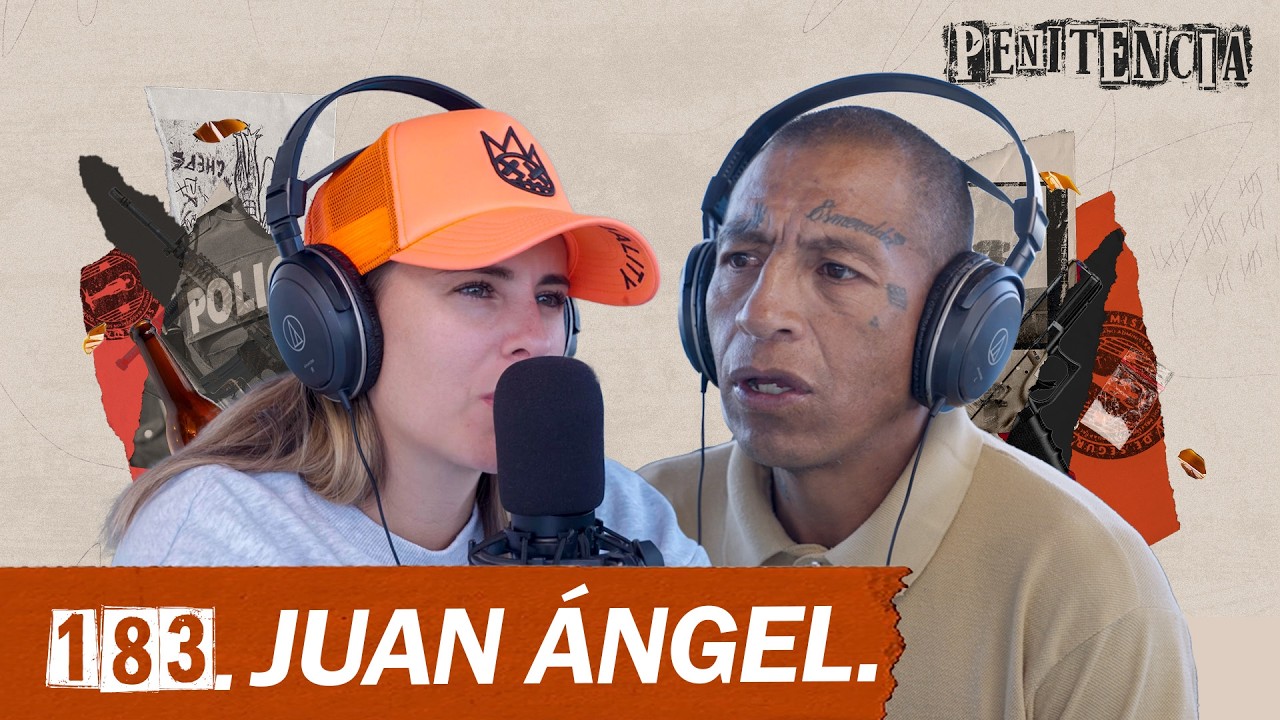
Maté por respeto: la cárcel se volvió mi hogar | Juan Ángel #Penitencia 183 #entrevista #México
"Juan Ángel's life story reveals a brutal cycle of violence, abandonment, and incarceration, where childhood trauma forged a path of crime and a desperate pursuit of respect through fear."

Somos hermanos y nos reencontramos en prisión | Christopher y Arturo #Penitencia 182
"Two brothers, Christopher and Arturo, recount their parallel lives of crime, absent fathers, and drug addiction, ultimately reuniting in prison after years apart, highlighting the cyclical nature of their circumstances."

Mackenzie & Her Dad’s Creepy Texts, Plus Her Weird Jail Calls with Mom | Mackenzie Shirilla
"This episode exposes the disturbing family dynamics of McKenzie Shirilla through her jail calls with her mother, revealing a focus on public perception over remorse, and delves into the controversial 'warm milk' texts with her father."