Copy of Roland, Howard Bryant talk "Kings and Pawns: Jackie Robinson and Paul Robeson in America"
YouTube · r7GvC_ej3vI
Quick Read
Summary
Takeaways
- ❖Paul Robeson, a towering figure in the 20th century, was intentionally erased from American history due to his political stances, not by accident or time.
- ❖Jackie Robinson was used as a 'pawn' by Branch Rickey and the government to counter Robeson's influence and prove Black American patriotism during the Red Scare.
- ❖Branch Rickey, often celebrated as a progressive ally, initially sought to integrate baseball with Latino players to avoid upsetting American segregation, only turning to Black American players out of necessity.
- ❖Black leadership faced immense pressure during the Cold War to decouple from pan-African and anti-colonial movements to avoid being labeled 'anti-American.'
- ❖The tactic of demanding patriotism to silence Black dissent and pit Black leaders against each other is a recurring theme in American history, from Robeson and Robinson to MLK and Kaepernick.
- ❖The 'illusion of merit' persists, where Black individuals are judged on merit while white counterparts are hired for 'comfort,' regardless of qualifications.
- ❖Despite their public opposition, Jackie Robinson and Paul Robeson ultimately converged in their critique of America, recognizing the country's failure to love them back.
- ❖The Negro Leagues represented major league talent, and their marginalization was due to white economic power, not a lack of skill.
Insights
1The Intentional Erasure of Paul Robeson
Paul Robeson, a multi-talented Renaissance man (singer, athlete, lawyer, actor, activist), was a titanic figure and the 'number one Black voice in America' in the mid-20th century. Despite his immense influence, he was intentionally written out of American and Black history due to his unabashed progressive, anti-capitalist, and pro-Soviet views during the Cold War. This erasure was a 'massive campaign' to silence a powerful dissenting voice.
Host Roland Martin and guest Howard Bryant discuss how many people, including younger generations and even their own, have no clue how huge Robeson was, despite his death in 1976. Bryant notes that even when he told Black people about his book, many hadn't heard of Robeson. (, , , , )
2Jackie Robinson as a Strategic Counter to Robeson
The US government and figures like Branch Rickey strategically placed Jackie Robinson in opposition to Paul Robeson. Robinson, initially not a national political figure, was pressured to testify against Robeson in front of the House Un-American Activities Committee (HUAC) in 1949. This move aimed to counter Robeson's powerful voice and prove Black American patriotism, leveraging Robinson's loyalty to Rickey and his belief in America's potential.
Bryant recounts how he repeatedly read about Robinson testifying against Robeson and realized the significance of two titanic Black figures being placed in opposition. He explains that Robeson's voice was so big that to counter it, they turned to Jackie Robinson. (, , , , )
3Branch Rickey's Complex Motivations for Baseball Integration
Branch Rickey, often hailed as a progressive ally for integrating baseball, had complex and self-interested motivations. He initially had 'no intention of upsetting American segregation' and spent $25,000 scouting Latino players in Mexico, Venezuela, Cuba, and the Dominican Republic, believing they could integrate baseball without challenging the racial status quo in the US. He only turned to Black American players like Jackie Robinson when he realized they were the best available talent.
Bryant reveals that newly released transcripts from 1943 baseball winter meetings show Rickey planning something, but his true intentions were not integration. Rickey 'hated black baseball' and 'had no respect for black baseball.' He admitted in a 1955 interview that he spent $25,000 looking for non-American players to integrate. (, , , )
4The Cold War's Impact on Black Leadership and Pan-Africanism
During the Cold War, Black leadership in the United States, including organizations like the NAACP and the Urban League, strategically decoupled from African independence and anti-colonial movements. This was done to avoid being labeled 'anti-American' or communist, which was 'kryptonite' to their civil rights efforts at home. This decision stifled the potential for a unified, pan-African movement that Robeson and W.E.B. Du Bois advocated.
Bryant explains that Black leadership in 1949 post-war America was trying to fight segregation while simultaneously proving their Americanism amidst the Red Scare. He notes that Black leadership 'did decouple from those movements because they didn't want to be called anti-American.' (, , )
5The Illusion of Merit and the Preference for Comfort
American society, particularly in business and institutions, often prioritizes 'comfort' over 'merit' when it comes to Black individuals. Despite exceptional qualifications, Black professionals are frequently dismissed or labeled (e.g., 'DEI hire'), demonstrating that the system often foregoes financial gain or talent to maintain existing racial structures and comfort levels for the dominant group.
Bryant states, 'We spend a lot of our time trying to prove merit. They hire for comfort. We talk about merit. They talk about comfort.' He cites the example of Elliot Williams, a Black professional with three Ivy League degrees, still being called a 'DEI hire.' (, , )
Bottom Line
The 'meeting is not the reward' for Black communities seeking progress or equity from dominant institutions.
Historically, Black leaders have been placated with access or discussions that ultimately yielded no substantive change, serving only to 'slow down the protest' or 'buy time' for the establishment. This pattern continues today, where engagement is mistaken for progress.
Black leaders and organizations must redefine success metrics beyond mere access, focusing on tangible outcomes, resource allocation, and structural change rather than symbolic gestures or 'meetings' that lack real power.
Baseball owners in 1945 believed Jackie Robinson's success would lead to an 'existential crisis financially' for the sport, fearing Black fans would drive away white fans and ruin franchise values.
This reveals that resistance to integration was not just about prejudice but a calculated economic fear, mirroring 'white flight' in housing. It demonstrates that financial incentives are often secondary to maintaining racial hierarchy and comfort for the dominant group.
Analyzing historical and contemporary resistance to diversity and inclusion through an economic lens, beyond simple prejudice, can uncover deeper systemic motivations and allow for more effective counter-strategies that address both financial and social concerns.
Paul Robeson was initially brought to speak to major league owners in 1943 as a 'voice of reason' to put down a planned protest by the Black press, mirroring how Jackie Robinson was later used to quell dissent.
This highlights a recurring tactic: using prominent Black figures to manage or neutralize Black activism, often by offering a platform that appears to be progress but is actually a strategic move to maintain the status quo and avoid genuine confrontation.
Activists and leaders should be acutely aware of how their platforms might be co-opted or used to defuse broader movements, requiring careful discernment of intentions and a commitment to collective goals beyond individual recognition.
Opportunities
Rebuilding Black-Owned Institutions and Media
Establish and strengthen Black-owned media, sports leagues, and other institutions to ensure Black people have 'access and agency of their own story' and can express themselves on their own terms, rather than being excluded or having their narratives controlled by mainstream entities. This includes investing in infrastructure, talent, and distribution channels for Black content creators and entrepreneurs.
Lessons
- Critically examine historical narratives, especially those presented as universally positive, to uncover hidden complexities, self-serving motivations, and intentional omissions of dissenting voices.
- Support and invest in Black-owned media and institutions to ensure that Black stories are told by and for Black people, providing agency and counter-narratives to mainstream portrayals.
- Recognize and challenge the tactic of demanding patriotism from marginalized groups to silence their critiques of systemic injustice, understanding it as a historical strategy to maintain the status quo.
- Question the 'illusion of merit' in professional and social contexts, acknowledging that 'comfort' and existing power structures often override objective qualifications, particularly for Black individuals.
Notable Moments
The revelation that Paul Robeson and Jackie Robinson, two titanic Black figures of the 20th century, never actually met.
This fact underscores the profound and deliberate nature of their strategic opposition and Robeson's isolation. Paul Robeson Jr.'s explanation that his father intentionally avoided Robinson to protect him from the toxicity surrounding Robeson's own life highlights the immense personal sacrifices made by these figures.
The discovery of previously unreleased transcripts from the December 3, 1943, baseball winter meetings, where Paul Robeson addressed owners about integration.
These transcripts provide concrete evidence of Robeson's early efforts to integrate baseball and reveal Branch Rickey's initial, self-serving intentions, challenging the long-held, simplified narrative of baseball integration.
Quotes
"It is crazy to me that this Renaissance man who singer, athlete, lawyer, actor, activist, all of this is essentially written out not only American history but black history."
"You've got two of the most titanic black American figures... and they were placed in opposition to each other in front of the entire country. And I kept it moving."
"You can't erase somebody like that by accident. Time didn't just erase him. It was intentional."
"If you have somebody that big who's also that erased, the massive campaign required to erase him, what it took to actually erase him."
"The black man who is willing to criticize another black person publicly will have a job for life."
"We spend a lot of our time trying to prove merit. They hire for comfort. We talk about merit. They talk about comfort."
"We are Americans and we love this country, but we are reminded in so many heartbreaking ways that it does not love us."
"You have to have some lane where you have access and agency of your own story, whether it be your own baseball leagues... it's not being a segregationist, it's having agency."
Q&A
Recent Questions
Related Episodes

A major shift is happening right now
"Donald Trump is losing his grip on the Republican party and movement, evidenced by internal dissent and a broader political landscape grappling with a collapse of accountability and truth."
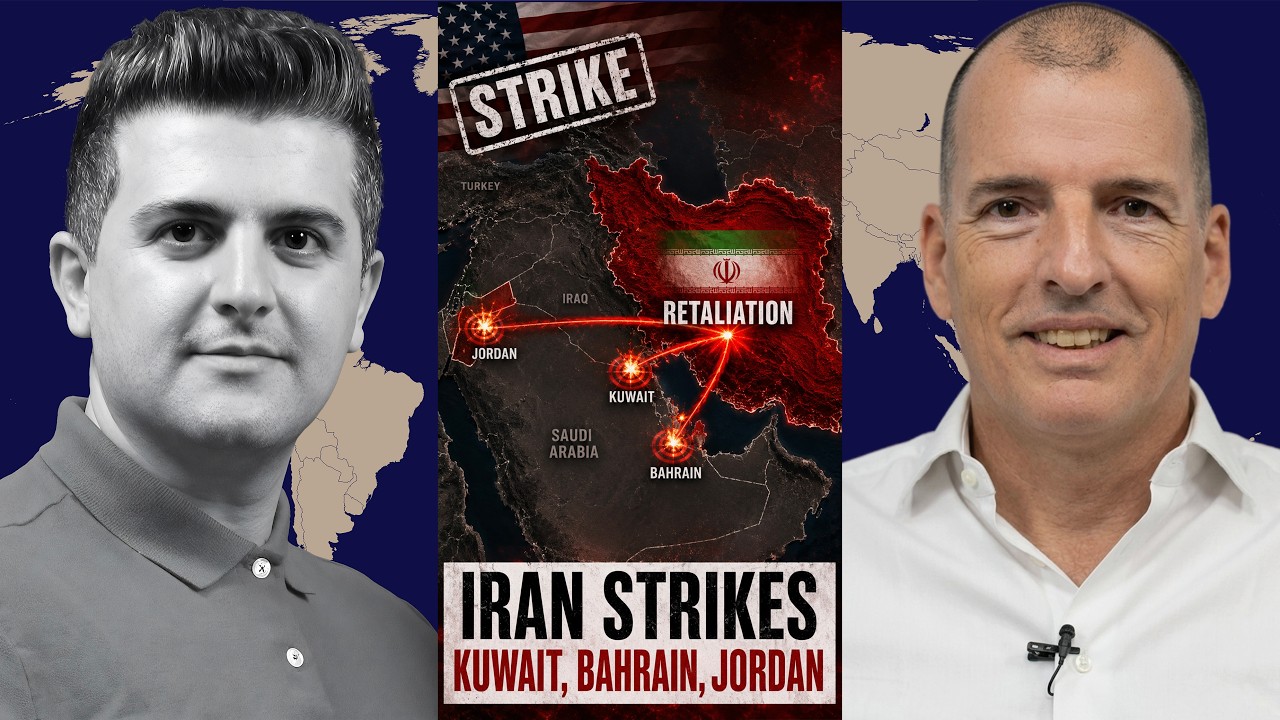
Alex Krainer: US STRIKES Iran – Iran RETALIATES Against Kuwait, Bahrain & Jordan!
"Amidst escalating US-Iran conflict and Iranian retaliation against regional US allies, this episode argues that US foreign policy is deeply controlled by an 'Anglo-Zionist conspiracy' led by the Rothschild banking dynasty, prioritizing Israeli interests over American ones."

The Lindbergh Conspiracies | Post Mortem
"Explore the enduring mystery of the 1932 Lindbergh kidnapping, from the compromised investigation and Bruno Hauptmann's unfair trial to Charles Lindbergh's controversial character and the modern resurgence of conspiracy theories."

Trump Just ENDED JD Vance’s White House Dreams
"A New York Times article and internal White House dynamics reveal Donald Trump's deep dissatisfaction with J.D. Vance, potentially ending Vance's 2028 presidential ambitions and highlighting a broader struggle for control within the Republican Party."