
Alastair Crooke: Trump’s Final Gamble: Iran Dares to Strike Back
YouTube · rSvsMr-wnq0
Quick Read
Summary
Takeaways
- ❖Netanyahu trapped Trump into prioritizing Iran's ballistic missiles and proxies over its nuclear program, threatening to 'deny kosher certificate' to any 'fudged' deal.
- ❖US-Iran talks are currently 'negotiating about negotiations,' with Iran seeking sanctions relief and the US offering only threat alleviation.
- ❖US military experts doubt America's ability to sustain a prolonged war with Iran due to air defense limitations and logistical challenges (e.g., carrier maintenance, missile reloading at sea).
- ❖Iran has significantly enhanced its air defense capabilities with Chinese technical assistance, including stealth-detecting radar and direct, secure satellite data links for real-time targeting.
- ❖Western analysts exhibit 'cognitive ignorance,' failing to understand that external attacks galvanize Iranian nationalism and patriotism, rather than fostering regime change.
- ❖The conflict extends beyond Iran, encompassing a broader struggle for global energy dominance and corridors, with Russia and China opposing a 'new colonial era' of Western hegemony.
- ❖Israel's pursuit of a 'Pax Judeaica' (regional domination) is creating new enemies, including Turkey and even pushing Saudi Arabia to view the UAE as a 'Trojan horse' for Israeli influence.
Insights
1Netanyahu's Strategic Trap for Trump
Netanyahu successfully persuaded Trump to shift focus from Iran's nuclear program to its ballistic missiles and regional proxies (Hezbollah, Yemen, Hamas). This redefinition of 'red lines' was a deliberate trap, ensuring that any US-Iran nuclear deal would be deemed insufficient by Israel, thereby limiting Trump's diplomatic options and pushing towards confrontation. Netanyahu explicitly warned Trump that Israel would not accept a 'fudged' nuclear deal and reserved the right to 'go it alone,' pulling the US into a disorganized war.
Netanyahu's discussions with Trump at Mar-a-Lago on December 28th, where he outlined four red lines: missiles, proxies, zero enrichment, and Hamas disarmament. He used the term 'kosher certificate' to signify Israeli approval.
2US Military Limitations Against Iran
Despite a significant military buildup, US forces are not equipped for a prolonged war of attrition against Iran. Military experts assess that US air defenses lack the depth to last more than a few days. Aircraft carriers like the USS Ford have mechanical issues, and destroyers cannot reload air defense missiles at sea, requiring a multi-day journey to a port like Diego Garcia if regional ports are inaccessible. This severely limits sustained offensive operations.
Guest cites military experts like Will Scriber, referencing the 12-day war with Israel where air defense missiles were quickly depleted, and issues with the USS Ford carrier.
3Iran's Enhanced Defense Capabilities with Chinese Assistance
Iran has dramatically upgraded its air defense systems with Chinese technical assistance. This includes long-range radars capable of detecting stealth aircraft and a shift from GPS to the Chinese BeiDou (Bo) system. Crucially, Iran has direct, encrypted, high-grade military data links to the Chinese satellite system, providing real-time, online targeting information. This makes US jamming efforts less effective and significantly complicates any air attack.
Discussion of Chinese long-range radar, Bo system, and direct military data links from Chinese satellites, with examples of Chinese publishing pictures of US aircraft at bases like Diego Garcia.
4Western Misunderstanding of Iranian Resilience
Western analysts and policymakers suffer from 'cognitive ignorance,' failing to grasp that external military attacks or attempts at 'regime change' do not weaken the Iranian state but instead galvanize nationalism, patriotism, and collective unity. They incorrectly assume Iran would collapse under pressure, akin to expecting Americans to demand regime change after 9/11. This misunderstanding leads to flawed strategic planning and underestimation of Iran's societal cohesion.
Comparison to 9/11's effect on American unity and the observation that the June attack on Iran brought the country together, rather than fueling a desire for regime change.
5The Broader Geopolitical Conflict: Hegemony vs. Multipolarity
The potential conflict with Iran is part of a much larger global struggle. The US aims to dominate energy fields, naval passages, and impose a siege on Iran, Russia, and China. This is framed as an attempt to establish a 'Pax Judeaica' (Israeli hegemony) in West Asia, backed by the US, which is met with strong pushback from regional powers like Turkey (with its 'Greater Ottoman project') and the BRICS nations. China, in particular, is taking quiet but significant measures to challenge US dollar hegemony and economic dominance.
Discussion of US determination to dominate energy, corridors, and naval passages; Israel's 'Pax Judeaica' project clashing with Turkey's 'Greater Ottoman project'; Saudi Arabia's antagonism towards UAE/Israel; and China's economic measures like disinvesting in treasuries and promoting digital RMBBI.
Bottom Line
The US military's inability to reload vertical missile launch systems at sea means that after expending its limited air defense missiles, naval vessels would need to steam for days to a distant port like Diego Garcia, creating critical vulnerabilities and operational delays in a sustained conflict.
This logistical constraint severely limits the duration and intensity of US naval air defense operations, making a 'quick in-out' strike highly risky and a prolonged engagement potentially disastrous for US naval assets in the region.
For adversaries, understanding this limitation allows for strategic targeting of US naval assets after initial missile expenditure, or for exploiting the time window required for resupply.
China is providing Iran with direct, encrypted, highest-grade military data links to its satellite system, enabling real-time targeting information for Iran's missile and air defense systems, and potentially sharing undersea mapping data for American and Israeli submarines.
This level of strategic intelligence sharing fundamentally alters the balance of power, significantly enhancing Iran's defensive and offensive capabilities against technologically superior adversaries, and making traditional US jamming techniques less effective. It indicates a deeper, more active Chinese role in supporting anti-hegemonic forces.
This signals a new era of proxy technological warfare, where major powers indirectly arm and support regional actors with advanced capabilities, creating opportunities for defense contractors specializing in anti-stealth, anti-jamming, and secure satellite communications for non-Western alliances.
The 'Pax Judeaica' project (Israeli regional hegemony) is inadvertently creating new enemies, including former allies or neutral states like Saudi Arabia and Turkey, who now perceive Israel's actions as a threat to their own regional ambitions and sovereignty.
This shift in regional alliances complicates US strategic objectives, as it can no longer rely on a unified front against Iran. It creates a more fragmented and unpredictable Middle East, where former partners may actively work against US-Israeli interests.
For non-Western powers, this offers opportunities to forge new alliances and deepen existing ones with disaffected regional states, further challenging US influence and accelerating the shift towards a multipolar world order.
Key Concepts
Cognitive Ignorance
The inability of Western analysts and policymakers to understand the cultural, emotional, and metaphysical drivers of non-Western societies, leading to flawed assumptions (e.g., that external attacks will cause regime collapse rather than national unity) and 'mechanical thinking' that oversimplifies complex geopolitical realities.
The Kosher Certificate Metaphor
A metaphor used by Netanyahu to describe Israel's power to legitimize or delegitimize US foreign policy actions regarding Iran, implying that without Israel's endorsement ('kosher certificate'), a US deal would lack 'Talmudic legitimacy' and face significant opposition from the American right-wing.
Lessons
- Re-evaluate the efficacy of 'quick strike' military operations against well-defended, nationally unified states, considering the potential for prolonged, resource-intensive conflicts.
- Investigate the implications of advanced satellite-linked targeting systems and anti-stealth technologies on future air superiority doctrines and naval warfare strategies.
- Develop deeper cultural and cognitive intelligence capabilities to avoid misinterpreting adversary motivations and societal resilience, especially in regions with complex historical and metaphysical frameworks.
Quotes
"My assessment is basically we should not pay much attention to what people are saying. Um, that includes Iranians and Americans because we're obviously close to a war and so we will be inundated with people trying to prepare psychologically and prepare um the situation uh for that purpose saying things whether they mean them or they don't mean them."
"He warned Trump very carefully at that time and said, you know, we won't um accept a pudged nuclear deal. We're not going to have a fudge. Um, uh and I can tell you u Mr. Trump that if you do that um we will go against you. Um we will not endorse your fudge. In fact we may come out opposing your fudge. Now, we don't have a veto in the United States. Exactly. But, you know, the right wing of America actually looks to Israel um on these issues and sets the tone for it. And if you don't accept this uh then we reserve the right to go it alone. And if we go it alone, let's see you stay out of the war. you won't be able to. You'll be pulled into the war, but you'll be pulled in in a disorganized way, not in a in a in a cooperative way, which would be what we need."
"What Iran is negotiating for is a lifting of tariffs and sanctions and economic um strangulation on the country. Not some, you know, that the, you know, fleet of ships would sail another 500 kilometers away from the Iranian coast. And they say, 'See, we've done that. Now you have to give more concessions on the nuclear issue.'"
"If you ask any American what was the effect of 9/11 on the American people, they would say we all came together. We came together as Americans and we determined that, you know, we were going to do something about what had happened to us. Did they collapse and demand regime change in America? Absolutely not. just the opposite. Yet they cannot make that cognitive jump when it comes to Iran."
Q&A
Recent Questions
Related Episodes

Pentagon Prepares For EXTENDED War With Iran
"This episode dissects the geopolitical maneuvers surrounding potential US-Iran conflict, revealing strategic leaks, Netanyahu's diplomatic sabotage playbook, and the true intent behind economic sanctions."

Patrick Henningsen: Hezbollah JUST Fired Back at Israel - Iran Vows to “Crush” All Attacks
"Patrick Henningsen argues that the US and Israel initiated an illegal war against Iran, driven by Trump's incompetence and Israeli influence, leading to an inevitable escalation with severe global economic repercussions."

Robby Soave GOES OFF On ANNOYING Liberal Black Woman Making Emotional Trump Deranged Arguments!
"The host dissects a heated foreign policy debate, arguing that 'left-wing' emotionalism and 'Trump derangement' prevent a rational understanding of US sanction strategies against Cuba and Iran."
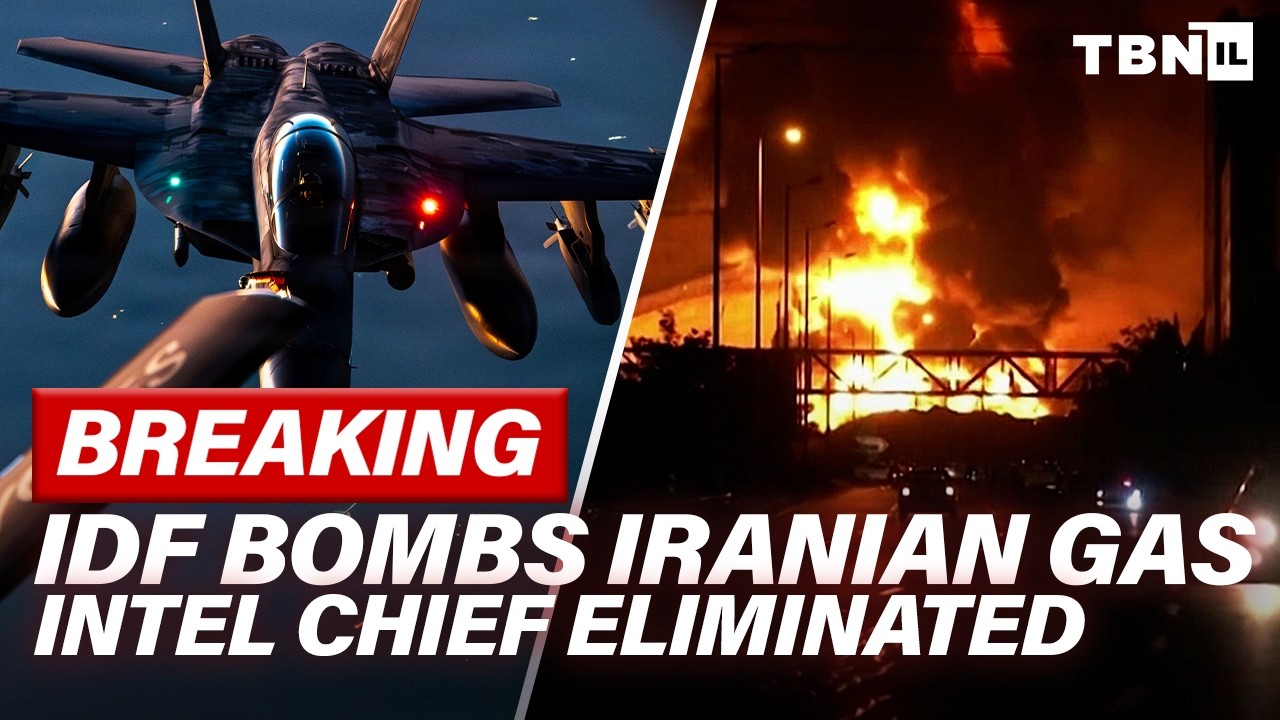
BREAKING: Israel BOMBS Major Iran Gas Site; Top Mullah ELIMINATED; Iran Vows VENGEACE | TBN Israel
"Israel and the United States have escalated their 'Roaring Lion War' against Iran, striking its largest gas facilities, eliminating key intelligence and military figures, and disrupting missile production, while Iran threatens a broader energy war in the Gulf."