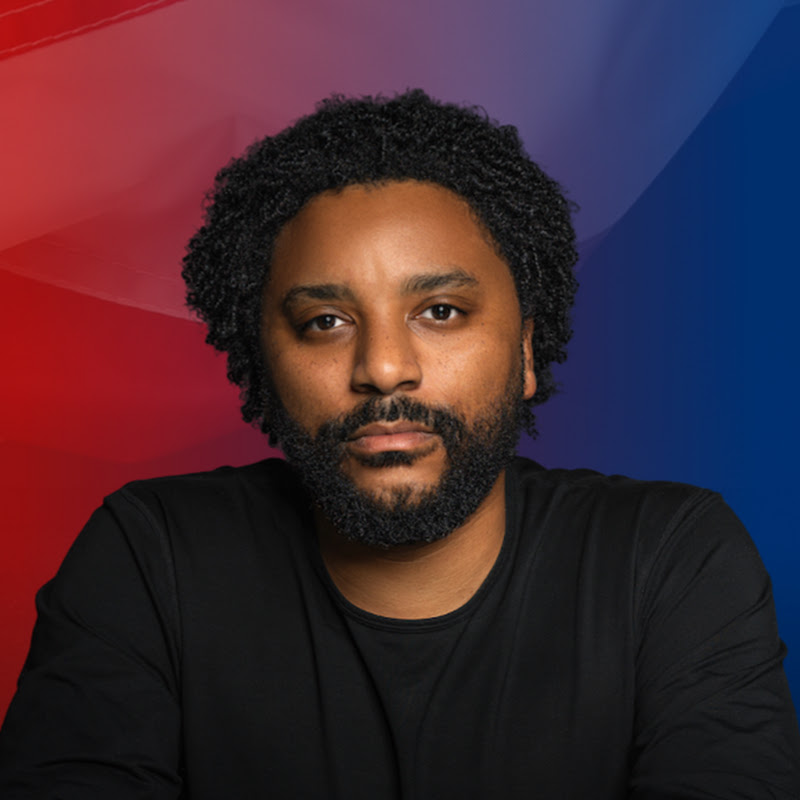
Ex Special Agent drops shocking admission as an FBI Civil War ERUPTS
YouTube · sQSWqAFM8eI
Quick Read
Summary
Takeaways
- ❖The guest, Nicole Parker, was motivated to join the FBI after witnessing 9/11, seeking to serve her country.
- ❖She identifies two distinct factions within the FBI: 'FBI 1' (dedicated, constitutional agents) and 'FBI 2' (politically weaponized social justice warriors).
- ❖The turning point for the FBI's political weaponization was Director James Comey's 2016 statement on Hillary Clinton's email investigation.
- ❖Public distrust directly impacted agents' ability to recruit confidential sources for critical cases like human trafficking.
- ❖The Mar-a-Lago raid solidified the guest's decision to leave the FBI, viewing it as an abuse of power for political reasons.
- ❖Current FBI leadership under Director Cash Patel is actively working to 'obliterate FBI 2' and restore the agency's core mission and morale.
- ❖The previous administration prioritized January 6th 'misdemeanors' over significant national security threats and violent crime.
- ❖DEI (Diversity, Equity, and Inclusion) initiatives and numerous internal 'clubs' within the FBI were seen as major distractions from the agency's mission.
- ❖The guest advocates for hiring the 'most qualified individuals' regardless of demographics, emphasizing diversity of backgrounds (engineers, pilots, doctors, etc.).
- ❖The FBI's failure to provide an after-action review for agents killed in the line of duty, while flooding inboxes with DEI emails, highlighted a severe misplacement of priorities.
- ❖The Epstein case is complex and has seen political backfiring, with the guest emphasizing justice for victims and equal enforcement of the law.
- ❖In Minnesota, the governor's unwillingness to cooperate with federal agencies (ICE) and alleged incitement of agitators is viewed as a significant mistake.
Insights
1Political Weaponization of the FBI
Former Special Agent Nicole Parker identifies July 5, 2016, when then-Director James Comey declared no reasonable prosecutor would charge Hillary Clinton, as the defining moment the FBI became a political pawn. This decision, outside his prosecutorial lane, signaled a shift that concerned many 'FBI 1' agents.
Guest's direct experience and observation of internal sentiment following Comey's statement.
2Erosion of Public Trust Hindered Operations
The FBI's perceived political bias directly impacted its operational effectiveness. The guest recounts a confidential source refusing to work with the FBI on a human trafficking case, explicitly citing distrust due to the agency's focus on 'going after President Trump' instead of its core mission. This indicated that the problem was no longer confined to D.C. but affected field operations nationwide.
Personal anecdote of a confidential source's refusal to cooperate due to distrust in the FBI's political motives.
3Mar-a-Lago Raid as a Catalyst for Departure
The August 8th Mar-a-Lago raid, though not directly involving the guest, was a critical event that solidified her decision to leave the FBI. She viewed it as a clear instance of the FBI abusing its power for political reasons, targeting conservatives and Republicans while turning a blind eye to Democrats, fundamentally betraying the principle of Lady Justice being blind.
Guest's personal reaction and interpretation of the Mar-a-Lago raid as a political act, leading to her resignation.
4Shift in FBI Priorities Under New Leadership
The guest credits current FBI Director Cash Patel with actively working to dismantle 'FBI 2' (the politically weaponized faction) and restore the agency's focus. This includes re-prioritizing serious threats over 'misdemeanors' like January 6th, which she describes as a major misallocation of resources under the previous administration. She points to an increase in captured 'most wanted' individuals as evidence of this shift.
Guest's assessment of Director Patel's actions, including stripping out clubs/organizations and refocusing on violent crime, and the reported increase in 'most wanted' captures.
5DEI Initiatives and Internal Clubs as Mission Distractions
The guest observed that Diversity, Equity, and Inclusion (DEI) initiatives and numerous internal clubs became a higher priority than the FBI's core mission. She felt these programs distracted agents and led to unqualified hires, particularly women and minorities, who then had to constantly prove their competence. She highlights the absence of an after-action review for agents killed in the line of duty, contrasted with a constant flow of DEI emails, as a 'sickening' misplacement of priorities.
Guest's personal experience with DEI emails, the lack of an after-action review for fallen agents, and her observation of unqualified hires in the name of 'checking boxes.'
Bottom Line
The perceived political weaponization of the FBI directly undermined its ability to execute critical law enforcement functions, such as recruiting confidential human sources for violent crime and human trafficking investigations.
When a federal agency loses public trust due to perceived political bias, its operational effectiveness is severely compromised, potentially allowing serious criminals to evade justice and endangering communities.
Rebuilding public trust requires not just internal reform but transparent communication from the FBI about its renewed commitment to apolitical law enforcement and its successes in combating serious crime, rather than focusing on politically charged narratives.
The guest's 'Two FBIs' framework suggests that internal factions can lead to a fundamental misalignment of an organization's mission, where a 'politically weaponized' segment actively works against the 'mission-focused' segment.
This internal conflict can paralyze an organization, divert resources, and create an environment where dedicated employees feel unfulfilled or compelled to leave, ultimately weakening the institution from within.
Leaders in any large organization, especially those with public trust mandates, must actively identify and dismantle internal factions that prioritize political agendas or non-core activities over the primary mission, fostering a culture of meritocracy and shared purpose.
Key Concepts
The Two FBIs
This model describes an internal division within the FBI: 'FBI 1' represents dedicated, mission-focused agents committed to upholding the Constitution and protecting Americans, while 'FBI 2' comprises politically weaponized social justice warriors who derail the agency's true mission and erode public trust.
Lessons
- Recognize that federal law enforcement investigations, especially complex corruption or white-collar cases, inherently take significant time due to legal processes like subpoenas and search warrants. Patience is required, but accountability remains crucial.
- Understand the distinct roles of the FBI (investigation, facts), DOJ (charging decisions), and grand juries/trial juries (indictment/conviction) in the justice system. Not all outcomes are solely within the FBI's control.
- Prioritize merit and qualifications over demographic quotas in hiring and promotion for critical roles, particularly in law enforcement and national security, to ensure competence and maintain public confidence.
Notable Moments
Witnessing 9/11 at 23 years old in New York City, which inspired the guest to eventually join the FBI to serve her country.
This personal experience highlights a common motivation for public service and provides context for her later disillusionment with the agency's direction.
A confidential human source refusing to work with the FBI on a human trafficking case, explicitly stating distrust due to the agency's perceived political focus on President Trump.
This anecdote powerfully illustrates how the erosion of public trust directly impacted the FBI's ability to perform its core duties, moving the problem beyond D.C. politics into real-world crime fighting.
The FBI's failure to provide an after-action review for two agents killed in the line of duty, including her best friend, while simultaneously flooding inboxes with DEI initiative emails.
This moment underscores the guest's perception of a severe misplacement of priorities within the FBI, where administrative and social agendas overshadowed agent safety and mission-critical analysis.
Quotes
"There really were two FBIs. FBI one were the amazing FBI agents working to protect the American people, uphold the Constitution, and do the right thing for the right reason. But I started noticing FBI two and those were the politically weaponized social justice warriors that really derailed the FBI's mission."
"When you don't have the trust of the American people, you're done. And when you don't have the trust of internal FBI one employees, you're done."
"It wasn't that it was President Trump or not President Trump. It's that the FBI was abusing their power and going after people for political reasons. And in this instance, it was President Trump and they did go after conservatives and they did go after Republicans and they did turn a blind eye to Democrats."
"I didn't sign up to become a social justice warrior at the FBI, but that's how it started to feel is that I work for some club."
"When I want to see diversity at the FBI, it's diversity of backgrounds. I want to see engineers, pilots, doctors, finance individuals, attorneys, law enforcement, military. That's the kind of diversity that I am all about because you do need that."
Q&A
Recent Questions
Related Episodes

SHOCK LIVE: MAGA COLLAPSES, GHISLAINE MAXWELL PRISON FOOTAGE LEAKS!
"This episode dissects conservative outrage over the Bad Bunny Super Bowl halftime show, debates Don Lemon's arrest as journalistic suppression, exposes GOP hypocrisy on gay marriage and Trump, and questions the motives behind Ghislaine Maxwell's prison transfer and deposition silence."

Trump Just ENDED JD Vance’s White House Dreams
"A New York Times article and internal White House dynamics reveal Donald Trump's deep dissatisfaction with J.D. Vance, potentially ending Vance's 2028 presidential ambitions and highlighting a broader struggle for control within the Republican Party."

🚨 HOLY F*CK HE WAS RIGHT 😂😂😂
"The host celebrates perceived conservative victories and the exposure of 'leftist' and 'communist' elements in American politics and culture, from Trump's enduring influence to alleged government fraud and societal decay."

🚨 LEFTISTS ARE F*CKING SEETHING 😂😂😂
"The host aggressively celebrates perceived 'wins' for the right-wing, from global conflicts and domestic politics to cultural shifts, framing them as a 'humiliation' for the 'leftist world order' and a testament to Donald Trump's influence."