
Big Oil's $23B Hormuz Exploits; Trump Botches Iran Peace Talks w/ Alex Jacquez, Matt Duss | MR Live
YouTube · t6qdOB1bUuI
Quick Read
Summary
Takeaways
- ❖Oil companies, including Exxon, Shell, and Chevron, are experiencing massive windfall profits (e.g., Exxon expecting nearly $9 billion internally in Q2/Q3) due to elevated oil prices, largely driven by geopolitical instability, without increasing production capacity.
- ❖These profits are primarily returned to shareholders through buybacks, with Exxon planning a $20 billion buyback and Shell $3 billion/month.
- ❖The Trump administration's approach to Iran and the Strait of Hormuz has inadvertently created a favorable environment for US oil companies, who benefit from higher global prices without increased operational costs or risks.
- ❖The Abraham Accords, brokered by the Trump administration and continued by Biden, failed to achieve lasting peace, instead marginalizing the Palestinian issue and primarily serving to boost arms sales and integrate countries into Washington's lobbying efforts.
- ❖The Biden administration is criticized for its outdated Cold War-era foreign policy approach, particularly its failure to rejoin the Iran nuclear deal (JCPOA) and its continued reliance on military alliances.
- ❖High oil prices are driving inflation across the economy, impacting food prices due to increased diesel costs for transportation and fertilizer production issues, with no expectation of gas prices returning to $3/gallon before 2027.
- ❖A growing number of prominent Democrats, including Senators Chris Van Hollen and Brian Schatz, are publicly calling for a change in the Democratic foreign policy establishment, criticizing advisors who 'whitewashed the truth' and contributed to current policy failures.
Insights
1Big Oil's Windfall from Geopolitical Instability
Oil companies like Exxon, Shell, and Chevron are generating billions in windfall profits due to sustained high oil prices, largely influenced by geopolitical tensions such as the conflict involving Iran and the Strait of Hormuz. These companies are not reinvesting these profits into increasing refining or production capacity but are instead returning capital to shareholders through massive stock buybacks. This practice contributes to inflation by keeping supply constrained while demand remains high.
Exxon expects nearly $9 billion in internal profits for Q2 and Q3. Exxon's stock is up 28% year-to-date and 40% year-over-year. Exxon and Chevron are planning a $20 billion buyback, and Shell is doing $3 billion a month in buybacks. The EIA (Energy Information Administration) forecasts crude oil prices will not fall below $80 a barrel until 2027, and gas prices will not return to $3 a gallon in their forecast.
2Failure of the Abraham Accords and US Middle East Policy
The Abraham Accords, initiated by the Trump administration and embraced by the Biden administration, are critiqued as a fundamentally flawed foreign policy initiative. They were designed to marginalize the Palestinian issue, under the false premise that Arab nations would normalize relations with Israel without movement on Palestinian liberation. The primary beneficiaries were arms sales and the integration of signatory countries into Washington's lobbying ecosystem, rather than genuine peace or regional stability. Saudi Arabia, unlike smaller states like the UAE, maintained its stance that normalization requires progress on the Palestinian issue.
The UAE and Bahrain joined the Accords, having an existing behind-the-scenes relationship with Israel. The main prize for signatories was access to Washington's lobbying coalition and increased arms sales. Saudi Arabia has consistently stated it cannot normalize relations with Israel without tangible movement on the Palestinian issue. The Biden administration's continued pursuit of Saudi-Israel normalization after October 7th is seen as a doubling down on a failed theory.
3Biden Administration's Outdated Foreign Policy and Missed Opportunities
President Biden's foreign policy approach is characterized as being 'trapped in amber' from the Cold War era, relying on outdated concepts of military alliances and failing to adapt to a changing global landscape. This is evident in his administration's decision to slow-walk and ultimately fail to rejoin the Iran nuclear deal (JCPOA), despite campaign promises, and its continued emphasis on military-to-military relationships as a means to maintain global hegemony and 'box China out' of regions like the Middle East. This approach has led to missed opportunities for de-escalation and contributed to current conflicts.
Biden's reputation as a foreign policy expert is tied to the late 80s/early 90s. He consistently downplayed the Palestinian issue. His administration failed to rejoin the JCPOA, despite his 2020 pledge, leading to a more hardline Iranian government. The 'America is back' slogan and focus on alliances like NATO and AUKUS reflect a Cold War mindset. The effort to 'box China out' of the Middle East is seen as bizarre, given China's lack of interest in replacing the US as a regional security guarantor.
4Rising Inflation and Supply Chain Vulnerabilities
Beyond direct energy costs, high oil prices are fueling broader inflation through increased diesel costs, which impact the transportation of goods and food. This, combined with issues like nitrogen supply affecting fertilizer production, is leading to higher food prices. Furthermore, geopolitical disruptions and natural disasters (like a 'super El Nino') threaten critical supply chains for components like semiconductors and specialized gases, adding further cost pressures and uncertainty to the economy.
Food at home (CPI category) was up past 3% last month and is expected to rise further. 80% of US food is distributed by truck, making diesel costs a direct inflation driver. Fertilizer costs are hitting farmers, predicting another food shock in the fall. The war has disrupted supplies of valuable gases like helium and neon, critical for semiconductor manufacturing. Natural disasters like the 'super El Nino' threaten crops, energy infrastructure, and specific industrial inputs (e.g., a quartz mine in North Carolina for high-end semiconductors).
5Internal Democratic Pushback Against Foreign Policy Establishment
There is a significant and growing movement within the Democratic party, particularly among younger, leading figures, to challenge and replace the long-standing foreign policy advisors who have shaped recent US policy. These critics argue that the current establishment has demonstrated a lack of moral and strategic clarity, 'whitewashed the truth' about conflicts, and led the country into multi-year disasters, particularly regarding Israel and Palestine. This signals a potential generational shift in Democratic foreign policy thinking.
Ben Rhodes has advocated for turning the page on these advisors. Chris Van Hollen published an editorial explicitly calling for a change in US foreign policy towards Israel and by implication, those who fashioned the existing policy. Brian Schatz tweeted that primary voters won't trust candidates who supported sending bombs to Netanyahu's government or who plan to 'reinlist senior Democratic decision makers who whitewashed the truth.'
Lessons
- Recognize that current high energy and food prices are not solely market-driven but are significantly influenced by geopolitical decisions and corporate profit-taking strategies.
- Critically evaluate foreign policy narratives, especially those promoting 'peace deals' that marginalize core issues or rely on outdated geopolitical frameworks.
- Support political movements and candidates advocating for a re-evaluation and overhaul of long-standing foreign policy establishments, particularly those with a clear record on human rights and strategic clarity.
Quotes
"If they aren't saying to keep going for it, they're at least not pushing for any changes right now. I think repeatedly the Trump administration has said that because the United States is a major oil and gas producer... that we are able to weather this storm better than other countries. And and what we've seen is, of course, quite the opposite right now."
"They're taking like almost all of this cash. And to your point, Emma, they're not reinvesting it in new production. They are not certainly not giving it back to consumers uh in any sort of way, but but distributing nearly all of that in buybacks."
"The main prize of the Abraham Accords was not a relationship with Israel. The main prize of the Abraham Accords was kind of making themsel a part of Israel's lobbying coalition here in Washington and getting goodies that way."
"Joe Biden... he was a foreign he was a foreign policy expert from you know the late 80s and early 90s and and he's kind of trapped in amber I think um with that understanding of the region."
"Democratic primary voters won't trust any Democratic presidential candidate who does not have a record of moral and strategic clarity on these issues... nor will they support any candidate who plans to reinlist senior Democratic decision makers who whitewashed the truth during the Biden administration and refused to acknowledge their complicity."
Q&A
Recent Questions
Related Episodes
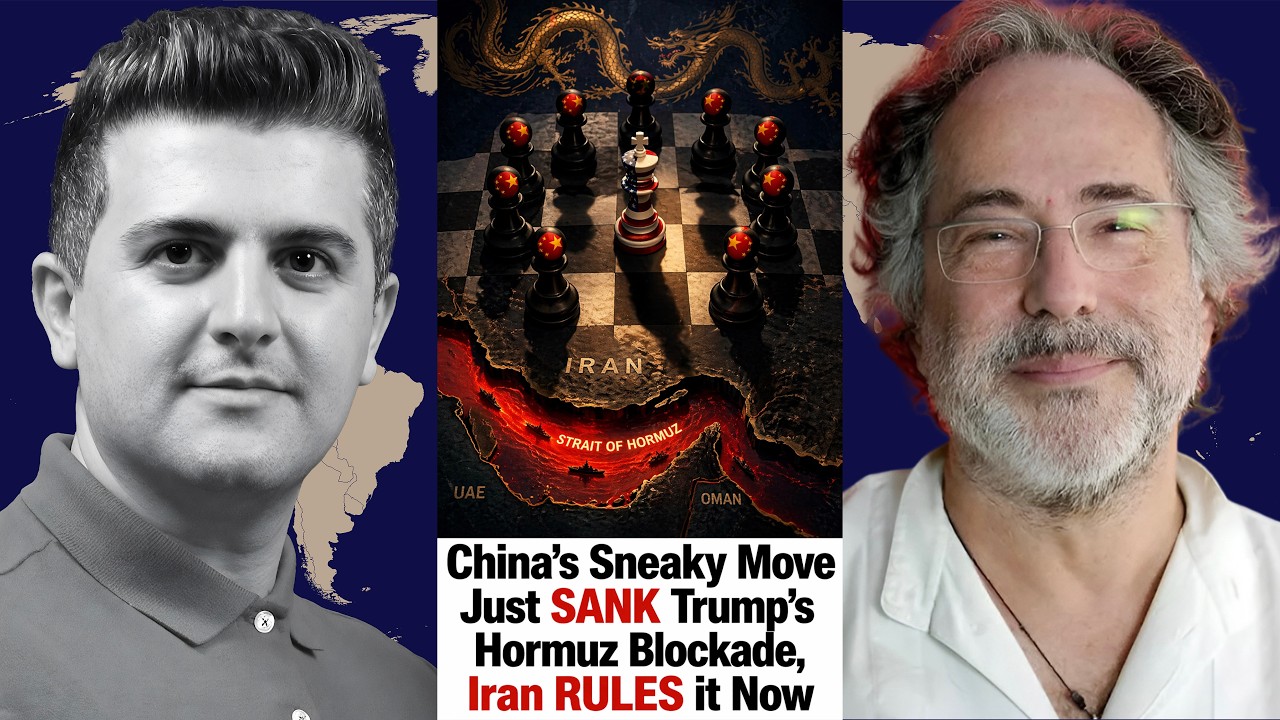
Pepe Escobar: “Total Failure”: Trump’s Blockade Just Backfired Disastrously
"Pepe Escobar argues that the US blockade against Iran, spearheaded by Donald Trump, has utterly failed and backfired, accelerating global economic chaos and challenging US geopolitical dominance."

Iran Deal Skepticism. Whoopi Vs Vance. Potomac Park Invasion. Racist Hurls Slurs At Black Boy.
"This episode dissects multiple instances of alleged anti-Black policies and racial injustice, from the Trump administration's legal challenges to reparations and the Iran deal, to police brutality and the erasure of Black history."
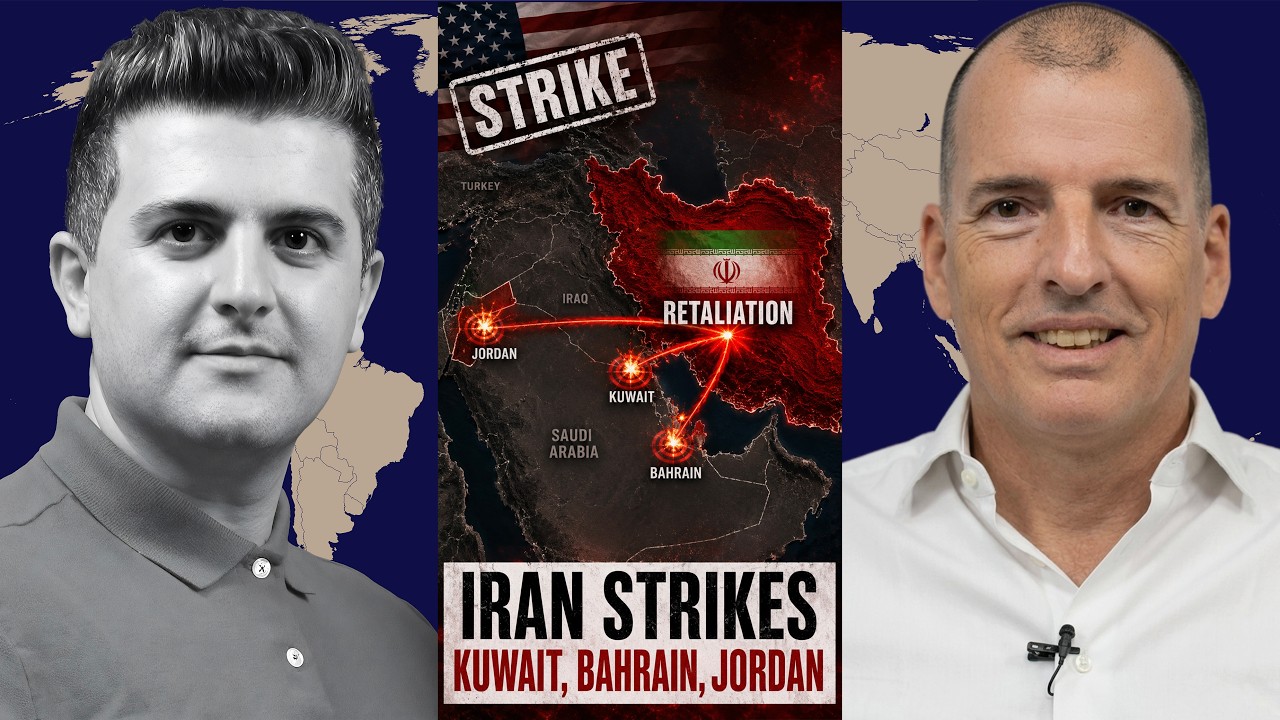
Alex Krainer: US STRIKES Iran – Iran RETALIATES Against Kuwait, Bahrain & Jordan!
"Amidst escalating US-Iran conflict and Iranian retaliation against regional US allies, this episode argues that US foreign policy is deeply controlled by an 'Anglo-Zionist conspiracy' led by the Rothschild banking dynasty, prioritizing Israeli interests over American ones."

Iran Update: Israel’s Newest Bombing Campaign, the Oncoming War With China and How to Avoid It
"Colonel Wilerson reveals how the US and Israel are actively bombing China's strategic infrastructure in Iran, escalating a covert economic war that Beijing intends to win without direct military conflict by dismantling the dollar's global dominance."