
Trump Salvages Iran War Defeat; New York's Change Primary w/ Mouin Rabbani, Astead Herndon | MR Live
YouTube · tSbeTPKGcuw
Quick Read
Summary
Takeaways
- ❖The US-Iran ceasefire, mediated by Pakistan, ended fighting but didn't resolve core issues like energy costs or Strait of Hormuz blockage.
- ❖Iran's control over the Strait of Hormuz provides a powerful 'snapback function,' allowing it to disrupt global energy markets at will, a stronger lever than a theoretical nuclear weapon threat.
- ❖Israel, excluded from US-Iran negotiations, is attempting to derail diplomacy by escalating aggression in Lebanon, which Iran views as a violation of the ceasefire MOU.
- ❖Mouin Rabbani likens the US's current situation with Iran to the 1956 Suez Crisis, marking a potential point of irreversible US imperial decline.
- ❖China reportedly stabilized the world economy during the Iran conflict by releasing energy reserves and coordinating mediation, while benefiting from exposed US weaknesses.
- ❖New York State primaries are a critical test for the DSA, building on Mondaire Jones's success in consolidating support among working-class homeowners, Hispanic, and Black voters.
- ❖DSA candidates are challenging establishment Democrats by offering an 'affirmative vision' that is populist, anti-war, and explicit in moral values, often rejecting corporate money.
- ❖The issue of Israel-Palestine has become a 'litmus test' for authenticity among Democratic candidates, signaling a willingness to take moral stances and challenge the establishment.
- ❖The success of DSA candidates in New York could prevent the 'moderate wing' of Democrats from continuing to misrepresent their base as solely working-class people of color, revealing a more 'swingy' electorate.
Insights
1Iran's Strategic Victory and US 'Damage Control' Diplomacy
The US, after unilaterally withdrawing from the 2015 nuclear deal and initiating a war, found itself in a position where diplomacy was the only viable option. Iran, through its control of the Strait of Hormuz, gained unprecedented leverage, forcing the US into negotiations aimed at 'damage control' rather than achieving original war aims. This shift indicates a significant weakening of US regional power and a strengthened Iranian geopolitical standing.
Mouin Rabbani states the US was 'faced with two options: conclude a diplomatic agreement... or commit massive military resources... Ultimately, the US chose for diplomacy.' He notes Iran now has 'unprecedented control it has established over the Strait of Hormuz,' acting as its own 'snapback function.'
2Israel's Role as Spoiler in US-Iran Diplomacy
Israel was deliberately excluded from US-Iran negotiations due to its perceived intent to sabotage any diplomatic resolution and continue hostilities. Israel is actively using Lebanon as an arena to pressure Hezbollah and Iran, hoping to provoke a resumption of the war and derail the US-Iran memorandum of understanding, which includes a ceasefire in Lebanon.
Rabbani mentions Israel was 'pointedly excluded from the negotiations... because it is seen as the main spoiler, hell-bent on continuing this war.' He adds Israel is 'using the Lebanese arena to increase the pressure on not only Hezbollah but also on Iran hoping that in doing so it can derail US Iranian diplomacy.'
3Rise of DSA and Progressive Coalition Shifts in NYC Primaries
Mondaire Jones's mayoral victory in 2025 marked a significant shift, demonstrating that DSA-backed candidates can consolidate support beyond traditional progressive strongholds, including working-class homeowners, Hispanic, and Black voters. This success has enabled DSA to strategically endorse candidates in other key races (NY7, NY13) to expand its political machine and push an anti-war, populist economic agenda.
Astead Herndon states Mondaire Jones 'consolidate[d] support among more traditional Democratic bases beyond the DSA millennial left... Hispanic voters, particularly in NY7... and kind of black voters up upper Manhattan, Harlem, the Bronx.' He adds Jones's goal was to 'change the landscape of New York City politics.'
4The 'Litmus Test' of Foreign Policy and Corporate Money in Local Elections
While voters don't typically prioritize foreign policy, a candidate's stance on issues like Israel-Palestine has become a 'shorthand' for authenticity and independence from corporate influence. This allows voters to assess if candidates are 'bought' or if they align with a shared reality and moral values, influencing their openness to other policy positions.
Herndon cites Patrick Gaspard's quote that 'Israel people don't necessarily vote on foreign policy, but it is a shorthand for... can you tell what time it is today?' and that it's 'become a way to show you're willing to take moral stances that we're willing to offend the establishment.' The discussion also highlights the 'without corporate money' aspect as a fundamental differentiator.
Bottom Line
The US's 'damage control' approach to Iran, rather than a position of strength, indicates a broader geopolitical reordering where non-Western powers like Iran and China are increasingly capable of dictating terms or stabilizing global systems independently.
This suggests a future where US unilateralism is severely constrained, and its traditional role as a global stabilizer is diminished, leading to a more multipolar world with unpredictable power dynamics and potentially new alliances.
For other nations, this presents an opportunity to diversify their geopolitical alignments and economic dependencies, reducing reliance on a single hegemonic power and fostering new trade routes or security partnerships.
The success of DSA-backed candidates in New York, particularly by expanding their base beyond white, college-educated progressives to include working-class people of color, challenges the long-held assumption that these demographics are inherently 'moderate' or tied to establishment Democrats.
This shift could fundamentally alter the Democratic Party's electoral strategy, forcing a move away from 'third way' politics towards more explicitly socialist and populist economic platforms to appeal to a broader, increasingly 'swingy' base.
Progressive movements nationwide can replicate these strategies by fielding candidates with deep community roots and a policy pitch aligned with changing values like affordability and anti-war stances, potentially reshaping local and national political landscapes.
Key Concepts
Snapback Function
Originally referring to the US ability to reimpose sanctions on Iran under the 2015 nuclear deal, Iran has now established its own 'snapback function' by controlling the Strait of Hormuz. This allows Iran to unilaterally disrupt global energy markets, giving it significant leverage in negotiations and making its commitments optional rather than mandatory for the US.
Imperial Decline (Suez Crisis Analogy)
Mouin Rabbani uses the 1956 Suez Crisis as a historical parallel to the US's current position with Iran. Just as Britain and France's attempt to reassert global dominance in Suez revealed the limits of their power and marked their imperial decline, the Iran war has exposed the limits of US global dominance and could be seen by future historians as a key point in its imperial decline.
Litmus Test for Authenticity
In the context of New York primaries, a candidate's stance on Israel-Palestine has become a 'litmus test' for authenticity. It's not just about foreign policy but serves as a shorthand to assess if a candidate is 'bought,' recognizes shared reality, and is willing to take moral stances that challenge the establishment, thereby building voter trust.
Lessons
- Support DSA-backed candidates in local and state elections, particularly in districts like New York 7 and 13, to build momentum for progressive political projects.
- Educate yourself on the geopolitical implications of US foreign policy, recognizing how events like the Iran negotiations reflect broader shifts in global power and influence.
- Engage in local political organizing to challenge establishment narratives and support candidates who prioritize anti-war, populist economic policies, and moral consistency over corporate interests.
Quotes
"Washington was essentially faced with two options. It could either conclude a diplomatic agreement with Iran, um the terms of which would be substantially more disadvantageous to the United States than the 2015 agreement... or it would need to commit massive military resources... to a renewal of full-scale hostilities."
"The main result of the current war is that Iran now has a lever that is much more powerful than the theoretical threat of a nuclear weapon... And that is of course the control, the unprecedented control it has established over the Strait of Hormuz."
"The Iran war was meant by Washington to reassert and emphasize once again unchallenged US global dominance, but instead it came up against the limits of its power. And I think future historians will point to this as a key point in in the, uh, process of US imperial decline."
"Mondaire did there was really um consolidate support among more traditional Democratic bases beyond the DSA millennial left, right? Like he improved uh among that kind of working-class homeowner base, um Hispanic voters, particularly in NY7... and kind of black black voters up uh upper Manhattan, Harlem, the Bronx."
"I think people are demanding a a a world view that is not just populist but is anti-war not you know, and is explicit in its moral value and I think that is the opportunity that DSA has has really I think driven over through these primaries."
"The base of the moderate version of Democratic Party is like old black and brown homeowners way more than it is people of color, right? And so one of the things that's really allowed that slide of hand to continue is that you know, they've been resting on the fact that the left hasn't really reached that group."
Q&A
Recent Questions
Related Episodes

Patrick Henningsen: Hezbollah JUST Fired Back at Israel - Iran Vows to “Crush” All Attacks
"Patrick Henningsen argues that the US and Israel initiated an illegal war against Iran, driven by Trump's incompetence and Israeli influence, leading to an inevitable escalation with severe global economic repercussions."

🚨 TOTAL F*CKING CHECKMATE 😂😂😂
"The host argues that Trump's 'ceasefire' with Iran was a calculated '5D chess' move to orchestrate a global energy market reshuffle, while simultaneously lambasting 'woke' domestic policies and the 'freefall' of anti-Trump conservative figures."
BREAKING: Protests ERUPT In Iran Over IRGC Surrendering To Trump - Infighting Clashes In Tehran
"Iran is experiencing severe internal infighting and protests as hardline IRGC elements clash with government figures over a perceived 'surrender' to the US, while mainstream Western media misrepresents the situation."
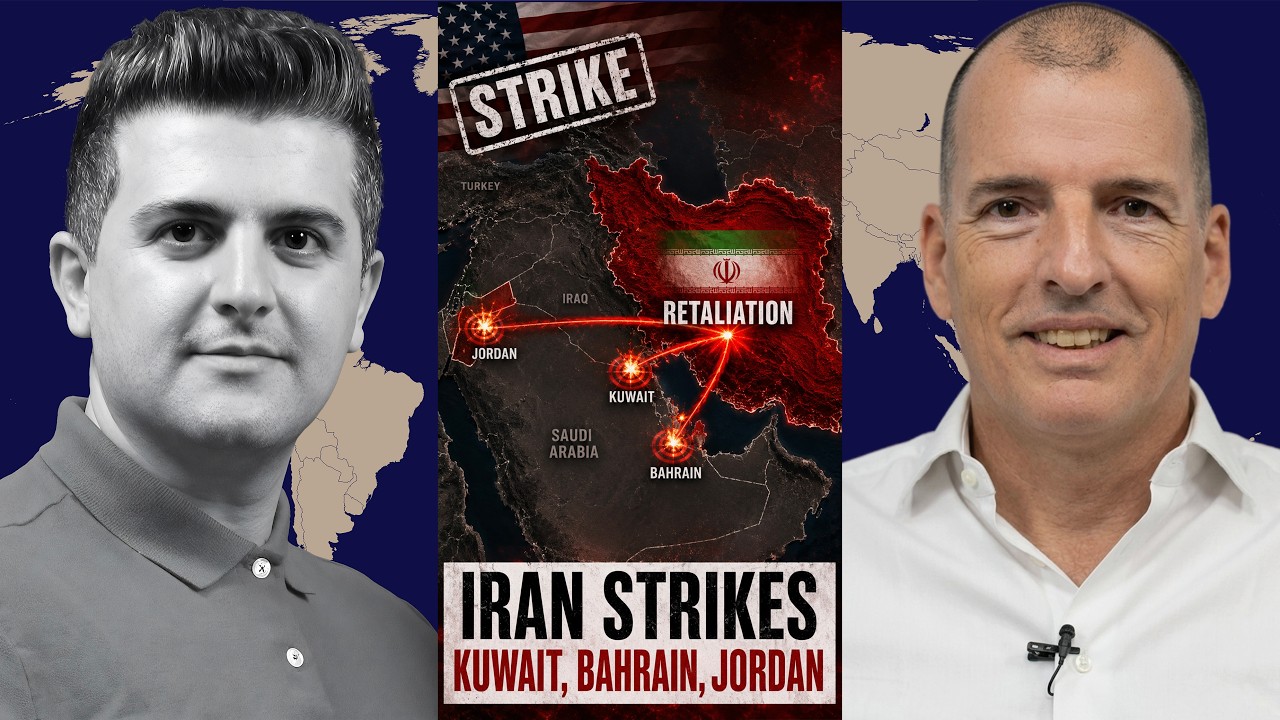
Alex Krainer: US STRIKES Iran – Iran RETALIATES Against Kuwait, Bahrain & Jordan!
"Amidst escalating US-Iran conflict and Iranian retaliation against regional US allies, this episode argues that US foreign policy is deeply controlled by an 'Anglo-Zionist conspiracy' led by the Rothschild banking dynasty, prioritizing Israeli interests over American ones."