Trump CRUMBLES on WORLD STAGE as BLOWS UP WORLD ORDER | It's Complicated
YouTube · tcMOy4PzB9E
Quick Read
Summary
Takeaways
- ❖Trump's 'America First' stance has fundamentally changed US foreign policy from post-WWII bipartisan consensus.
- ❖Allies, particularly in Europe, no longer trust the US as a reliable partner, leading them to diversify alliances and trade.
- ❖The world is transitioning from a unipolar (US-dominated) to a multipolar system, with Russia and China seeking greater influence and challenging the existing order.
- ❖The US financial system, centered on the dollar and US debt, is vulnerable as allies question its benefits and reliability.
- ❖The weaponization of the US justice system for political purposes, as seen in the Minnesota DOJ investigation, erodes domestic rule of law and institutional credibility.
- ❖The long-term damage to international trust and domestic institutions may be permanent, requiring decades to rebuild, if at all.
- ❖Reining in presidential discretion and asserting congressional authority are critical to prevent future unilateral damage to US security and well-being.
Insights
1Trump's Disruption of the Post-WWII World Order
Jim Shudo explains that Trump's approach, exemplified by the Greenland incident, rejects the long-standing bipartisan consensus on alliances and a rules-based international order. Trump views alliances as costly and detrimental, preferring a transactional, 'America First' stance that has led allies to distrust the US.
Jim Shudo states, 'Trump's view is and has been quite clearly so going back to his first term. No, I'm not convinced. In fact, I I think all those alliances actually cost us more uh than we get out of them.' He also notes, 'there is a shift in the way our allies view the US, which is to say they don't really trust us anymore.'
2Shift to a Multipolar World and Great Power Competition
The podcast discusses the transition from a unipolar world (US-dominated) to a multipolar one, where Russia and China actively seek to reshape the global system. Russia aims to dismantle the old order, while China seeks to lead a new, China-centric one. Trump's actions are seen as accelerating this shift.
Asha Rangapa asks Jim Shudo to 'lay the scene... of kind of this broader shift that's been happening in terms of a transition from a unipolar world to one where Russia and China in particular are seeking to have a multipolar world.' Shudo responds that Russia and China want to 'break down or significantly change the system that balanced the powers again going back largely to to World War II.'
3Erosion of Allied Trust and Diversification
European and Canadian officials openly express distrust in the US, leading them to diversify trade and defense strategies. This includes Canada re-engaging with China and European nations increasing their own defense spending, but with lingering doubts about US commitment.
Jim Shudo notes that European officials 'don't really trust us anymore. And you know, they used to say that only in private, they're saying it more publicly.' He later adds that 'it's natural for countries like Canada um and Europe too to diversify their trade further beyond the US because they don't look at the US as a reliable trading partner anymore.'
4Economic Vulnerabilities of the US Financial System
The US-centric financial system, where the dollar is paramount and other nations hold US debt, is being challenged. Canadian Prime Minister Mark Carney's speech at Davos highlighted how this system disproportionately benefits the US, prompting concerns about the stability of US debt and potential economic repercussions if allies begin selling bonds.
Renato Mariotti references Mark Carney's speech, 'in which he essentially called out that system for benefiting the United States at the expense of countries like Canada.' Shudo elaborates, 'not too subtle reminder that if we started selling those bonds, you know, your interest rates would go up, your borrowing costs, etc.'
5Weaponization of the Justice System Domestically
The Trump administration is accused of using the investigative process to harass political opponents, such as the DOJ's investigation into Minnesota's Mayor Frey and Governor Walsh. This is framed as an abuse of power, undermining the rule of law and creating a 'black as white' narrative similar to fascist playbooks.
Asha Rangapa states, 'the investigative process itself can be used to basically harass them.' Renato Mariotti calls it 'an abuse of the criminal justice system' and likens the rhetoric to '1984 uh George Orwell like black as white, war is peace sort of thing.'
6Lasting Damage to Trust and Institutions
The repeated shifts in US foreign policy and domestic legal norms have caused 'permanent damage' to trust, both internationally and within the US justice system. Rebuilding this trust will be a monumental, multi-decade challenge, as institutions are no longer seen as reliable bedrock.
Renato Mariotti notes, 'there was, you know, permanent damage done, right? Something that you you had uh alluded to earlier.' Asha Rangapa concludes, 'It is so hard to rebuild trust once it's gone... I'm not really sure how you build that back except across, you know, like decades basically.'
Bottom Line
The 'America First' sentiment, while disruptive, has roots in public dissatisfaction with past US foreign policy failures, particularly costly wars that yielded little benefit and were disproportionately borne by a small segment of the population.
Understanding this underlying motivation is crucial for addressing domestic political divisions and preventing future isolationist shifts, even if the current implementation is seen as detrimental.
Future administrations could address this by recalibrating foreign policy to demonstrate clearer benefits to the average American and ensure more equitable burden-sharing in international engagements.
China is positioning itself as the 'adult in the room' on the world stage, seeking to change the international order to its advantage rather than dismantle it entirely, contrasting with Russia's more destructive aims.
This strategic difference means that while China offers an alternative to US leadership, its 'rules' are not aligned with Western interests, presenting a complex challenge for allies seeking to diversify away from an unreliable US.
The US could highlight China's unfair trade practices and authoritarian vision to remind allies of the drawbacks of aligning too closely with Beijing, even as they seek alternatives to Washington.
Lessons
- Congress must assert its authority to rein in presidential discretion and latitude, particularly concerning delegated powers in areas like immigration, tariffs, and national emergencies, to prevent unilateral damage to US interests.
- Future US administrations need to prioritize significant institutional reforms to address the 'permanent damage' done to the rule of law and rebuild trust, both domestically and internationally.
- The US should clearly articulate the benefits of a rules-based international order to its citizens, connecting global stability and trade to tangible domestic prosperity and opportunities.
Quotes
"Trump's view is and has been quite clearly so going back to his first term. No, I'm not convinced. In fact, I I think all those alliances actually cost us more uh than we get out of them."
"There is a shift in the way our allies view the US, which is to say they don't really trust us anymore."
"I'm still trying to wrap my mind around why you would give up being the leader of the free world to be the leader of the Western Hemisphere."
"The thing is it's now colored every international relationship, alliance, foreign adventure etc."
"The conclusion that our allies seem to be drawing is that the new normal is that it's not reliable anymore."
"It is so hard to rebuild trust once it's gone."
Q&A
Recent Questions
Related Episodes
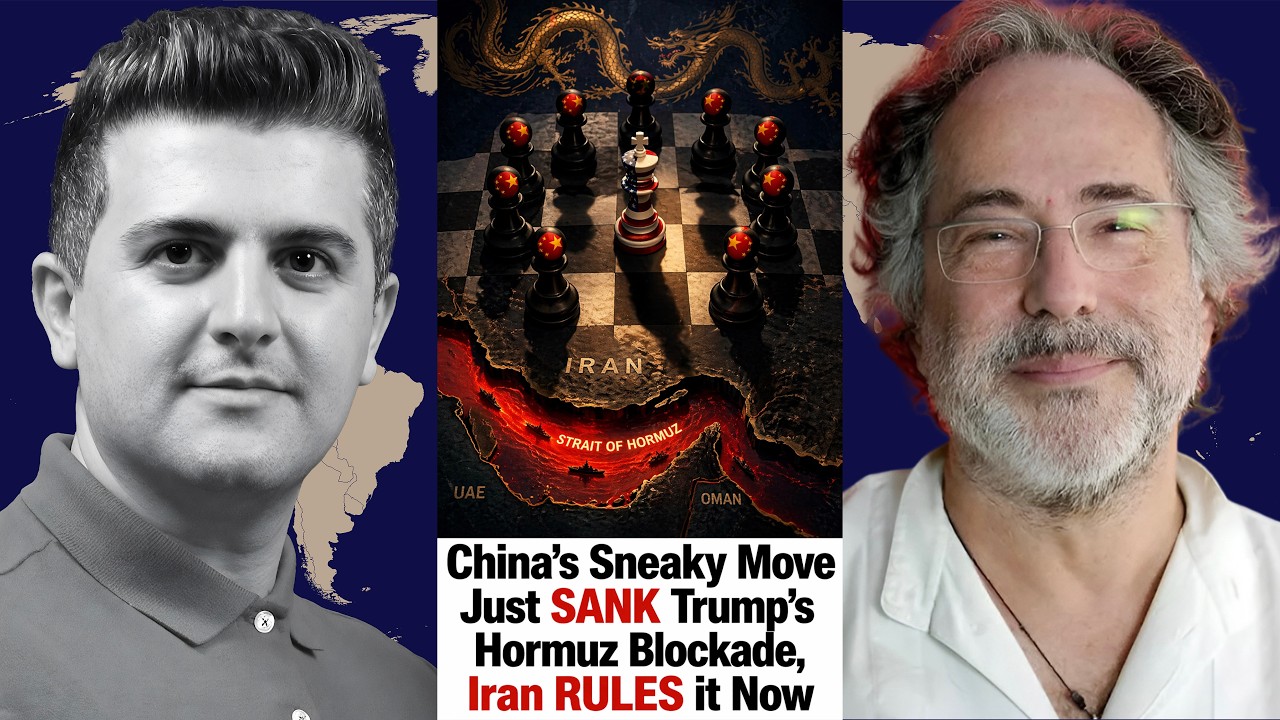
Pepe Escobar: “Total Failure”: Trump’s Blockade Just Backfired Disastrously
"Pepe Escobar argues that the US blockade against Iran, spearheaded by Donald Trump, has utterly failed and backfired, accelerating global economic chaos and challenging US geopolitical dominance."
Robby Soave GOES OFF On ANNOYING Liberal Black Woman Making Emotional Trump Deranged Arguments!
"The host dissects a heated foreign policy debate, arguing that 'left-wing' emotionalism and 'Trump derangement' prevent a rational understanding of US sanction strategies against Cuba and Iran."
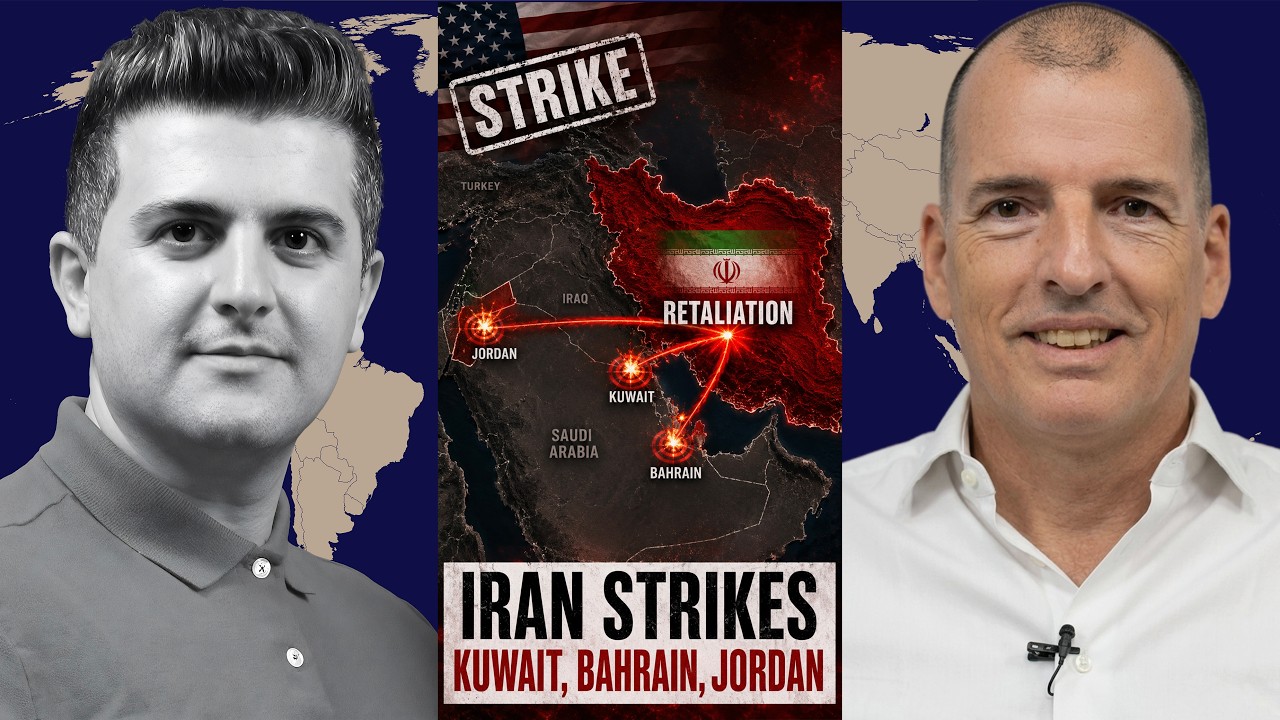
Alex Krainer: US STRIKES Iran – Iran RETALIATES Against Kuwait, Bahrain & Jordan!
"Amidst escalating US-Iran conflict and Iranian retaliation against regional US allies, this episode argues that US foreign policy is deeply controlled by an 'Anglo-Zionist conspiracy' led by the Rothschild banking dynasty, prioritizing Israeli interests over American ones."

LIVE: Trump HIDES FROM PUBLIC as US SOLDIER KILLED!!! 6/2/2026
"The host exposes alleged government cover-ups regarding military casualties, Trump's unexplained public absence, and questionable political appointments, arguing these reflect a 'regime of loser babies' and a failing foreign policy."