Russell Brand on Fame and Addiction, His Past Marriage to Katy Perry, His Trial Ahead, & Finding God
YouTube · u4P_Q-QGbpk
Quick Read
Summary
Takeaways
- ❖Russell Brand acknowledges his past sexual conduct was 'selfish and exploitative' and a 'sin,' but maintains all encounters were consensual.
- ❖He faces an upcoming trial in the UK (October 7th) related to sexual assault allegations, which he believes are politically motivated.
- ❖Brand attributes the timing of the allegations to his shift from mainstream celebrity to a vocal critic of government, big pharma, and COVID-19 policies.
- ❖He details his history of drug addiction (heroin, crack) and sex addiction, describing fame as a 'soothing balm of synthetic glory' that temporarily medicated feelings of inadequacy.
- ❖Brand states his sex addiction involved 'thousands' of women over roughly 15 years, viewing it as a misguided search for God and a form of 'false idolatry.'
- ❖He criticizes centralized power, citing examples like the UK's 77th Brigade (a psychological operations unit) and the Five Eyes alliance, which he claims spy on citizens.
- ❖Brand advocates for a return to faith and decentralization of political power, believing that human beings are 'children of God, not children of the state.'
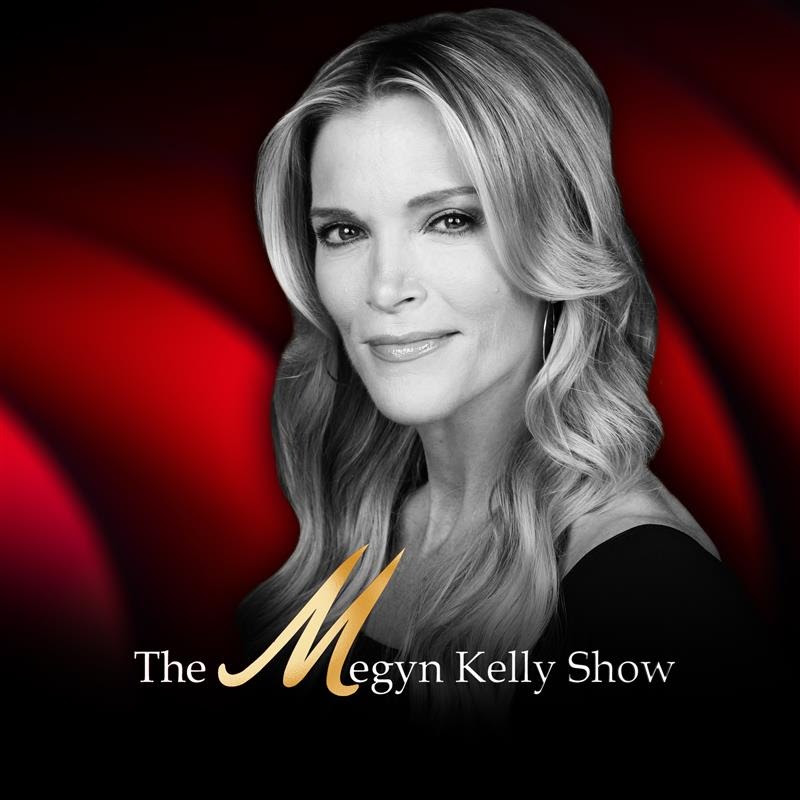
- ❖Megyn Kelly expresses suspicion about the timing of the allegations against Brand, drawing parallels to how other right-leaning figures are targeted.
- ❖Brand's new book, 'How to Become a Christian in Seven Days,' reflects his spiritual journey, emphasizing that true fulfillment comes from God, not worldly pursuits.
- ❖Kelly expresses disappointment in Donald Trump's shift on foreign policy, particularly regarding Iran, viewing it as a betrayal of his base and a manipulation by external interests.
Insights
1Past Sexual Conduct: Selfish but Consensual
Russell Brand openly admits his past sexual behavior was 'selfish and exploitative,' driven by addiction and fame, leading to 'thousands' of encounters. He acknowledges the harm caused but firmly states that all sexual acts were consensual, distinguishing his actions from criminal sexual assault. He highlights the power differential inherent in his celebrity status, which allowed him to 'direct consent' rather than override it.
Brand states, 'I did sleep with a 16-year-old when I was 30... I think involves exploitation, I think it is exploitative. I recognized that my sexual conduct in the past was selfish.' He clarifies, 'What I'm obviously not only querying but violently or aggressively or assertively opposing is the idea that this is a judicial criminal matter where consent was overridden.' He reads from his book, 'I had sex with multiple women, often at the same time, most days for years. It was normal to have three ways and four ways... the pointlessness of coercion, meaning you never had to nor did coerce anybody to do this with you.'
2Political Motivation Behind Allegations
Brand asserts that the timing of the sexual assault allegations and the upcoming trial is directly linked to his public shift towards media criticism and anti-establishment political commentary. He believes he became a target when he started questioning government policies, big pharma, and mainstream narratives, particularly during the COVID-19 pandemic.
Brand states, 'I believe that there is a strong connection between when it happened and what I was doing publicly. I'd moved from being... essentially advocating for the kind of cultural values that most people within the institutions of power and entertainment power endorse... to being quite critical of them.' Megyn Kelly adds, 'It wasn't until you got very outspoken in your more right-wing views that suddenly Channel 4 thought it would be a great time to do a hit piece on Russell Brand and found some women.'
3Critique of Centralized Power and Media Manipulation
Brand details how governments and powerful institutions allegedly use various methods, including psychological operations (like the UK's 77th Brigade) and surveillance (like the Five Eyes alliance), to control narratives and suppress dissent. He argues that the COVID-19 pandemic served as a 'pilot' for asserting global control, even in democracies, and that mainstream media often acts as a tool for this agenda.
Brand mentions, 'In my country, for example, Megan, there's a group called the 77th Brigade... They are a SCOP organization that operate in partnership with the with with the military... An online organization... has to be managed and manipulated.' He explains the Five Eyes alliance's method of circumventing domestic surveillance laws by spying on each other's citizens. He also criticizes late-night TV hosts for promoting government narratives during COVID-19.
4Spiritual Transformation and Christian Faith
Brand describes his conversion to Christianity as a profound shift from seeking fulfillment in drugs, sex, and fame to finding meaning in God. He views his past addictions as a misguided search for the divine and believes that true purpose lies in serving a higher power, not self-indulgence or worldly success.
Brand states, 'I have this real appetite for what I recognize now is God... I was trying to defibrillate the dead and inert world into life through chemicals at first. And then, you know, sex is a gift.' He explains, 'The reason that I became Christian is because what I had learned as an addict in recovery that this world can never give you what you think it can give you.' He recounts a 'suicidal moment' where he 'knew Christ was real.'
5Disillusionment with Political Leaders and Call for Decentralization
Both Brand and Kelly express skepticism about the ability of political leaders, including Donald Trump, to genuinely challenge entrenched power structures. They argue that politicians are often 'maneuvered' or 'bought' by 'invisible institutions' and advocate for radical decentralization of political power to local communities, enabled by modern technology.
Brand states, 'If someone as powerful and magnetic and idiosyncratic as Donald Trump can be maneuvered by invisible institutions of deep state international power... then all of us are participating... in sets of powers and interests that do not like to be challenged.' Kelly expresses, 'I just thought that Trump really meant it when he promised to buck the system. He promised he couldn't be bought. Um he was bought. I like the the Miriam Madison $250 million bought him on Iran and Israel.' Brand proposes, 'What if these voices in independent media became overtly and deliberately active in politics? Doesn't that have the extraordinary um salve of resolving these cultural issues instantly?'
Bottom Line
The government's ability to 'criminalize you' if you become an 'enemy of the state' is facilitated by extensive surveillance and data collection, even if obtained through legal loopholes like the Five Eyes alliance.
This suggests that personal privacy is an illusion for public figures, and potentially for all citizens, as historical data can be weaponized against individuals who challenge established power structures.
Develop secure, decentralized communication platforms and legal frameworks that genuinely protect individual data and free speech from government overreach, making it harder to 'find something with which to criminalize you.'
The 'lone gunman' narrative for assassinations of prominent figures could be a deliberate strategy by state or underworld entities to eliminate problematic individuals while maintaining plausible deniability.
This implies a sophisticated level of covert operations where public perception is managed to dismiss state involvement, fostering a sense of random violence rather than targeted elimination.
Independent investigative journalism and open-source intelligence (OSINT) could focus on deconstructing such narratives, seeking patterns, and exposing potential state-sponsored false flags, though this carries significant personal risk.
The SPLC allegedly paid members of extremist groups (like the KKK and Aryan Brotherhood) to 'infiltrate' and potentially instigate events like the Charlottesville 'Unite the Right' rally, then used these events to solicit donations by 'protecting' against the very groups they funded.
This suggests a cynical and manipulative strategy by ostensibly 'anti-hate' organizations to perpetuate conflict for financial gain and political leverage, blurring the lines between activism and orchestration.
Investigate the funding and operational methods of 'anti-hate' organizations to expose potential conflicts of interest or manipulative tactics. Support whistleblowers within these organizations to reveal internal practices that contradict their public mission.
Key Concepts
False Idolatry
Russell Brand uses this term to describe his past worship of fame, sex, and self-indulgence, believing he was making himself a 'kind of God.' He argues that society's focus on material success and individual gratification leads people away from true spiritual fulfillment and into 'hollow sadness.'
Empire of Domination and Control
Brand and Kelly discuss a perceived 'empire' or 'invisible institutions of deep state international power' that seek to assert centralized control, manipulate public opinion, and silence dissenting voices. This model suggests that political leaders are often 'maneuvered' by these forces, and that even seemingly democratic systems can be subverted for global agendas.
Lessons
- Cultivate a strong spiritual foundation or a clear moral compass to navigate the temptations of fame, wealth, and power, recognizing that external validation often leads to 'hollow sadness.'
- Be critically aware of mainstream media narratives, especially during times of crisis, and seek out diverse, independent sources of information to form your own informed opinions.
- Actively support and advocate for the decentralization of political power and local governance, recognizing that centralized systems are prone to manipulation by powerful, unelected interests.
Notable Moments
Megyn Kelly reveals her initial anger and belief in the sexual assault allegations against Brand, only to re-evaluate and become open-minded to him being 'railroaded' due to his political views.
This highlights the powerful influence of media narratives and the potential for political motivations to shape public perception and legal actions against public figures, even for experienced journalists.
Brand recounts a 12-step meeting where a man described celebrity as 'crumbs,' stating, 'I want to be at the banquet.'
This quote encapsulates Brand's journey from seeking superficial glory to desiring deeper spiritual fulfillment, serving as a powerful metaphor for the emptiness of worldly success without a higher purpose.
Brand's wife, a 'lapsed Catholic,' gave him a painting with a verse from James 1: 'Consider it great joy when you face trials of any kind,' as he prepared for his trial.
This personal anecdote underscores the profound impact of his spiritual journey on his family life and his approach to facing severe adversity, framing his legal challenges within a broader divine plan.
Quotes
"Fame, celebrity, those things, those are crumbs. I want to be at the banquet."
"If you have a meaningful dissenting voice, it's quite likely that you will be subject to attacks."
"Whenever they come to you saying that they want to protect you, they actually want to control you."
"We are children of God. We are not children of the state."
"The devil's in control. It's fallen into the control of someone who's going to create systems that seem like God's kingdom, but they're actually false."
Q&A
Recent Questions
Related Episodes

🚨 LEFTISTS ARE F*CKING SEETHING 😂😂😂
"The host aggressively celebrates perceived 'wins' for the right-wing, from global conflicts and domestic politics to cultural shifts, framing them as a 'humiliation' for the 'leftist world order' and a testament to Donald Trump's influence."

Trump caught in OFF THE RAILS new scandal | Another Day
"Host Brian Tyler Cohen dissects Donald Trump's racist social media post, the White House's implausible defense, and the broader pattern of bigotry in conservative politics."

Dan Bongino’s EPIC CRASHOUT Over Jimmy Dore!
"Jimmy Dore dissects Dan Bongino's alleged hypocrisy regarding the Epstein files and his public meltdown during a past interview, framing it as a case of psychological projection and political opportunism."

🚨 HOLY F*CK HE WAS RIGHT 😂😂😂
"The host celebrates perceived conservative victories and the exposure of 'leftist' and 'communist' elements in American politics and culture, from Trump's enduring influence to alleged government fraud and societal decay."