
Trump PANICS with MAJOR DEFEAT on World Stage
YouTube · uA65LkY25ak
Quick Read
Summary
Takeaways
- ❖Viktor Orban's 'illiberal democracy' model, which involved capturing state institutions and media, was seen as a blueprint for the Trump administration.
- ❖Orban's Hungary acted as Russia's primary voice and blocker of sanctions/aid within the European Union.
- ❖The new Hungarian leader, Peter Majer, represents a center-right, democratic alternative, rejecting Orban's 'great replacement theory' rhetoric.
- ❖Europe is now poised to provide substantial, independent support to Ukraine, reducing reliance on the US.
- ❖Modern autocracies are inherently kleptocracies, enriching leaders and their associates at the expense of citizens.
Insights
1Orban's Defeat as a Blow to Global Authoritarianism and Trump's Ideological Playbook
Viktor Orban's electoral defeat in Hungary is a significant setback for the global movement of 'illiberal democracy' and directly impacts Donald Trump, who adopted many of Orban's strategies. Orban systematically captured state institutions, media, and the economy to create an 'impermeable' system, which he then promoted to international allies, including the Trump administration. His unexpected loss demonstrates that such entrenched systems can be overcome.
Anne Applebaum states Orban 'created the idea that you could within the bounds of a of a of a democratic state... change your political system in such a way as to make it almost impossible for anybody else to win.' She notes 'a lot of the ideas that the Trump administration has and has been trying to enact come from him.'
2Hungary's Role as Russia's Proxy in Europe
Under Orban, Hungary became a key advocate for Russia within the European Union, actively blocking sanctions and funding for Ukraine. His removal creates a new dynamic, allowing Europe to act more cohesively and effectively in supporting Ukraine and countering Russian influence.
Applebaum explains Orban 'made themselves into the voice of Russia in Europe... he blocked sanctions on Russia. He blocked European funding for Ukraine.' She adds that Orban's foreign minister would share confidential EU meeting details with Russia's foreign minister.
3The Rise of a Democratic Center-Right in Hungary
Peter Majer, the new leader, offers a model for a democratic center-right, distinguishing himself from Orban's far-right, fear-mongering rhetoric. Majer advocates for social conservatism and controlled migration within legal and constitutional bounds, without demonizing immigrants or resorting to 'great replacement theory' propaganda.
Applebaum describes Majer as a 'center-right European leader' who 'describes himself as a social conservative' and 'wants to limit migration into Hungary, but that puts him in the tradition of other democratic center-right parties in Europe.' She contrasts this with Orban's use of 'great replacement theory language' and 'secret plots' to 'dilute the purity of the Hungarian nation.'
4Ukraine's Evolving Military Autonomy and European Support
With diminished US involvement, Ukraine has significantly advanced its military technology, particularly in drone warfare and automated fighting, becoming a leading innovator. The European Union has stepped up to provide substantial financial and military support, ensuring Ukraine's ability to continue fighting independently.
Applebaum states, 'the European Union has already agreed to a $90 billion payment for Ukraine' and 'the EU will now find it easier to sanction Russians.' She notes Ukraine is 'rapidly becoming the world's most sophisticated army' in drone technology, even doing deals with Middle Eastern countries to help defend against Iranian drones.
5Modern Autocracies as Kleptocracies
A defining characteristic of modern autocracies, unlike their 20th-century predecessors, is their inherent kleptocratic nature. Leaders like Putin and Xi Jinping are billionaires who use state power to amass personal wealth, control business, and even bribe Western actors, making corruption a central mechanism of maintaining power.
Applebaum explains, 'almost all modern autocracies are kletocracies... Stalin and Hitler were not billionaires, but Xiinping and Putin are billionaires.' She adds that this 'enormous economic power... gives you also the ability to bribe people in the west.'
6Campaigning on Corruption as an Effective Anti-Autocratic Strategy
Peter Majer's success in Hungary, mirroring Alexi Navalny's approach in Russia, demonstrates the effectiveness of campaigning against corruption by directly linking it to citizens' daily struggles. By showing how leaders' illicit wealth impacts public services and infrastructure, opposition movements can mobilize support even against entrenched regimes.
Applebaum notes Majer's 'main theme' was corruption, and he 'connected these issues of corruption and autocracy to people's ordinary lives. In other words, they are stealing from you... that's why you don't have healthcare.' She compares this to Navalny, who 'campaigned on corruption' and 'drew those links for people all the time.'
Bottom Line
The US's role in the Ukraine conflict has diminished, with its negotiators (like Steve Witkoff and Jared Kushner) perceived by Europeans as prioritizing commercial deals in Russia over a just peace or European security.
This perception undermines US credibility as a global leader and complicates future diplomatic efforts, as Europeans question the true motives behind US foreign policy under certain administrations.
European nations can leverage this diminished US role to forge stronger, more independent defense and foreign policy alliances, potentially leading to a more unified and self-reliant Europe on the global stage.
Ukraine has rapidly become a world leader in advanced military technology, particularly in drone warfare and automated fighting, shifting its image from a victim to an admired and imitated military innovator.
This technological leap changes the power dynamics of modern warfare, making Ukraine a valuable partner for countries facing similar threats (e.g., Iranian drones) and potentially influencing future military doctrines globally.
Other nations can collaborate with Ukraine on defense innovation, adopting its combat-tested technologies and strategies, while Ukraine can export its expertise and hardware, bolstering its economy and international standing.
Key Concepts
Illiberal Democracy
A political system, exemplified by Viktor Orban's Hungary, where leaders are democratically elected but then systematically dismantle democratic institutions (media, courts, civil service) to consolidate power and make it nearly impossible for opposition to win, while still maintaining the facade of democracy.
Kleptocracy
A government where corrupt leaders use their power to exploit the people and natural resources of their own territory in order to extend their personal wealth and political power. This model defines modern autocracies, contrasting with 20th-century totalitarian regimes where leaders like Stalin or Hitler were not billionaires, but contemporary autocrats like Putin and Xi Jinping are.
Great Replacement Theory
A white nationalist conspiracy theory that claims there is a deliberate plot to replace white populations with non-white immigrants, often used by far-right politicians like Orban to demonize migrants and justify authoritarian measures as an 'existential threat' to national purity.
Lessons
- Democratic parties should explicitly campaign on the issue of corruption, connecting leaders' illicit wealth directly to the deterioration of public services and infrastructure in citizens' daily lives.
- International allies should be wary of 'illiberal democracy' models, recognizing their systematic dismantling of democratic institutions despite electoral legitimacy.
- European nations should continue to strengthen their collective defense and support mechanisms for countries like Ukraine, reducing reliance on potentially unreliable external partners.
Countering Illiberal Democracy and Kleptocracy
Expose and detail the financial corruption of autocratic leaders, linking their personal wealth directly to the lack of public services (e.g., 'Putin's palace vs. your potholes').
Highlight the systematic dismantling of democratic institutions (media, courts, civil service) by 'illiberal' regimes, showing how these actions consolidate power and stifle opposition.
Offer a clear, democratic center-right alternative that addresses national concerns (e.g., migration) within constitutional bounds, without resorting to fear-mongering or 'great replacement theory' rhetoric.
Quotes
"He created the idea that you could within the bounds of a of a of a democratic state and as a democratically elected leader that you could change your political system in such a way as to make it almost impossible for anybody else to win."
"A lot of the ideas that the Trump administration has and has been trying to enact come from him."
"Hungary was acting as as a spokesman and a and a representative of Putin inside European meetings."
"Ukraine has gone from being a country that many people saw as a victim... to now being the country that is admired and imitated by others around the world."
"Almost all modern autocracies are kletocracies. And so they're run by people who are making huge sums of money off their own countries."
Q&A
Recent Questions
Related Episodes

LIVE: Trump HIDES FROM PUBLIC as US SOLDIER KILLED!!! 6/2/2026
"The host exposes alleged government cover-ups regarding military casualties, Trump's unexplained public absence, and questionable political appointments, arguing these reflect a 'regime of loser babies' and a failing foreign policy."
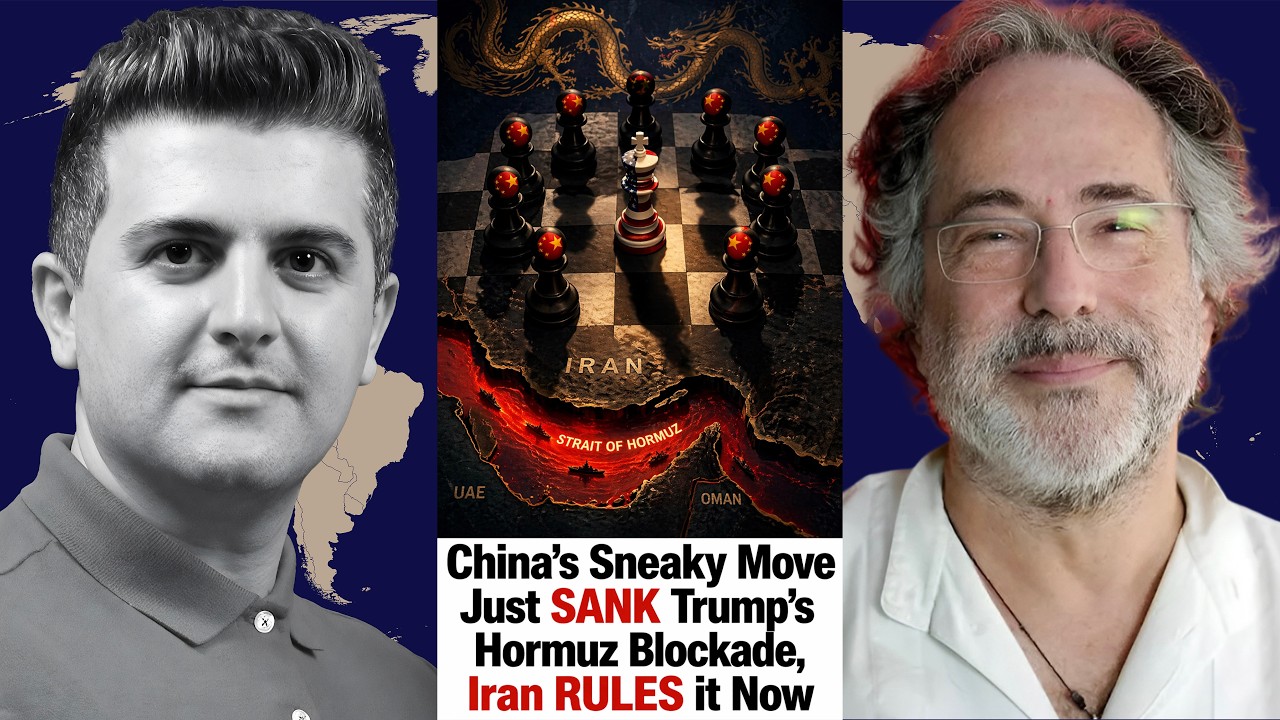
Pepe Escobar: “Total Failure”: Trump’s Blockade Just Backfired Disastrously
"Pepe Escobar argues that the US blockade against Iran, spearheaded by Donald Trump, has utterly failed and backfired, accelerating global economic chaos and challenging US geopolitical dominance."

PBS News Hour full episode, April 10, 2026
"This episode covers high-stakes US-Iran peace talks amidst ongoing conflict, Hungary's pivotal election challenging Viktor Orban, the accelerating decline in US birth rates, AI's disruptive impact on jobs, and Palestinian Christians observing Easter under Israeli restrictions."

Iran Deal Skepticism. Whoopi Vs Vance. Potomac Park Invasion. Racist Hurls Slurs At Black Boy.
"This episode dissects multiple instances of alleged anti-Black policies and racial injustice, from the Trump administration's legal challenges to reparations and the Iran deal, to police brutality and the erasure of Black history."