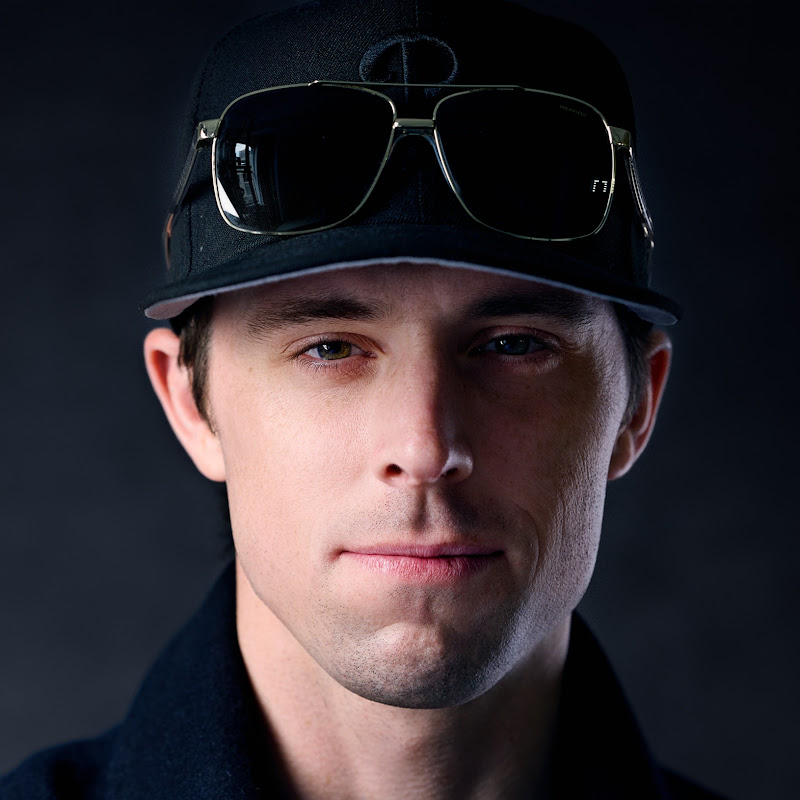
“KILL Chain!” - Navy SEAL Drone Expert on $4.5 Quadrillion Op, Anthropic & Pentagon | B. Tseng • 409
YouTube · ubT2ta9U8B8
Quick Read
Summary
Takeaways
- ❖Brandon Tseng's early career as a Navy SEAL officer included deployments to Afghanistan and the Pacific, where he gained firsthand experience in combat and intelligence operations.
- ❖A pivotal moment in Tseng's life was being denied from SEAL training initially, which instilled a 'be number one' mentality that propelled his later success.
- ❖He co-founded Shield AI in 2015, recognizing AI and autonomy as the 'next internet' with the potential to solve complex problems, including warfare.
- ❖Shield AI develops AI pilots (Hivemind) that enable unmanned systems to operate autonomously, even when GPS and communications are jammed.
- ❖The company's VBAT drone is a miniature Predator/Reaper, actively used by the US Coast Guard for drug interdiction and by Ukraine for ISR and targeting.
- ❖The Expat is a revolutionary AI-piloted vertical takeoff/landing fighter jet, designed to provide distributed, long-range fire capabilities to deter adversaries like China.
- ❖Tseng believes that AI in defense can achieve 'peace through strength' by making potential adversaries rethink their calculus due to overwhelming, mobile, and unjammable air power.
- ❖He emphasizes the critical importance of maintaining human control over all lethal force decisions in AI-powered military systems, a core policy for Shield AI, the US, and NATO.
- ❖The economic impact of AI and autonomy is projected to be 30 times greater than the internet, potentially reaching $4.5 quadrillion over the next 25 years.
- ❖The future of kinetic warfare will be characterized by unprecedented mass (millions of drones), maneuver, speed, and intelligence, fundamentally changing force structures.
Insights
1The 'Worst Day' Mentality Shift
Being rejected from SEAL teams initially, despite it being a childhood dream, was the 'most soul-crushing moment.' However, it catalyzed a profound shift in Tseng's mentality, driving him to be 'number one' in everything he did subsequently, from his ship duties to SEAL training and founding Shield AI.
-
2Leadership Lessons from the USS Pearl Harbor
During an arduous 8-month period of 15-16 hour workdays, including 47 consecutive days, Tseng learned two critical leadership lessons: leading with energy and enthusiasm (flipping a switch to motivate the team) and prioritizing the mission over morale when necessary, understanding that hard decisions are essential for operational readiness.
-
3AI as the 'Next Internet' in 2015
In 2015, while still a SEAL, Tseng recognized AI and autonomy as the next major technological revolution, comparable to the internet. He foresaw a world 'full of robots' where autonomous systems could perceive, think, and act, leading him to found Shield AI to apply this technology to warfare.
-
4The $4.5 Quadrillion Economic Impact of AI
Based on a query to Grok (an AI), the estimated cumulative global GDP impact of AI and autonomy from 2025 to 2050 is $4.5 quadrillion, 30 times greater than the internet's estimated impact from 2000-2025 ($150 trillion). This highlights the immense perceived value and transformative potential of AI.
-
5AI for Deterrence: Distributed Volume of Long-Range Fires
Shield AI's strategy for deterring conflict, particularly with China, is to provide 'distributed volume of long-range fires.' This means having numerous mobile, AI-piloted systems (like the Expat) capable of striking from many different, unpredictable locations, making an adversary's calculus for invasion significantly more complex and risky.
-
6US Military's Responsibility with Power
Despite media narratives, Tseng, from his experience in operational centers, asserts that the US military is an 'incredibly responsible' steward of powerful technology. He notes that strikes were called off '10 times more' often than executed due to concerns about collateral damage and civilian life, demonstrating a high level of caution and ethical consideration.
-
7The Future of Kinetic Warfare: Unprecedented Scale and Speed
The next 10 years of kinetic warfare will be defined by 'unprecedented mass, maneuver, speed, and intelligence.' Militaries will build 'million-drone armies' powered by AI to achieve faster maneuver, superior intelligence gathering, and operate at scales previously unimaginable, fundamentally altering how personnel are deployed and employed.
-
Bottom Line
The 'dumb idea' contrarian investment thesis in defense technology, as articulated by Peter Levine of Andreessen Horowitz, suggests that overlooked sectors with high barriers to entry can yield significant returns once societal or governmental perceptions shift.
This insight highlights the potential for venture capitalists and entrepreneurs to find massive opportunities by investing in areas currently deemed 'unsexy' or 'too difficult,' especially in critical national security sectors where traditional tech companies hesitate.
Identify and invest in nascent, high-impact technologies within stigmatized or challenging industries (e.g., biotech, advanced manufacturing, space defense) before mainstream adoption, leveraging the 'contrarian' advantage.
AI-piloted vertical takeoff and landing (VTOL) fighter jets, like Shield AI's Expat, address the vulnerability of static runways and the high cost/visibility of aircraft carriers, offering a mobile, distributed air power solution.
This technology fundamentally changes the calculus of air dominance, making it harder for adversaries to neutralize air power and providing a more resilient deterrence capability, especially in vast theaters like the Indo-Pacific.
Develop complementary mobile launch and recovery platforms or advanced stealth/counter-detection technologies for VTOL drones to further enhance their survivability and operational flexibility in contested environments.
The shift towards software-defined military products means that defense companies need to attract top-tier software engineers, historically drawn to Silicon Valley, to develop cutting-edge AI capabilities.
Traditional defense contractors struggle to compete for this talent, creating an opening for agile, tech-focused startups like Shield AI to lead innovation in critical defense sectors.
Establish specialized talent pipelines and unique organizational cultures that bridge the gap between Silicon Valley's innovation ethos and the defense sector's mission-critical requirements, attracting engineers to 'noble missions' over purely commercial ventures.
Opportunities
AI-Powered Autonomous ISR & Targeting Drones (VBAT)
Develop and deploy long-endurance (12+ hours) vertical takeoff and landing drones equipped with AI pilots capable of operating in GPS and communication-jammed environments. These drones provide intelligence, surveillance, reconnaissance (ISR), and targeting data for various missions, including drug interdiction, border security, and conflict zone support.
AI-Piloted VTOL Fighter Jets (Expat)
Design and manufacture full-sized, AI-piloted vertical takeoff and landing fighter jets that use military-grade engines (e.g., GE F-110). These aircraft would offer distributed, mobile, and unjammable air power for air-to-ground, air-to-surface, and air-to-air missions, serving as a cost-effective and resilient deterrent against major adversaries.
Enterprise Software for AI Pilot Development (Hivemind)
Offer a cloud-based enterprise software platform that simplifies and accelerates the development and integration of AI pilots onto various unmanned systems (drones, surface vessels, underwater vehicles, satellites). This platform would enable militaries and defense contractors to rapidly build and deploy AI-driven autonomous capabilities.
Key Concepts
Peace Through Strength
The idea that maintaining a superior military capability and demonstrating a hard target deters potential adversaries from initiating conflict. This is a core tenet of Shield AI's mission to prevent war.
Isolate and Contain
A tactical principle of warfare, also applicable strategically, where a target (individual, geographic area, or country) is isolated to prevent entry and contained to prevent exit, making it an impossible problem to solve if not achieved. Tseng applies this to national strategy, noting its absence in Afghanistan.
First Principles Thinking
An engineering approach to problem-solving by breaking down complex issues into fundamental truths and building up from there. Tseng applies this to understanding the enduring principles of warfare (mass, maneuver, intelligence, speed) in the context of evolving technology.
The 'Already Dead' Mentality
A piece of advice from a Delta Force sergeant major: if you adopt the mentality that 'you're already dead,' you stop worrying about everything else and operate freely without stress. This fosters resilience and focus in high-stakes environments.
Lessons
- Cultivate a 'number one' mentality: When facing setbacks, quickly analyze why you weren't the best and commit to excelling in all future endeavors, transforming failure into a catalyst for relentless pursuit of excellence.
- Lead with energy and enthusiasm: Recognize that leadership is a choice. Actively bring positive energy to every task, even the unglamorous ones, to motivate your team and foster a resilient work environment.
- Prioritize mission over morale when necessary: Understand that effective leadership sometimes requires making unpopular decisions for the greater good of the mission. Lead by example by tackling difficult tasks yourself, demonstrating that no task is beneath you.
- Embrace 'peace through strength': Invest in and advocate for advanced, distributed defense technologies that deter conflict by presenting an overwhelming and unpredictable threat to potential adversaries, thereby buying time for diplomacy.
- Maintain human control in critical AI applications: When developing or deploying AI systems with lethal capabilities, ensure that human operators retain ultimate authority over decisions involving the use of force, implementing robust 'human-in-the-loop' safeguards.
Notable Moments
Enduring 47 consecutive days of 15-16 hour work shifts on the USS Pearl Harbor during a congressional inspection preparation.
This experience forged critical leadership lessons for Tseng, teaching him the importance of leading with enthusiasm and prioritizing mission accomplishment even at the expense of morale, shaping his approach to challenges in both military and business contexts.
Being an augmentee with the SEAL Team 6 troop that killed Osama Bin Laden, learning directly from elite operators shortly after the raid.
This offered an unparalleled 'cutting his teeth' experience in a war zone, providing direct exposure to high-stakes special operations, targeting processes, and the 'kill chain' from intelligence to kinetic strikes, which later informed his work at Shield AI.
Adopting the 'you're already dead' mentality from a Delta Force sergeant major before deploying to Afghanistan.
This philosophy allowed Tseng to operate without fear of dying, fostering a sense of freedom and focus in dangerous combat environments, a mindset he continues to apply to high-pressure situations in business.
Andreessen Horowitz investor Peter Levine calling Shield AI a 'dumb idea' for being a defense tech company in 2015, yet still investing.
This anecdote illustrates the contrarian nature of early defense tech investing and the significant shift in venture capital's perception of the sector. It highlights the challenge and eventual validation of building a technology company in an historically overlooked and sometimes stigmatized industry.
Quotes
"It's our mission to make sure that this ship is ready for tasking, ready for deployment. The US Navy expects it of us, the American people expected of us. Absolutely know that I'm putting the crew through hell, but we have to figure out a way to accomplish the mission."
"Best advice I can give you is you're already dead. If you keep that mentality, you'll stop worrying about everything else around you and you'll operate freely. You'll operate without stress."
"I fundamentally believe that that decision should only ever be made by human beings."
Q&A
Recent Questions
Related Episodes
The Fat Electrician Vs Tactically Acquired | Unsubscribe Podcast 267
"This episode features military content creators discussing current geopolitical hotspots, advanced weaponry, and the surprising psychological warfare tactics of modern conflict, alongside their personal journeys building online communities."

BREAKING: Iran Threatens To END Talks; U.S. Vows Retaliation; Hezbollah Collapsing? | TBN Israel
"Iran is leveraging Hezbollah and the Strait of Hormuz to manipulate US negotiations, while Israel asserts its right to dismantle Hezbollah's eroding but still dangerous infrastructure in Lebanon, independent of international talks."

🚨 THEY F*CKED AROUND FOR THE LAST TIME 😭😭😭
"This episode unleashes a torrent of highly opinionated commentary on the US-Iran deal, Israel's role, and a scathing critique of 'leftist' policies and immigration, particularly highlighting the UK grooming gang report as evidence of Western societal decay."

BREAKING: Protests ERUPT In Iran Over IRGC Surrendering To Trump - Infighting Clashes In Tehran
"Iran is experiencing severe internal infighting and protests as hardline IRGC elements clash with government figures over a perceived 'surrender' to the US, while mainstream Western media misrepresents the situation."