
Golden State Killer, Crypto Convict, Genetic Genealogy - Megyn's "True Crime" Mega-Episode
YouTube · ufcpsGU0G9U
Quick Read
Summary
Takeaways
- ❖CeCe Moore's genetic genealogy work has led to over 250 solves, identifying 200 violent criminals and many unidentified victims.
- ❖The field evolved from limited Y/mtDNA testing to powerful autosomal DNA analysis, enabling exploration of all family tree branches.
- ❖23andMe's health-focused autosomal DNA test inadvertently pioneered the data needed for genetic genealogy.
- ❖GEDMatch and Family Tree DNA are the primary databases used by law enforcement for genetic genealogy, though they are significantly smaller than consumer sites.
- ❖Law enforcement DNA databases (STRs) are not directly comparable to genetic genealogy databases (SNPs).
- ❖Investigative genetic genealogy uses crime scene DNA to find distant relatives in public databases, then builds family trees to identify suspects.
- ❖Location data and phenotyping (predicting physical traits) are critical for narrowing down suspect pools.
- ❖Touch DNA, even from a few skin cells, and rootless hair can now yield viable genetic profiles for analysis.
- ❖The Idaho murder suspect, Brian Coberger, was linked to the crime scene via touch DNA on a knife sheath button, which was then compared to his father's DNA from a trash pull.
- ❖The John Benet Ramsey case has a small, degraded DNA sample, and experts advocate for whole-genome sequencing to maximize information extraction.
- ❖CeCe Moore believes serial killers like Ted Bundy or the Golden State Killer are now "impossible" to operate undetected due to advanced forensic and technological evidence.
Insights
1Evolution of Genetic Genealogy
CeCe Moore, founder of DNA Detectives and chief genetic genealogist at Parabon Nanolabs, pioneered the use of genetic genealogy, starting with limited Y-chromosome and mitochondrial DNA testing for family history and expanding to autosomal DNA. This shift, initially deemed impossible by scientists due to rapid DNA recombination, was enabled by companies like 23andMe.
Moore explains her early work with Y and mitochondrial DNA, and the transition to autosomal DNA testing, noting scientists' initial skepticism. She credits 23andMe for introducing autosomal-based tests.
2The Power of Autosomal DNA and Public Databases
Autosomal DNA, inherited from all ancestors, allows for broader family tree exploration. Platforms like GEDMatch and Family Tree DNA, where users voluntarily upload raw DNA data from consumer tests, form the crucial databases for law enforcement. These databases, though smaller than commercial sites, enable cross-company comparisons and the identification of distant relatives of unknown suspects.
Moore details the advantages of autosomal DNA over Y/mtDNA for genealogy, and how GEDMatch was created by friends to allow cross-company comparisons, becoming a key tool for genetic genealogists and later, law enforcement.
3Investigative Process for Solving Crimes
The process involves sending crime scene DNA (semen, blood, saliva, touch DNA) to a private lab to create a SNP profile compatible with genealogy databases. Matches, often distant (third, fourth, fifth cousins), are grouped into genetic networks to identify common ancestors. Reverse genealogy is then used to trace descendants, narrowing down suspects by factors like gender, age, and geographical proximity to the crime scene, often supplemented by phenotyping (predicting physical traits).
Moore describes receiving unknown DNA, sending it to a private lab for SNP profiling, uploading to GEDMatch/Family Tree DNA, identifying distant matches, building genetic networks, and using reverse genealogy, location, and phenotyping to narrow down suspects.
4Impact on Serial Killer Investigations
The combination of advanced technological evidence (cell phone data, GPS, computer data) and investigative genetic genealogy makes it "virtually impossible" for serial killers to operate undetected today. Even minute DNA samples, like touch DNA or rootless hair, can now yield profiles sufficient for identification, as demonstrated by cases solved decades after the crime.
Moore states, 'there will be no more serial killers because of this,' and explains that modern technology, including the ability to analyze hair without roots and small amounts of touch DNA, leaves criminals with no place to hide.
5Idaho Murders Case Study
In the Bryan Coberger case, touch DNA from a knife sheath button, likely from a single male source, was crucial. Law enforcement conducted a "trash pull" at Coberger's father's home, obtaining DNA that matched the crime scene DNA with 99.99996% certainty as the father of the suspect. This paternity match, combined with other evidence like vehicle surveillance, led to Coberger's arrest.
Megyn Kelly and CeCe Moore discuss the single source male DNA on the knife sheath button, the trash pull from Coberger's father's home, and the high certainty of the paternity match, noting its role in the investigation.
6John Benet Ramsey Case Potential
John Ramsey seeks to have the remaining minute DNA evidence from his daughter's murder re-analyzed using modern genetic genealogy techniques. Experts suggest a whole genome sequence could extract maximum information, potentially allowing for both family tree reconstruction and phenotyping, despite the risks of consuming the limited sample.
Megyn Kelly reports on John Ramsey's efforts to get the Colorado governor to allow new DNA testing on the limited sample, with Moore affirming the potential of whole genome sequencing and phenotyping for such cases.
7Lindy Sue Beechler Cold Case Solved
CeCe Moore successfully solved the 1975 murder of Lindy Sue Beechler in Lancaster, Pennsylvania, in 2022. This case, which had gone unsolved for decades, was connected to the Christy Mirat case through shared billboards seeking tips, highlighting the long-term impact of genetic genealogy on cold cases.
Moore recounts how she became involved in the Lindy Sue Beechler case, solving it in 2022 after decades, and noting its connection to the Christy Mirat case through public appeals.
8Novel Genetic Genealogy Technique Solves Lindy Sue Bechtler Murder
CeCe Moore described a groundbreaking method used when initial genetic genealogy searches yielded only very distant matches (30 centimorgans, equivalent to a tenth cousin). Instead of giving up, she built extensive family trees from these distant matches, eventually finding they all converged on a small town in southern Italy called Gasparina. By researching the migration patterns from Gasparina to Lancaster, Pennsylvania (where the crime occurred) and cross-referencing with local Italian-American club records, she identified a suspect whose family roots aligned perfectly. This suspect, David Senobily, was later confirmed by surreptitious DNA collection to be the killer, having lived in the same apartment building as the victim in 1975.
Moore's detailed account of tracing DNA matches from 30 cM, identifying Gasparina, researching migration to Lancaster, using 'Sons of Italy' membership cards, and finding a suspect with the same address as the victim. The subsequent one-to-one DNA match confirmed the identification.
9Investigative Genetic Genealogy's Broader Impact on Public Safety
Moore advocates for the early application of IGG in active crime investigations, not just cold cases. She argues that using IGG as soon as traditional law enforcement databases fail to yield a match can prevent serial killers from escalating, save lives, and make investigations more efficient by quickly focusing on the correct suspect and ruling out innocent individuals. This proactive approach can avoid wrongful convictions and reduce the long-term societal cost of unsolved crimes.
Moore states, 'We will start working more active cases. it'll start stopping criminals in their tracks, keeping serial killers from ever developing.' She cites the Idaho case as an example of early IGG use. She also notes, 'one of the real powers of investigative genetic genealogy is the ability to rule people out.'
10The Golden State Killer's Evolution and Cunning Tactics
Paul Holes details Joseph James D'Angelo Jr.'s progression from a fetish burglar in Visalia (where he committed his first murder) to the East Area Rapist in Sacramento, and finally the Original Nightstalker in Southern California. D'Angelo, a criminal justice major and former police officer, actively learned from his early mistakes. He applied his law enforcement training to become a highly sophisticated predator, using tactics like wearing gloves, ski masks, blinding victims with flashlights, and 'verbal staging'—planting false clues (e.g., mentioning a 'van' or claiming to be from 'Bakersfield') to mislead investigators and victims.
Holes explains D'Angelo's 'evolution of a serial predator' from burglar to killer (). He notes D'Angelo 'was a criminal justice major and then of course he was a cop' and 'goes to burglary investigation school,' learning 'how law enforcement is investigating these cases as well as how burglars commit their crimes' (). Holes describes 'verbal staging' where D'Angelo would say things like 'you better not tell the cops, you saw my van parked outside' or 'I killed two people down in Bakersfield' (). He also mentions D'Angelo's time as a police intern for Roseville PD, a city he later pretended not to know ().
11Psychological Sadism and Control as a Primary Motivator for GSK
D'Angelo was driven by psychological sadism, deriving gratification from the fear and suffering of his victims, rather than physical torture. This was evident in his practice of making terrorizing phone calls to victims years after their attacks and his unique method of psychologically tormenting men by binding them, placing dishes on their backs as an 'alarm system,' and threatening their families while he assaulted their partners. This allowed him to assert power and control, fulfilling a need that intensified after he lost his police authority.
Holes states, 'He was a psychological sadist. You mentioned the fear. That's what he wanted to invoke in his victims' (). He recounts D'Angelo calling a victim 24 years later, saying, 'Remember when we played?' (). The use of dishes on men's backs as an alarm system and threats to 'kill everything in this house' or 'cut off a piece of his wife' are detailed (). Holes adds, 'He really liked the idea of having that power and control over the man while he is being able to sexually assault that man's wife or girlfriend' ().
12The Golden State Killer's Unconventional Cessation of Crimes
Despite the common myth that serial killers never stop, D'Angelo ceased his violent crimes in 1986, living a seemingly normal life as a family man and grandfather until his arrest in 2018. Holes theorizes that factors such as D'Angelo's increasing age (41 in 1986), physical decline (his crimes were very physical, involving jumping fences), and a particularly challenging attack where he got into a physical fight with a victim, may have contributed to his decision to stop. He compartmentalized his predatory urges, blending back into society.
Holes discusses the 'myth out there is that, you know, serial killers once they start, they don't stop. But we've seen as some of these notorious serial killing cases have been solved, well, these killers do stop' (). He mentions D'Angelo's age (41 in 1986) and the physical demands of his crimes (). He cites the 1981 Santa Barbara attack where D'Angelo 'got into a physical fight with 6'3 Gregory Sanchez' as a possible turning point ().
13Golden State Killer's Complex Psychological Profile
Joseph DeAngelo exhibited contradictory behaviors during his crimes, such as placing blankets and pillows on victims, and crying after attacks, suggesting an internal struggle or compulsion rather than pure psychopathy. His ex-fiancée Bonnie noted his ability for repeated sexual acts in short timeframes, consistent with his crimes, but not an enjoyment of violence unless victims resisted. He sometimes engaged in 'consensual-type' fantasies during assaults.
Discussion of DeAngelo's actions during attacks, Bonnie's recollections, and the host's and guest's interpretations.
14Genetic Genealogy: The Breakthrough in the GSK Case
After years of traditional DNA methods failing, investigator Paul Holes adopted a novel genetic genealogy approach in late 2017. This involved converting the killer's DNA from traditional STR markers to SNP profiles, uploading them to public genealogy databases (like those used by Ancestry and 23andMe), and building extensive family trees from distant relatives (third cousins) to identify potential suspects based on age, location, and physical characteristics. This led directly to Joseph DeAngelo.
Paul Holes' account of learning about DNA adoption.com, Barbara Ray Venter's method, the difference between STR and SNP profiles, and the process of building family trees from third cousins born in the 1840s.
15The Psychological Toll of Homicide Investigations
The deep immersion into horrific true crime cases can lead to severe psychological trauma for investigators and even dedicated civilians. Michelle McNamara, a true crime writer who became deeply involved in the GSK case, experienced emotional rollercoasters, trauma from victim interactions, and ultimately self-medicated, leading to an accidental overdose involving fentanyl. Investigator Paul Holes also described his inability to enjoy normal entertainment due to constant case preoccupation.
Michelle McNamara's story, her self-medication, and Paul Holes' personal experience with detachment and the overriding commitment to cases.
16Ray Trapani's Path to Crypto Fraud Fueled by Trauma and Addiction
Ray Trapani's criminal career, culminating in the Centra Tech crypto fraud, is attributed to a childhood marked by sexual abuse from his stepbrother (ages 8-12), an absent father, and drug addiction starting at age 12. He developed a 'me against the world' mentality and idolized his 'mobster figure' grandfather. This background fostered a talent for exploiting systemic loopholes, first with OxyContin prescription fraud, then a Venmo scheme, and finally the Centra Tech ICO.
Trapani's personal account of childhood abuse, drug use, family influences, and his progression through various frauds.
17Exploiting Unregulated Markets: The Centra Tech Case Study
Centra Tech, co-founded by Ray Trapani, was a multi-million dollar cryptocurrency fraud that thrived in the largely unregulated crypto market. The company made bold, false claims about a crypto debit card, a fake CEO, and nonexistent partnerships. An accidental endorsement from a crypto guru, Cliff High, who confused Centra with a bank, significantly boosted their funding, leading to millions in investments before the fraud was exposed.
Johnny's description of unregulated markets as 'chumming the water for sharks,' Trapani's admissions of lies, the fake CEO, the lack of Visa/Mastercard, and the story of Cliff High's mistaken article.
18Fabricated Credentials and Fictional Executives
Centra Tech's founders created fake LinkedIn profiles for all employees, falsely claiming they attended Harvard Business School. When pressed for a CEO, they invented 'Michael Edwards,' using a random 'old white man' photo from Google and fabricating a Harvard MBA and experience at Wells Fargo and Chase. They even published a fake obituary for Edwards when the New York Times began investigating.
Ray states, 'everybody create a LinkedIn and we all created those LinkedIns separately in different houses and then we all put Harvard' (). Johnny adds, 'Michael Edwards was a fake CEO... they Googled old white man and found the first photo, slapped it up on LinkedIn... said he went to Harvard also' (). Ray confirms, 'We completely created him from scratch. The photos for Michael Edwards were just taken off Google. We just looked up old white guy' ().
19Leveraging Celebrity Endorsements for Massive Returns
The company paid high-profile celebrities like DJ Khaled and Floyd Mayweather to promote Centra Tech. These endorsements, despite being paid promotions, were incredibly effective in attracting investors due to the perceived legitimacy and reach of the celebrities.
Ray explains, 'we just basically reached out for an endorsement through their managers... you just pay them and you give them a script and they say whatever you want them to say' (). He adds, 'if Floyd Mayweather we gave him a million dollars, we were going to make five million the next day' ().
20Silencing Critics and Journalist Manipulation
Centra Tech actively paid off crypto journalists and influencers who were questioning the company's legitimacy. This tactic effectively turned negative coverage into positive or neutral reports, demonstrating the corruptibility of some figures in the crypto media landscape.
Ray states, 'every single one of the people that are promoting crypto, they all are just doing it in for greed... we just paid off either a few thousand, 5,000, 10,000, whatever it took to get those taken down' ().
21South Korean Investors' Complicity in Fraud
Despite a damning New York Times article and a failed live demonstration of their app, South Korean investors injected an additional $15 million into Centra Tech. Ray Trapani interprets this as evidence that these investors were likely involved in criminal activities themselves, seeking to launder money or profit from the fraud, rather than being genuine, deceived investors.
Ray recounts, 'right away they just send $5 million... the app didn't work but they still invested. And the only take that I could get from that is that that money was also criminal proceeds' (). He adds, 'everybody's complicit at that point' ().
22Personal Transformation and Legal Outcomes
Ray Trapani's involvement in Centra Tech, coupled with a severe Xanax addiction (20 pills/day), led to his arrest and subsequent cooperation with the government. His commitment to sobriety, becoming a drug counselor, and demonstrating remorse resulted in a time-served sentence, contrasting sharply with co-founder Sorby's eight-year prison term due to continued misconduct.
Ray states, 'I was taking 20 Xanax a day, like 40 milligrams of Xanax every single day the whole time I was running Centra' (). He later says, 'this case saved my life. Like if I wasn't arrested there, I was dead within probably the next couple months' (). He explains his sentence was due to the government believing he 'was never going to commit another crime' (), unlike Sorby.
Bottom Line
The success rate of genetic genealogy (over 250 violent crime solves) indicates a massive backlog of cold cases that could be solved with dedicated resources and expert application of these techniques.
This suggests a significant opportunity for law enforcement agencies to re-evaluate and invest in genetic genealogy for their unsolved cases, potentially bringing justice to hundreds more victims.
Governments and private organizations could fund initiatives to process cold case DNA samples using advanced genetic genealogy, creating specialized units or partnerships.
The reliance on consumer DNA databases for law enforcement, while highly effective, continuously fuels the debate around genetic privacy and the ethical boundaries of using personal data for public safety.
This tension requires ongoing public discourse and clear policy frameworks to balance individual privacy rights with the societal benefit of solving violent crimes, influencing public trust in DNA testing services.
Development of transparent, opt-in/opt-out systems for DNA data usage in law enforcement, potentially with tiered consent levels, could address privacy concerns while maintaining investigative utility.
The ability to extract viable DNA profiles from minute samples like touch DNA or rootless hair, and to perform whole genome sequencing, demonstrates an exponential advancement in forensic science, making traditional crime-solving methods increasingly obsolete for complex cases.
This technological leap means that even seemingly insignificant traces of DNA can now be powerful evidence, fundamentally changing how crime scenes are processed and how long evidence remains viable for investigation.
Forensic training programs and crime lab protocols need urgent updates to incorporate these cutting-edge DNA extraction and analysis techniques, ensuring law enforcement can fully leverage these capabilities.
Law enforcement's own DNA can contaminate crime scenes, potentially leading to false leads or complications in genetic genealogy cases.
This highlights a critical vulnerability in forensic evidence collection, where the very people securing a scene could inadvertently compromise it.
Mandate stricter 'hazmat suit' protocols for all personnel at crime scenes to prevent DNA contamination, ensuring the integrity of evidence for advanced forensic techniques like IGG.
The Golden State Killer's ability to 'compartmentalize' his violent life and live as a 'normal' family man for decades challenges traditional profiling assumptions about continuous escalation or overt signs of psychopathy.
This suggests that some highly dangerous individuals can effectively mask their pathology, making them incredibly difficult to identify without advanced forensic methods like IGG.
Develop new psychological profiling models that account for 'compartmentalization' in serial offenders, and integrate IGG earlier in investigations to identify these hidden predators before they can blend back into society for extended periods.
The psychological impact of serial killer investigations can be so profound that it leads to self-medication and accidental overdose, even for those not directly in law enforcement but deeply immersed in the case details.
This underscores the critical need for mental health support and trauma-informed care not just for law enforcement, but for all individuals, including journalists and writers, who engage deeply with violent crime narratives.
Develop specialized mental health resources and support networks tailored for true crime writers, podcasters, and researchers, acknowledging the unique psychological risks of their work.
The Golden State Killer's plea deal included admitting to unprosecutable crimes (past statute of limitations) to provide closure to all victims, highlighting a victim-centric approach to justice beyond legal prosecution.
This sets a precedent for creative legal strategies in cold cases, prioritizing victim healing and acknowledgment over strict prosecutorial limits, offering a model for future cases.
Advocate for and implement legal frameworks or plea bargaining guidelines that allow for the formal acknowledgment of all crimes committed by a perpetrator, even those beyond the statute of limitations, to provide comprehensive closure for victims.
Ray Trapani's ability to identify and exploit systemic loopholes (Venmo, unregulated crypto exchanges) was a 'gift' applied to criminal enterprise, suggesting an underlying talent for 'system hacking'.
This highlights that individuals with a propensity for fraud often possess high intelligence and analytical skills, which, if redirected, could be valuable assets.
Create programs or pathways to identify and rehabilitate individuals with 'system hacking' talents, offering them legitimate employment in cybersecurity, risk assessment, or financial system design to leverage their skills for societal benefit rather than harm.
The market's perception of legitimacy can be manipulated by controlling the token price, even amidst negative press. As long as the price was going up, investors ignored critical reports like the New York Times article, dismissing them as 'hit pieces.'
This highlights a critical psychological vulnerability in speculative markets: perceived gains often override rational due diligence and warnings of fraud. Investors prioritize short-term profit signals over fundamental analysis or investigative journalism.
Develop tools or educational campaigns that emphasize the importance of independent verification and fundamental analysis over price action in highly speculative markets, especially when red flags emerge. Regulators could focus on price manipulation as a key indicator of fraud, even if other business aspects appear to be failing.
The Centra Tech fraud reveals a 'meta-fraud' layer where even investors, particularly the South Korean group, may have been complicit, investing large sums despite clear evidence of a non-functional product.
This suggests that some participants in the crypto space were not merely victims but active enablers or beneficiaries of illicit financial flows, using the 'investment' as a means for money laundering or other criminal proceeds. This complicates the traditional victim-perpetrator narrative.
Law enforcement and financial intelligence units should investigate investment flows into suspicious projects not just for victim identification, but also for identifying potential co-conspirators or money laundering networks. This could lead to a broader crackdown on illicit finance within the crypto ecosystem.
Key Concepts
Reverse Engineering Family Trees
The process of starting with a DNA match (often distant) and working backward through generations to identify common ancestors, then forward to potential suspects.
Genetic Networks
The method of grouping DNA matches into clusters based on shared genetic segments to reconstruct different branches of an unknown individual's family tree.
Lessons
- Individuals interested in contributing to solving cold cases can upload their raw DNA data from consumer testing services (like 23andMe or AncestryDNA) to public databases like GEDMatch and opt-in for law enforcement matching.
- Law enforcement agencies with cold cases involving DNA evidence should explore partnerships with private labs and genetic genealogists to leverage advanced SNP profiling and family tree reconstruction techniques.
- Advocates for unsolved cases, like John Ramsey, can apply public pressure on officials to allow modern genetic genealogy analysis, especially whole genome sequencing, on limited DNA samples.
- Advocate for early integration of Investigative Genetic Genealogy (IGG) into cold case workflows to accelerate identifications and prevent further crimes.
- Implement stringent DNA contamination protocols for all law enforcement personnel at crime scenes, including full protective gear, to preserve evidence integrity.
- Educate yourself and your family on evolving predator tactics, such as online targeting and isolation, to enhance personal safety beyond traditional home security measures.
- If attacked, always fight and make noise initially, but be aware that some sexual sadists are 'amped up' by resistance; if fighting fails, a brief shift to non-resistance might disrupt their desired dynamic.
- Never comply with an abductor's demand to enter a vehicle; fight with all effort to stay outside, as the danger escalates significantly once you are moved to a secondary location.
- Be highly skeptical of unregulated financial markets, especially those promising quick riches, as they are prime targets for exploitation by individuals adept at finding and exploiting systemic flaws.
- Always conduct thorough due diligence on a company's team, verifying credentials independently rather than relying on website claims or LinkedIn profiles.
- Be highly skeptical of celebrity endorsements for financial products, especially in speculative markets like cryptocurrency, as they are often paid promotions with no genuine investment advice.
- Understand that a rising price alone does not validate a project; investigate underlying technology, product functionality, and financial transparency, especially when negative news emerges.
- Recognize that some 'investors' in fraudulent schemes may be complicit, using the platform for their own illicit activities, which can complicate recovery efforts for legitimate victims.
- Prioritize mental health and sobriety, as substance abuse can severely impair judgment and increase susceptibility to engaging in or perpetuating fraudulent activities.
Notable Moments
CeCe Moore's 'nerve-wracking' moment of identifying David Senobily based on a novel, distant-match genealogy technique, leading to a one-to-one DNA match.
This demonstrates the innovative and often uncertain nature of cutting-edge forensic science, where a new methodology can yield a breakthrough in a decades-old case, even when traditional methods fail.
Paul Holes describing how D'Angelo, after being fired as a cop for shoplifting, prowled his former police chief's house, shining a flashlight into his daughter's window.
This incident vividly illustrates D'Angelo's vindictive and rule-breaking personality, confirming his deep-seated psychological issues and providing a crucial 'aha' moment for Holes in connecting D'Angelo to the GSK profile.
The chilling audio of the Golden State Killer's phone call to a victim 18 months after her attack, where he repeatedly whispers 'I'm going to kill you.'
This audio clip provides direct, visceral evidence of D'Angelo's psychological sadism and his intent to instill lasting fear in his victims, underscoring the profound trauma he inflicted.
Bonnie, D'Angelo's ex-fiancée, standing in the courtroom during a victim impact statement to confront him, years after he threatened her with a gun.
This moment highlights the long-lasting impact of D'Angelo's psychological abuse and the immense courage of his victims to face him, even those he didn't physically assault in the same manner as his other victims.
Paul Holes receives the call confirming the Golden State Killer's DNA match from a car door handle while celebrating a house offer with his wife, who is a DNA analyst.
This moment captures the profound personal and professional intersection for the lead investigator, highlighting the emotional weight of a 24-year pursuit culminating in an unexpected, yet deeply personal, setting.
Joseph DeAngelo's court apology is interpreted as a vindictive act, where he stood up and faced victims not out of remorse, but to psychologically instill fear and assert dominance.
This reveals the enduring psychopathy of the killer, even in conviction, and underscores the ongoing trauma for victims who must confront their abuser's manipulative nature.
Ray Trapani recounts attempting suicide after losing his last 100,000 dollars gambling, only to wake up 24 hours later and pivot to the Centra Tech crypto fraud.
Centra Tech's fake CEO, 'Michael Edwards,' was given a fake obituary, including a French bulldog named Stanley, when the New York Times began investigating the company's legitimacy.
This demonstrates the extreme lengths the fraudsters went to maintain their deception, even creating a fictional death to explain the CEO's disappearance from public view, highlighting their audacity and the theatrical nature of the fraud.
Ray Trapani lied on the stand for co-founder Sorby in his 17th DWI case, after studying the restaurant where the DWI occurred and being prepped by Sorby's lawyer, ultimately leading to a perjury charge for Trapani.
This moment illustrates Ray's deep loyalty and willingness to commit further crimes for his partner, even outside the crypto fraud, and highlights the escalating legal risks he undertook, eventually leading to his first felony charge.
Centra Tech hired a 'lawyer' found on Upwork to advise them on avoiding security classification, only for him to be arrested later and revealed to be a college student pretending to be a lawyer.
This exposes another layer of fraud and incompetence within the Centra Tech operation, showing that even the fraudsters themselves were susceptible to being conned, especially when seeking advice to legitimize their illicit activities.
Quotes
"CeCe Moore says there will be no more serial killers because of this."
"I don't think they want credit for it, but they certainly do deserve some credit for it."
"The moral of the story is don't leave your DNA to crime scene. Don't leave it. Even if you're not in the system, even if nobody you know is in a system, CC Moore is going to get you."
"You will leave DNA behind no matter how hard you try. I mean, Brian was clearly educated about this and yet he still left his DNA behind."
"I don't think he was the sharpest tool in the shed. It does not sound like he planned this out nearly as well as we would expect from a PhD student in criminology."
"I started building trees of these really distant matches. And instead of... I didn't expect I'd find common ancestors because of the distance, but I did find that they were all converging on this small town in southern Italy."
"It seems like we're identifying a new type of criminal with investigative genetic genealogy. We see so many of these cases where this individual seems to have perpetrated one really horrible violent crime and then gone on with their lives."
"Using investigative genetic genealogy early in a crime soon as they don't get that hit in the law enforcement database because it can save lives. And this is where we can have the real impact on public safety."
"The public money that went into the law enforcement field basically paid D'Angelo's way to become a better predator."
"He wasn't a physical sadist by classic definition. He was a psychological sadist. You mentioned the fear. That's what he wanted to invoke in his victims."
"The myth out there is that, you know, serial killers once they start, they don't stop. But we've seen as some of these notorious serial killing cases have been solved, well, these killers do stop."
"D'Angelo was doing was making statements to these victims knowing that they were going to talk to law enforcement. So he was planting seeds."
"You don't like this, do you? Well, there's nothing you can do about it."
"D'Angelo, he's a law enforcement officer. He's a serial killer. He has shot at a cop in his past... we were so concerned that he would fight, he would be armed, he would take his daughter hostage, grandkids hostage."
"I was addicted to drugs since I was 12. So, then basically once I got arrested this time, it was the first time being sober since for, you know, 15 years of drug use. So that really is what changed me. You know, all these crimes I did, I always did them under the influence."
"Ray just has a very unique way of looking at systems and then like figuring out a way to exploit them."
"If there's a coin named after like an animal, probably don't buy that one."
"In cryptocurrency pretty much like 95% of it is fraud. like if if it's not considered fraud, it's insiders, you know, like the insiders are the ones always getting rich."
"The value proposition was just so much better in crypto because we just had like we knew that if Floyd Mayweather we gave him a million dollars, we were going to make five million the next day."
"Every single one of the people that are promoting crypto, they all are just doing it in for greed essentially."
"We completely created him from scratch. The photos for Michael Edwards were just taken off Google. We just looked up old white guy."
"The app didn't work but they still invested. And the only take that I could get from that is that that money was also criminal proceeds."
"This case saved my life. Like if I wasn't arrested there, I was dead within probably the next couple months."
Q&A
Recent Questions
Related Episodes

True-crime cases with recent developments | 48 Hours Full Episodes
"This episode reconstructs four complex true-crime cases, detailing the harrowing searches for missing persons, the challenges of prosecuting murders without bodies, and the enduring quest for justice in cold cases spanning decades."
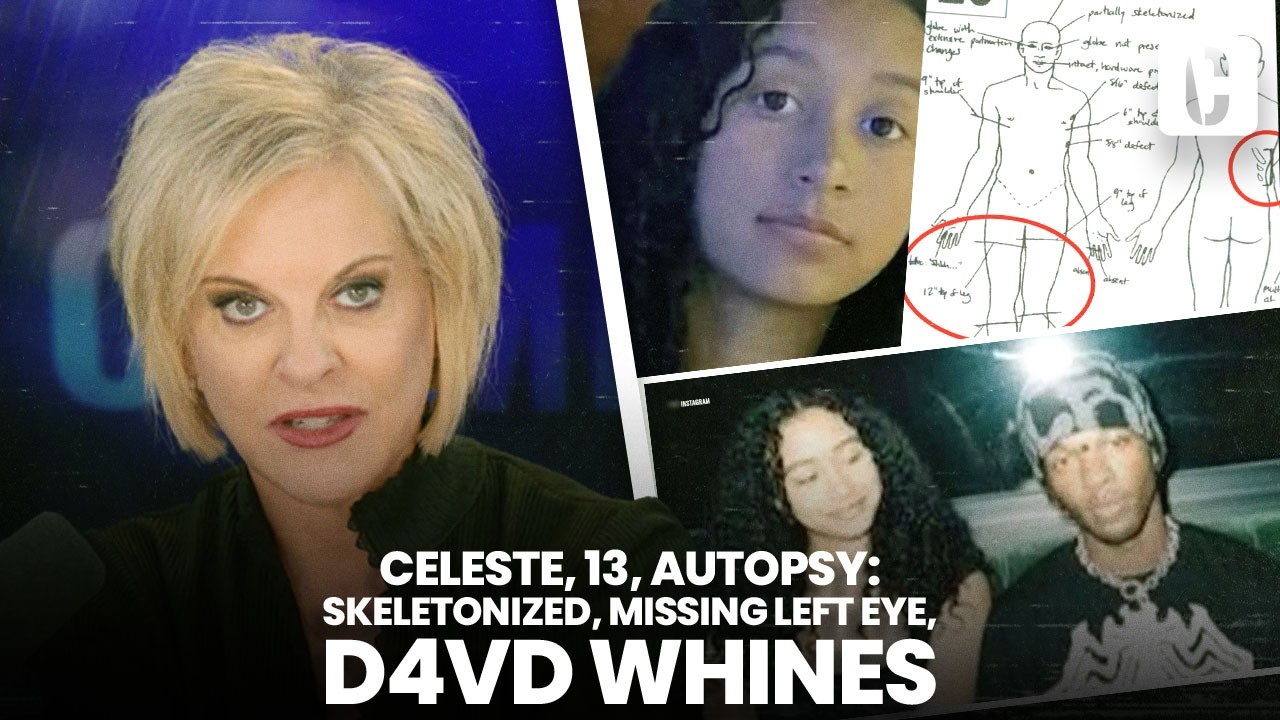
CELESTE, 13, AUTOPSY: SKELETONIZED, MISSING LEFT EYE, D4VD WHINES
"A 13-year-old girl, Celeste Rivas, was found partially skeletonized with a missing left eye, traces of meth and MDMA, and fatal stab wounds, while the accused musician David Anthony Burke (D4VD) complains about jail conditions."

Nancy Guthrie Mystery: Kidnapped to Mexico? The Truth About Eerie Google Searches
"Federal authorities are now engaging with Mexican officials in the Nancy Guthrie kidnapping case, contradicting earlier statements from the local sheriff, while new investigative leads emerge from a gun holster purchase and Google search data is clarified."

Hell On Wheels: Mackenzie Shirilla's Double Murder Crash
"A seemingly accidental car crash that killed two young men in Strongsville, Ohio, was meticulously uncovered by investigators to be a deliberate act of double murder by the 17-year-old driver, Mackenzie Shirilla, amidst a tumultuous relationship and a shocking lack of remorse."