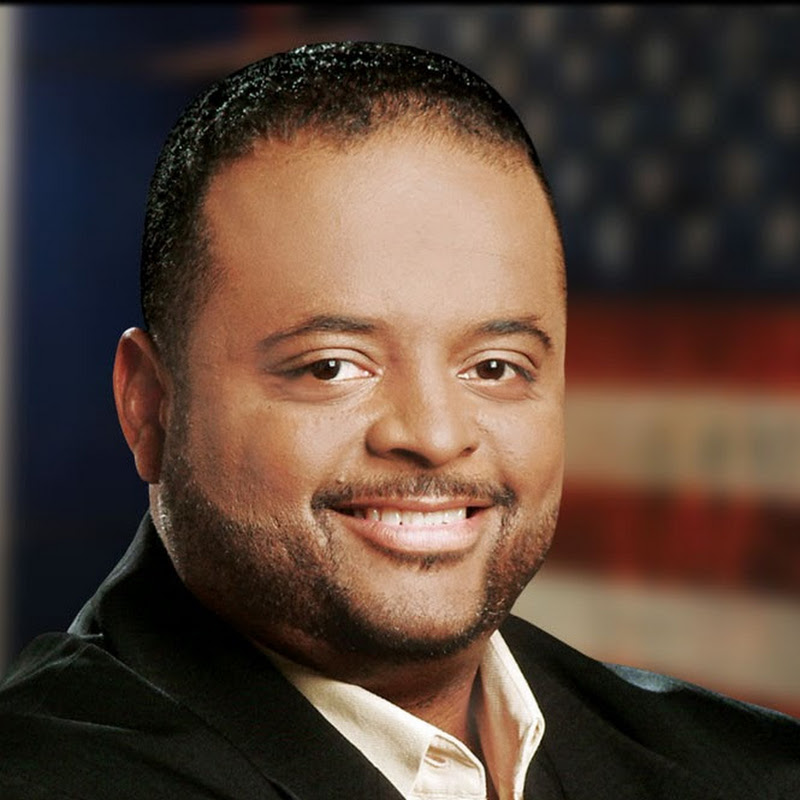
New Minneapolis ICE Shooting Video, Philly Sheriff Warns ICE, Black Women Jobless Spike
YouTube · usJVEg-UV1U
Quick Read
Summary
Takeaways
- ❖A new video from an ICE officer's perspective in the Renee Good shooting in Minneapolis does not help their case, leading to charges against officer Jonathan Ross.
- ❖Philadelphia Sheriff Rochelle Bilal has publicly warned ICE agents that 'thuggish behavior' in her county will result in arrest, criticizing their masked operations and lack of proper training.
- ❖The Trump administration's economic performance in 2025 showed significantly low job creation (500,000 jobs) compared to previous years, with overall and Black unemployment rising.
- ❖Federal law enforcement, including Border Patrol, is criticized for operating far from borders, asking for citizenship based on accents, and lacking proper identification, raising concerns about impersonation.
- ❖Bishop William Barber advocates for a 'Selma moment' of sustained, grassroots voter mobilization in North Carolina (February 11-14) to engage infrequent poor and low-wage voters.
- ❖Congresswoman Summer Lee accused Republicans of a 'hypocritical witch hunt' in congressional hearings, alleging they weaponize fraud investigations to cut social programs and target Democratic states.
Insights
1Minneapolis ICE Shooting and Federal Overreach
A new video from an ICE officer's perspective in the shooting death of Renee Good in Minneapolis is seen as detrimental to the officers' case, leading to charges against Jonathan Ross. This incident has reignited debates about federal law enforcement tactics, with Minneapolis City Councilwoman Robin Wley drawing parallels to the George Floyd killing and accusing the Trump administration of a 'smear campaign' and attempts to cover up the incident. Critics, including a retired FBI agent, argue that deadly force is not justified for fleeing suspects unless the vehicle is used as a weapon, which was not evident in this case.
A new video from one of the ICE officers' perspectives emerged, showing the shooting of Renee Good. The Hennepin County DA stated officer Jonathan Ross would be charged. Retired FBI agent Steve Lazarus commented that 'deadly force is never authorized merely to stop a fleeing suspect' unless the vehicle is used as a weapon. City Councilwoman Robin Wley noted the incident occurred 'just a few blocks away from where George Floyd was also killed' and accused the Trump administration of 'framing Renee Good as an aggressor' and trying to 'cover this up'.
2Local Resistance to Federal Law Enforcement Tactics
Philadelphia Sheriff Rochelle Bilal has taken a firm stance against federal ICE agents, publicly warning them against 'thuggish behavior' and threatening arrest for unlawful actions. She criticized federal agents for wearing masks, lacking proper identification, and disregarding established law enforcement protocols, such as not shooting at fleeing vehicles. This local pushback highlights a broader concern about federal agencies operating without local cooperation or accountability, and the potential for impersonation by individuals using fake federal gear.
Philadelphia Sheriff Rochelle Bilal stated, 'ICE do not bring your thuggish behavior to my county or we're going to put you in jail.' She criticized agents for wearing masks, saying 'No law enforcement professional wears a mask' and 'Law enforcement professionals do not shoot at moving vehicles.' She also expressed concern about people impersonating ICE agents, noting 'you can get on Amazon' fake ICE gear.
3Economic Struggles Under Trump Administration
The Trump administration's economic performance in 2025 is characterized by significantly low job creation, with only about 500,000 jobs created for the entire year, a sharp decline compared to previous administrations. Unemployment, particularly for Black Americans, has increased, and those unemployed are remaining so for longer periods. Despite White House attempts to spin these numbers positively, critics point to manufacturing job losses, the negative impact of tariffs, and the growing influence of AI on job markets as indicators of a floundering economy.
Morgan Harper, Director of Policy and Advocacy for the American Economic Liberties Project, stated that 'there were only about 500,000 jobs created for the whole year' in 2025, compared to 'about two million' in 2024 under President Biden. She noted 'Black unemployment is much much higher from this point last year' and that 'manufacturing job losses' have occurred. The White House's 'go-to talking point' was that 'those that have manufacturing jobs they're getting paid a lot more,' despite overall losses.
4The Power of Grassroots Voter Mobilization
Bishop William Barber emphasizes the critical need for sustained, grassroots voter mobilization, particularly targeting the 80 million poor and low-wage infrequent voters who often feel unheard. He advocates for a 'micro to macro' approach, focusing on local organizing, educating communities on specific policy impacts (like healthcare and food stamps), and connecting their economic 'pain' to their political 'power'. This strategy aims to leverage small margins in elections, as seen with the current Congress being decided by just 7,000 votes, to fundamentally shift political outcomes.
Bishop William Barber stated, 'We must nationalize state movements.' He highlighted that in North Carolina in 2025, 'over 300,000 black that were registered and had voted infrequently, didn't vote. Over 1.7 million poor and low-wage people... didn't vote.' He emphasized connecting 'pain to their power' and noted that 'the current Congress that we have in office right now is there because of a 7,000 vote margin'.
5Republican Tactics and Undermining Oversight
Congresswoman Summer Lee critically exposed Republican tactics in congressional hearings, labeling their fraud investigations as a 'hypocritical witch hunt' that cherry-picks Democratic states and immigrant populations for demonization. She argued that the Trump administration actively hurt oversight mechanisms by firing 17 inspectors general and attacking whistleblowers, thereby creating an environment where fraud could thrive while simultaneously using alleged fraud as an excuse to cut vital social programs like Medicaid, CHIP, and SNAP benefits.
Congresswoman Summer Lee stated, 'too often, your bigotry, the Republican party's own bigotry is imprisoning them and keeping them from ever actually doing something that helps, not harms the American people.' She noted that the Trump administration 'illegally fires 17 inspectors general' and 'tries to roll back their protections.' She concluded, 'This hearing is not an effort by Republicans to improve social service programs. It's an excuse to end them and to punish Democratic states.'
Bottom Line
The expansion of federal law enforcement operations, particularly by Border Patrol and ICE, into inland cities far from actual borders, and their use of tactics like masked agents and questioning based on accents, indicates a broader agenda beyond immigration enforcement, potentially targeting a wider range of citizens and eroding civil liberties.
This aggressive federal presence, coupled with a lack of transparency and accountability (e.g., no badge numbers, GoPros instead of body cameras), creates an environment of fear and uncertainty, making it difficult for local law enforcement to maintain community trust and for citizens to assert their rights.
Local and state governments can proactively establish clear policies and legal frameworks that define the limits of federal agency operations within their jurisdictions, ensuring local oversight and protecting residents' rights. This could involve legislation banning masked officers without clear identification or requiring federal agents to coordinate with local authorities.
The economic impact of tariffs and the rise of AI are creating a 'perfect storm' for job market instability, particularly in manufacturing and professional services, yet current political discourse often fails to offer concrete, supply-side solutions.
Without proactive government investment in retraining programs, infrastructure, and policies that address the 'supply side' (e.g., housing, skilled labor), the economic downturn will worsen, leading to increased unemployment and social unrest, especially for vulnerable populations.
Advocates and policymakers should push for comprehensive economic plans that include significant investment in trades education, AI literacy, and critical thinking skills, alongside policies that stabilize housing and utility costs. This requires moving beyond partisan rhetoric to implement practical solutions that prepare the workforce for future economic realities.
Key Concepts
Connecting Pain to Power
This model suggests that individuals experiencing economic hardship or social injustice can be motivated to engage politically if they understand how their 'pain' is linked to systemic issues and how their collective 'power' through voting and organizing can bring about change. Bishop William Barber uses this to explain how losing healthcare or food stamps can awaken complacent voters.
Micro to Macro Organizing
Instead of focusing solely on large-scale national events, this model emphasizes building political power through sustained, granular efforts at the local level (neighborhoods, blocks, individual houses). These micro-level actions, such as door-knocking and targeted voter engagement, accumulate to create significant macro-level change in elections.
Lessons
- Record all interactions with law enforcement: Carry a camera or use your phone to record any encounter with federal or local agents, as this footage can be crucial evidence.
- Know your rights: Understand the distinctions between federal and local law enforcement authority and your right to remain silent, especially when questioned outside of border zones.
- Engage in sustained local political mobilization: Focus on micro-organizing efforts in your community, connecting with infrequent voters, and advocating for specific policies that address local economic and social issues year-round, not just during election cycles.
Bishop William Barber's Grassroots Mobilization Strategy
Identify and map poor and low-wage infrequent voters: Use data to pinpoint communities and individuals earning $50,000 or less for a family of four who are registered but vote inconsistently.
Connect 'pain to power': Educate these voters on how specific policy decisions (e.g., cuts to healthcare, SNAP benefits) directly impact their lives and how their collective vote can change these outcomes.
Implement a 'micro to macro' organizing approach: Start with mobilizing within your own organization/church, then expand to a 2-5 mile radius, focusing on door-to-door engagement, community town halls, and non-partisan voter guides that expose politicians' records.
Align mobilization with key voting periods: Schedule marches, rallies, and civic engagement activities to coincide with early voting and same-day registration periods to maximize immediate electoral impact.
Demand clear policy commitments from candidates: Challenge politicians to articulate specific plans for the first 50 days in office, focusing on issues like living wages, healthcare, and voting rights, rather than just campaigning 'against' opponents.
Notable Moments
New video of the Minneapolis ICE shooting of Renee Good is played and analyzed, showing the incident from an officer's perspective and leading to charges against officer Jonathan Ross.
This moment highlights the controversial nature of federal law enforcement tactics and underscores the importance of video evidence in holding officers accountable, drawing parallels to other high-profile police shootings.
Philadelphia Sheriff Rochelle Bilal delivers a fiery speech, warning ICE agents against 'thuggish behavior' in her county and vowing to arrest them if they operate unlawfully or without proper identification.
This demonstrates a significant act of local defiance against perceived federal overreach and sets a precedent for local law enforcement refusing to cooperate with federal agencies whose tactics are deemed illegal or unethical.
An Uber driver, Ben Hassan, confronts federal Border Patrol agents who questioned him in Minneapolis, challenging their jurisdiction and motives, and refusing to answer questions about his citizenship.
This illustrates a citizen's active resistance against what he perceives as racial profiling and unlawful interrogation by federal agents operating far from the border, emphasizing the importance of knowing one's rights and recording interactions.
Congresswoman Summer Lee confronts James Comer in a congressional hearing, accusing Republicans of a 'hypocritical witch hunt' and weaponizing fraud investigations to cut social programs while having previously undermined oversight mechanisms.
This moment exposes the political strategy behind certain congressional investigations, suggesting they are used to demonize vulnerable populations and justify cuts to social services, rather than genuinely addressing fraud.
Quotes
"Deadly force is never authorized merely to stop a fleeing suspect. Yes, if a vehicle is being used as a weapon, that changes the analysis, but nothing in this video supports that."
"ICE do not bring your thuggish behavior to my county or we're going to put you in jail."
"No law enforcement professional wears a mask. None. Those that come into our communities wearing a mask to commit crime."
"You guys just murdered somebody in cold blood in this city today. And God brought you guys to me at work. I'm literally working here. And you guys are literally impeding my income, asking me questions."
"The current Congress that we have in office right now is there because of a 7,000 vote margin, right? In a time when 90 million people didn't vote, we have to start getting folk to understand that so they can own their power."
"too often, your bigotry, the Republican party's own bigotry is imprisoning them and keeping them from ever actually doing something that helps, not harms the American people."
Q&A
Recent Questions
Related Episodes

Trump's HEATED Call + AOC's Data Center Deep Dive | PBD #804
"This episode dissects the week's most impactful events, from Trump's contentious call with Netanyahu and Elon Musk's path to trillionaire status, to the societal implications of AI-driven job displacement and AOC's unexpected political alignment on data center concerns."
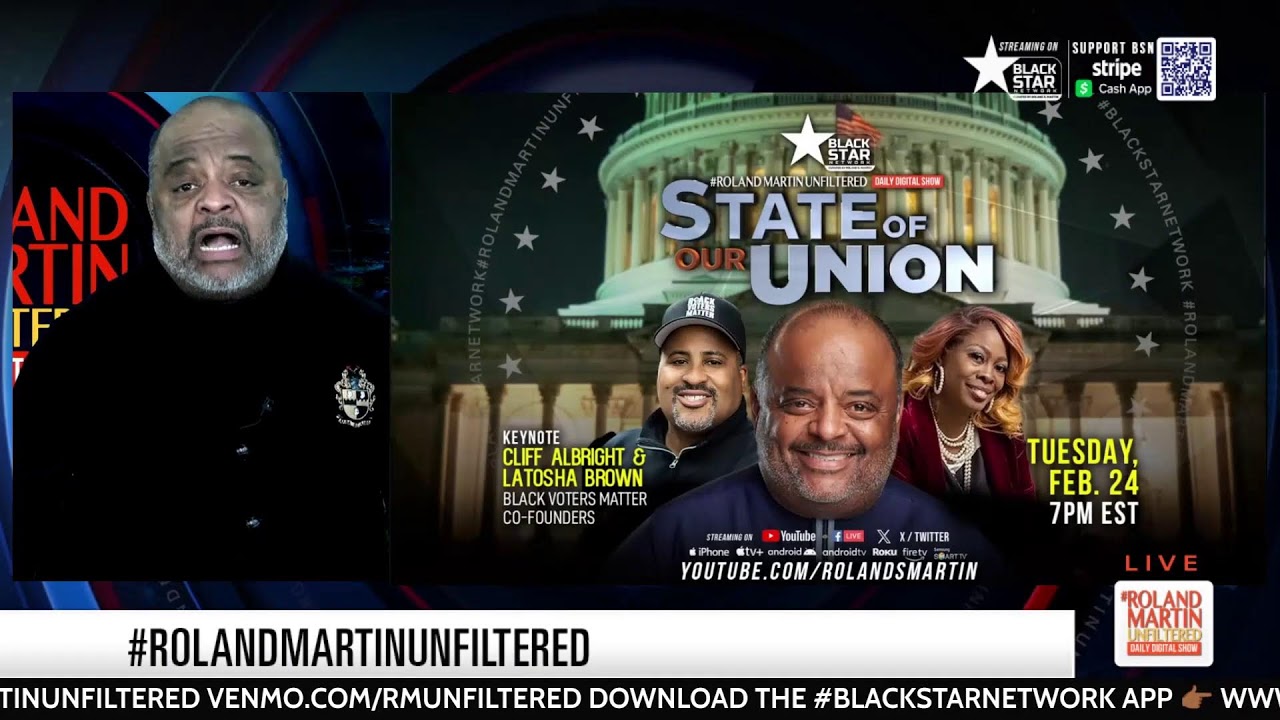
Black Woman Killed in ICE Pursuit. Newsom “Can’t Read” Remark. Tariff Repayment Push. TPS Fight
"This episode dissects multiple critical events, from the tragic deaths during an ICE pursuit and a police shooting, to debunking a viral controversy around Governor Gavin Newsom's remarks, and honoring Reverend Jesse Jackson's enduring legacy in economic and media justice."
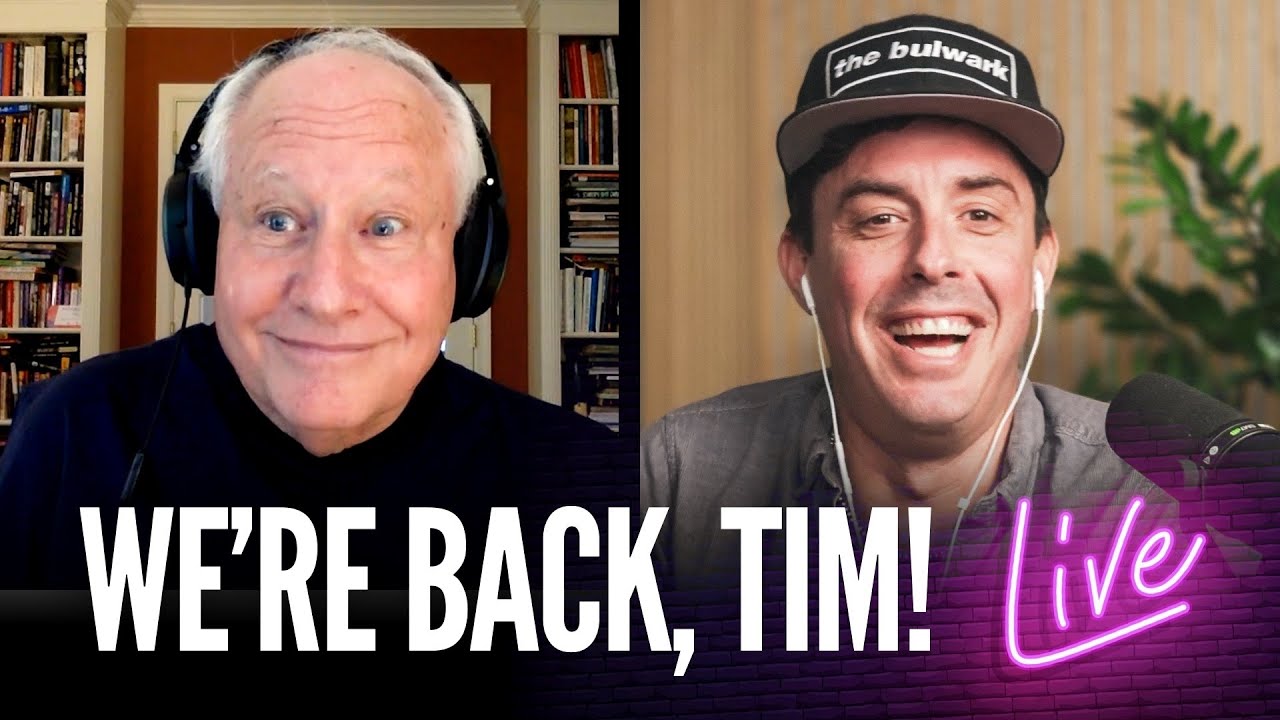
Bill and Tim Couldn’t Wait Until Monday
"Tim Miller and Bill Kristol discuss the shifting tactics of ICE in Minneapolis, the grassroots community resistance, Trump's fabricated hospital ship to Greenland, and the ongoing war in Ukraine."
NC Mom Sues Hospital For Negligence. Black NFL Coaches Win Major Ruling. Drug Test Scandal Exposed
"This episode exposes systemic failures and racial disparities across healthcare, professional sports, and politics, featuring a mother's harrowing hospital negligence lawsuit, a landmark NFL discrimination ruling, and alarming findings on flawed drug tests criminalizing new mothers."