
Trump’s Base Might Stay Home (w/ Amy Walter) | Focus Group
YouTube · vGzarL-aTGM
Quick Read
Summary
Takeaways
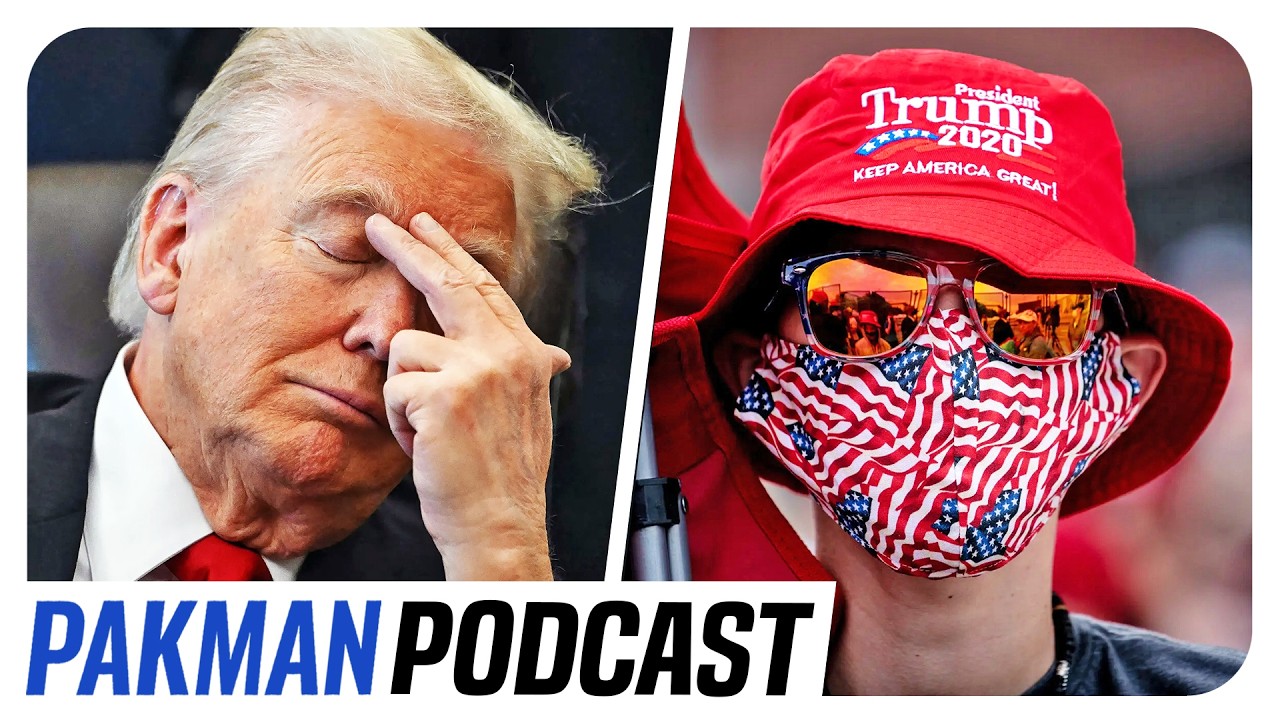
- ❖A significant portion of Trump's base, especially those motivated by economic concerns, is deeply disappointed with his administration's performance on the economy and foreign policy.
- ❖The Jeffrey Epstein files serve as a powerful symbol of betrayal for these voters, who expected Trump to hold elites accountable, not appear implicated or inactive.
- ❖An 'enthusiasm gap' is emerging, where disaffected Trump voters are less likely to turn out, posing a greater threat to Republican electoral success than direct Democratic conversions.
- ❖The political map is narrowing for Democrats, requiring them to win in traditionally red states if they hope to build a lasting Senate majority.
- ❖The current media environment fosters widespread conspiracy theories, which are increasingly embraced by voters, further complicating political discourse and trust in institutions.
Insights
1Trump Voters' Disillusionment Driven by Economy and Foreign Policy
Many Trump voters, including multi-time supporters, express deep dissatisfaction with the economy (e.g., rising gas and grocery prices) and the war in Iran. They feel Trump is not focusing on their core concerns and has failed to deliver on promises related to economic prosperity and an 'America First' foreign policy. This contrasts with his first term, where economic approval often offset concerns about his behavior.
Voters described Trump's address as lacking substance, focusing on 'who we've killed lately' instead of economic relief or an exit strategy for the war. One voter stated, 'I'm not getting what I voted for' (). Another highlighted gas prices in Texas nearing $5 a gallon ().
2Epstein Files as a Symbol of Betrayal and Catalyst for Distrust
The release of the Jeffrey Epstein files is a significant driver of dissatisfaction, particularly among voters who supported Trump because they believed he would 'drain the swamp' and challenge corrupt elites. The perceived lack of prosecution for powerful individuals implicated in the files, including Trump himself, is viewed as a profound betrayal of his anti-establishment appeal. This fuels existing conspiracy theories and a sense that powerful people are above the law.
Voters openly questioned if the Iran war was a distraction to 'hide what you were up to' regarding Epstein (). One participant, a former felony prosecutor, likened the situation to the Catholic Church scandal, expressing dismay that 'our leadership on both sides of the aisle' is involved and unpunished (). The hosts noted that Trump's failure to prosecute anyone from the files undermines his image as an elite-taker-downer ().
3Emerging Enthusiasm Gap Threatens Republican Turnout
The widespread disillusionment among non-MAGA Trump voters is creating an 'enthusiasm gap,' where these voters are likely to stay home or even vote for Democrats, rather than actively supporting Republican candidates. This effect is compounded by the tendency of core MAGA voters to only turn out when Trump himself is on the ballot, making midterms particularly challenging for the party.
Sarah Longwell noted that recent special elections show a 'real enthusiasm gap,' with a congressional district swinging 25 points toward Democrats (). Amy Walter emphasized that the biggest concern for Republican campaigns is that 'independents have soured on Trump... Republicans are sticking with Donald Trump... but they're not liking him enough or don't feel threatened enough to come out and vote for Republicans' ().
4The Narrowing Political Map for Democrats
Despite potential Republican vulnerabilities, Democrats face a structural challenge: the political map has significantly narrowed. States that were once competitive or even Democratic strongholds (e.g., Ohio, Iowa, Florida) are now reliably red, meaning Democrats must win in increasingly difficult, Trump-leaning states to secure majorities in the House and Senate.
Amy Walter explained that to lose 40 House seats (as in 2018), Trump's numbers would have to be 'decidedly worse' because even flipping every district Trump won by less than 10 points only yields 27 seats (). She cited Ohio as an example, where a Democratic incumbent must win in a state Trump carried by 11-12 points ().
Key Concepts
The Grammar of Hidden Knowledge
This model describes the pervasive belief among some voters that a cabal controls events, that things are rigged, and that there are hidden truths to uncover. This mindset thrives when institutional trust is low and is reinforced by events like the Epstein saga, which some interpret as proof that 'conspiracy theories are directionally correct'.
Lessons
- Political campaigns should segment Trump voters beyond the 'MAGA' label, recognizing a distinct group motivated by economic self-interest and anti-elite sentiment who are now highly disaffected.
- For Republicans, a strategic pivot back to core economic issues is critical to re-engage disillusioned voters, moving away from foreign policy crises or cultural battles that alienate this segment.
- Democrats should focus messaging on economic affordability and perceived betrayal by elites, leveraging voter disappointment over issues like the Epstein files, to attract disengaged Republican-leaning voters.
- Both parties must contend with an information environment where conspiracy theories are increasingly accepted, requiring nuanced strategies to convey facts and build trust amidst widespread skepticism.
Notable Moments
Discussion of the '6 months' theory regarding conspiracy theories becoming truth.
This highlights a prevalent mindset among some voters, where the Epstein saga is seen as validating the idea that initially outlandish theories eventually prove to be 'directionally correct,' further eroding trust in mainstream narratives.
Voters expressing regret for voting for Trump but not necessarily being ready to vote for a Democrat.
This illustrates the 'stay-home' level despair and the challenge for Democrats to convert disaffected Republicans, who may be open to not voting Republican but are not yet sold on the alternative.
Quotes
"The dichotomy used to be, well, I don't like the mean tweets, but the economy is good. Or I don't like Trump the person, but I like his policies. And now they don't like Trump the person or his policies at the moment."
"If there's a blue wave in November, it may have as much to do with the sad GOP base staying home as with Democrats converting a bunch of new voters."
"I focus that blame directly on Trump and the administration."
"I don't really tell people I voted for Trump because I feel like I really regret it and feel bad about it, but I just basically looked at my own finances and said, 'Who's going to be better?' I voted for him."
"If you're not prosecuting, there has to be a reason. What other reason could there be?"
"What's the difference between a conspiracy theory and the truth? And they said about 6 months."
"Trump has spent will have spent more than a decade teaching their voters to hate the party and only love him."
Q&A
Recent Questions
Related Episodes
What happens to Trump voters when Trump is gone?
"The David Pakman Show explores the contentious path forward for Trump voters after his political era, exposing alleged corruption, economic misrepresentation, and the necessity of media literacy."

HOT TOPICS | Is Donald Trump Destroying MAGA?!
"Don Lemon declares the MAGA movement is collapsing, citing Donald Trump's escalating political missteps, economic failures, and alienation of his core base and former allies."

🚨 THEY… F*CKING... FOUND… OUT… 😂😂😂
"The host delivers a fiery, unfiltered commentary on global and domestic political events, framing them as a battle between a 'collapsing globalist order' and a 'resurgent new right' that prioritizes national sovereignty and traditional Western values."

Trump Just ENDED JD Vance’s White House Dreams
"A New York Times article and internal White House dynamics reveal Donald Trump's deep dissatisfaction with J.D. Vance, potentially ending Vance's 2028 presidential ambitions and highlighting a broader struggle for control within the Republican Party."