
TEPE MURDERS: SURGEON EX-HUBBY PLOTS BAIL BID, HOUSE FOR SALE
YouTube · vJGJwwmh-ds
Quick Read
Summary
Takeaways
- ❖Dr. Michael McKe, Manique Tepee's ex-husband and the accused murderer, is attempting to secure bail.
- ❖McKe's court appearances have been marked by a perceived arrogant demeanor, including yawning and clenching his teeth.
- ❖The search warrant return from the Tepee home lists 29 pieces of evidence, 395 photographs, and swabs for DNA and blood.
- ❖Manique Tepee was shot multiple times, including in the face, and Spencer Tepee was also shot multiple times, totaling 16 shots between them.
- ❖Forensic analysis suggests the shooter moved around the bed, ejecting spent casings across the scene.
- ❖The Tepee home, the site of the double murder, has been listed for sale, raising concerns about the destruction of the crime scene.
- ❖Experts argue that professional crime scene cleaning removes all biological evidence, making it impossible to revisit the original scene for trial purposes.
Insights
1Suspect's Court Demeanor and Bail Bid
Dr. Michael McKe, the ex-husband accused of the Tepee murders, appeared in court with a visibly angry and arrogant demeanor, reportedly yawning and clenching his teeth. Despite this, his legal team is preparing to push for his release on bail, a move strongly opposed by the host due to concerns about flight risk and witness intimidation, given his past attempt to flee after the murders.
Host Nancy Grace and Dr. Bethany Marshall comment on McKe's court appearance, describing him as looking like he wanted to 'bite the neck out of his defense lawyer' and 'so above it all' (, , ). Dave Mack confirms the bail bid (). Joe Scott Morgan references McKe's previous flight attempt ().
2Details from the Search Warrant Return
The recently unsealed search warrant return from the Tepee home revealed that investigators seized 29 pieces of evidence, documented 15 latent fingerprints, took 395 photographs, and gathered swabs for potential blood and DNA. This data forms the foundation for the state's case.
Dave Mack reports 29 pieces of evidence, 395 photographs, and swabs for DNA and blood (, ). Nancy Grace explains the legal process of a search warrant return ().
3Forensic Analysis of the Murder Scene
Forensics expert Joe Scott Morgan details that Manique and Spencer Tepee were shot a total of 16 times (Manique 9, Spencer 7), with Manique sustaining a fatal wound and other shots to her arms and face. The use of a semi-automatic weapon means spent rounds were ejected across the scene, requiring painstaking collection, even from blood-soaked areas, to reconstruct the timeline and identify the weapon used.
Joe Scott Morgan states Manique was shot nine times and Spencer seven times, totaling 16 (). He describes the semi-automatic weapon ejecting rounds as the shooter 'orbited the bed' ().
4Controversy of Selling the Crime Scene House
The decision to list the Tepee home for sale is highly criticized by the panel, who argue it leads to the irreversible destruction of critical evidence. They cite examples like the Idaho quadruple murder house being torn down and the cleaned-up scene of Ellen Greenberg's death as precedents where crime scene alteration hindered justice. The host emphasizes that a jury's ability to view the original scene provides crucial context.
Nancy Grace announces the Tepee home is for sale (, ). Joe Scott Morgan and Nancy Grace discuss the impact, comparing it to the Idaho and Moselle cases (, ).
5Irreversible Destruction of Evidence by Professional Cleaning
Corey Charmer, a crime scene cleaner, explains that their process involves not only removing visible blood but also disinfecting surfaces with chemicals that alter any remaining biological material. Porous items like mattresses and carpets are cut out, removed, and incinerated, ensuring no evidence remains. This process, if performed before all potential evidence is collected, permanently compromises the scene.
Corey Charmer details the cleaning process, including using hydrogen peroxide-based illuminators, cutting out blood-saturated materials, and incineration (, , ).
Lessons
- Advocate for policies that mandate the long-term preservation of major crime scenes, especially in ongoing murder investigations, to ensure all potential evidence is available for trial.
- Educate yourself on the legal process of search warrants and evidence collection to understand how cases are built and what factors can compromise them.
- Consider the psychological impact of crime scenes on first responders and clean-up crews, recognizing the trauma associated with such work.
Quotes
"He looks like he has a lot of contempt. Contempt. Well, we know already he had contempt for the law, contempt for Monnique and Spencer."
"If he ran once from the scene of a crime, he'll do it again. When you don't know a horse, Joe Scott, look at his track record."
"Why would you why would you take what what's the rush? What is the rush? The only thing I can think about is that there's some kind of monetary motivation. I understand that, but it's problematic."
"Our job is to not only make the traces of the crime disappear, but to make the danger disappear. So to do that, we not only have to make the visible blood gone, but we also have to disinfect."
Q&A
Recent Questions
Related Episodes

Hell On Wheels: Mackenzie Shirilla's Double Murder Crash
"A seemingly accidental car crash that killed two young men in Strongsville, Ohio, was meticulously uncovered by investigators to be a deliberate act of double murder by the 17-year-old driver, Mackenzie Shirilla, amidst a tumultuous relationship and a shocking lack of remorse."

Student Murders Her Ex-Teacher After Graduation
"A welfare check for a missing retired teacher escalates into a murder investigation when his car is found with a former student, revealing a brutal robbery-homicide driven by drug-induced rage."

Woman Finds Best Friend Murdered After Date Night in Texas
"An elite cyclist's murder in Austin, Texas, unravels a jealous love triangle, leading to an international manhunt and the conviction of her killer."
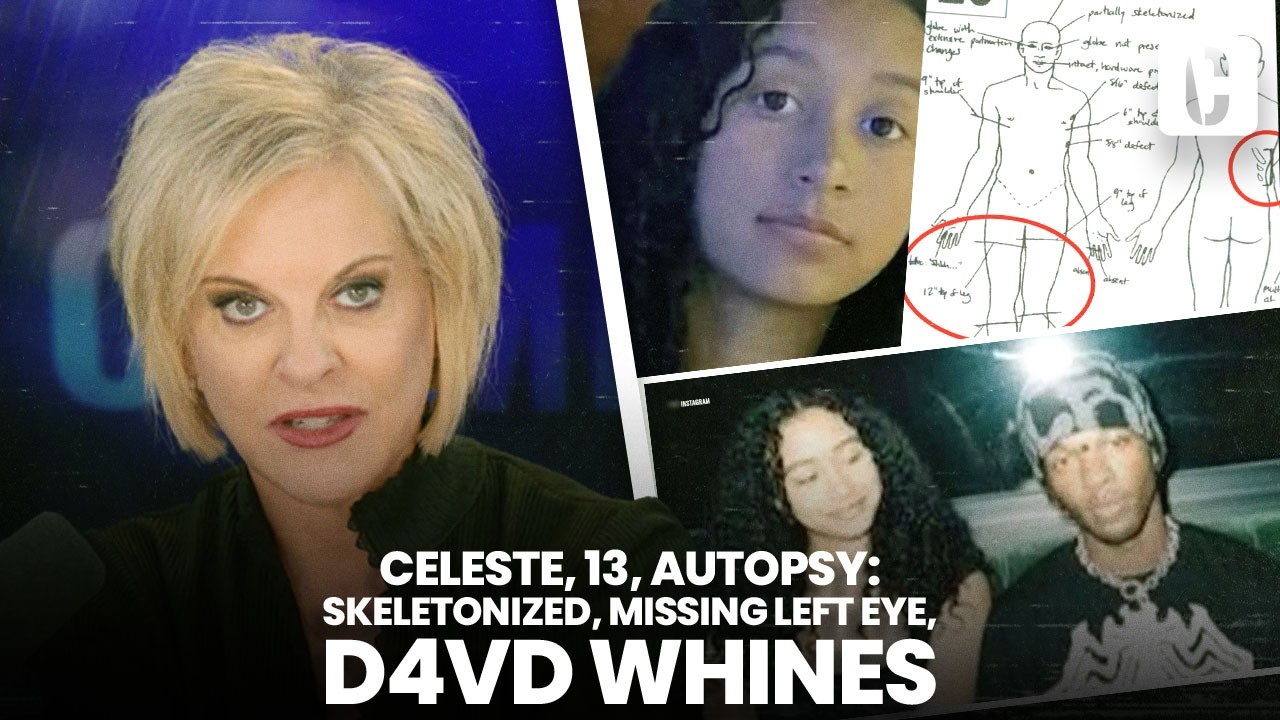
CELESTE, 13, AUTOPSY: SKELETONIZED, MISSING LEFT EYE, D4VD WHINES
"A 13-year-old girl, Celeste Rivas, was found partially skeletonized with a missing left eye, traces of meth and MDMA, and fatal stab wounds, while the accused musician David Anthony Burke (D4VD) complains about jail conditions."