Dave Smith NUKES Israel First LIARS
YouTube · vZyTCkGQQBY
Quick Read
Summary
Takeaways
- ❖Former President Trump's statements on Iran were highly inconsistent, threatening military strikes one moment and announcing a peace deal the next.
- ❖The US facilitated Iraq's use of chemical weapons against Iran during the Iraq-Iran War, contributing to long-standing Iranian animosity towards the US.
- ❖US administrations, including Obama's and Trump's, are accused of 'treason' for arming groups like Al-Qaeda and ISIS in Syria, which are considered enemies of America.
- ❖The 'Clean Break memo' is cited as a blueprint for Israeli-driven US foreign policy, aiming to topple regimes hostile to Israel to secure its territorial ambitions.
- ❖Sam Harris is criticized for denying the famine in Gaza and for refusing to debate critics, which the hosts attribute to his inability to defend his pro-Israel stance against factual evidence.
- ❖The hosts argue that the US-Israel alliance has been detrimental to American interests, prioritizing Israeli foreign policy goals over the well-being of the American people.
Insights
1Trump's Inconsistent Iran Policy and the Kharg Island Threat
Former President Trump displayed extreme inconsistency in his approach to Iran, oscillating rapidly between threats of devastating military strikes, including seizing Kharg Island and other oil infrastructure, and announcing imminent peace deals. This erratic behavior is framed as a 'drunk teenager' conducting war, lacking any coherent strategy.
Trump's Truth Social posts threatening to 'hit them very hard tonight' and 'taking Car Island' (), followed by an announcement of a deal being 'very close' and 'signed this weekend' ().
2US Complicity in Historical Atrocities Against Iran
The US government's historical actions, such as facilitating the sale of chemical weapons to Iraq for use against Iran during the Iraq-Iran War, have created deep-seated resentment among the Iranian population. This context is crucial for understanding why negative sentiments towards America exist in Iran, far beyond simple 'hostage' narratives.
The US 'provided Iraq with literal chemical weapons to use against Iran' () and 'armed them the entire time through the war' (), leading to hundreds of thousands of Iranian casualties.
3The 'Israel First' Doctrine and the Clean Break Memo
US foreign policy in the Middle East is argued to be primarily driven by Israeli interests, aiming for 'regime collapse' in countries perceived as threats to Israel. The 'Clean Break memo' is presented as a blueprint for this strategy, detailing plans to destabilize and overthrow leaders in the region to secure Israel's territorial ambitions, with the US acting as the military and economic enforcer.
The war is 'not about nuclear weapons. It's not about anything other than Israeli desires for regime collapse' (). The 'Clean Break memo' laid out a plan to 'topple all of the Arab and Muslim leaders who we don't like' () to avoid a two-state solution and allow Israel to 'annex all of Palestine' ().
4Sam Harris's Denial of Gaza Famine and Refusal to Debate
Sam Harris is heavily criticized for denying the existence of famine in Gaza, dismissing Pulitzer-winning photos as 'fakery,' and claiming Hamas stole food. His refusal to debate critics is attributed to an inability to defend his pro-Israel stance against factual evidence, revealing a 'sociopathic' logic that justifies civilian suffering.
Harris stated, 'no one was starving in Gaza' and 'Hamas stealing food and hoarding it' (). The hosts point out that Israel restricted aid for 'three months straight' () and that Harris's logic implies punishing civilians because Hamas might steal aid.
5Accusations of Treason Against US Administrations
Both Obama and Trump administrations are accused of treason for providing aid and comfort to groups like Al-Qaeda and ISIS in Syria, which are considered enemies of the United States. This is framed as a betrayal of American soldiers and a prioritization of foreign policy agendas over national security.
Obama 'armed al-Qaeda terrorists and ISIS related terrorists' (). Trump invited a former Al-Qaeda commander, Gelani, to the White House (). This is 'literally treason with a capital T' () for 'giving aid and comfort to the enemy during the time of war' ().
Bottom Line
Despite mainstream media narratives and pro-Israel advocacy, Israel's global popularity is consistently declining, indicating a losing 'propaganda war' according to Zionist organizations themselves.
This suggests that the public is increasingly seeing through the established narratives, making it harder for pro-Israel advocates to maintain support for current policies.
Activists and alternative media can leverage this trend by continuing to expose alleged inconsistencies and biases, further shifting public opinion and potentially influencing policy changes.
Key Concepts
The First Casualty of War is Truth
This model, explicitly mentioned, posits that in times of war, truth is often the first victim, as governments and media engage in propaganda and misinformation to justify conflicts and manipulate public opinion. The hosts apply this to numerous US wars, asserting they were based on lies.
Demonize and Whitewash
This describes a propaganda tactic where one side's adversaries are systematically demonized (e.g., portraying all Muslims as 'jihadists worse than Nazis'), while the actions of one's own side or allies are whitewashed or downplayed, regardless of their severity. Sam Harris's arguments are presented as a prime example of this model.
Lessons
- Critically evaluate all claims regarding international conflicts, especially those from official sources or prominent media figures, by cross-referencing information and seeking out alternative perspectives.
- Recognize the historical context of US foreign policy in the Middle East, including past interventions and alliances, to better understand current geopolitical tensions and public sentiment in the region.
- Challenge narratives that demonize entire populations or religious groups, and question the motivations behind calls for military intervention, particularly when they align with specific foreign interests.
Notable Moments
The hosts highlight the 'stunning intellectual immaturity' of figures like Ben Shapiro and Donald Trump when discussing complex geopolitical issues like taking Kharg Island, pointing out their lack of understanding of the human cost and strategic realities.
This moment underscores the hosts' belief that powerful figures often approach foreign policy with a superficial understanding, leading to dangerous and unrealistic proposals that ignore the severe consequences.
Dave Smith contrasts the American memory of the 1970s Iran hostage crisis with the Iranian memory of the US green-lighting and arming Iraq during the Iraq-Iran War, including chemical weapons use.
This comparison effectively illustrates the vast difference in historical grievances and perspectives between the US and Iran, explaining the roots of Iranian animosity and challenging the simplistic 'us vs. them' narratives often presented in Western media.
The hosts critique Sam Harris's 'new atheist thing' for failing to prevent him from defending what they see as religiously-motivated, irrational policies, suggesting that 'atheism can get you there, too' in terms of justifying horrific outcomes.
This moment challenges the idea that rationality or atheism inherently leads to moral superiority, arguing that even secular intellectuals can fall into ideological traps when defending political positions, especially concerning Israel.
Quotes
"Donald Trump conducts a war like a drunk teenager. So it's just impossible to you know everything he says contradicts the last thing he said."
"The brutality that the United States government and its military has carried out in the Middle East against Israel's perceived enemies has been, you know, pretty disastrous when it comes to hostilities directed toward the United States."
"Almost every war, you know, that old saying is that uh the first casualty of war is always the truth. And it's it is the case that almost every single war is based off lies."
"This war is not about nuclear weapons. It's not about anything other than Israeli desires for regime collapse."
"My views about the conflict in the Middle East will not fundamentally change unless my critics produce evidence, you're looking at it right now, that Israel has become as evil as her enemies."
"You're talking about the most powerful military in the region systematically destroying a people that they've held captive for 59 years."
Q&A
Recent Questions
Related Episodes

Patrick Henningsen: Hezbollah JUST Fired Back at Israel - Iran Vows to “Crush” All Attacks
"Patrick Henningsen argues that the US and Israel initiated an illegal war against Iran, driven by Trump's incompetence and Israeli influence, leading to an inevitable escalation with severe global economic repercussions."

🚨 THEY F*CKED AROUND FOR THE LAST TIME 😭😭😭
"This episode unleashes a torrent of highly opinionated commentary on the US-Iran deal, Israel's role, and a scathing critique of 'leftist' policies and immigration, particularly highlighting the UK grooming gang report as evidence of Western societal decay."

Iran Deal Skepticism. Whoopi Vs Vance. Potomac Park Invasion. Racist Hurls Slurs At Black Boy.
"This episode dissects multiple instances of alleged anti-Black policies and racial injustice, from the Trump administration's legal challenges to reparations and the Iran deal, to police brutality and the erasure of Black history."
BREAKING: Protests ERUPT In Iran Over IRGC Surrendering To Trump - Infighting Clashes In Tehran
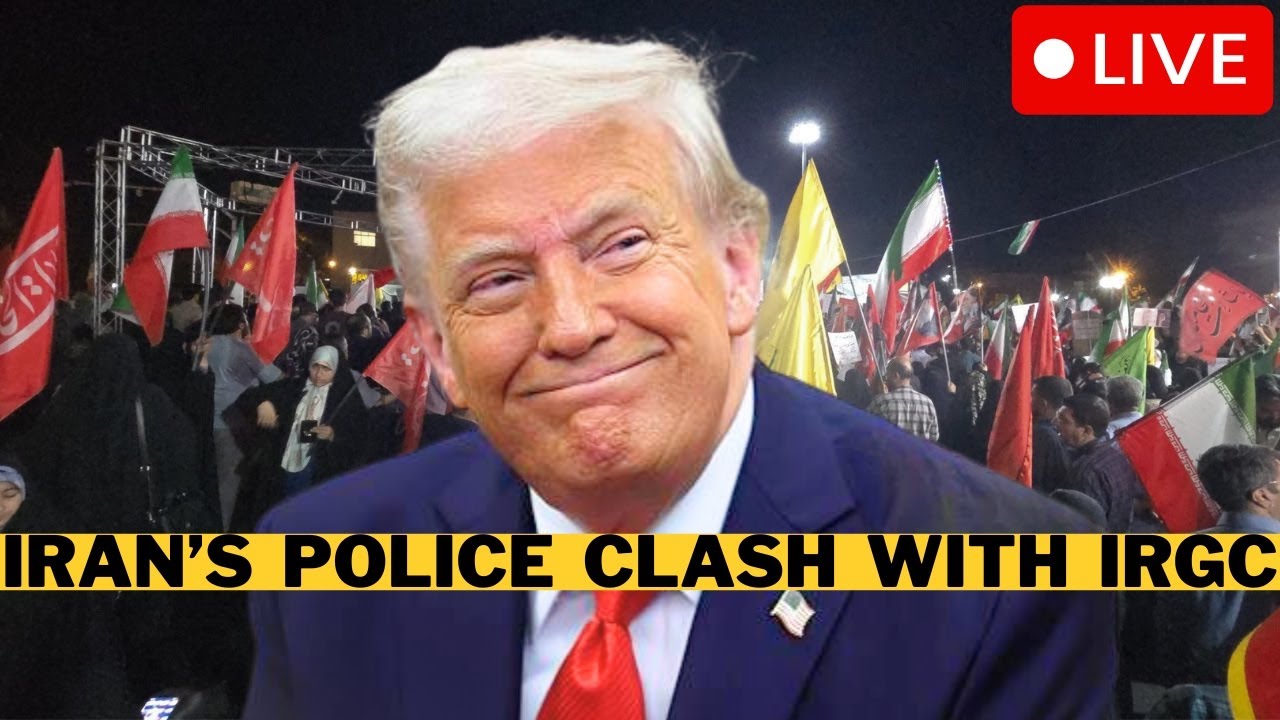
"Iran is experiencing severe internal infighting and protests as hardline IRGC elements clash with government figures over a perceived 'surrender' to the US, while mainstream Western media misrepresents the situation."