BREAKING: Massive IDF Assault On Hezbollah HALTED; IRGC Boats TERRORIZE Hormuz | TBN Israel
YouTube · vcsgvFjwlp8
Quick Read
Summary
Takeaways
- ❖The U.S. intervened to stop an IDF strike on Beirut's Dahiya district, fearing it would derail U.S.-Iran negotiations.
- ❖Iran insists any agreement with the U.S. must include Lebanon and guarantee Hezbollah's interests.
- ❖Hezbollah openly violated the U.S.-brokered ceasefire, demonstrating its independence and continued intent to attack Israel.
- ❖Israel is implementing a 'doctrine of stages,' using diplomatic pauses to regroup and advance operational objectives in southern Lebanon.
- ❖The IDF now controls approximately 600 square kilometers in southern Lebanon, establishing a buffer zone larger than the Gaza Strip.
- ❖Iran's Revolutionary Guards are actively disrupting shipping in the Strait of Hormuz, attempting to collect passage fees and assert de facto sovereignty.
- ❖The U.S. has threatened sanctions and military action against Oman if it cooperates with Iran's efforts to control the Strait of Hormuz.
- ❖Israel's defense exports reached a historic $19.2 billion, reflecting global demand for its battlefield-tested military technology.
- ❖Iran attempts to link all its regional fronts (Lebanon, Hormuz, Yemen) into a single bargaining chip against the U.S.
Insights
1U.S. Intervention Halts Israeli Strike on Beirut to Preserve Iran Talks
President Trump directly intervened to prevent a planned Israeli strike on Hezbollah targets in Beirut's Dahiya district. This intervention was driven by Washington's desire to avoid an uncontrolled escalation that could jeopardize ongoing diplomatic efforts with Iran, specifically concerning a ceasefire and the reopening of the Strait of Hormuz. The U.S. engaged in unusual indirect contact with Hezbollah through Lebanese officials to secure a commitment to cease fire, highlighting the urgency of preventing a wider regional conflict.
Trump announced that Israel would not send forces into Beirut and that Hezbollah committed to stop firing towards Israel. Netanyahu confirmed he told Trump Israel would strike Beirut if Hezbollah attacks continued. American officials feared a broad strike in Beirut would harm diplomatic efforts with Lebanon and broader regional moves. Trump's reference to contact with Hezbollah, even through mediators, was unusual given its terrorist designation. (, , , , , )
2Israel's 'Doctrine of Stages' in Southern Lebanon
Israel is shifting from a 'rounds of fighting' model to a 'doctrine of stages,' where every diplomatic pause is utilized as a strategic jumping-off point for the next operational phase. This involves regrouping, creating legitimacy, and consolidating territorial gains. The IDF is actively establishing a new security reality in southern Lebanon, including a buffer zone and control over strategic high grounds, aiming to dismantle Hezbollah's infrastructure and push it away from the Israeli border.
Israel is moving to a doctrine of stages, where every diplomatic pause becomes a jumping off point for the next stage, used to regroup and preserve achievements. The IDF holds territory up to the anti-tank line, expanding to Beaufort Castle, controlling about 600 square kilometers, larger than the Gaza Strip. This aims to build a different security reality, control ridge lines, thwart infrastructure, and push Hezbollah away. (, , , , , )
3Iran's Leverage: Strait of Hormuz and Hezbollah as Bargaining Chips
Iran is strategically using its control over the Strait of Hormuz and its proxy, Hezbollah, as significant leverage in negotiations with the U.S. Tehran insists that any agreement must include Lebanon and guarantee Hezbollah's interests, effectively linking all its regional fronts. The Revolutionary Guards are actively disrupting maritime trade in Hormuz, attempting to collect passage fees and assert de facto sovereignty, thereby increasing global economic risk and pressuring the U.S. to restrain Israel in Lebanon.
Tehran insists every arrangement with the U.S. include Lebanon and guarantee Hezbollah's interests. The Revolutionary Guards are tightening operational grip on the Strait of Hormuz, collecting passage fees, and dictating rules. Iran is trying to insert Hezbollah into its agreement with Washington, making every Israeli strike in Lebanon endanger talks on Hormuz. (, , , , )
4Global Economic Clock Influences Geopolitical Actions
The global economy, particularly oil prices and stock markets, significantly influences the geopolitical actions and diplomatic strategies of major powers like the U.S. The Trump administration is acutely aware of how its statements and military actions affect markets, often timing strikes to minimize economic impact. The disruption in the Strait of Hormuz directly impacts global energy prices and trade, creating an economic clock that limits the freedom of action for countries dependent on stable markets.
Oil prices move based on hints from Hormuz and Iran talks, limiting Trump's freedom of action. The Trump White House is aware of the effects of their statements and war phases on stock markets, often timing strikes on weekends. The global economy is intertwined, and the Strait of Hormuz is a key lever to affect it, with Iran trying to use it to show an upper hand in negotiations. (, , , , )
Bottom Line
The 'Dahiya equation' is a new Israeli deterrent strategy: if northern Israeli communities are attacked, Israel will strike Hezbollah's stronghold in Beirut's Dahiya district, regardless of U.S. diplomatic pressure.
This shifts the traditional rules of engagement, raising the stakes for Hezbollah and the Lebanese government by directly threatening their urban centers, even if it risks broader regional escalation and U.S.-Iran talks.
This creates a new dynamic for defense contractors specializing in urban warfare, precision strike capabilities, and civilian evacuation logistics, as well as for intelligence agencies monitoring Hezbollah's response and civilian movements in Dahiya.
Iran's 'mosquito fleet' strategy in the Strait of Hormuz, using small, fast, armed boats and naval mines, aims not to sink fleets but to increase risk and insurance costs, making global trade passage economically unviable without direct Iranian 'permission'.
This tactic bypasses traditional naval warfare, creating a persistent, low-level threat that can effectively choke a major global energy artery without triggering a full-scale conventional war, forcing a re-evaluation of maritime security strategies.
This highlights opportunities for developing advanced counter-swarm drone technologies, rapid response small vessel defense systems, and innovative maritime insurance models that account for non-conventional threats in critical choke points.
Lessons
- Monitor official announcements and verifiable actions on the ground, separating them from unverified leaks and psychological warfare narratives in geopolitical reporting.
- Assess the economic implications of geopolitical conflicts, particularly how disruptions in key trade routes like the Strait of Hormuz can impact global markets and supply chains.
- Support the 'Rebuild Israel' campaign by donating to plant apple orchards in northern Israel, contributing to economic recovery and community resilience in war-affected areas (tbn.org/rebuildisrael).
Quotes
"We must defend ourselves from every existential threat and show the terrorist organizations that force and violence will be answered with force and a harsh response."
"When a report relies on an American senior official without a name, without documentation, without a recording, and without any way to check the full context, we do not treat it as fact, but as a claim that must be handled carefully."
"As long as the Strait of Hormuz remains closed or dangerous enough that ships don't want to travel through, well, that means that the Iranian regime is winning."
"From Israel's perspective, there's no ceasefire in Lebanon. The equation that he presented is simple: The Dahiya district in Beirut will be treated the same as the communities of northern Israel."
"Iran is telling Washington, 'If you want quiet in the Gulf, restrain Israel in Lebanon.'"
Q&A
Recent Questions
Related Episodes

Patrick Henningsen: Hezbollah JUST Fired Back at Israel - Iran Vows to “Crush” All Attacks
"Patrick Henningsen argues that the US and Israel initiated an illegal war against Iran, driven by Trump's incompetence and Israeli influence, leading to an inevitable escalation with severe global economic repercussions."

BREAKING: Iran Threatens To END Talks; U.S. Vows Retaliation; Hezbollah Collapsing? | TBN Israel
"Iran is leveraging Hezbollah and the Strait of Hormuz to manipulate US negotiations, while Israel asserts its right to dismantle Hezbollah's eroding but still dangerous infrastructure in Lebanon, independent of international talks."

Iran Update: Israel’s Newest Bombing Campaign, the Oncoming War With China and How to Avoid It
"Colonel Wilerson reveals how the US and Israel are actively bombing China's strategic infrastructure in Iran, escalating a covert economic war that Beijing intends to win without direct military conflict by dismantling the dollar's global dominance."
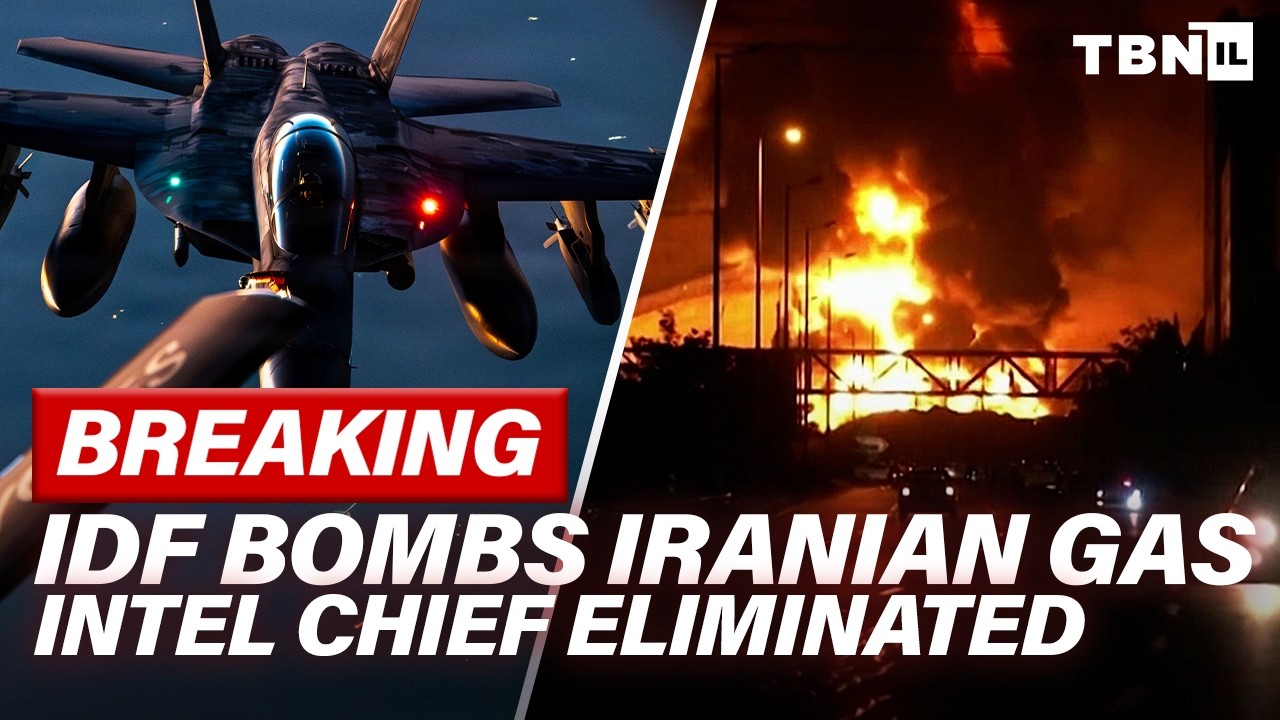
BREAKING: Israel BOMBS Major Iran Gas Site; Top Mullah ELIMINATED; Iran Vows VENGEACE | TBN Israel
"Israel and the United States have escalated their 'Roaring Lion War' against Iran, striking its largest gas facilities, eliminating key intelligence and military figures, and disrupting missile production, while Iran threatens a broader energy war in the Gulf."