
Paul Craig Roberts: Xi Humors Trump as His World Caves In (Inside & Out)
YouTube · vslZ1KIeK5Q
Quick Read
Summary
Takeaways
- ❖Trump's foreign policy is characterized by bluster and inconsistency, lacking a coherent strategy.
- ❖China's primary concern with the US is Taiwan, explicitly warning against intervention.
- ❖The US arms industry drives demand for conflict or the expectation of conflict to maintain its economic viability.
- ❖Paul Craig Roberts views US and Israeli hegemonic claims as the root cause of global conflicts.
- ❖Iran successfully defended against a combined US-Israeli attack, demonstrating its military capability and shifting regional power.
- ❖Trump's personal business activities while president represent an unprecedented conflict of interest, eroding political integrity.
- ❖The Israel lobby's financial power in US elections, exemplified by the campaign against Thomas Massie, highlights its control over US foreign policy.
Insights
1Trump's China Visit: A Clash of Narratives and a Taiwan Warning
Trump's visit to China resulted in no joint communique or press conference, with US and Chinese accounts of the meeting diverging significantly. The Chinese leader explicitly warned Trump against interfering with Taiwan, stating that such actions would lead to conflict instead of business deals. This indicates China's firm stance on Taiwan and its unwillingness to be dictated by US demands.
Lack of joint communique, differing accounts of the meeting, Chinese leader's direct warning to Trump regarding Taiwan.
2US Hegemony and Israeli Influence Drive Global Conflict
Paul Craig Roberts argues that the US's hegemonic ambition to control every country and its resources, combined with Israel's 'Greater Israel' agenda, is the primary source of global instability. He cites the US attack on Iran at Israel's request and the proxy war in Ukraine against Russia as examples of this aggressive, destabilizing foreign policy.
The Wolfowitz doctrine, US dismemberment of the Soviet Union, US attacks on Iran at Israel's request, proxy war in Ukraine, destabilization efforts in Georgia.
3Iran's Successful Resistance and Shifting Middle East Alliances
The combined US-Israeli attack on Iran was not successful, marking a defeat for both nations. Iran's ability to withstand and prevail in this conflict has led to a significant shift in regional dynamics, with Gulf Cooperation Council (GCC) countries like Saudi Arabia now seeking non-aggression pacts with Iran and moving away from dependence on the US and Israel.
Iran's successful defense against US-Israeli attack, Iran not asking for ceasefire, Saudi Arabia discussing non-aggression pacts with Iran, perceived increased GCC dependence on Iran.
4Israel Lobby's Pervasive Control Over US Politics
The Israel lobby exerts immense influence over US domestic and foreign policy, evidenced by its significant financial intervention in congressional primaries (e.g., $30 million against Thomas Massie). This influence extends to state-level legislation penalizing criticism of Israel and even dictating university policies regarding student protests, demonstrating a profound lack of US sovereignty over its own foreign policy, particularly in the Middle East.
$30 million spent against Thomas Massie in a primary, state laws (Texas, Florida) prohibiting criticism of Israel for state employment/contracts, firing of Harvard president for allowing student protests.
5Trump's Presidency: A Conflict of Interest and Deterioration of Governance
Trump is identified as the first US president in modern history to openly conduct personal business ventures while in office, using his position to generate billions in personal wealth. This practice, traditionally associated with 'third world countries,' represents a severe conflict of interest and a significant deterioration of American political standards, yet it receives little public scrutiny.
Trump building a ballroom in the White House with his own company, involvement in bitcoins/electronic money, family members producing missiles, reports of Trump making billions while president.
Bottom Line
The rise of drones and hypersonic missiles has fundamentally altered military power dynamics, rendering traditional 'superpower' advantages less meaningful in conventional warfare.
This technological shift means that smaller nations like Iran can effectively deter or resist larger powers, challenging the long-held military superiority of countries like the US.
Nations seeking to assert sovereignty against hegemonic powers can invest in asymmetric warfare technologies to level the playing field, reducing reliance on traditional military alliances.
Putin is perceived as a 'weak element' in the Russia-China-Iran alliance, potentially willing to compromise Russia's sovereign interests for business deals that benefit oligarchs and American corporations.
This perceived weakness could undermine the coherence and strength of the anti-hegemonic bloc, potentially creating vulnerabilities for the US to exploit, or leading to internal instability within Russia.
Analysts should scrutinize Russian foreign policy for signs of internal divisions or economic concessions that could indicate a departure from a unified anti-Western stance.
Key Concepts
Hegemony
The idea that one state (the US) seeks to dominate the international system, or one regional power (Israel) seeks to dominate its region, leading to conflicts and destabilization as other nations resist this control.
American Exceptionalism
The belief, particularly among 20th-century American political liberals and later neoconservatives, that the US is an indispensable nation with unique privileges and rights over other countries, justifying its hegemonic approach.
Military-Industrial Complex (Extended)
The concept that the US armaments industry requires continuous conflict or the expectation of conflict to sustain itself, influencing foreign policy decisions to promote arms sales and military interventions.
Lessons
- Critically evaluate official government statements and media narratives by comparing them with alternative sources and analyzing underlying interests.
- Recognize the potential influence of powerful lobbies and economic interests on national foreign policy decisions, especially in regions like the Middle East.
- Consider how the pursuit of hegemony by powerful nations can inherently prevent lasting peace and foster continuous conflict, rather than promoting stability.
Quotes
"Do not mess with Taiwan or there will be conflict instead of business deals."
"The American problem with Iran is also influenced by Israel by the Israel lobby. You know Trump is very much in the hands of of Israel. We attacked Iran for Israel."
"The notion that the president creates companies to make money off of him being president. Uh, we saw some of this with Biden, selling influence and and Hunter, his son, getting paid uh $50,000 a month from the Ukrainians for protecting them. Uh, but Trump is making billions according to reports. Billions."
"If Massie wins, it's going to shake that power. And we'll know tomorrow. If he loses, we know that the Israelis have us in an iron grip."
"I don't think Putin is any longer taken seriously like he was say in 2007 when he spoke at the Munich security conference very confident person who spoke in a very firm. Uh we've seen nothing of that anymore."
Q&A
Recent Questions
Related Episodes

Iran Update: Israel’s Newest Bombing Campaign, the Oncoming War With China and How to Avoid It
"Colonel Wilerson reveals how the US and Israel are actively bombing China's strategic infrastructure in Iran, escalating a covert economic war that Beijing intends to win without direct military conflict by dismantling the dollar's global dominance."
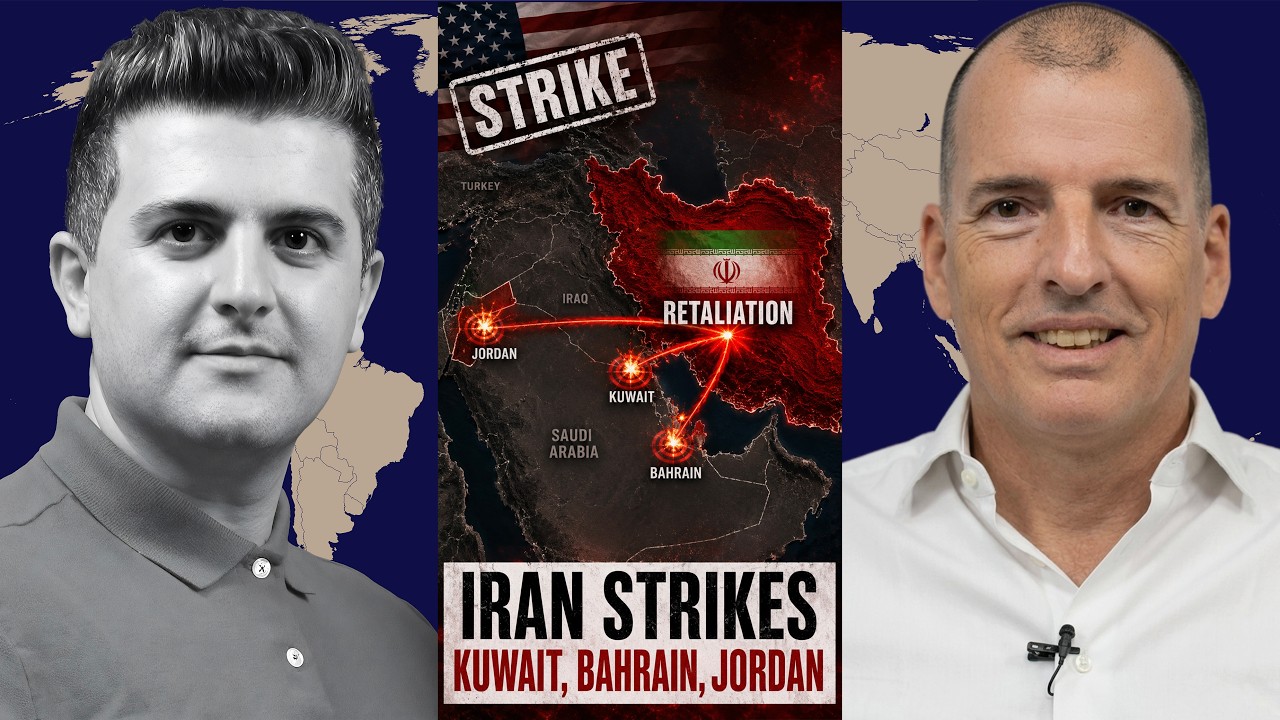
Alex Krainer: US STRIKES Iran – Iran RETALIATES Against Kuwait, Bahrain & Jordan!
"Amidst escalating US-Iran conflict and Iranian retaliation against regional US allies, this episode argues that US foreign policy is deeply controlled by an 'Anglo-Zionist conspiracy' led by the Rothschild banking dynasty, prioritizing Israeli interests over American ones."

Patrick Henningsen: Hezbollah JUST Fired Back at Israel - Iran Vows to “Crush” All Attacks
"Patrick Henningsen argues that the US and Israel initiated an illegal war against Iran, driven by Trump's incompetence and Israeli influence, leading to an inevitable escalation with severe global economic repercussions."
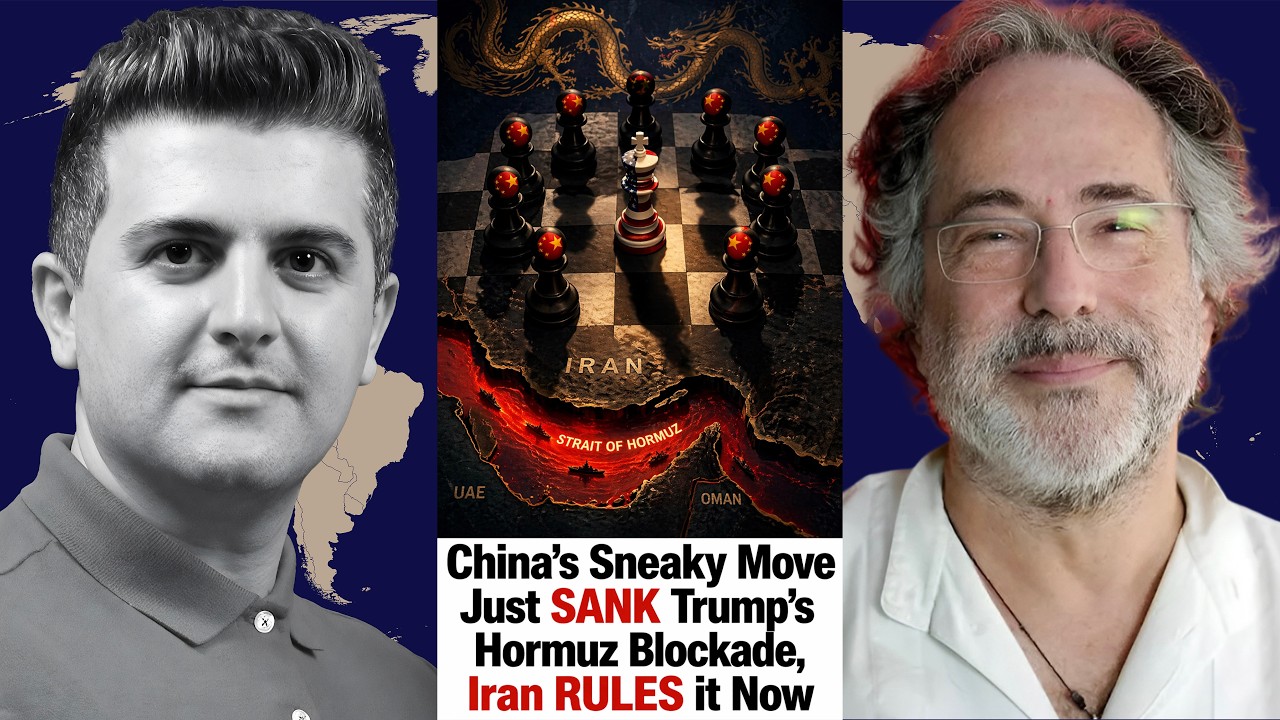
Pepe Escobar: “Total Failure”: Trump’s Blockade Just Backfired Disastrously
"Pepe Escobar argues that the US blockade against Iran, spearheaded by Donald Trump, has utterly failed and backfired, accelerating global economic chaos and challenging US geopolitical dominance."