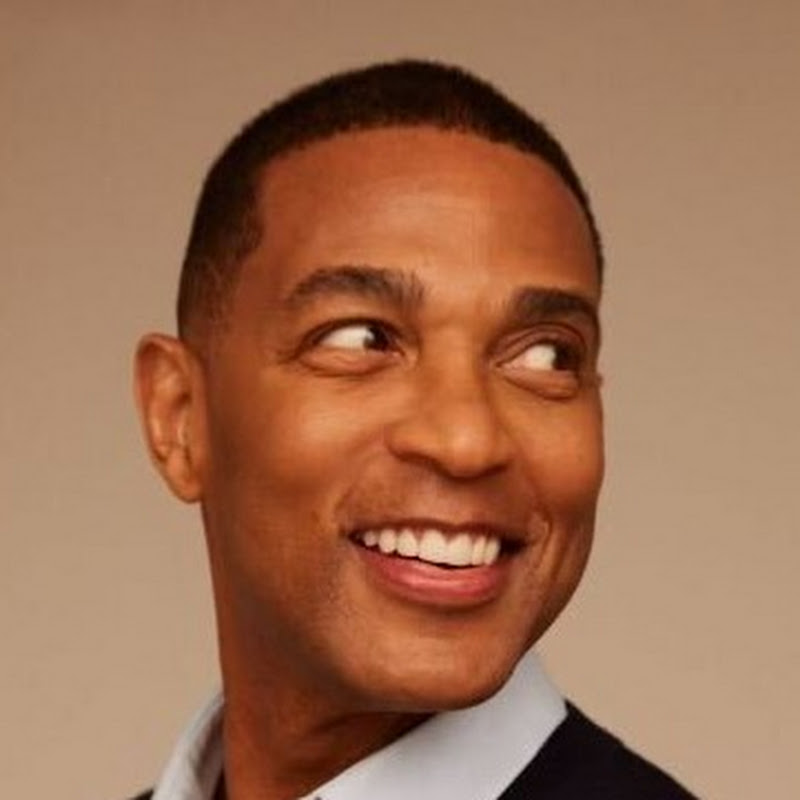
HOT TOPICS | BREAKING: SCOTUS DECISION TODAY! Who Gets To Be An American?!
YouTube · w0UqMKnJsiI
Quick Read
Summary
Takeaways
- ❖The 14th Amendment, guaranteeing birthright citizenship, was a direct response to the Dred Scott decision, establishing Black personhood after the Civil War.
- ❖Challenges to birthright citizenship are presented as a veiled attack on the 14th Amendment's core purpose, using immigration as a 'costume' for racial politics.
- ❖The Supreme Court ruled that states *may* ban transgender youth from participating in sports, opening the door for further discriminatory legislation.
- ❖Justice Clarence Thomas's dissent on birthright citizenship is viewed as a profound betrayal of Black history and civil rights.
- ❖A recurring pattern in American history shows Black advancement is consistently met with organized backlash, from the KKK to modern legal challenges.
- ❖The electoral college is critiqued as a 'white supremacist policy' that allows a minority to govern, undermining democratic principles.
- ❖There is an urgent call for Supreme Court reform, including potential expansion, to counteract its perceived politicization and right-wing bias.
Insights
1Birthright Citizenship as a Black History Story
The challenge to birthright citizenship is fundamentally a black history story, not primarily an immigration one. The 14th Amendment, written in 1868 after the Civil War, was a direct response to the 1857 Dred Scott ruling, which declared Black people (free or enslaved) were not citizens and had no rights a white man was bound to respect. The amendment was intended to ensure full citizenship and personhood for Black Americans, and any attempt to 'carve a hole' in it is a direct assault on this foundational principle.
Don Lemon states, 'This is not an immigration story. It is kind of but it's not really an immigration story. This is a a story about black history. It's a black history story. Wearing an immigration costume is what it is. The 14th Amendment was written in 1868... It came out of Dread Scott.'
2Historical Pattern of Backlash Against Black Advancement
American history reveals a consistent pattern: when Black people gain political power or make significant advancements, an immediate and organized backlash follows to dismantle that progress. Examples include the formation of the KKK after Black men gained the vote, the erection of Confederate monuments during Jim Crow and the Civil Rights Movement, and the current legal challenges to rights established through Black struggle.
Don Lemon explains, 'Every single time we get close to something that looks like full citizenship, full belonging, full personhood, somebody shows up and then they take it away.' He cites the KKK forming in 1865 'right as black political power started to look real' and Confederate monuments being built 'right alongside Jim Crow and again in the 1950s and the 1960s right alongside the civil rights movement.'
3Precarious Upholding of Birthright Citizenship and Dissenting Justices
While the Supreme Court upheld birthright citizenship by striking down Trump's executive order, the 6-3 decision is seen as precarious. The dissent by Justices Clarence Thomas, Neil Gorsuch, and Samuel Alito is highlighted as particularly concerning, indicating a willingness to reinterpret or narrow fundamental constitutional rights, especially given the 14th Amendment's historical context.
Ariva Martin states, 'Expected this to be the case. Can't wait to hear Don how many judges upheld the Constitution today. I'm hoping it's 909 in favor of upholding the constitution and the 14th amendment.' Simone Redwin later confirms, 'Clarence Thomas filed a dissenting opinion in which Gorsuch joined as well as Alto.'
4Supreme Court Ruling on Transgender Athletes as a Step Backward
The Supreme Court ruled that states *may* ban transgender youth from participating in sports, which is interpreted as a significant setback for trans rights. This decision is seen as enabling further discrimination and is criticized for a lack of compassion and a fundamental misunderstanding of transgender experiences and the effects of hormone replacement therapy (HRT).
Daniel Grimes reports, 'the Supreme Court did rule that and against transgender youth rights, saying that schools are allowed to on the basis of title N rule that they can ban transgender youth from participating in sports.' Ellie, a transgender individual, states, 'This is a a massive step back for trans rights in this country and for the lives of trans kids.'
Bottom Line
The politization of the Supreme Court and Department of Justice is eroding public trust in institutions, potentially leading to social unrest similar to historical uprisings.
A loss of trust in legal and governmental institutions can destabilize society, making it vulnerable to extremism and undermining the rule of law.
Advocates must focus on restoring institutional integrity, demanding accountability from judges and politicians, and promoting adherence to the rule of law to prevent societal breakdown.
The historical contributions and sacrifices of Black Americans are the bedrock for the rights enjoyed by all marginalized groups in the U.S., including women and other ethnic minorities.
Ignoring or undermining Black history and civil rights struggles weakens the foundation of rights for everyone, making all groups vulnerable to similar attacks.
Building stronger coalitions across marginalized communities by recognizing and honoring the historical role of Black Americans in securing civil rights can create a more robust defense against discriminatory policies.
Key Concepts
Fixed Pie Fallacy
The belief that there isn't enough room for everyone at the table, meaning if one group (e.g., Black or brown people) rises, another (e.g., white people) must fall. The host argues this is a lie that has shaped 250 years of American policy.
Lessons
- Actively participate in democracy by voting in primary and midterm elections, supporting candidates who advocate for Supreme Court reform and the protection of civil rights.
- Demand that elected representatives support concrete actions like expanding the Supreme Court to neutralize its perceived right-wing bias and ensure it upholds constitutional rights.
- Support independent media and journalism that provide truthful information and hold power accountable, as a counter-narrative to mainstream outlets that may spread misinformation or false equivalences.
Countering the Erosion of Rights and Reforming Institutions
**Educate and Inform:** Understand the historical context of civil rights struggles, particularly the role of Black Americans and the 14th Amendment, to recognize current threats.
**Engage Politically:** Vote in all elections and actively question candidates on their stance regarding Supreme Court reform, electoral college reform, and the protection of marginalized groups' rights.
**Support Advocacy:** Channel anger and frustration into productive action by supporting civil rights organizations (e.g., ACLU, Brennan Center for Justice) and independent media platforms that fight for justice and accountability.
Notable Moments
NPR's breaking news report that Justice Samuel Alito was retiring, followed by a rapid retraction, created a moment of high drama and speculation.
This incident highlighted the intense scrutiny and speculation surrounding Supreme Court justices' tenures, especially given the current political climate and the court's ideological balance. It also underscored the rapid, sometimes flawed, nature of breaking news in critical moments.
Quotes
"The 14th Amendment was written in 1868... It didn't come out of nowhere. It came out of Dread Scott."
"This is a new reconstruction fight. Make no mistake about it. It just doesn't look like men in robes with torches. It looks like men in robes with gables, which may be even more dangerous than the torches."
"White fear of black advancement is not a conspiracy theory. It is a document. It is documented. It is it is historical and it repeats every single time."
"If the court guts birthright citizenship, they are saying that the amendment born out of black blood and black sacrifice can be reinterpreted, narrowed, walked back. The moment it becomes politically convenient, they can do it. And if they do that to the 14th amendment, they can do it to anything."
"The electoral college exists to uphold white supremacy. That's the only reason that exists. There's no other practical or logical reason for it to exist."
"Clarence Thomas is going to be Clarence Thomas. He is on that court for a reason and he's going to be the puppet. He's going to be the lackey. He's going to be uh you know used by Donald Trump and the MAGA and the MAGA right in the ways that he has shown himself willing to do."
"This is a a massive step back for trans rights in this country and for the lives of trans kids."
Q&A
Recent Questions
Related Episodes

HOT TOPICS | WARNING: Donald Trump's Iran War Chaos Has Hit the Point of No Return!
"Don Lemon delivers a scathing critique of Donald Trump's recent actions, framing them as desperate, unconstitutional attempts to consolidate power, undermine democracy, and distract from economic and foreign policy failures, all while questioning his mental stability."

Iran Deal Skepticism. Whoopi Vs Vance. Potomac Park Invasion. Racist Hurls Slurs At Black Boy.
"This episode dissects multiple instances of alleged anti-Black policies and racial injustice, from the Trump administration's legal challenges to reparations and the Iran deal, to police brutality and the erasure of Black history."
Major SCOTUS "Birthright Citizenship" Case, and Charlie Kirk Murder Trial Bullet Questions
"Megyn Kelly and legal experts dissect the Supreme Court's oral arguments on birthright citizenship and break down new, potentially exculpatory evidence in the Charlie Kirk murder trial, including an 'inconclusive' bullet match and complex DNA findings."
SHOCK BREAKING: SHOCKED TRUMP STORMS OUT OF SUPREME COURT IN RAGE!
"This episode dissects Donald Trump's contentious Supreme Court appearance regarding birthright citizenship, the growing disillusionment of right-wing figures like Alex Jones with Trump, and the political fallout from Kristi Noem's husband's alleged cross-dressing scandal."