BREAKING: Netanyahu’s Terror Attack on Lebanon Destroys Trump’s Ceasefire. Tucker Reacts.
YouTube · w5aKtwQByXw
Quick Read
Summary
Takeaways
- ❖Donald Trump announced a ceasefire with Iran, which was quickly nullified by Israeli airstrikes in Beirut, Lebanon.
- ❖The host argues that US foreign policy is dictated by Israel, whose objectives (e.g., a fragmented Iran) conflict with US interests (e.g., open Strait of Hormuz).
- ❖Iran has emerged economically stronger from the conflict, doubling oil revenues by selling in Yuan and challenging the petrodollar system.
- ❖Iran's military strategy, developed over 20 years, utilizes deeply buried facilities, decoys with heat signatures, and advanced Chinese digital communication systems, making it highly resilient to conventional attacks.
- ❖The US military's reliance on expensive, outdated systems like aircraft carriers is proving ineffective against modern asymmetric threats.
- ❖A former US intel official, Joe Kent, linked the uninvestigated Butler shooting of Donald Trump to Israel's influence over the US government.
- ❖Some Israeli leaders are driven by 'eschatological' beliefs, viewing major conflict as a path to 'redemption,' making them resistant to rational de-escalation.
- ❖The ongoing crisis is accelerating a global economic shift away from the US dollar, with countries like Russia demanding Yuan for energy transactions.
- ❖The US needs to detach from Israel by ending all military and economic aid to restore its sovereignty and prioritize American interests.
Insights
1Trump's Ceasefire Undermined by Israeli Actions
Donald Trump announced a two-week ceasefire with Iran, contingent on the Strait of Hormuz opening. However, within hours, Israel launched 'Operation Eternal Darkness,' bombing civilian apartment blocks in Beirut, Lebanon, effectively scuttling the agreement. The US administration stated the Lebanon bombings were not part of the Iran agreement, indicating a fundamental misalignment of interests.
Trump's truth post at announcing the ceasefire; Israel's bombing of Beirut () and the operation name 'Eternal Darkness' (); US administration's clarification ().
2US-Israel Interests Diverge Critically
The host asserts that the US and Israel have fundamentally different goals in the region. Israel aims to leave Iran a 'husk,' a bleeding wound of civil war, to permanently weaken it. In contrast, the US needs a coherent Iranian government to ensure the Strait of Hormuz remains open for global trade and to prevent refugee crises, which a fragmented Iran would destabilize.
Host's analysis of Israel's goals () versus US goals (); Guest Alastair Crooke's confirmation of Israel's desire for chaos ().
3Iran's Unexpected Resilience and Economic Gains
Alastair Crooke explains that Iran has emerged stronger from the recent conflict, both militarily and economically. Iran's oil sales dramatically increased, with one month's revenue doubling previous years' totals, and transactions increasingly settled in Chinese Yuan, challenging the petrodollar. Militarily, Iran suffered fewer casualties due to extensive use of heat-emitting decoys and deeply buried, decentralized command and missile facilities, making them immune to decapitation strikes.
Iran's economic benefits (), specific oil sales figures (), demand for Yuan (); use of Chinese decoys with heat sources (), deeply buried missile cities (), and dispersed command structure ().
4The US Dollar's Retreat and Geopolitical Shift
Iran's insistence on settling oil sales in Yuan is accelerating a global shift away from the US dollar as the reserve currency. This move, supported by Russia (which now demands Yuan for its energy sales to Europe) and evidenced by European banks issuing debt in Yuan, signifies a broader project by China and Russia towards more self-sufficient, goods-producing economies, away from a 'financialized' Western model.
Iran's demand for Yuan for oil sales (); Russia's announcement for Yuan payments (); Deutsche Bank issuing debt in Yuan (); Crooke's analysis of the economic shift ().
5Israeli Influence and Uninvestigated US Security Breaches
Joe Kent, a former top US intel official, claimed that the failure to fully investigate the Butler shooting of Donald Trump and other 'shocking violations' of presidential security by the Secret Service are connected to Israel's demonstrable control over the US government. He suggests these incidents highlight an inability of US leaders to say 'no' to Israel, even when American interests are at stake.
Joe Kent's claims about the Butler shooting investigation () and Secret Service security breaches () being linked to Israeli control ().
6US Military Ineffectiveness and Outdated Strategy
The host questions the efficacy of the US military's expensive, large-scale weapon systems, like aircraft carriers, against modern asymmetric threats. He points out that Iran, despite being labeled 'primitive,' effectively constrained US naval power and shot down advanced aircraft, suggesting a failure to adapt to new warfare technologies like drones. The military-industrial complex is blamed for incentivizing costly, outdated systems over more effective, cheaper alternatives.
Critique of US military spending and outcomes (); Iran chasing away aircraft carriers and shooting down aircraft (); comparison to Ukraine war funding (); argument for drone technology over expensive systems ().
Bottom Line
Israel's strategic objective in Iran is not regime change but to sow chaos and stoke ethnic/religious civil war, preventing the emergence of a coherent, powerful nation-state, even if it harms US interests.
This implies that Israeli actions are deliberately designed to destabilize the region for its own long-term security, rather than aligning with US goals of stability or a functioning Iranian state, leading to perpetual conflict and US entanglement.
For US policymakers, recognizing this divergent strategic goal could inform a more independent foreign policy, prioritizing US stability and economic interests over unconditional support for Israeli objectives.
The current global crisis, driven by geopolitical shifts and economic pain, could act as a 'creative destruction' for the West, forcing a re-evaluation of its nihilistic economic structures and leading to a more equitable, goods-producing society.
This suggests that the severe economic and social consequences of current policies might be a necessary catalyst for fundamental, positive change in Western societies, rather than just a disaster.
Leaders and citizens can proactively engage in discussions and policy reforms aimed at restructuring economic systems to prioritize real jobs, local production, and social well-being, rather than solely focusing on financialized markets.
Some segments of the Israeli population and leadership are driven by 'eschatological' or 'messianic' beliefs, viewing major conflict, even 'Armageddon,' as a path to 'redemption,' making them immune to conventional rationalist arguments for de-escalation.
This perspective suggests that traditional diplomatic or economic pressures may be ineffective against a mindset that welcomes conflict for religious reasons, posing a unique challenge to peace efforts.
Understanding these underlying motivations is critical for international diplomacy, requiring different engagement strategies that acknowledge and navigate non-secular drivers of conflict, rather than solely relying on rational self-interest.
Lessons
- Demand accountability from US leaders and military strategists for failed foreign policy outcomes and wasteful defense spending, especially when it contradicts stated national interests.
- Advocate for a re-evaluation of US alliances, particularly with Israel, to ensure that foreign policy decisions prioritize American sovereignty, economic stability, and the lives of its citizens.
- Support initiatives that promote economic self-sufficiency and a shift away from a 'financialized' economy, recognizing the potential for global economic changes to impact domestic well-being.
Notable Moments
Donald Trump announces a ceasefire with Iran via a 'truth post,' surprising many who expected total destruction.
This moment sets the stage for the episode's central conflict, highlighting a sudden shift in US policy that was immediately challenged by allied actions.
Israel launches 'Operation Eternal Darkness,' bombing civilian apartment blocks in Beirut, Lebanon, shortly after Trump's ceasefire announcement.
This direct action by Israel is presented as the immediate catalyst for the ceasefire's collapse and a clear demonstration of misaligned US-Israeli interests.
Former US intel official Joe Kent's claims linking the uninvestigated Butler shooting of Donald Trump and Secret Service security breaches to Israeli influence.
This highly controversial claim suggests a deep, hidden level of foreign control over US internal affairs and presidential security, raising questions about American sovereignty.
Alastair Crooke details Iran's advanced asymmetric warfare capabilities, including deeply buried missile facilities, heat-emitting decoys, and Chinese digital communication systems.
This provides concrete evidence of Iran's unexpected military strength and strategic foresight, challenging the narrative of a 'primitive' country and highlighting the ineffectiveness of current US military doctrine.
Crooke explains how Iran's oil sales, increasingly settled in Chinese Yuan, are accelerating the de-dollarization of the global economy, with Russia following suit.
This reveals a significant, ongoing shift in global financial power that has direct implications for the US dollar's status and the American economy.
Quotes
"A ceasefire would still be a win for the United States because war, total war, is just that bad. It's so bad that even absorbing some humiliation and some measurable losses is still better than that."
"Israel is a tiny, insignificant country with an infinitesimally small population and economy that only exists because you protect it and pay for everything. Israel is your client state. This is like taking orders from your housekeeper, which you would never do."
"We got into this war at the urging of another country, Israel. The war did not go well. Now, we can't get out of the war because the behavior of that same country, Israel. Why? Why can't this president or any president say no to Israel?"
"The whole point of this from an Israeli perspective is not an attack on Israel by the way. I mean it makes a kind of evil sense. If you want to eliminate a threat, you can't kill everybody even with nuclear weapons. But what you can do is set them at war with each other."
"In this one month, they have earned double what they've ever earned in previous years... they earned $850 million in one day from that. So the revenue from if you like the potential revenue from Homos will be enormous. It would be probably in a year just under a trillion dollars."
"You know, it's no longer possible to see and understand a large segment of the Israeli population through secular rationalist lenses, which we tend to do. We have to look at it through eschatological ideas and see what they are looking to."
"The IDF, the military force is collapsing. We're totally overextended. It is collapsing and you know there's nothing we can do about it unless you want to produce another four 400,000 troops. We can't do it. We're overextended. We need to get out of Lebanon."
Q&A
Recent Questions
Related Episodes
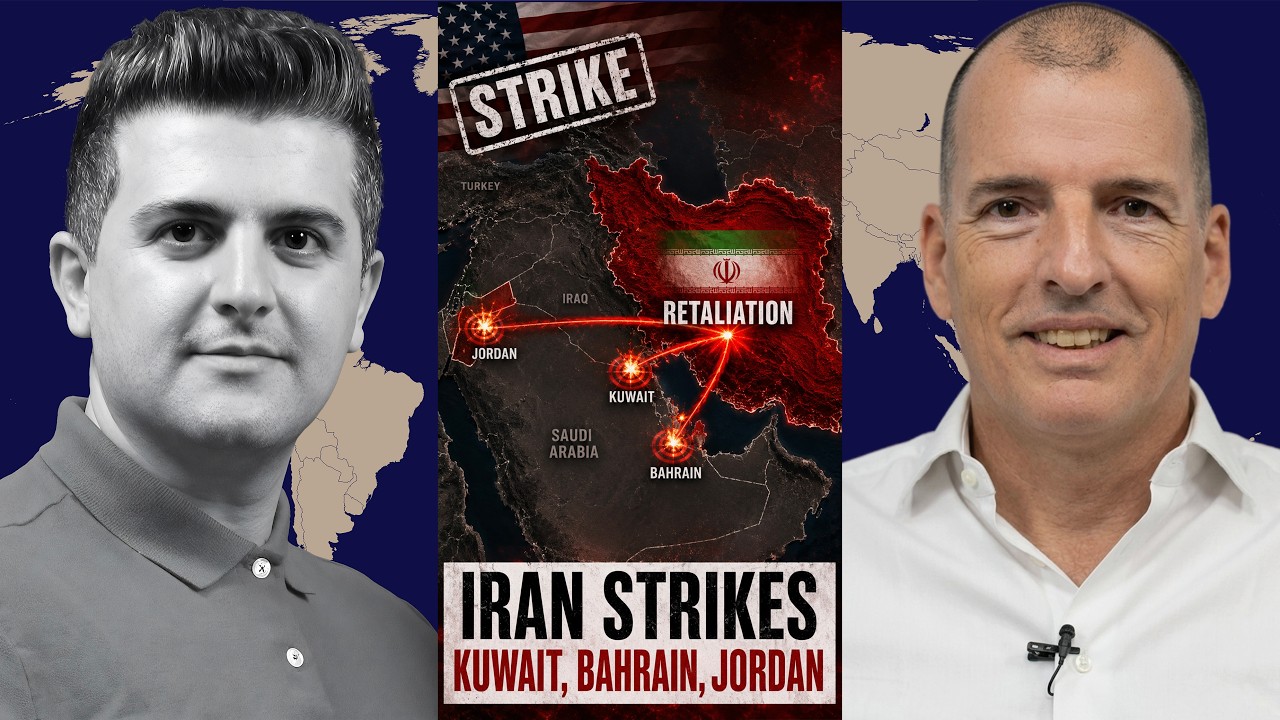
Alex Krainer: US STRIKES Iran – Iran RETALIATES Against Kuwait, Bahrain & Jordan!
"Amidst escalating US-Iran conflict and Iranian retaliation against regional US allies, this episode argues that US foreign policy is deeply controlled by an 'Anglo-Zionist conspiracy' led by the Rothschild banking dynasty, prioritizing Israeli interests over American ones."

Patrick Henningsen: Hezbollah JUST Fired Back at Israel - Iran Vows to “Crush” All Attacks
"Patrick Henningsen argues that the US and Israel initiated an illegal war against Iran, driven by Trump's incompetence and Israeli influence, leading to an inevitable escalation with severe global economic repercussions."
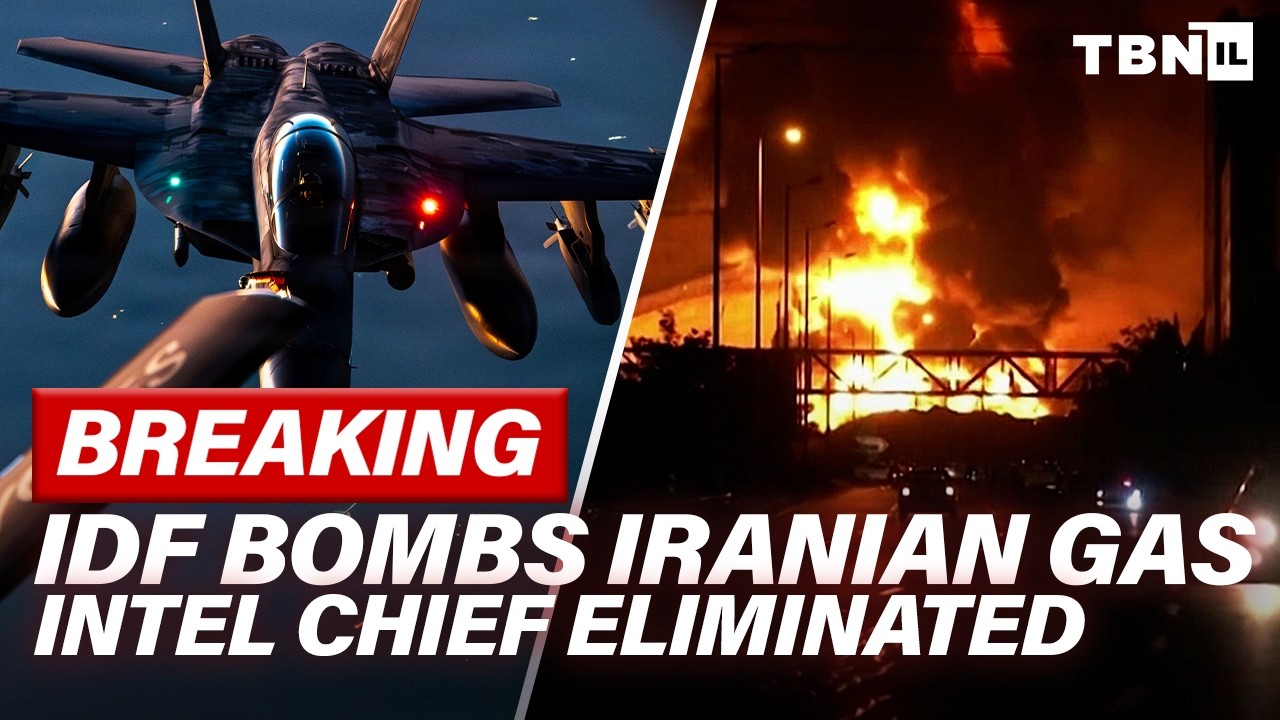
BREAKING: Israel BOMBS Major Iran Gas Site; Top Mullah ELIMINATED; Iran Vows VENGEACE | TBN Israel
"Israel and the United States have escalated their 'Roaring Lion War' against Iran, striking its largest gas facilities, eliminating key intelligence and military figures, and disrupting missile production, while Iran threatens a broader energy war in the Gulf."

LIVE: Trump HIDES FROM PUBLIC as US SOLDIER KILLED!!! 6/2/2026
"The host exposes alleged government cover-ups regarding military casualties, Trump's unexplained public absence, and questionable political appointments, arguing these reflect a 'regime of loser babies' and a failing foreign policy."