
EXCLUSIVE: Focus Group Suggests TX Trump Voters Could Flip to Talarico | Focus Group Podcast
YouTube · wA_iob2pnFk
Quick Read
Summary
Takeaways
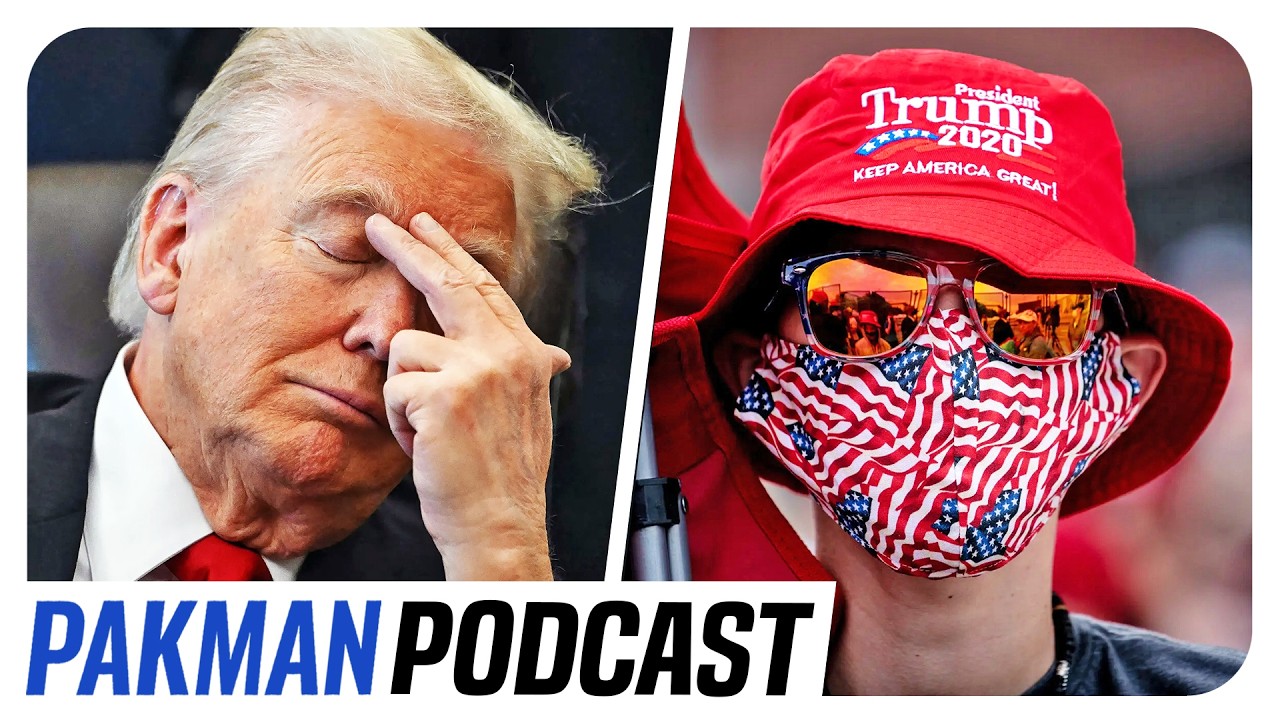
- ❖2024 Trump voters in Texas express widespread disapproval of Trump's job performance, citing unfulfilled promises on cost of living and foreign entanglements.
- ❖Texas Attorney General Ken Paxton's corruption allegations and impeachment trial are significant liabilities, yet Republican leadership is largely rallying around him.
- ❖Democrat James Talarico faces challenges from GOP messaging on social issues (e.g., 'God is non-binary'), but many Trump-disapproving voters still view him as the 'lesser of two evils' due to his perceived integrity.
- ❖Maine voters, who previously supported both Biden and Susan Collins, are now largely rejecting Collins due to her perceived alignment with Trump and Supreme Court votes.
- ❖Maine Democrat Grant Plathner's extensive personal baggage (tattoo, Reddit posts, sexting, abuse allegations) is known to voters, but many are willing to overlook it for a candidate who will 'stand up' to Trump.
- ❖Republicans have developed 'scar tissue' from embracing flawed candidates like Trump, making them more adept at unifying behind figures like Paxton despite ethical concerns.
- ❖Democrats are increasingly adopting a similar strategy, willing to overlook candidate flaws to achieve political goals, reflecting a rejection of the 'when they go low, we go high' approach.
Insights
1Texas Trump Voters Disapprove of Trump and Paxton, Open to Talarico
Focus group participants, who voted for Trump in 2024, expressed significant disapproval of his job performance, citing a lack of progress on campaign promises like reducing the cost of living and avoiding foreign entanglements. They also voiced strong concerns about Attorney General Ken Paxton's corruption, impeachment trial, and personal scandals. Despite Republican efforts to unify around Paxton, many of these voters are considering supporting Democrat James Talarico, viewing him as a more honest alternative, even if they disagree with his progressive stances on issues like transgender rights.
Voters stated, 'I was frankly shocked when I heard that Paxton won the primary,' and 'I'm not a fan of either of them, but it's what your options here.' One voter, despite disagreeing with Talarico on transgender issues, stated, 'I'm looking for integrity and character... he seems like a really honest fellow, not just the way he talks, but his his record.'
2Maine Voters Abandon Collins, Overlook Plathner's Baggage for Change
Long-time Susan Collins voters in Maine, who also supported Joe Biden, are now largely abandoning her. Their disillusionment stems from her votes on Supreme Court justices and a general perception that she has not sufficiently stood up to Trump. Despite Democrat Grant Plathner's extensive personal controversies—including a controversial tattoo, Reddit posts, extramarital sexting, and allegations of physical violence—many of these voters are willing to support him. They view him as an avatar for the 'not normal times' and a necessary check on Trump, prioritizing this over his personal liabilities.
One voter declared, 'I voted for Susan Collins since 1996. I will not vote for her again. Period. End of story,' citing her Supreme Court votes. Another, discussing Plathner's baggage, said, 'I hope it's not true and if it is I hope it was because he wasn't himself he was on a substance or whatever,' indicating a willingness to rationalize or overlook issues.
3Issue Salience and the 'Normalcy' Factor Drive Voter Choices
The podcast highlights that the salience of specific issues heavily influences voter decisions. While social issues like transgender rights are used by Republicans to attack candidates like Talarico, for many voters, these are not top-tier priorities. Instead, a broader desire for change, a perception of 'normalcy,' and the need for a strong counter to figures like Trump often outweigh specific policy disagreements or candidate baggage. This indicates a shift where voters are willing to compromise on candidate character if they believe it serves a larger political objective.
The host notes, 'as small of an issue as like trans people in sports is relative to its actual impact on people's lives, the amount that it comes up as either a tipping point issue... or the thing that people overcome or overlook.' Patrick Svitek adds, 'It all comes down to where voters are actually ranking that issue on their list of priorities.'
4Republican Unity vs. Democratic Hesitation on Flawed Candidates
Republicans, having gone through the 'psychological experience' of embracing Donald Trump despite his vulnerabilities, have developed a playbook for unifying behind flawed candidates like Ken Paxton. They prioritize base mobilization through aggressive attacks on opponents and leveraging Trump's popularity. Democrats, while increasingly willing to overlook their own candidates' baggage (like Plathner's), still exhibit more hesitation and internal struggle, reflecting a 'hack gap' where Republicans are more strategically ruthless in their electoral pursuits.
Svitek states, 'Republicans... have just already gone through this with Donald Trump. I mean, they have already gone through the psychological, deeply psychological experience of embracing a Republican standard-bearer who is... morally compromised.' Chuck Schumer's reluctance to explicitly name Grant Plathner as a supported candidate is cited as evidence of continued Democratic anxiety.
Lessons
- Political campaigns should prioritize understanding the 'issue salience' for their target voters, recognizing that broad desires for change or a check on national figures can override specific policy disagreements or candidate baggage.
- Democratic campaigns need to develop a more unified and less apologetic strategy for supporting their nominees, even those with significant liabilities, mirroring the Republican ability to rally around candidates for strategic gain.
- Candidates perceived as having 'integrity and character' can appeal to disaffected voters from opposing parties, even if their policy positions are not fully aligned, suggesting a focus on personal authenticity can be a winning strategy.
Quotes
"I was frankly shocked when I heard that Paxton won the primary. I feel like there was such a strong negative impression that his trial made on a lot of people."
"I don't care if the new leadership is Republican or Democrat. It's just this guy's been there too long and and we need new leadership."
"I voted for Susan Collins since 1996. I will not vote for her again. Period. End of story."
"It's all about issue salience and I feel like sometimes in political reporting or analysis we lose sight of this. We just see that an issue is unpopular... It all comes down to where where are voters actually ranking that issue on their list of priorities."
"Republicans both in Texas and nationwide have just already gone through this with Donald Trump. I mean, they have already gone through the psychological, deeply psychological experience of embracing a Republican standard-bearer who is is has all these vulnerabilities and is, you know, morally compromised and has ethical issues and whatnot."
"Every attack ad is about his history. Nothing is being talked about about his positions on things that are important to us."
Q&A
Recent Questions
Related Episodes

Ken Paxton Dominates Cornyn Ahead of Race Against RADICAL Talarico, Plus SHOCK Prince Andrew Stories
"Megyn Kelly delivers a sharp analysis of Ken Paxton's decisive victory in the Texas Republican primary and his upcoming battle against a 'radical' Democratic opponent, alongside explosive new allegations of predatory behavior and corruption surrounding Prince Andrew and Sarah Ferguson."
What happens to Trump voters when Trump is gone?
"The David Pakman Show explores the contentious path forward for Trump voters after his political era, exposing alleged corruption, economic misrepresentation, and the necessity of media literacy."

A major shift is happening right now
"Donald Trump is losing his grip on the Republican party and movement, evidenced by internal dissent and a broader political landscape grappling with a collapse of accountability and truth."

SOTU: Trump In FREEFALL With Independents Ahead Of Big Speech
"Donald Trump faces unprecedented declines in independent voter approval, with his populist promises from a year prior largely unfulfilled, signaling a significant shift in his political standing."