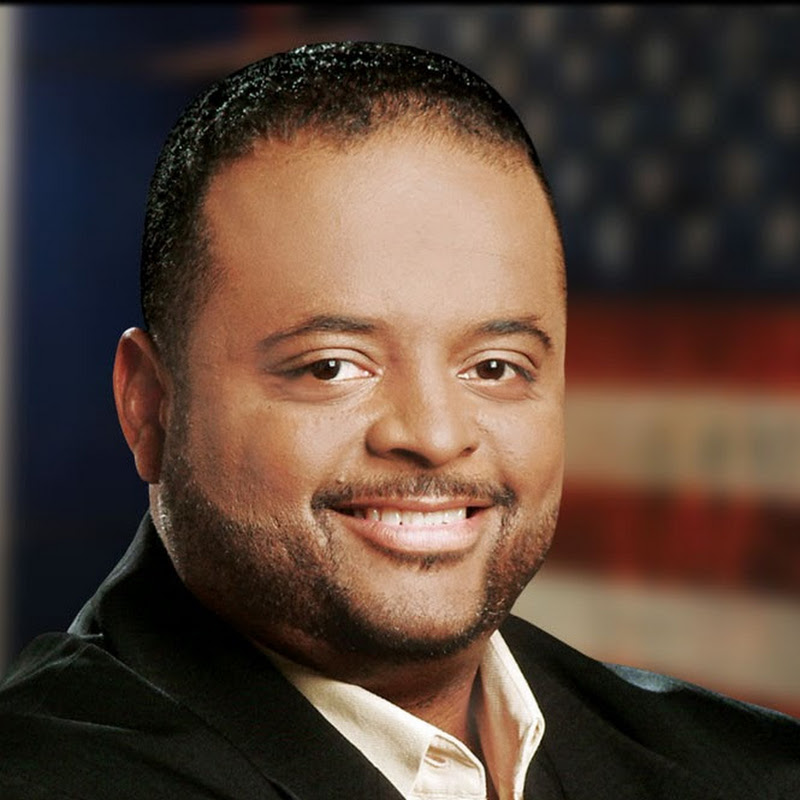
Historian Dr. Gerald Horne talks Juneteenth, the Texas counter-revolution and fascism
YouTube · wRoD_y8cxlo
Quick Read
Summary
Takeaways
- ❖Texas's 1836 independence was a 'counter-revolution' by slave owners against Mexico's abolition of slavery.
- ❖Mexico's president, Vicente Guerrero, of African descent, abolished slavery 200 years before Barack Obama's election.
- ❖Texas, as an independent country (1836-1845), expanded the enslavement of Africans, engaging in the international slave trade.
- ❖The traditional Juneteenth story of General Granger arriving in 1865 is a 'fairy tale'; true emancipation was enforced in 1867 by Black Union soldiers and Mexican forces.
- ❖The Battle of the Alamo was fundamentally about preserving slavery, with many defenders being enslavers or slave traders.
- ❖Efforts by politicians like Governor DeSantis to restrict Black history education are attempts to maintain a 'creation myth' of a flawless America.
- ❖The uncompensated abolition of slavery in the US, unlike in British colonies or Haiti, generated immense fury among former enslavers, contributing to the rise of the KKK and modern anti-Washington sentiment.
- ❖Global pressure, particularly from sovereign African nations, can challenge and potentially reverse anti-Black policies in the US, as seen historically with Jim Crow.
Insights
1Texas Independence as a Pro-Slavery Counter-Revolution
Texas's independence in 1836 was not a fight for general freedom but a 'counter-revolution' initiated by slave owners like Stephen F. Austin and Sam Houston. They sought to secede from Mexico because Mexico had abolished slavery under its president of African descent, Vicente Guerrero. This move allowed for the expansion of African enslavement within the newly independent Texas.
The guest states, 'the slave owners of Texas... were opposed to the abolition of slavery in Mexico... rather than accede to abolition, they succeeded.' He adds that Texas then 'began to expand the enslavement of Africans' and its slave ships were found globally.
2The True Juneteenth: A Global, Armed Struggle for Freedom
The popular narrative of Juneteenth (June 19, 1865) as merely General Granger announcing freedom is a 'fairy tale.' The Emancipation Proclamation was a 'paper resolution' until enforced. The actual, decisive blow against slavery in the region came on June 19, 1867, when Black Union soldiers allied with Mexican opposition forces (led by Benito Juarez) crushed French occupiers in Mexico. This collaboration prevented Confederate enslavers from retreating into Mexico to continue slavery, effectively securing freedom.
Dr. Horne explains the Emancipation Proclamation 'did not apply in jurisdictions that Lincoln did not control.' He asserts, 'the real Juneteenth is June 19th, 1867 when the black men with guns in hand allied with Mexicans also with guns in hand crushed the French occupiers.'
3The Alamo's Pro-Slavery Foundation
The heroic narrative surrounding the Alamo in Texas history is a distortion. The defense of the Alamo was fundamentally about preserving slavery. Many of the Euro-American settlers defending it were enslavers or slave traders, fighting against Mexican forces who had abolished slavery.
The host states, 'the Alamo was about slavery,' to which Dr. Horne replies, 'Absolutely. And of course, many of the Euro-American settlers who were 'defending' the Alamo... were not only enslavers, but in some cases slave traders.'
4Uncompensated Emancipation and Enduring Fury
Unlike in British colonies or Haiti, where enslavers received compensation or forced reparations, the abolition of slavery in the United States in 1865 (or 1867) involved the expropriation of billions in 'property' (enslaved people) without compensation. This generated immense fury among former enslavers, directly contributing to the rise of white supremacist organizations like the Ku Klux Klan and a lasting anti-Washington sentiment that persists today.
Dr. Horne contrasts the US situation with Jamaica and Haiti, stating, 'In the United States, there was no compensation paid... And obviously that generates fury.' He links this fury to 'the rise of the Ku Klux Klan' and 'this anti-Washington sentiment that you now see.'
5Global Pressure as a Catalyst for US Racial Progress
Efforts to suppress accurate Black history in states like Florida are ultimately a 'losing struggle' due to global interconnectedness and international pressure. Historically, international scrutiny (e.g., Ethiopian students complaining about Jim Crow) forced the US to address racial injustices. In the 21st century, as the US seeks to attract more African students amid declining relations with China, its treatment of Black people will face renewed global scrutiny, potentially compelling a reversal of anti-Black policies.
Dr. Horne argues, 'Florida is not an island. It's going to be very difficult for Florida to push through these anti-black policies not only in the face of opposition from Berkeley, Brooklyn, and Los Angeles but also in the face of global opposition from Africans now the entire continent virtually is sovereign.'
Bottom Line
The shape of Oklahoma, described as a 'bloody cleaver hanging over Texas,' was influenced by slavery and the forced relocation of indigenous populations, some of whom also enslaved Africans.
This historical context reveals the complex and often contradictory roles various groups played in the institution of slavery and territorial expansion, challenging simplistic narratives of victimhood and oppression.
Further research into the economic and social structures of indigenous slave-owning societies could offer nuanced perspectives on pre-Civil War America and the broader history of forced labor.
The 1917 Camp Logan Mutiny in Houston, where Black soldiers rebelled against Jim Crow racism and the mistreatment of Black women by police, remains largely unknown despite its significance.
The suppression of such events is part of a broader 'whitewashing' of US history, preventing a full understanding of Black resistance and the systemic nature of racial injustice.
Promoting and supporting media (like the movie 'The 24th') that sheds light on these suppressed histories is critical for public education and challenging dominant narratives.
Key Concepts
Creation Myth
The concept that nations often construct idealized, simplified narratives of their origins to foster national identity and pride, often omitting or distorting uncomfortable truths like slavery or violence against indigenous populations. This myth is actively defended by suppressing accurate historical accounts.
Historical Whitewashing
The deliberate act of omitting, downplaying, or distorting negative aspects of history, particularly those involving racial injustice or oppression, to present a more favorable or 'clean' narrative. This serves to prevent critical examination of systemic issues and maintain existing power structures.
Lessons
- Actively seek out and support historical accounts that challenge dominant 'creation myths' and provide accurate renditions of Black history, like Dr. Horne's work and the 1619 Project.
- Recognize and protest against contemporary efforts to suppress historical education (e.g., in Florida), understanding them as attempts to maintain systemic racism and prevent social change.
- Understand that historical events like the uncompensated abolition of slavery continue to fuel modern political sentiments (e.g., anti-Washington rhetoric), and use this knowledge to critically evaluate current political discourse.
Notable Moments
Dr. Horne describes how he obtained a microfilm reading machine during COVID lockdown, allowing him to research early Texas and Mexico history for his book.
This highlights the dedication and specific methods historians employ to uncover primary sources and reconstruct historical narratives, emphasizing the rigorous nature of academic research.
The host mentions Phil Collins, the British musician, has become a significant benefactor for restoring the Alamo, expressing curiosity about his motivation.
This anecdote underscores how popular culture figures can become involved in preserving historical sites, sometimes without a full understanding of the site's controversial historical context, reinforcing the need for accurate historical education.
Quotes
"The slave owners of Texas, led by Stephen F. Austin and Sam Houston... were opposed to the abolition of slavery in Mexico... And, rather than accede to abolition, they succeeded."
"I don't think you can begin to understand why Texas plays an outsized role in right-wing politics in the United States of America without understanding the African anti-African sentiment that helped to drive independence and then statehood."
"The shape of Oklahoma has been described as a bloody cleaver hanging over Texas."
"They don't want people today to know... the other side of that story... in this country, that's what it's all about, the fantasy of American history where white Americans were always the saviors and were perfect and they were just wonderful when in fact, what we're talking about or just prime examples of pure evil."
"It's just there's a campaign against an accurate rendition of black history. And there are those like Governor DeSantis and his acolytes who feel that an accurate rendition of black history calls into question the creation myth about the United States of America."
"We are living examples of their worst nightmare. Negroes who can read. Now we can write and now we can publish and now we can broadcast, all hell, we are we are absolutely a threat to this whole system."
"The investment in the bodies of enslaved Africans was the most valuable investment in this country, more more valuable than the railroads and the factories than the mines."
"I'm happy to hear that a movie is being made about what's been called the Camp Logan Mutiny of August 1917 in the city of Houston."
"Knowledge ultimately is power. And power is what we need in order to repel and repulse those who want to drive us deeper into a ditch."
Q&A
Recent Questions
Related Episodes

4 True Scary Stories about Families with Dark Pasts
"Explore four chilling accounts of families whose present-day lives are haunted by the dark, often violent, and hidden histories of their ancestors."

Trump CRUSHED as His DESTRUCTIVE Impulse SCREWS HIM!!!
"This episode exposes former President Trump's systematic efforts to rewrite American history and self-glorify through executive orders, White House installations, and proposed currency changes, framing his actions as a 'demolition derby' against established historical narratives."

LEMON DROP | Kamala Harris Speaks Out, Ashley St. Clair Drops Bombshells & Newsom Fires Back
"Kamala Harris, Ashley St. Clair, and Don Lemon dissect the weaponization of the Department of Justice, corporate smear tactics, and the controversial White House invitation for the NBA champions."
Our Last Episode!
"The H3 After Dark crew celebrates their first season finale by reminiscing on fan-favorite chaotic moments, from the Montgomery Brawl reaction to infamous merch ideas and a competitive game of Chameleon."