FBI Mixup: Nancy Guthrie’s neighbor tells bizarre story about FBI visit — day 38 on the scene
YouTube · wqcW7Nh0-4Q
Quick Read
Summary
Takeaways
- ❖A neighbor's sister reported a suspicious FBI visit, leading to a large-scale police response and a four-hour investigation into 'fake cops'.
- ❖The initial FBI agents were later confirmed legitimate, exposing significant communication failures between law enforcement entities.
- ❖Retired FBI agent Moren O'Connell attributes the mix-up to poor internal communication and the fluid nature of large investigations.
- ❖A suspicious person was sighted near Nancy Guthrie's home around January 11th, a date the FBI was specifically seeking video evidence for.
- ❖The host and guest discuss the possibility that Nancy Guthrie was carried out of her home, likely alive but unconscious, based on blood droplet analysis.
Insights
1Bizarre FBI Visit and Subsequent 'Fake Cop' Investigation
Nancy Guthrie's neighbor's sister was visited by two individuals claiming to be FBI agents, who arrived late at night in hoodies during the rain, asked about a pacemaker, and inspected her garage. Their vague demeanor and minimal identification (a small FBI emblem on a hoodie) led the sister to call 911. This triggered a massive response from seven deputies and four FBI agents who, initially believing the first visitors were fake, spent four hours fingerprinting the house and swabbing the sister for DNA. The next day, the FBI confirmed the initial agents were legitimate, highlighting a severe communication breakdown.
The neighbor's sister's account, confirmed by the host and guest, details the initial visit, the 911 call, the extensive investigation, and the delayed confirmation of legitimacy.
2Retired FBI Agent's Analysis of Communication Failures
Retired FBI Special Agent Moren O'Connell explains that such communication issues are common in large, fluid investigations. She notes that FBI agents are trained to show dual-placard credentials, which are often unfamiliar to the public. The delay in the initial agents submitting their report, combined with the rapid response to the 'fake cop' report, led to the mix-up. O'Connell emphasizes that 'comms' are frequently the biggest challenge in major incidents.
Moren O'Connell's explanation of FBI identification protocols, the 5-day report submission window, and her general observation that communication is a primary issue in large-scale events.
3Suspicious Person Sighting Near Nancy Guthrie's Home
A neighbor reported seeing a suspicious individual around January 11th, the same date the FBI was actively seeking video footage from other neighbors. The person was described as hunched over, wearing a low baseball cap, in street clothes (not exercise gear), walking slowly, and taking a 'long look' at the street. The neighbor felt the person 'didn't fit' the quiet neighborhood.
The neighbor's description of the suspicious person and the host's confirmation that the FBI was requesting video from January 11th.
4Speculation on Nancy Guthrie's State When Removed from Home
Moren O'Connell, based on analysis of blood droplets and the absence of footprints or voids, believes Nancy Guthrie was carried out of her home by two people. She suggests the aspiration in one large blood circle indicates Guthrie was likely alive, though possibly unconscious, when removed, as a conscious person would likely have been restrained (e.g., duct tape).
O'Connell's analysis of blood droplet patterns and the lack of footprints, and her interpretation of aspiration in the blood.
Key Concepts
Communication Breakdown in Fluid Situations
In large, rapidly evolving investigations, communication (or 'comms') is often the number one finding in after-action reports for areas needing improvement. Information, personnel, and directives are constantly shifting, making it difficult to maintain consistent and timely updates across all involved entities, leading to confusion and wasted resources.
Pucker Factor
A colloquial term used in law enforcement to describe a moment of extreme stress or fear, often leading to an immediate, forceful response. In this context, the belief that 'fake cops' were operating in the area prompted a rapid, seven-deputy, four-FBI-agent response to mitigate a perceived high-risk threat.
Lessons
- If law enforcement agents arrive at your door without clear uniforms or visible credentials, always ask to see their official identification. FBI agents are required to show their dual-placard credentials upon request during an interaction.
- In situations where you are unsure of an officer's legitimacy, especially if they are not in uniform or a marked vehicle, you can call 911 or the local police non-emergency number to verify their presence and identity before allowing them entry or providing information.
- Be observant of unusual activity in your neighborhood. Note specific details about suspicious individuals (e.g., clothing, gait, distinguishing features) and report them to authorities, as these details can be crucial data points in investigations.
Notable Moments
The host and guest discuss the emotional difficulty families face in deciding what to do with a deceased loved one's home, with the guest sharing her personal experience of keeping her mother's home for years for comfort.
This sidebar provides a human element to the tragedy of missing persons cases, acknowledging the profound emotional impact on families beyond the immediate investigation, and offering a relatable perspective on grief and remembrance.
Quotes
"They were tapping on her windows and frantically ringing her doorbell and she answered it... The male did not take his hoodie off. The female did. They wanted to know if she had a pacemaker and they wanted to look into her garage."
"So they took they took her DNA because they were gonna um uh they were looking for the DNA of the two people they thought were possible offenders. uh this happened. You know, it's not it's not uncommon."
"So, my thought is this. They were assigned an area uh on a map or wherever like, 'Hey, this block, we're going to do this block.' And maybe this particular house was scheduled for the following day or something. I don't know."
"You always always in these situations have a whole bunch of like I said, you got stuff flying, good stuff, bad stuff, you know, confusing stuff. You're and you're lucky if you can if you can keep it down and and if you can contain it, that's even better."
"I've gone back and forth and back and forth. What I do believe is she was carried out. I don't believe she walked out. I I I believe she was carried out by two people."
Q&A
Recent Questions
Related Episodes
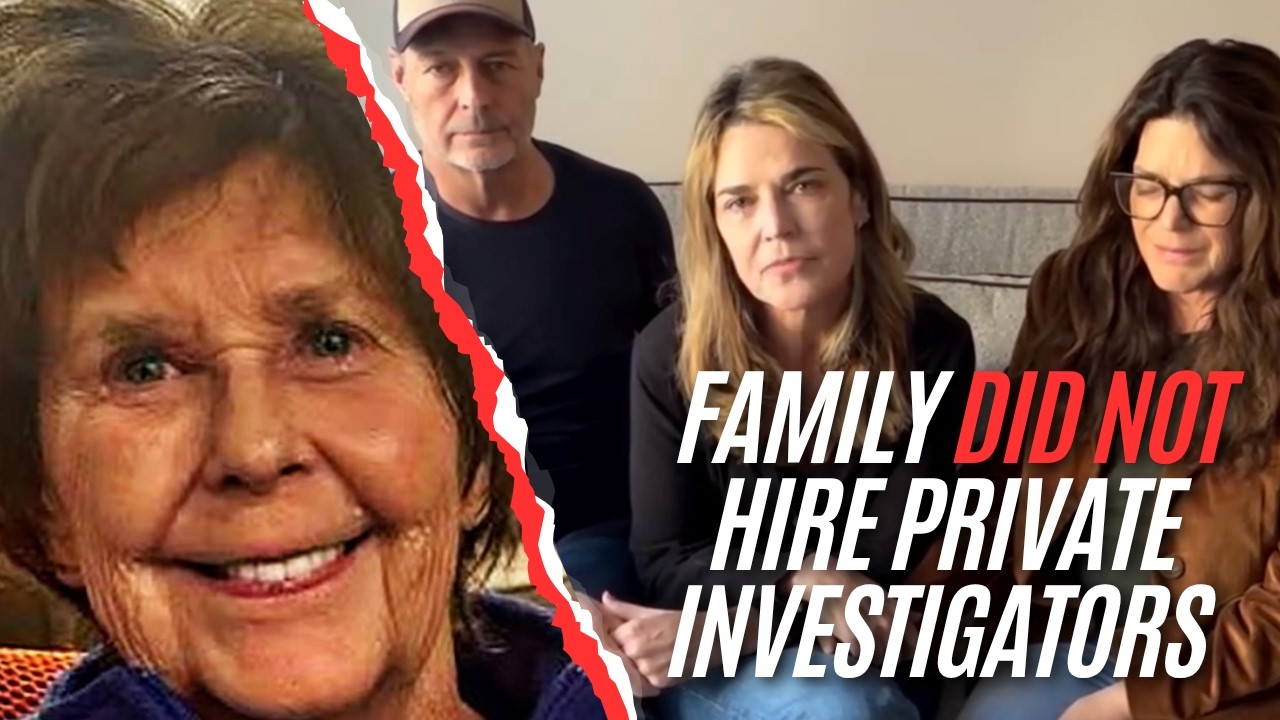
Savannah Guthrie did not spend 500k on private investigators in Nancy Guthrie case
"This episode debunks a major rumor in the Nancy Guthrie disappearance and provides critical updates on the Lynette Hooker missing person case, highlighting inter-agency conflicts and forensic challenges."

Inside the first hours after Nancy Guthrie vanished
"A retired FBI agent dissects the Pima County Sheriff's Office's chaotic initial response to Nancy Guthrie's disappearance, highlighting critical failures in crime scene management and inter-agency cooperation."

Another twist in Nancy Guthrie investigation -- are they really getting closer? Day 100
"One hundred days after Nancy Guthrie vanished, new clarifications emerge about the initial police response, while a retired FBI agent critically assesses the Pima County Sheriff's handling of the investigation and their alleged resistance to FBI assistance."

FBI kept out of Nancy Guthrie investigation for 4 days, airplane was ready to take DNA, Patel says
"New revelations from FBI Director Cash Patel expose a four-day exclusion of the FBI from the Nancy Guthrie investigation and the Pima County Sheriff's refusal to use the FBI's Quantico lab for DNA, fueling theories of a 'puppet master' and a dead accomplice."