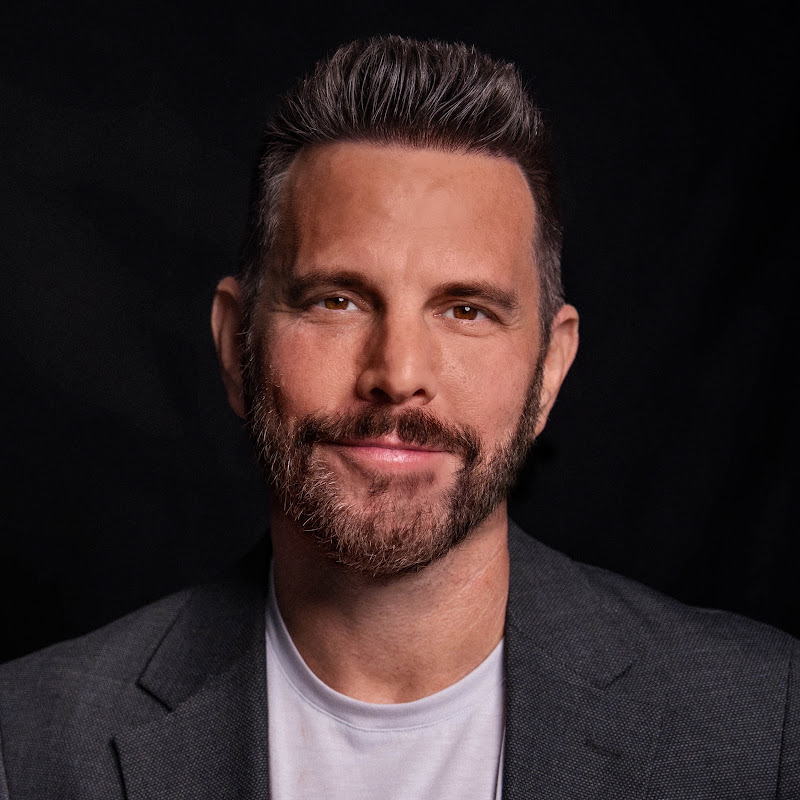
The One Trick You Can Use to Avoid Failing Like 90% of People | Dr. Phil McGraw
YouTube · wrkf1oa9An8
Quick Read
Summary
Takeaways
- ❖80-90% of New Year's resolutions fail by mid-February because willpower is an unreliable, emotionally fueled myth.
- ❖Lasting change requires setting up your environment to support desired behaviors when motivation is absent.
- ❖Habits are not broken; they are replaced by new behaviors incompatible with the old ones.
- ❖Modern overstimulation from devices and constant news hinders reflection and intentional living.
- ❖Societal division is often exaggerated by legacy media; finding common ground is crucial for dialogue.
- ❖The 'concierge parenting' model, where parents smooth all obstacles, cripples children's ability to develop self-reliance and problem-solving skills.
Insights
1Willpower is a Myth; Environmental Structuring is the 'One Trick'
Dr. Phil asserts that willpower is a 'con' and 'joke' because it's emotionally fueled and unsustainable. He highlights that 80-90% of New Year's resolutions fail by mid-February. The 'trick' to success is to proactively set up your environment to support compliance when motivation is low. This includes physical changes (e.g., removing junk food, altering routes) and social accountability (e.g., surrounding yourself with like-minded people).
By the middle of February, 80 to 90% have given up the ghost... Willpower is a myth. It's a con. Willpower is a joke because it's emotionally fueled... You have to set up your environment to support you when you don't want to do it.
2Modern Overstimulation Prevents Intentional Living
The constant bombardment of news, social media, and digital devices creates an 'overstimulated' state that prevents individuals from having the 'pensive' and 'reflective' quiet time necessary to consciously decide what they want and live with intention. This digital noise manipulates individuals away from their true purpose.
We're so overstimulated. We don't have time to be pensive, to be reflective, to sit down and and just have some quiet time... Am I doing what I want to do or am I doing what I'm being manipulated into doing?
3Societal Division is Exaggerated by Legacy Media
Dr. Phil believes that society is not as divided as legacy media portrays. He suggests that media outlets, often suffering from confirmation bias, push narratives that deepen perceived divides. He advocates for individuals to take back power by engaging in grassroots conversations, starting with identifying common ground before addressing disagreements.
We need to stop letting legacy media tell us who we are, what we believe, and what defines our culture. I don't think we're nearly as divided as we're being told we are... I think if we can just get people to start saying, 'Hey, quit telling me how I think and feel. I'm going to start asking questions and listening.'
4The Toxic Model of 'Concierge Parenting' Cripples Children
Despite parents spending more time with children than since the 1970s, children's mental health outcomes (anxiety, depression, loneliness) are worsening. This is attributed to 'concierge parenting,' where parents smooth all obstacles, preventing children from observing themselves overcome challenges and developing essential competencies for self-reliance and independence.
Parents are spending more time with their children now than they have since the 70s... the more time parents are spending with their children the worse the children are doing... We've got parents that are smoothing all the bumps out for their children... The child never has an opportunity to observe themselves overcoming obstacles.
Bottom Line
The current model of increased parental engagement is paradoxically leading to worse outcomes for children due to 'concierge parenting' that prevents the development of resilience.
This challenges the common assumption that more parental time automatically equates to better child development, suggesting that the *quality and nature* of interaction, specifically allowing for struggle and independent problem-solving, is more critical.
Develop parenting resources and programs that teach parents how to foster independence and resilience by strategically allowing children to face and overcome age-appropriate challenges, rather than shielding them from all difficulties.
Key Concepts
Willpower is a Myth
The idea that sustained self-control comes from sheer willpower is flawed because willpower is emotionally fueled and unreliable. True success in goal achievement comes from external environmental structuring.
Environmental Structuring
To achieve goals, individuals must proactively design their physical and social surroundings to support desired behaviors and make undesirable ones difficult, especially for moments when motivation is low.
Habit Replacement
Instead of attempting to 'break' bad habits, which is largely ineffective, focus on replacing them with new, incompatible behaviors that naturally crowd out and supersede the old patterns.
Confirmation Bias
A cognitive bias where individuals seek out and interpret information in a way that confirms their existing beliefs, often leading them to dig in further even when presented with contradictory factual evidence.
Concierge Parenting
A parenting style where parents excessively smooth out all obstacles and challenges for their children, preventing them from experiencing and overcoming adversity, which is essential for developing self-reliance and resilience.
Lessons
- Consciously design your physical and social environment to support your goals, especially when motivation is low (e.g., remove unhealthy foods, choose supportive social circles).
- Identify specific undesirable behaviors and actively replace them with new, incompatible actions, rather than just trying to 'stop' the old ones.
- Schedule dedicated 'quiet time' daily for reflection and intentional decision-making, reducing digital overstimulation to reconnect with your purpose.
- When engaging with those you disagree with, initiate conversations by first identifying common ground to build rapport before addressing points of contention.
- For parents: intentionally allow children to experience and overcome obstacles to build resilience and self-competence, resisting the urge to smooth out every difficulty.
The Environmental Structuring Playbook for Goal Achievement
Identify a specific goal you want to achieve (e.g., eat healthier, exercise more).
Analyze your current environment for triggers and obstacles that undermine your goal (e.g., junk food in pantry, unsupportive friends).
Proactively remove or modify environmental obstacles (e.g., clear pantry of junk food, take a different route home to avoid temptation).
Introduce environmental supports that make desired behaviors easier (e.g., pre-prepare healthy meals, lay out workout clothes, find an accountability partner).
Cultivate a social environment that aligns with your goals, surrounding yourself with like-minded individuals who reinforce positive habits.
Notable Moments
Dr. Phil introduces the concept that willpower is a myth and explains why New Year's resolutions fail.
This sets the foundation for his core 'trick' – environmental structuring – by debunking a common but ineffective approach to change.
The discussion shifts to the impact of modernity and overstimulation on intentional living.
It broadens the scope from individual habits to systemic societal challenges affecting personal agency and critical thinking.
Dr. Phil outlines his strategy for bridging societal divides by finding common ground first.
This offers a practical, grassroots approach to fostering dialogue and reducing polarization, contrasting with media-driven narratives.
The conversation delves into the negative consequences of 'concierge parenting' on children's development.
This provides a counter-intuitive insight into modern parenting, highlighting how well-intentioned actions can inadvertently hinder resilience and independence.
Quotes
"Willpower is a myth. It's a con. Willpower is a joke because it's emotionally fueled."
"You have to set up your environment to support you when you don't want to do it."
"We don't break habits. That's a myth. What we do is replace one set of behaviors with a new set of behaviors that are incompatible with the first set of behaviors."
"We need to stop letting legacy media tell us who we are, what we believe, and what defines our culture. I don't think we're nearly as divided as we're being told we are."
"The more time parents are spending with their children the worse the children are doing. There's more anxiety, more depression, more loneliness."
Q&A
Recent Questions
Related Episodes

Dopamine Expert: How TikTok Is Physically Rewiring Your Brain (Permanent Damage?)
"Dr. Anna Lembke, a Stanford addiction expert, explains how modern abundance and frictionless digital rewards are hijacking our dopamine systems, leading to widespread addiction and anhedonia, and offers strategies for reclaiming control."

BREAKING: Trump is TERRIFIED That You’ll WATCH THIS INSANE Video!
"The host exposes the stark contrast between public figures' self-portrayals and their actual conduct, from Trump's 'Great American State Fair' flop to Ken Paxton's hypocritical vacation, and Tucker Carlson's alarming embrace of Russian propaganda."

IHIP News: Trump's DEATHBED CONFESSION Era is in FULL-SWING! He Let's the TRUTH SLIP!
"Comedian Billy Eichner reflects on how his New York City upbringing and parents' unconditional love fostered self-acceptance and resilience, offering an antidote to societal shame and political toxicity."

Epstein, Atlantis & Ark of the Covenant | Dan Richards
"This deep dive into ancient mysteries and modern science communication exposes how ego, algorithms, and financial incentives often obscure truth in archaeology and public discourse."