Afroman Wins in Court. Cops Raid His Home, Find Nothing, Then Lose Big
YouTube · x91h8kC_vFY
Quick Read
Summary
Takeaways
- ❖A jury ruled in Afroman's favor against seven Adams County, Ohio sheriff's deputies who sued him for defamation and invasion of privacy.
- ❖The deputies raided Afroman's home in 2022 based on an informant's false claims of narcotics and a 'dungeon' with kidnapping victims; no drugs or charges resulted.
- ❖Afroman used his home security footage of the raid in parody music videos, which went viral.
- ❖The lawsuit and trial further amplified the videos, with Afroman's lawyer even playing them in court.
- ❖Afroman's performance fees have increased significantly since the incident and subsequent legal battle.
- ❖Afroman is exploring a 'Lemon Pound Cake' product line, inspired by a deputy's viral image from the raid.
Insights
1Unsubstantiated Raid and Damage
Adams County deputies raided Afroman's home based on an informant's claims of drugs and a 'dungeon' with kidnapping victims. No evidence was found, and no charges were filed. Afroman had to pay for the damage to his gate and doors, which the deputies refused to repair.
Afroman states the informant made up 'unbelievable lies' about a dungeon and kidnapping victims. He confirmed he paid for the damage and that Sergeant Randy Walters refused to help with repairs, stating, 'We're not required to do that.'
2Strategic Use of Parody for Justice and Profit
Afroman, watching the raid remotely, decided to 'milk the situation' by creating multiple parody songs and videos using his security footage. This was a deliberate strategy to capitalize on the injustice, express his anger, and generate income.
Afroman states, 'I thought about everything I was mad about. I wanted to milk the situation so I could capitalize on it.' He created songs like 'Pound Cake,' 'Why You Disconnecting My Camera?', 'Will You Help Me Repair My Gate?', and 'I'mma Have a Good Time'.
3Lawsuit Amplified Virality and Income
The deputies' decision to sue Afroman for defamation inadvertently propelled his content to global virality. The trial itself became a platform for Afroman's videos, further increasing his reach and performance fees.
Afroman notes, 'I went viral when I got raided. They fought. Then I went viral again when they sued me, they fought. Then I went viral again when we went to trial.' He confirms his performance fee has increased, stating, 'Sky, baby. God, prices is going up.'
4First Amendment Precedent for Parody
The jury's ruling in Afroman's favor reinforces the legal precedent for artists to create parody songs without fear of defamation lawsuits, even when targeting specific individuals or institutions like law enforcement.
The host references the Luther Campbell Supreme Court case, stating, 'That Luther Campbell case among others allows for artists to make parody songs... and not be sued.' He emphasizes this was 'absolutely a First Amendment case' and will 'go down... as it relates to music parodies and the First Amendment.'
Bottom Line
The police officers' emotional testimony, including one claiming Afroman's video caused his wife to leave (despite a prior restraining order against him), was perceived as disingenuous and likely undermined their case.
Emotional appeals in court, especially from public officials, can backfire if perceived as manipulative or inconsistent with facts, potentially alienating a jury and reinforcing a negative public image.
Legal teams defending against such claims can strategically highlight inconsistencies in emotional testimony to discredit plaintiffs and bolster arguments about the lack of actual harm or malicious intent.
Afroman's 'player' philosophy, focused on making money and avoiding enemies, guided his approach to politics and business, including his stance against police immunity.
This perspective demonstrates a pragmatic, self-interested approach to social issues, where personal safety and financial well-being (e.g., 'I can't get my tax break if I don't have my black life') dictate political alignment, rather than strict party lines.
Understanding this 'player' mindset can inform how public figures, especially artists, navigate political endorsements and policy stances, often prioritizing tangible benefits or protections for their community and themselves.
Opportunities
Afroman Lemon Pound Cake Product Line
Capitalize on the viral 'Lemon Pound Cake' meme from the trial by launching a branded line of packaged lemon pound cakes. This leverages existing virality and public recognition for a tangible consumer product.
Key Concepts
Streisand Effect
The phenomenon where an attempt to hide, remove, or censor information has the unintended consequence of publicizing the information more widely, often via the Internet. The deputies' lawsuit against Afroman directly caused his parody videos to gain significantly more attention and reach.
Turning Adversity into Opportunity
Afroman's strategic decision to create multiple parody songs and videos from the traumatic experience of his home being raided, and then leveraging the subsequent lawsuit to further promote his content and message, exemplifies transforming a negative event into a positive outcome for his career and finances.
Lessons
- Document critical events: Ensure security cameras are operational and footage is backed up, as it can be crucial evidence in legal disputes or creative projects.
- Leverage creative outlets for protest and profit: When faced with injustice, consider how artistic expression (music, video, art) can be used to tell your story, challenge narratives, and even generate income.
- Understand parody law: Artists should be aware of their First Amendment rights regarding parody, which protects creative works that comment on or critique existing material, even if it's critical of public figures or institutions.
- Be prepared to capitalize on unexpected virality: When an event or content goes viral, have a strategy to 'milk the situation' for sustained engagement and financial gain, as Afroman did with multiple songs and potential product lines.
- Maintain composure and strategic thinking during adversity: Afroman's ability to observe the raid and then plan his creative response, rather than reacting solely with anger, allowed him to turn a negative into a significant win.
Leveraging Adversity for Artistic and Financial Gain
Document the incident: Ensure all available evidence (security footage, witness accounts) is collected and preserved.
Identify core grievances: List all aspects of the adverse event that caused anger or frustration.
Brainstorm creative responses: Develop artistic concepts (songs, videos, art) that address each grievance, aiming for virality and public resonance.
Capitalize on public attention: Release content strategically, and if legal action ensues, use the trial as a further platform to amplify your message and content.
Explore commercial extensions: Identify opportunities to translate viral moments or memes into tangible products or services (e.g., 'Lemon Pound Cake').
Notable Moments
Deputies crying on the witness stand, with one claiming Afroman's video caused his divorce, despite a prior restraining order against him.
This moment highlighted the perceived insincerity of the deputies' claims of distress, potentially swaying the jury and reinforcing Afroman's narrative of police overreach and lack of accountability.
Afroman's lawyer compared the literal interpretation of 'Lemon Pound Cake' to Cardi B's 'WAP' during cross-examination, demonstrating the absurdity of taking parody literally.
This comparison effectively illustrated the nature of parody and artistic license to the jury, undermining the prosecution's argument that Afroman's songs were factual defamation.
Afroman wore an American flag suit, tie, and shoes to court, and a white mink coat on another day.
This sartorial choice was a deliberate statement of patriotism and defiance, framing his First Amendment defense as a quintessentially American act, while also maintaining his 'player' persona.
Quotes
"I watched them cops beat up Rodney King and I watched him get off. So even, you know, right and wrong ain't got nothing to do with it. I just knew it could happen and I'm glad God didn't let it happen this time."
"I didn't want to write a song until that dude laughed about knocking my door down, you know, because I'm a brother. I get pulled over all the time... but I just didn't like his attitude after he realized I was a good dude."
"He wanted to give police officers 100% immunity. That was my deal breaker with him. Before I can get my big Republican tax break, I need my black life."
Q&A
Recent Questions
Related Episodes
Black Woman Killed in ICE Pursuit. Newsom “Can’t Read” Remark. Tariff Repayment Push. TPS Fight
"This episode dissects multiple critical events, from the tragic deaths during an ICE pursuit and a police shooting, to debunking a viral controversy around Governor Gavin Newsom's remarks, and honoring Reverend Jesse Jackson's enduring legacy in economic and media justice."
NC Mom Sues Hospital For Negligence. Black NFL Coaches Win Major Ruling. Drug Test Scandal Exposed
"This episode exposes systemic failures and racial disparities across healthcare, professional sports, and politics, featuring a mother's harrowing hospital negligence lawsuit, a landmark NFL discrimination ruling, and alarming findings on flawed drug tests criminalizing new mothers."
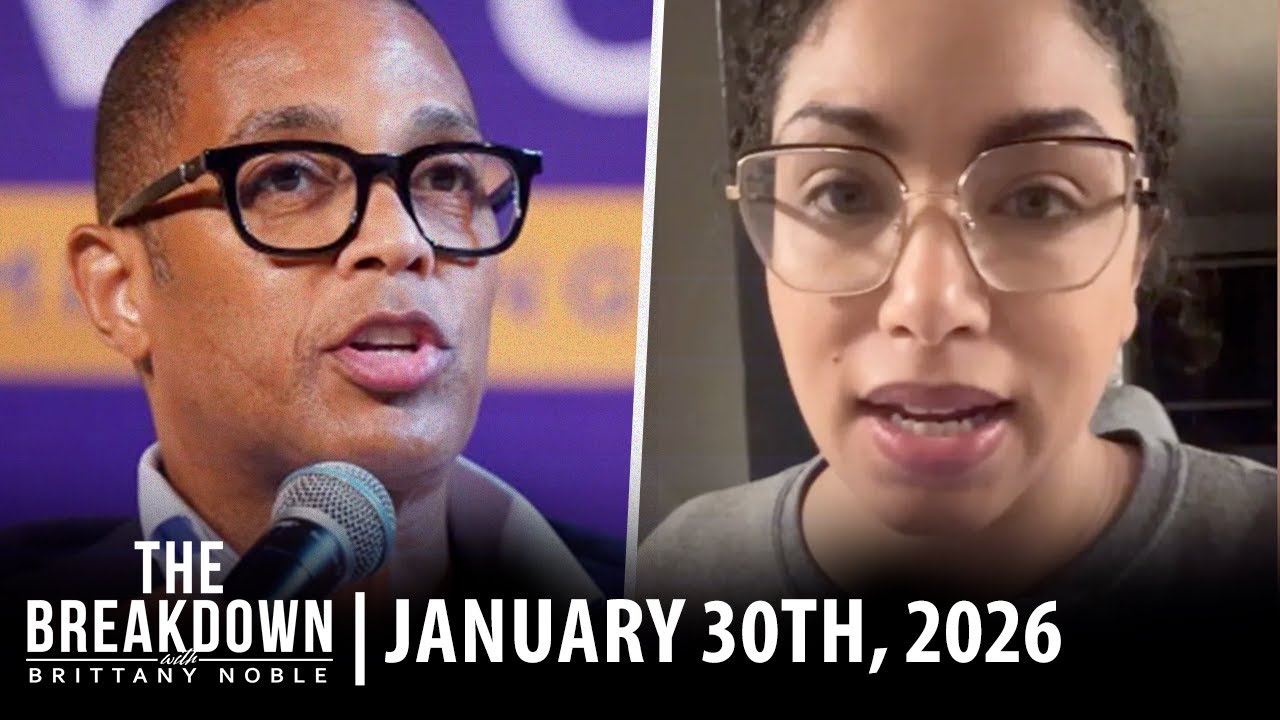
rump’s DOJ arrests journalists Don Lemon, Georgia Fort
"Federal agents arrested prominent journalists Don Lemon and Georgia Fort for covering a church protest, sparking widespread condemnation and raising critical questions about First Amendment rights and the weaponization of the Justice Department."
Don Lemon, Georgia Fort Arrested Over Church Protest. Press Freedom on the Line Under Trump.
"The Trump administration's arrest of journalists Don Lemon and Georgia Fort for covering a church protest is framed as a direct assault on press freedom and a calculated distraction from the release of damaging Epstein files."