Moral Monday — Moral Witness in the Public Square
YouTube · xO4SY5eUeSs
Quick Read
Summary
Takeaways
- ❖The 'public pulpit' is essential to counter religious nationalism and bring moral messages directly to power.
- ❖Military spending is a 'theft from the poor,' preventing universal healthcare, education, and poverty eradication.
- ❖Efforts to restrict voting rights are condemned as 'policy violence' and a denial of human dignity.
- ❖True faith is demonstrated through actions of justice and compassion, not hollow religious performance.
- ❖The interconnectedness of issues like war, poverty, voting rights, and healthcare forms a 'one moral fabric' that must be mended.
Insights
1The Mandate for a Public Pulpit Against Religious Nationalism
Speakers established the 'public pulpit' as a necessary platform, grounded in biblical prophecy (Jeremiah 22, Isaiah), to confront the state's distortion of moral narratives. They argued that religious nationalism sanitizes cruel policies, justifies systemic neglect, and uses faith to promote white supremacy, war, and the starvation of the poor. The pulpit must be 'out on the pavement' to counter this 'toxic falsehood' and bring the message of justice directly to the 'palace gates,' not confined to sanctuaries.
We gather today... to construct a public pulpit in the very face of the White House... because the state has distorted the moral narrative using religious nationalism to sanitize their cruelest of empires and justify their systemic neglect of our people.
2Economic Violence: Military Spending as 'Policy Murder'
The Institute for Policy Studies presented data illustrating the 'economic violence' and 'policy murder' of prioritizing military spending. They highlighted a bill that slashed food assistance and Medicaid while pouring trillions into the war machine. Specifically, the US War Department's spending of over $1 billion a day on an 'immoral war' could instead fund universal food assistance for half the country or Medicaid for millions, or rebuild pulverized health infrastructure in places like Gaza. This diversion of funds is framed as a 'theft from the poor.'
Over $1 billion a day that the United States War Department has spent every single day to wage this immoral war... that war money could pay for 161 million people... to receive food assistance... or 43 million people to receive Medicaid for 1 year.
3Universal Healthcare as a Moral Imperative
The speakers advocated for universal healthcare, citing Matthew 25 and emphasizing that caring for the sick is a core Christian action. They pointed out that despite high spending, the US ranks last among high-income countries in healthcare performance, with racial disparities and medical costs leading to bankruptcy. They condemned politicians who prioritize iPhones over healthcare, aligning with calls for 'Medicare for All' as a reflection of loving one's neighbor.
We're calling for universal health care today for each and every person who lives in this country... America has some of the best hospitals in the world... but it is also the only rich country without universal health coverage and health care that leads to bankruptcy.
4Voting Rights as a Defense Against Policy Violence
Bishop Phil Hirsch underscored that protecting and exercising voting rights is a pastoral, not partisan, issue. He highlighted the historical struggle for voting access and condemned recent efforts to restrict it, including the Supreme Court's evisceration of Section 2 of the Voting Rights Act. Denying voting rights is equated to violence, and the faith community is called to raise a prophetic voice for just access to ballots.
Efforts to restrict access to voting should be condemned and resisted. It to do so is not partisan, it is pastoral... Denying voting rights is violence.
5The 'One Moral Fabric' of Interconnected Injustices
The closing speaker articulated that all the issues discussed—war, poverty, voting rights, women's rights, healthcare, and non-violence—are not separate problems but threads of 'one moral fabric.' This fabric is being intentionally torn for profit, aiming to divide and conquer. The call to action is to mend this whole cloth with justice, love, and mercy, refusing to let any single thread be forgotten or left untended.
It was not six speeches. It was just one. Because it is one moral fabric. Pull the thread of war and you find the money that was supposed to feed the poor. Pull the thread of poverty and you find the people that did not want you to vote.
Key Concepts
Policy Violence
This model describes how government policies, such as cuts to social programs, excessive military spending, and restrictions on voting rights, inflict harm and suffering on vulnerable populations, effectively constituting a form of violence or 'murder' through systemic neglect and oppression.
Public Pulpit
This concept refers to taking religious and moral advocacy out of traditional church buildings and into the public square, directly confronting political power structures with prophetic truth and calls for justice. It emphasizes visible, consistent witness against injustice in the face of governmental and corporate power.
Lessons
- Establish 'public pulpits' in your local community to consistently speak truth to power and challenge unjust policies.
- Mobilize friends and neighbors to vote, focusing on a moral vision that prioritizes human well-being over political partisanship.
- Join or support campaigns like 'People Over Pentagon' to advocate against excessive military spending and for reallocation of funds to social programs.
- Actively resist policies that restrict voting rights, cut social safety nets, or deny universal healthcare, recognizing these as forms of 'policy violence'.
Building a Public Pulpit for Moral Witness
Identify local injustices: Recognize how issues like war, poverty, healthcare, and voting rights are interconnected in your community.
Gather diverse leaders: Bring together clergy, workers, mothers, elders, and young people from various backgrounds and faiths.
Proclaim truth publicly: Establish a visible 'public pulpit' (e.g., outside government buildings, in public squares) to speak boldly against 'policy violence' and 'religious nationalism'.
Advocate for systemic change: Demand policies that promote universal healthcare, living wages, robust public education, and protected voting rights.
Maintain consistent witness: Commit to regular gatherings and actions, understanding that mending the 'moral fabric' requires sustained effort, 'stitch by stitch, thread by thread'.
Notable Moments
The opening call-and-response chant, 'Fight on, just a little while longer. Pray on, just a little while longer. Love on, just a little while longer. I know justice is coming soon.'
This sets a tone of persistent struggle, faith, and hope, framing the entire event as a continuation of a long-standing fight for justice.
The speaker's detailed etymological breakdown of Greek words used by Jesus (patochos, akmalatos, aphesis, anableps, thrauo) to define 'poor,' 'captive,' 'deliverance,' 'blind,' and 'bruised' as systemic rather than merely individual conditions.
This academic yet passionate explanation deepens the theological grounding for the call for structural socio-economic revolution and 'jubilee,' moving beyond superficial interpretations of faith.
The collective singing of 'Witness for my Lord' and the repeated chant of 'Witness!' by the crowd.
This moment embodies the collective commitment and spiritual resolve of the participants, reinforcing the idea that their presence and voices are a necessary testimony against injustice.
Quotes
"This is what the Lord says: Do what is just and right. Rescue from the hands of the oppressor the one who has been robbed. Do not wrong or violence to the foreigner, the fatherless, or the widow, and do not shed innocent blood in this place."
"God turns his back on a faith that sings beautifully on Sunday, but then votes to crush the vulnerable on Monday."
"A nation that continues year after year to spend more money on military defense than on programs of social uplift is approaching spiritual doom."
"Every dollar spent on a missile is a dollar stolen from the poor."
"A government loses its moral authority when it sheds innocent blood to feed its own ego. And when rulers build their palaces on the backs of the poor, the public pulpit must break the silence."
"This is not a left versus right issue. This is not a Democrat versus Republican issue. This is a deeply moral issue. It is a matter of right versus wrong."
"We never thought that America would be a geopolitical predator. Pushing the kind of things that Russia and China are pushing."
"Pull the thread of war and you find the money that was supposed to feed the poor. Pull the thread of poverty and you find the people that did not want you to vote."
Q&A
Recent Questions
Related Episodes
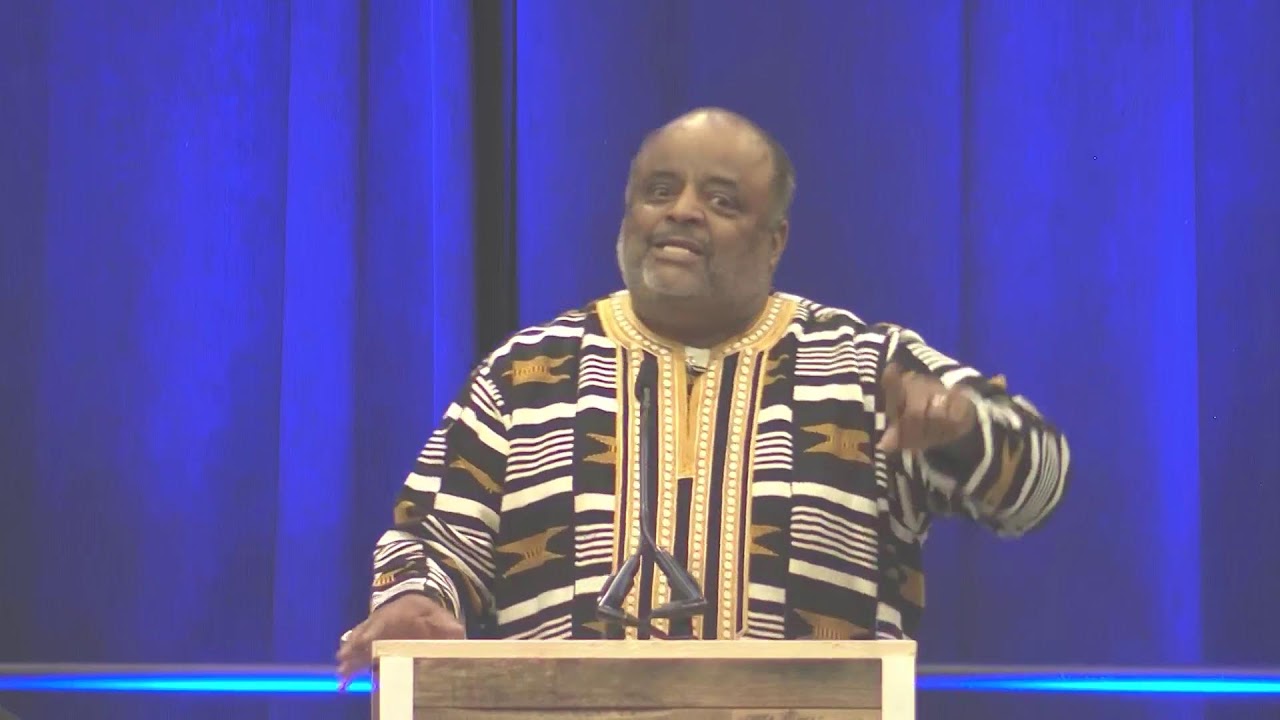
Roland speaks at Columbus Educ. Assoc. MLK Dinner
"Roland Martin challenges the audience at an MLK dinner to move beyond passive celebration and engage in active, sustained political and economic struggle, emphasizing that 'rest time is over' for those seeking real societal change."
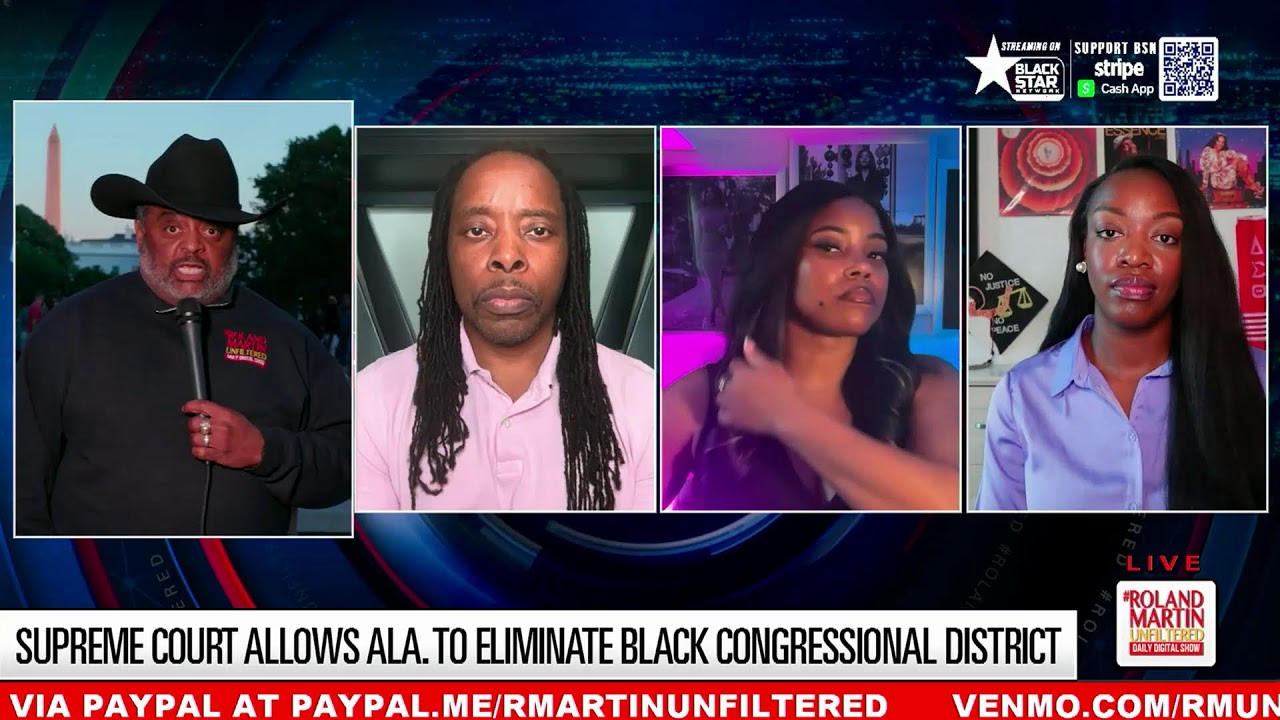
Moral Monday at BLM Plaza. Cleo Fields Sounds Alarm on Louisiana & Gary Chambers Pushes Turnout
"Activists and faith leaders gathered at Moral Monday to denounce 'policy violence' in various forms, from war and budget cuts to voter suppression and healthcare denial, urging sustained mobilization against a 'hijacked' democracy."

Contested Primary Elections. Facebook Marketplace Shooting. Hey Black Girl Affirmations#TheBreakdown
"This episode explores a Georgia lawsuit challenging a new election law, highlights a community-driven real estate project building Black wealth, and features initiatives empowering Black women and girls."
All-White Jury Convicts Karmelo Anthony. Georgia Election Lawsuit. Tennessee Map Challenge Dropped.
"This episode dissects systemic racial biases in the justice system, politically motivated election law changes, and the dangers of unchecked AI in law enforcement, all while highlighting the ongoing fight for civil rights."