
Cartel Insider Exposes ‘Sasquatch’ Triple Murder You Won’t Believe | David Holthouse
YouTube · xQOWXfDIUzM
Quick Read
Summary
Takeaways
- ❖Operation Odessa involved a Russian mobster, a Colombian trafficker, and a Cuban spy attempting to sell a Soviet submarine to the Cali cartel after the fall of the Soviet Union.
- ❖Filming 'Operation Odessa' in Moscow involved constant surveillance by Chechen secret police and a near loss of all footage.
- ❖The 'Sasquatch' documentary investigated a triple murder in California's Emerald Triangle, initially rumored to be by Bigfoot, but uncovered a human-perpetrated crime related to the illicit cannabis trade.
- ❖David Holthouse believes DEA agent Kiki Camarena was killed because he stumbled upon a CIA cocaine trafficking operation funding the Contras.
- ❖Narco Menanites, a Canadian streaming series, exposes a unique Menanite drug cartel in Mexico that uses special visas to smuggle drugs into the US and Canada.
- ❖California's energy policy, aimed at reducing domestic oil production, has led to increased reliance on imported oil, with 40% coming from Iraq, creating national security vulnerabilities and environmental paradoxes.
- ❖The Epstein files reveal a bipartisan network of powerful individuals involved in illicit activities, suggesting a 'vertical fight' against an elite layer above traditional politics.
- ❖Holthouse's undercover work with neo-Nazis and meth addicts highlighted the allure of belonging and the surprising funding sources of white supremacist groups through illegal merchandise sales to Europe.
- ❖The Phoenix Lights UFO sighting, witnessed by Holthouse, continues to defy conventional explanations, raising questions about military technology or other phenomena.
Insights
1Operation Odessa: Post-Soviet Military Hardware Trafficking
After the fall of the Soviet Union, a Russian mobster named Ludvig Fineberg (Tarzan), a Colombian trafficker Juan Almeida, and a Cuban spy Tony Esester, leveraged connections in the former Soviet Union to acquire surplus military hardware for the Cali cartel. This included military motorcycles, AK-47s, RPGs, a heavy military transport helicopter, and even a brokered deal for a submarine. The chaos in Russia meant military officers, unpaid, were willing to sell anything, including, as one scene depicted, a nuclear weapon.
Tarzan's connections in former Soviet Union for surplus military hardware (), brokering a deal for a heavy military transport helicopter (), and a submarine (). Tony Yester's account of being offered a nuclear weapon in a Russian sauna ().
2The Sasquatch Documentary: Unmasking a Triple Homicide in the Emerald Triangle
Holthouse's documentary 'Sasquatch' began by investigating a 1993 rumor of three men killed by a Sasquatch on a weed plantation in California's Emerald Triangle. Through extensive reporting and interviews with locals, including a harrowing encounter with a self-admitted murderer, the investigation uncovered that the 'Bigfoot' story was a cover for a human-perpetrated triple homicide, likely related to the violent, off-grid cannabis trade. The region's remoteness, drug culture, and high missing persons rate contribute to a climate where such crimes can occur with impunity.
Story of three dudes killed by a Sasquatch on a weed plot in 1993 (), tracking the true story of who killed them (), description of the Emerald Triangle as 'outlaw country' with a high missing person's rate (), and a woman confessing to murder and burying bodies on her property ().
3CIA Involvement in Kiki Camarena's Murder
Holthouse's documentary 'The Last Narc' posits that DEA agent Kiki Camarena was killed because he inadvertently uncovered a CIA cocaine trafficking operation. This operation allegedly moved coke from Colombia to Mexico and into the US, using proceeds to illegally fund the Contras in Central America. While not directly murdered by the CIA, Holthouse believes a CIA operative, Felix Rodriguez, was involved in Camarena's abduction and interrogation, which escalated to torture and death.
Kiki Camarena stumbled across the CIA's cocaine trafficking operation (), using money to illegally fund Contras (), Felix Rodriguez's involvement in abduction and interrogation (), and consistent accounts from cartel enforcers placing Rodriguez at the mansion where Camarena was held ().
4California's Paradoxical Energy Policy
California's aggressive 'net zero' energy policies, which aim to shut down domestic oil production, have not reduced the state's oil consumption. Instead, California now imports 40% of its oil from Iraq, making it the single greatest source of imported oil. This policy creates significant national security vulnerabilities by increasing reliance on a volatile Middle Eastern region and paradoxically worsens environmental impact due to the dirty fuel burned by international oil tankers. The state lacks an interstate pipeline, preventing it from sourcing oil from other U.S. states like Texas.
California shutting down domestic oil production (), importing 40% of its oil from Iraq (), national security implications of relying on Middle East oil (), environmental impact of trucking oil overseas (), and lack of an interstate pipeline ().
5The Epstein Files and 'Hypernormalization'
The release of the Epstein files, detailing widespread illicit activities involving powerful figures, has revealed a 'vertical fight' against an elite layer above traditional politics. Despite public evidence and admissions, there's a collective societal denial or refusal to confront the implications, a phenomenon Holthouse likens to 'hypernormalization' observed in the Soviet Union before its collapse. The files suggest Epstein's connections to multiple intelligence agencies (Mossad, MI6, CIA, FSB) and powerful financial families (Rothschilds), indicating a deeper, more pervasive network than initially perceived.
Epstein files making public information admitted by DOJ (), Holthouse's belief Epstein was an Israeli intelligence agent gathering blackmail (), links to FSB and attempt to reach Putin (), and the host's observation of Rothschild connections ().
Bottom Line
The 'green' energy policies of California, by stifling domestic oil production without reducing consumption, have inadvertently created a national security risk and increased global environmental impact by shifting reliance to foreign, often less regulated, sources like Iraq.
This challenges the conventional narrative that local environmental regulations automatically lead to global environmental benefits or energy independence. Instead, it highlights how isolated policy decisions can have complex, counter-intuitive geopolitical and environmental consequences.
There is a need for comprehensive energy policy analysis that considers national security, global environmental impact, and economic realities, rather than purely localized environmental goals. This could involve investing in nuclear power or developing secure interstate energy infrastructure.
Key Concepts
Gonzo Journalism
A style of journalism written without claims of objectivity, often including the reporter as part of the story via a first-person narrative. Holthouse embodies this by immersing himself in the subcultures he reports on, building trust, and even mirroring the behaviors of his subjects to gain access, as exemplified by his work with meth addicts and neo-Nazis.
Hypernormalization
A concept describing a state where people are aware that their systems (government, economy, society) are failing, but they collectively pretend everything is normal because they see no alternative. Holthouse and the host apply this to contemporary American society, drawing parallels to the Soviet Union before its collapse, and to the public's reaction to the Epstein files.
Lessons
- Question conventional wisdom and accepted truths, especially concerning complex issues like energy policy and geopolitical events, as narratives can be divorced from reality.
- Recognize the psychological toll of deep immersion in challenging environments or subcultures, and develop coping mechanisms for disassociation and adrenaline dumps.
- Be aware of the 'hypernormalization' phenomenon, where societal denial can prevent confronting uncomfortable truths, and actively seek diverse sources of information to counter this effect.
- Understand that criminal organizations, including cartels and white supremacist groups, are often well-funded, organized, and leverage ex-military or intelligence personnel for their operations.
- Exercise caution and critical thinking when encountering information, especially in the digital age, as deliberate disinformation can be mixed with truth to overwhelm and confuse.
Gonzo Journalism: Immersion and Trust-Building
Identify interesting individuals or subcultures that offer a unique story, even if they appear 'weird' or fringe.
Immerse yourself fully in the subject's world, temporarily inhabiting their environment and adopting their mannerisms, slang, and dress to build rapport and trust.
Prioritize building relationships and gaining trust, often through off-camera or off-the-record interactions, as this is where the most important work takes place.
Maintain a 'participant-observer' stance, actively engaging while also critically observing and documenting, using discreet recording methods when necessary.
Be prepared for significant personal risk and psychological toll, including disassociation and adrenaline dumps, and understand that such work is not always sustainable long-term.
Notable Moments
While filming 'Operation Odessa' in Moscow, Holthouse and his crew were under constant surveillance by Chechen secret police and nearly lost all their footage, having to hastily leave the country with only one copy.
This illustrates the extreme risks and covert operations involved in documenting international crime, highlighting the power dynamics between journalists and state actors.
During the investigation for 'Sasquatch,' Holthouse, alone and wired, interviewed a woman who casually confessed to multiple murders and burying bodies on her property, describing a pitbull digging up a victim's shoe as a humorous anecdote.
This chilling account underscores the profound dangers of embedding in outlaw communities and the casual brutality that can exist in remote, lawless areas.
Holthouse, while undercover as a neo-Nazi skinhead in Denver, realized the intimidating power of group identity and observed that many members were 'lost souls' seeking belonging, while leaders often exploited the movement for power.
This provides a nuanced insight into the motivations behind joining hate groups, revealing both ideological commitment and the psychological need for community and identity, as well as the organizational sophistication of these groups.
Holthouse witnessed the Phoenix Lights UFO sighting, describing a massive V-shaped craft that appeared to morph shape at low altitude, a phenomenon he initially attributed to military technology but now questions given the lack of official explanation.
His firsthand account from a major, well-documented UFO event adds a personal dimension to the ongoing mystery, highlighting the persistent questions surrounding unexplained aerial phenomena and government secrecy.
Quotes
"Tony, they're saying they can sell us a nuclear weapon. Should we buy a nuclear weapon?"
"This is your chance to tell your story for your kids."
"I'm convinced that Kiki Camarina was killed because he stumbled across the CIA's cocaine trafficking operation."
"California is importing a lot of oil and the single greatest source of imported oil for California is Iraq."
"The idea that there's an energy transition away from fossil fuels, there really isn't."
Q&A
Recent Questions
Related Episodes
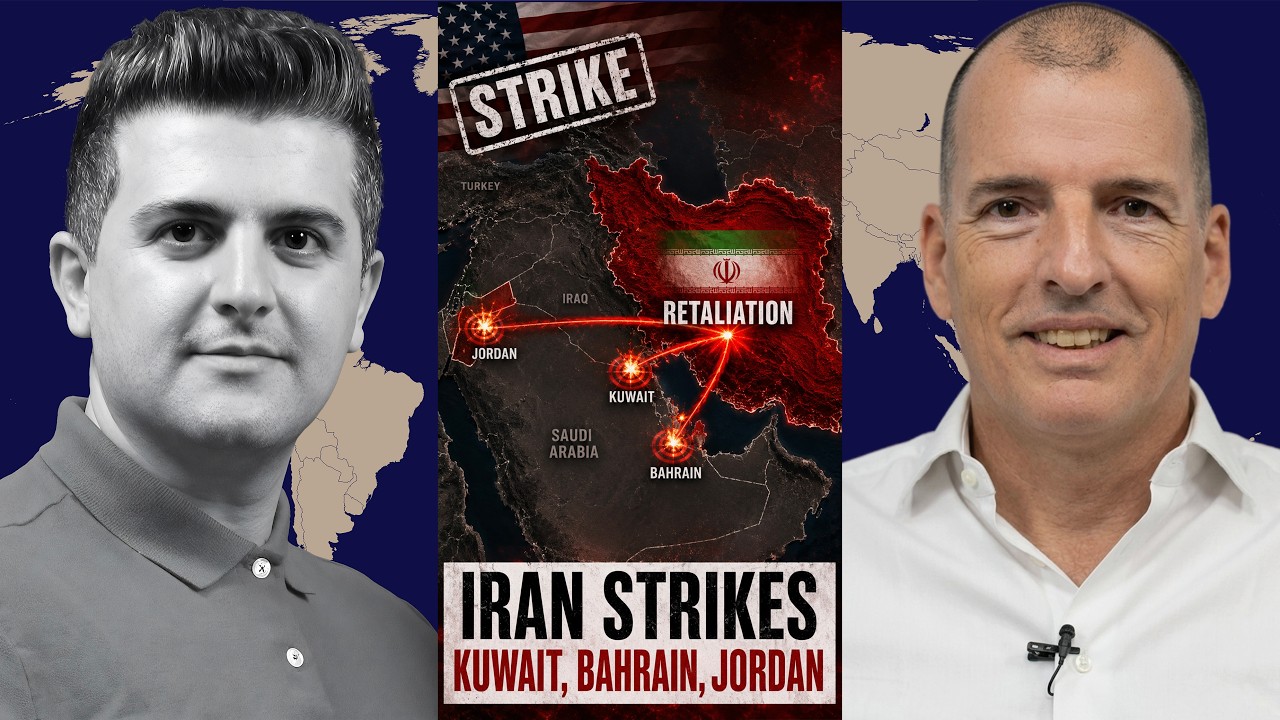
Alex Krainer: US STRIKES Iran – Iran RETALIATES Against Kuwait, Bahrain & Jordan!
"Amidst escalating US-Iran conflict and Iranian retaliation against regional US allies, this episode argues that US foreign policy is deeply controlled by an 'Anglo-Zionist conspiracy' led by the Rothschild banking dynasty, prioritizing Israeli interests over American ones."

Iran Update: Israel’s Newest Bombing Campaign, the Oncoming War With China and How to Avoid It
"Colonel Wilerson reveals how the US and Israel are actively bombing China's strategic infrastructure in Iran, escalating a covert economic war that Beijing intends to win without direct military conflict by dismantling the dollar's global dominance."
Victor Marx: The Man Who Weaponized Faith. | Candace Ep 329
"Corby Hall, inventor of the Fold AR, details his unsettling encounters with self-proclaimed pastor Victor Marx, exposing alleged spiritual and financial manipulation, including requests for guns for Haiti and attempts to control his business, which the host frames as 'dark psychiatry' and a microcosm of broader societal deception."
Killer Cases: NBA Star Lured to Execution In Rural Tennessee
"The decade-long cold case of NBA star Lorenzen Wright's murder was cracked through a persistent mother, a jailed informant, and a covert police operation that recovered the murder weapon from a lake and exposed a conspiracy driven by greed."