
Larry Johnson & Col. Wilkerson: Fighter Jet SHOT DOWN — Iran War SPIRALS OUT OF CONTROL
YouTube · xRb-V32-MWA
Quick Read
Summary
Takeaways
- ❖A US F-15E fighter jet and a Blackhawk helicopter were shot down in Iran, contradicting US claims of Iranian military incapacitation.
- ❖US intelligence significantly underestimated Iran's missile inventory and air defense capabilities.
- ❖Saudi Arabia's MBS is re-evaluating its relationship with the US, making deals with Ukraine and potentially other regional powers, signaling a pivot away from Washington.
- ❖The Strait of Hormuz is becoming a chokepoint controlled by Iran and Oman, with fees potentially charged in yuan, challenging the petrodollar system.
- ❖The US military is undergoing politicization under Pete Haxet, raising concerns about loyalty and a potential "praetorian guard" for a specific political agenda.
- ❖Approximately 7,500 US special operations forces are deployed, indicating a potential ground assault in Iran, which is predicted to be disastrous.
- ❖The war is causing global economic instability, with oil prices rising and a potential global depression if Iran targets "second-tier" economic assets.
- ❖Israel is pushing the US to continue the war but is militarily overstretched and suffering heavy casualties from Hezbollah.
Insights
1US Intelligence Failures in Iran
US intelligence agencies, including the CIA and DIA, severely misjudged Iran's military capabilities, particularly its ballistic missile inventory (estimating 3,000, which Iran expended in two weeks) and air defense systems. This led to a false narrative of Iran's defeat, directly contributing to US aircraft being shot down.
The early reports we had showed that they really had no idea what they were talking about because the analysis was that Iran had only like 3,000 missiles. Well, they burned through all that in about two weeks and have kept firing ever since. It does appear that it can shoot down, detect and shoot down F-35s, F-15s, F-16s, KC135 tankers.
2Geopolitical Realignment Away from US
Trump's "impolitic comments" about Saudi Arabia's MBS, specifically claiming MBS "kissed his ass," have fundamentally altered the US-Saudi relationship. Saudi Arabia is now forging new alliances (e.g., with Ukraine's Zelensky, Pakistan, Syria) and re-evaluating major projects like the pipeline through Israel, signaling a broader regional shift away from US influence.
Trump's very impolitic comments about NBS... Well, we have a whole new relationship now developed in the region, a relationship between Zalinsky... and NBS. MBS has said nothing back in derisive nature. But that changed, I think, the entire nature of our relationship with the principal power in Southwest Asia other than Iran.
3Politicization of the US Military
The Pentagon, under Pete Haxet, is reportedly undergoing a "politicization" process, exemplified by the firing of commanders (including women and black officers) and changes to the chaplain corps. This is framed as an attempt to create a "praetorian guard" loyal to a specific political agenda, rather than a military serving the nation.
He was absolutely incensed over Excess dipping into the brigadier general's list and removing the two women I think and two black officers and he was so incensed over it that he let him go. What we're seeing here is I'll call it the politicization of the military, turning the military into a praetorian guard as opposed to the legionnaires.
4Imminent US Ground Assault in Iran
Analysis of C17 flight data reveals a significant deployment of approximately 7,500 US special operations forces (including elements of the 82nd Airborne, Ranger Regiments, and Delta Force). This indicates a high probability of an imminent ground assault in Iran, possibly targeting nuclear facilities like Bushehr, despite the logistical complexities and risks.
There have been a total of 74 flights. Each C17 can carry 102 paratroopers... potential deployment of around 7,500 soldiers. I think they're going to do something crazy. You don't deploy those folks overseas just for show.
5Economic Weaponization of the Strait of Hormuz
Iran, in cooperation with Oman, is moving to assert control over the Strait of Hormuz, potentially charging fees for passage and accepting payments in yuan instead of dollars. This move, combined with Iran's ability to disrupt shipping, could lead to a global depression and fundamentally restructure the international financial system by undermining the petrodollar.
They're negotiating with Oman about, hey, let's work together on this. Let's agree upon the fees that we're going to charge per ship to pass through the Persian Gulf. A French tanker and a Japanese tanker have gone through as well, and that means the French and the Japanese they're paying Chinese and yuan, they're not paying in dollars.
Bottom Line
The US military's current leadership is actively being reshaped to serve a specific political agenda, potentially creating a "praetorian guard" that could be leveraged for domestic political control, rather than a neutral force loyal to the nation.
This internal politicization poses an existential threat to the military's integrity and its constitutional role, potentially leading to internal conflict or complicity in unconstitutional actions, far beyond typical partisan divides.
For political analysts and historians, this presents a critical case study in the erosion of institutional norms and the weaponization of state power for political ends. For citizens, it highlights the importance of vigilance regarding military leadership appointments and their political affiliations.
Iran's strategy of initially withholding its full air defense capabilities and then deploying them by surprise has exposed critical US intelligence gaps and significantly altered the battlefield calculus.
This suggests a sophisticated, long-term strategic deception by Iran, indicating a higher level of military planning and adaptability than previously credited by Western intelligence. It means the US is fighting an enemy it fundamentally misunderstands.
Military strategists should re-evaluate conventional assumptions about intelligence gathering and enemy capabilities, particularly in non-peer conflicts. Defense contractors might explore new counter-deception technologies or adaptive warfare training.
Opportunities
Develop alternative global shipping insurance models for high-risk zones.
Create a new insurance consortium or platform that can underwrite maritime shipping in politically volatile regions like the Strait of Hormuz, potentially leveraging non-dollar currencies or state-backed guarantees from non-Western powers. This addresses the current void left by traditional insurers like Lloyds.
Investment funds focused on non-dollar denominated assets and emerging market energy infrastructure.
Establish investment vehicles specifically designed to capitalize on the de-dollarization trend and the rise of alternative currency-based trade, particularly in energy markets. This would include investments in infrastructure projects in countries willing to trade outside the dollar system (e.g., Chinese yuan-denominated oil deals).
Lessons
- Monitor global oil and stock markets closely, as the conflict in Iran is directly impacting prices and could trigger a global depression.
- Diversify investment portfolios away from dollar-denominated assets, considering the accelerating shift towards alternative currencies like the yuan in international trade.
- Pay attention to geopolitical shifts in the Middle East, particularly Saudi Arabia's evolving relationships, as they signal a major reordering of global power dynamics.
Quotes
"what we're seeing here is I'll call it the the politicization of the military turning the military into a ptorian guard as opposed to the legionnaires uh within you know within the Roman system the legionnaires were there to fight for Rome they fought for the nation the proaring guard was there to protect a particular politician."
"You cannot bomb a people into submission. No matter how many bombs you drop, no matter how accurate accurate they are, no matter how many planes you have flying, you cannot do anything by bombing their schools, their mosques, their facilities for food, their facilities for water, on and on and on. All of which are war crimes. Of course, you cannot convince them to do anything but to oppose you with the resolution of every bone in their body."
"Trump's narrative about the complete defeat of Iran is not working out so well."
"I think they're prepping for this and I I said to one person this morning I thought he would go and I said he would probably be the first one to go. Bondi's gone's gone. I think a couple of others are shortlived. Hegs is here and I understand why he's here now because he's crafting the instrument of Trump's and Trump's legacy in retention of power."
Q&A
Recent Questions
Related Episodes

Patrick Henningsen: Hezbollah JUST Fired Back at Israel - Iran Vows to “Crush” All Attacks
"Patrick Henningsen argues that the US and Israel initiated an illegal war against Iran, driven by Trump's incompetence and Israeli influence, leading to an inevitable escalation with severe global economic repercussions."
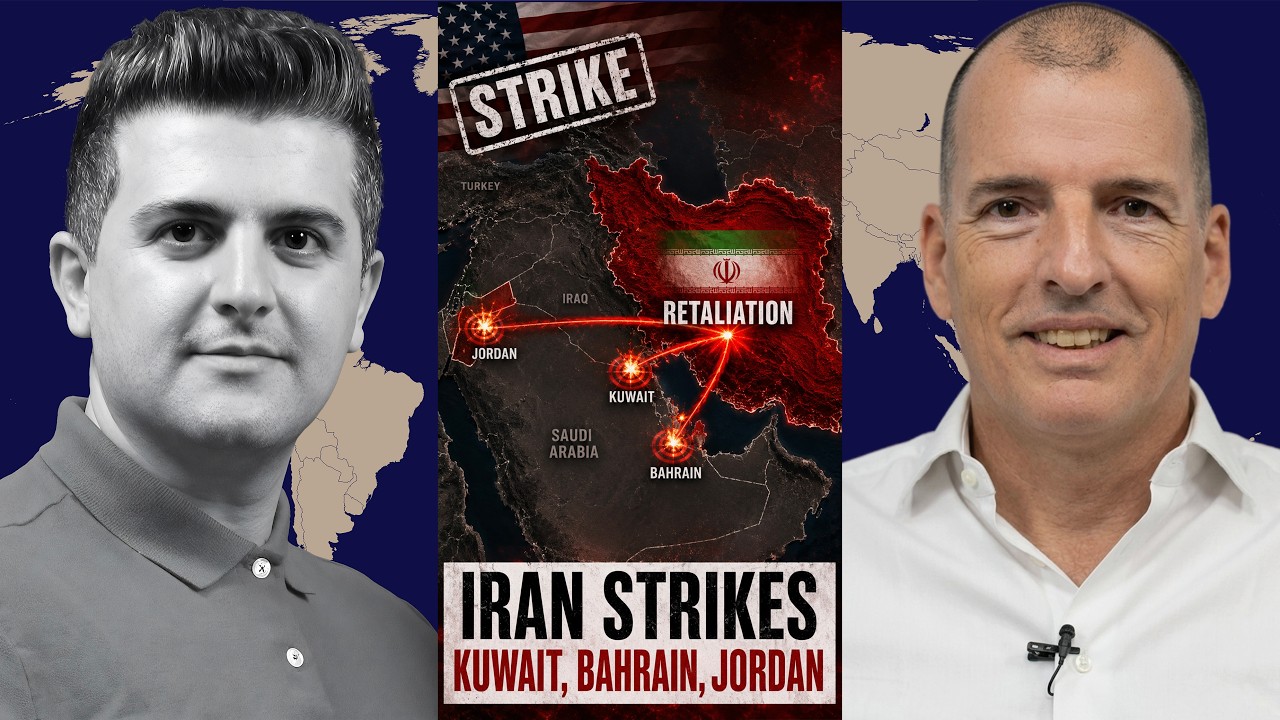
Alex Krainer: US STRIKES Iran – Iran RETALIATES Against Kuwait, Bahrain & Jordan!
"Amidst escalating US-Iran conflict and Iranian retaliation against regional US allies, this episode argues that US foreign policy is deeply controlled by an 'Anglo-Zionist conspiracy' led by the Rothschild banking dynasty, prioritizing Israeli interests over American ones."

🚨 THEY F*CKED AROUND FOR THE LAST TIME 😭😭😭
"This episode unleashes a torrent of highly opinionated commentary on the US-Iran deal, Israel's role, and a scathing critique of 'leftist' policies and immigration, particularly highlighting the UK grooming gang report as evidence of Western societal decay."

LIVE: Trump HIDES FROM PUBLIC as US SOLDIER KILLED!!! 6/2/2026
"The host exposes alleged government cover-ups regarding military casualties, Trump's unexplained public absence, and questionable political appointments, arguing these reflect a 'regime of loser babies' and a failing foreign policy."