BREAKING: Iran Deal COLLAPSES; Trump Revives PROJECT FREEDOM; Hormuz Nears War | TBN Israel
YouTube · xSGCA3E5lvk
Quick Read
Summary
Takeaways
- ❖US-Iran negotiations have reached a 'dead end' after Trump rejected Iran's 'unacceptable' proposals.
- ❖Trump is considering renewing 'Project Freedom' with broader military action, including combat against Revolutionary Guards and the removal of enriched uranium.
- ❖Iran's proposal included lifting blockades, releasing frozen funds, and a central role in managing the Strait of Hormuz, which the US views as a trap to buy time.
- ❖Despite severe economic and military damage, Iran maintains an uncompromising stance, prioritizing regime survival and projecting strength.
- ❖An ultra-hawkish faction in Iran, the 'steadfastness front,' actively sabotages compromise with Washington, influencing parliament and media.
- ❖The US is amassing elite military forces, including airborne and marine units, capable of seizing strategic areas and shutting down Iranian infrastructure.
- ❖Future military targets could include energy sites, senior officials, and the capture of Kharg Island, the origin point for 80% of Iranian oil.
- ❖Iran employs an underground economic network, using Turkey, cryptocurrencies, cash, gold, and the hawala system to bypass blockades.
- ❖China's role is critical, as Trump seeks to leverage Beijing to pressure Iran, given China's dependence on Gulf energy and its economic ties to Iran.
- ❖Iran is allegedly recruiting local activists online in Europe to carry out surveillance and attacks against Jewish institutions, expanding its asymmetric warfare.
Insights
1Iran's Uncompromising Stance Amidst Severe Pressure
Despite significant damage to its military capabilities, infrastructure, and a chaotic economic reality, Iran's regime maintains an extreme and uncompromising negotiation posture. This behavior is attributed to an ultra-hawkish 'steadfastness front' within the Revolutionary Guards, which holds sway over parliament, media, and religious institutions, actively sabotaging any compromise with Washington and accusing negotiation teams of 'surrender.' The regime's primary goal is survival and maintaining its chokehold on power, rather than economic prosperity or the well-being of its population.
The host notes a 'complete anomaly between the severe damage to the Iranian capabilities and their infrastructure and the chaotic economic reality in Iran and also the way the negotiations are being conducted in a determined extreme and uncompromising way against the United States of America.' Mati Shosani explains Iran's focus on 'religious survival, its military survival or leadership survival and its chokehold on the Iranian people and the Iranian economy.'
2US Military Options and 'Project Freedom' Revival
With diplomacy at a 'dead end,' the US military option is back on the table, with President Trump threatening to revive 'Project Freedom.' This expanded operation would involve more than just escorting ships; it would combine military fighting against the Revolutionary Guards and potentially include attacks on energy sites, the elimination of extremist leadership, and the capture of strategic locations like Kharg Island, which accounts for 80% of Iranian oil exports. The US also aims to remove enriched uranium from Iranian soil.
Trump 'threatens to bring back Operation Freedom. This time, escorting the ships will be only a small part of this operation. And it seems that it will be combined with military fighting against the revolutionary guards in Iran.' General Dan Kaine, chairman of the joint chief of staffs, stated the 82nd Airborne Division is 'ready at any time to jump from Air Force planes into the ground combat and also seize strategic areas if an order is given.'
3Iran's Proposed Ceasefire Conditions and US Rejection
Iran proposed an Israeli-American ceasefire across the Middle East, a gradual opening of the Strait of Hormuz, and a willingness to dilute or transfer parts of its enriched uranium stockpile. However, these conditions were contingent on the transfer of control over the Strait of Hormuz to the Revolutionary Guards and guarantees for the return of transferred material if negotiations failed. The US rejected this as 'unacceptable' and a 'stupid proposal,' viewing it as a trap designed to buy Iran time, lift blockades, release funds, and repair infrastructure without dismantling its core threats.
Iran is 'proposing an Israeli American ceasefire across the entire Middle East and a gradual opening of the Strait of Humus... in exchange for renewing the American blockade on the Iranian ports and on the ships.' Trump 'called the Iranian proposal stupid and unacceptable.'
4China's Pivotal Role in US-Iran Dynamics
China is a critical player in the US-Iran conflict due to its energy needs from the Gulf, its purchase of Iranian oil, and its desire to maintain influence against Washington. Trump plans to meet with Chinese President Xi Jinping to recruit China to pressure Iran. The US believes China can deliver a message to Iran that no other mediator can, as a closed Hormuz or a prolonged crisis also hurts the Chinese economy. However, China has its own interests, seeking stability while preserving its influence and avoiding a sudden collapse of the Iranian regime.
The bigger picture 'relates to China, to Russia, to the geopolitics of this region. We're expecting a meeting between President Trump and Chinese President Xiinping sometime soon.' 'China needs energy from the Gulf. It buys oil from Iran. It wants home to open. And on the other hand, it does not want to see the United States emerge from the crisis as a clear winner.'
5Iran's Underground Economic Network to Bypass Blockade
Facing severe economic suffocation from the American blockade, Iran has established an underground economic network, primarily through Turkey, to bypass sanctions. This network utilizes smuggling, illegal money conversion, cryptocurrencies, bank transfers, cash, gold, and the hawala system. Private planes transport physical money and gold along Russia-Turkey-Iran routes, and Chinese yuan from oil sales (pre-blockade) finds its way to Turkey. This system, while indicative of desperation, allows Iran to continue breathing economically.
Iran is 'trying to create solutions. One of the ways includes smuggling and illegal money conversion network through its neighbor Turkey.' 'The money moves through cryptocurrencies, bank transfers, cash, gold, and the hwala system.' 'Private planes continue moving along the Russia Turkey Iran route and according to the assessments they carry physical money and gold.'
Bottom Line
Iran is threatening to disrupt underwater internet cables in the Strait of Hormuz, expanding its pressure tactics beyond physical maritime and energy routes to target global digital infrastructure, financial systems, and communications.
This signifies a new frontier in economic warfare, where critical digital backbone infrastructure becomes a bargaining chip. Disruption could severely impact international trade, banking, and cloud services, causing global economic ripple effects far beyond oil prices.
Companies and governments should prioritize diversifying critical data routes and investing in resilient, redundant undersea cable infrastructure, potentially exploring new routing technologies or satellite alternatives to mitigate single points of failure in conflict zones.
Iran is allegedly recruiting local activists online in Europe, offering money via platforms like Telegram for tasks ranging from hanging posters and photographing locations to intelligence gathering and violent actions against Jewish institutions.
This reveals a low-cost, high-impact method for Iran to project influence and conduct terror operations with plausible deniability in Western countries. It exploits local grievances or financial desperation, turning ordinary citizens into proxies and making it harder to trace attacks directly back to the Iranian state.
Intelligence agencies and cybersecurity firms could develop advanced AI-driven social media monitoring tools to detect patterns of recruitment and radicalization, particularly focusing on financial incentives and task-based operations. Public awareness campaigns could also educate citizens about the risks of online recruitment by foreign state actors.
Key Concepts
Survival vs. Victory Paradigm
The Iranian regime operates on a 'survival' paradigm, prioritizing the continuation of its rule and ideological stance over admitting defeat or achieving traditional military 'victory.' This contrasts with Western countries, which are often motivated by economic benefits, human lives, and public perception tied to electoral cycles. Iran's willingness to endure extreme pain (bombardment, sanctions, loss of infrastructure) rather than publicly concede defeat is a core aspect of this model, making conventional negotiation difficult.
Asymmetric Warfare and Pressure Expansion
Iran's strategy involves expanding pressure beyond traditional military and economic domains. This includes threatening underwater internet cables to impact digital infrastructure, recruiting online terror activists in Europe for plausible deniability, and leveraging its proxies (like Hezbollah) in regional negotiations. This approach aims to create multiple points of leverage and disruption, forcing concessions from adversaries who operate under different constraints.
Lessons
- Monitor global oil prices and shipping costs, particularly those affected by the Strait of Hormuz, as renewed US-Iran conflict could trigger significant market volatility.
- Evaluate supply chain vulnerabilities that rely on maritime routes through the Middle East and consider diversification or alternative logistics to mitigate potential disruptions.
- Stay informed on geopolitical developments involving China and Iran, as China's stance could significantly alter the trajectory of the conflict and its economic implications.
Notable Moments
The hosts emphasize that the current situation is not a real negotiation nor a real ceasefire, but a deadlock where Iran cannot admit defeat and the US cannot back down from its demands.
This highlights the fundamental impasse driven by differing political systems and objectives, suggesting that conventional diplomatic solutions are unlikely without a significant shift in one side's core strategy or leadership.
A Mayop Panim branch in Dimona, Israel, was hit by an Iranian missile, causing severe structural damage and displacing residents, despite anti-rocket defensive systems.
This concrete example demonstrates the direct human and infrastructural cost of Iran's missile capabilities and its willingness to target civilian areas, underscoring the immediate threat posed by the conflict.
Quotes
"We've beat them on a military level, but when it comes to an actual negotiation, things simply are not moving."
"They'd rather sustain additional pain from bombardment, from sanctions, from financial pressure, uh from loss of infrastructure, flow of cash, uh you know, logistical support, etc. They'd rather suffer that pain than be in a place where they have publicly been defeated by the Americans."
"You cannot bomb your way into peace with Iran. it simply won't happen. Well, at least with what the United States of America is willing to do."
"Iran doesn't think, operate or compete in the way that Western countries do. They are not as concerned with the loss of economic benefits. They're not as concerned with the cost of human lives."
"If the agreement deals only with uranium and ignores the missiles, Iran can freeze the enrichment and continue threatening Islam. If it deals only with hummus and ignores his tan can lose at sea and win on land. And if it releases the money without dismantling the power mechanism, that money will once again return to the same terrorist system."
Q&A
Recent Questions
Related Episodes
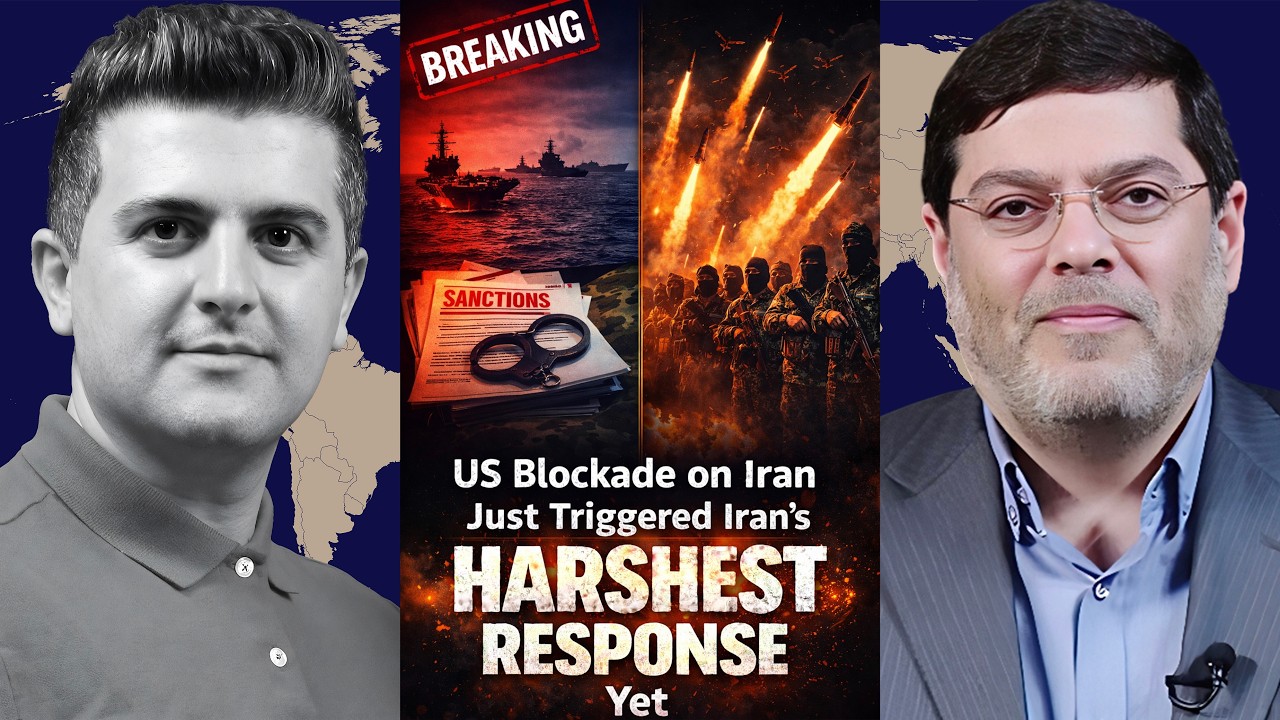
Seyed M. Marandi: US Blockade on Iran Just Triggered Iran’s HARSHEST Response Yet
"An Iranian professor details how US demands and an imposed blockade triggered Iran's harshest response, exposing American strategic missteps and the vulnerability of Gulf Arab states."

Patrick Henningsen: Hezbollah JUST Fired Back at Israel - Iran Vows to “Crush” All Attacks
"Patrick Henningsen argues that the US and Israel initiated an illegal war against Iran, driven by Trump's incompetence and Israeli influence, leading to an inevitable escalation with severe global economic repercussions."

Pentagon Prepares For EXTENDED War With Iran
"This episode dissects the geopolitical maneuvers surrounding potential US-Iran conflict, revealing strategic leaks, Netanyahu's diplomatic sabotage playbook, and the true intent behind economic sanctions."
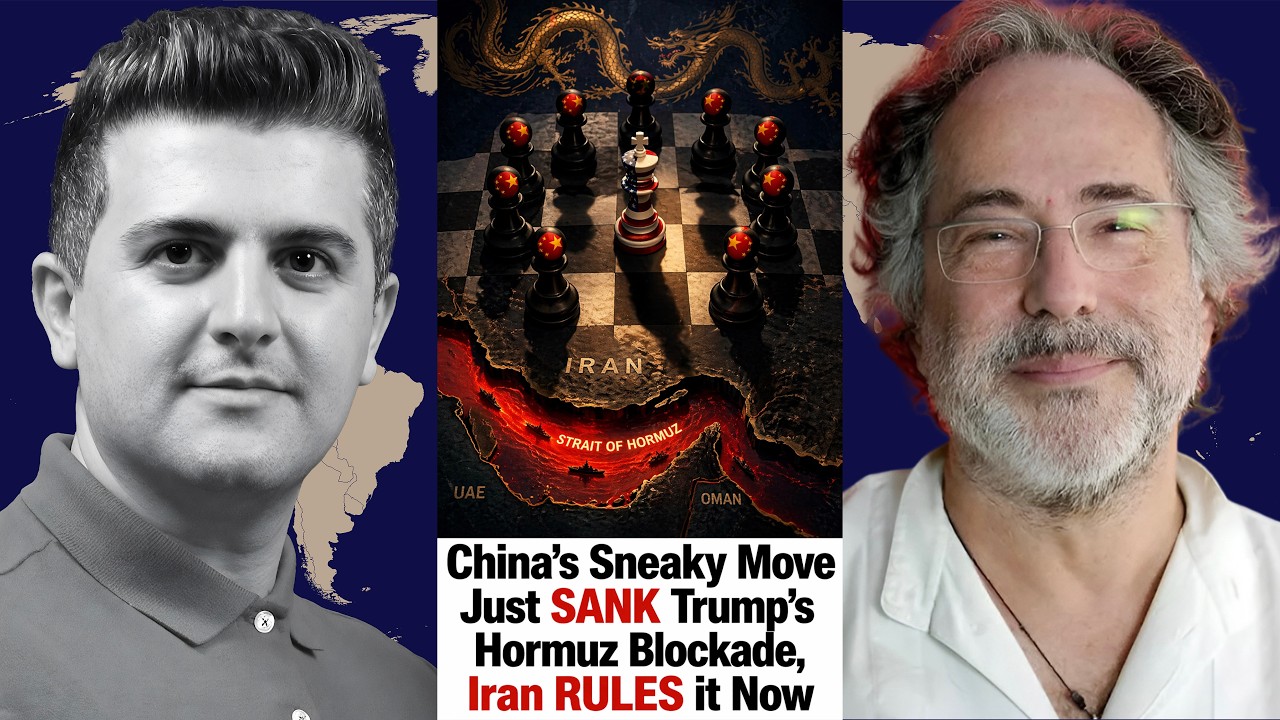
Pepe Escobar: “Total Failure”: Trump’s Blockade Just Backfired Disastrously
"Pepe Escobar argues that the US blockade against Iran, spearheaded by Donald Trump, has utterly failed and backfired, accelerating global economic chaos and challenging US geopolitical dominance."