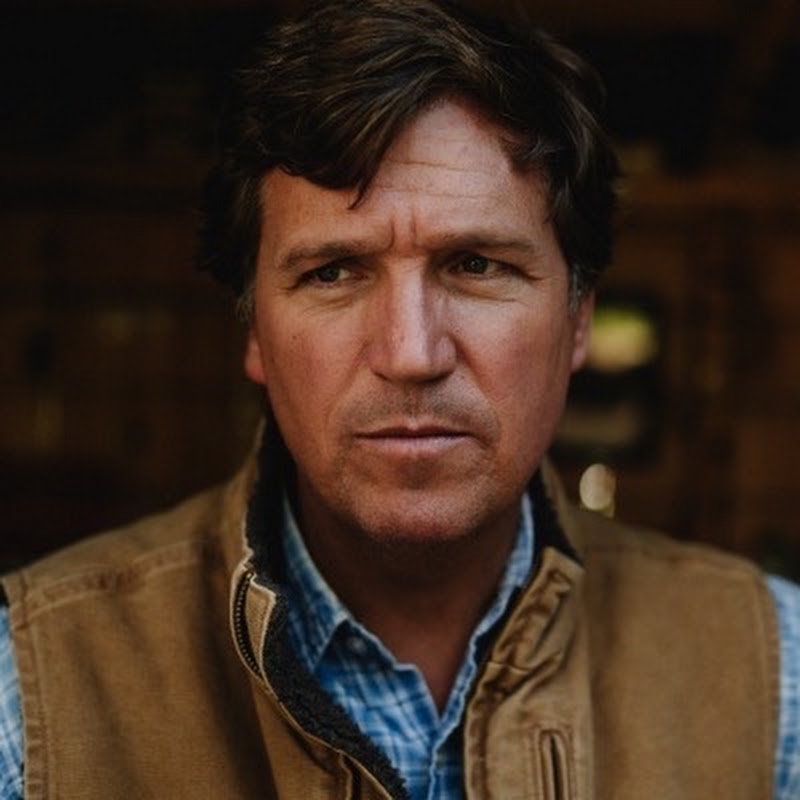
DEBATE: Tucker vs Kevin O’Leary on the Dystopian AI Future Devouring American Energy and Jobs
YouTube · xTAJnJUos3g
Quick Read
Summary
Takeaways
- ❖A global energy crisis is unfolding, exacerbated by the immense power demands of AI data centers, which require more electricity than entire states.
- ❖Elites, including financial leaders and elected officials, are now calling for increased energy production, reversing previous climate change narratives, primarily to fuel AI development.
- ❖AI is perceived by some as an existential threat to human labor and purpose, with predictions of 50% of high-paying jobs being eliminated.
- ❖The proposed 40,000-acre Utah data center, championed by Kevin O'Leary, is projected to consume 9 gigawatts of power, more than twice the current usage of the entire state of Utah.
- ❖Critics argue that AI's development is being pushed without public consent, with tax subsidies benefiting wealthy corporations and little explanation of its positive impact on average citizens.
- ❖Kevin O'Leary frames the rapid development of AI infrastructure as a critical national security measure to maintain technological superiority over China.
- ❖O'Leary asserts that his data center project will be energy-independent, generating its own power from natural gas, and will create thousands of construction and maintenance jobs.
- ❖The debate highlights concerns about AI enabling pervasive government surveillance, potentially leading to a totalitarian society similar to China, eroding privacy and freedom.
Insights
1AI's Unprecedented Energy Demand and Societal Cost
Tucker Carlson argues that the rapid expansion of AI infrastructure, exemplified by a proposed 40,000-acre data center in Utah, demands an 'amazing amount of electricity' (9 gigawatts) – more than double the entire state's current consumption. This massive energy draw, he contends, will inevitably lead to higher electricity prices for consumers, diverting resources from public use to private AI operations. He highlights the hypocrisy of elites who previously advocated against fossil fuels now demanding more energy for AI, suggesting a disregard for environmental concerns when it serves their interests.
The Utah data center will draw 9 gigawatts, more than twice what the entire state of Utah now uses. Residents of Lake Tahoe were told their electricity would be diverted to a nearby data center. (, )
2AI as a National Security and Economic Imperative Against China
Kevin O'Leary asserts that the development of AI compute power is a critical competition with China, stating, 'The nation that has the best AI models will be the winner of future wars. It'll have the most productive economy.' He believes China actively tries to sabotage U.S. data center projects to gain an advantage. O'Leary argues that AI is already enhancing productivity and corporate margins across all economic sectors, leading to unprecedented earnings, and that the U.S. must accelerate its AI infrastructure build-out as an 'insurance policy' against Chinese dominance.
O'Leary states the Chinese don't want the U.S. to build compute power and are using 'agitators' and 'paid protesters' to shut down data center proposals. He cites China building 400 gigawatts of new coal-burning power in 18 months to train AI models. (, )
3AI's Threat to Human Purpose and Jobs
Carlson expresses deep concern that AI will eliminate '50% of all high-paying American jobs,' particularly intellectual and creative roles, leading to massive societal displacement and potential revolution. Beyond job loss, he argues AI threatens the fundamental human need to 'create,' which is central to joy and purpose. He cites the booing reaction of college graduates to AI as evidence of widespread anxiety about a 'barren future with no job and no reason for living.'
AI is predicted to eliminate 50% of high-paying American jobs. College graduates booed the mention of AI at a commencement speech, and cheered when told AI wasn't a factor a few years ago. (, )
4Data Centers and Energy Independence: A Contested Claim
O'Leary claims his Utah data center project will be 100% energy independent, generating its own power from low-cost, stranded natural gas via new, clean-burning turbines. He argues this approach not only powers the data center but can also sell excess power back to the local grid, benefiting the community and preventing spikes in local electricity bills. Carlson questions this, noting that O'Leary still needs to acquire gas and that the project benefits from taxpayer subsidies.
O'Leary states, 'You have to bring your own power... you find low-cost stranded natural gas. You acquire the new technology turbines that burn very very clean... and you build those turbines first.' He confirms, 'Yes, that's 100% correct' that the project creates 100% of its own power. (, , )
5AI as a Tool for Surveillance and Control
Carlson raises the alarm that AI will enable governments to achieve 'almost complete control over communication' and 'create any illusion,' making it 'almost impossible to remain independently minded.' He draws a direct parallel to China's totalitarian surveillance state, arguing that the U.S. is 'aping China' by building such infrastructure and that the recent congressional vote allowing warrantless spying on Americans, combined with AI, poses a direct threat to privacy and freedom.
Carlson states, 'China uses technology to eliminate privacy. And no privacy means no freedom.' He connects this to the US Congress voting to allow warrantless spying on American citizens. (, )
6The Unseen Opportunities and Productivity Gains of AI
O'Leary maintains an optimistic view, asserting that AI will create 'millions of jobs' through 'new science opportunities, new exploration into space, new manufacturing for robotics, for defense.' He likens current fears to the initial skepticism about the internet or the Model T, arguing that new technologies always generate unforeseen opportunities. He provides personal examples of AI's utility in medical diagnostics (full body scans) and personal data management (cataloging photos), showcasing its ability to perform tasks better and faster than humans.
O'Leary states, 'AI compute is now being implemented in all 11 sectors of our economy and it's enhancing both productivity and margin.' He describes a full body scan using AI that delivered results in 18 minutes, and an AI tool that cataloged 590,000 images in two weeks. (, , )
Bottom Line
The 'climate orthodoxy' of the past 15 years, which demonized fossil fuels, is being abruptly reversed by the same 'people in charge' (elected officials, think tank grandees, captains of finance) to meet the insatiable energy demands of AI. This suggests that environmental concerns are secondary to geopolitical and economic imperatives.
This reveals a flexible ethical framework among elites, where 'sins' like CO2 emissions are overlooked when a new, more pressing technological or competitive goal emerges. It implies that public narratives can be quickly shifted to accommodate new strategic priorities, potentially undermining trust in long-standing policy positions.
Entrepreneurs and policymakers can anticipate future shifts in 'acceptable' technologies or practices based on evolving national priorities, rather than static ideological positions. There's an opportunity to invest in or advocate for energy solutions that are currently out of favor but may become essential as AI's demands grow, regardless of past environmental rhetoric.
The public, particularly younger generations, is not buying into the 'exciting future' narrative of AI, instead perceiving it as a direct threat to their economic future and purpose. This is evidenced by college graduates booing the mention of AI at a commencement speech.
This indicates a significant disconnect between the elite vision for AI and the lived anxieties of the general population. The lack of a clear, compelling narrative from AI proponents about how it will benefit average citizens is fueling public resentment and distrust, rather than excitement.
Companies and leaders developing AI need to urgently craft transparent, empathetic, and tangible narratives explaining how AI will genuinely improve the lives and opportunities of ordinary people, not just corporate bottom lines or national power. Failure to do so risks a growing societal backlash and resistance to AI adoption, potentially leading to social unrest or political instability.
Kevin O'Leary, a prominent capitalist, defends the use of taxpayer subsidies for his private data center business by framing it as a necessary 'competition' between states for jobs and a national security 'insurance policy' against China. He dismisses concerns about wealth transfer from taxpayers to rich corporations as 'how it works' in America.
This highlights how 'capitalism' can be redefined to include significant government intervention and subsidies when it serves the interests of powerful industries or national strategic goals. It reveals a system where private profits are socialized through tax breaks, while risks and costs (like energy price hikes) are borne by the public.
Citizens and advocacy groups have an opportunity to challenge the definition of 'capitalism' and demand greater transparency and accountability for public funds used to subsidize private ventures. There's a potential for political movements to emerge that advocate for more equitable distribution of the benefits and costs of technological advancements, rather than accepting 'how it works' as an immutable truth.
Opportunities
Develop and deploy advanced, clean-burning natural gas turbines for localized power generation.
O'Leary's model for data centers involves acquiring 'low-cost stranded natural gas' and using 'new technology turbines that burn very very clean' to generate power independently. This suggests a market for companies specializing in efficient, environmentally conscious gas turbine technology that can be deployed at scale for industrial or data center use, potentially selling excess power back to the grid.
Specialized data analytics and investigative services for social media manipulation.
O'Leary mentions having a 'pretty big team' of 'very good data scientists, investigative data scientists' who monitor his social media for 'abnormalities' and identify sources of 'misinformation' or foreign influence. This indicates a demand for sophisticated services that can detect and analyze coordinated disinformation campaigns, particularly those originating from adversarial nations or political groups, targeting specific projects or narratives.
Lessons
- Critically evaluate claims about AI's benefits and costs, especially when presented by those with financial or political interests in its development, and question the narrative that AI development is an unquestionable imperative.
- Advocate for transparency and public input in decisions regarding large-scale AI infrastructure projects, particularly those receiving taxpayer subsidies or impacting local resources like energy and water.
- Investigate local energy policies and infrastructure plans to understand how AI data centers might impact your community's electricity costs, supply, and environmental regulations.
Notable Moments
College graduates booing the mention of AI at a commencement speech.
This moment vividly illustrates a significant generational and societal disconnect regarding AI. While elites promote AI as 'exciting change,' young people, facing a potentially job-scarce future, perceive it as a threat, highlighting a failure of proponents to articulate tangible benefits for the average person.
Local Utah citizens expressing outrage and being dismissed by county commissioners regarding the proposed data center.
This clip underscores the perceived erosion of democratic accountability. Citizens feel unheard and disrespected when local officials, influenced by powerful corporations, push through projects that profoundly impact their lives without meaningful public consultation or addressing legitimate concerns.
Larry Fink (BlackRock CEO) expressing concern about 'domestic terrorism using a $3,000 drone' against data centers.
This reveals a deep-seated fear among the financial elite that the public will actively resist AI infrastructure, even through illegal means. It suggests an awareness that the public views these projects negatively, to the point where physical protection against 'restive populations' is a primary concern, rather than the societal implications of AI itself.
Quotes
"Cheap energy is the key to prosperity and in fact civilization itself."
"We're entering a period of great uncertainty where we're dealing with things we've never dealt with before. And normally the first time you deal with something totally novel, you get it wrong. And we can't afford to get it wrong with these things."
"The threat that they face is a barren future with no job and no reason for living."
"The nation that has the best AI models will be the winner of future wars. It'll have the most productive economy."
"I would prefer even though the future's uncertain... let China do this first or us. I'll take us."
"The problem with China from my perspective is that it surveils its citizens and it limits their ability to say what they think and to oppose existing power. That's why China is bad."
Q&A
Recent Questions
Related Episodes

PBS News Hour full episode, April 10, 2026
"This episode covers high-stakes US-Iran peace talks amidst ongoing conflict, Hungary's pivotal election challenging Viktor Orban, the accelerating decline in US birth rates, AI's disruptive impact on jobs, and Palestinian Christians observing Easter under Israeli restrictions."

Trump DOJ REACHES NEW LOW Trying to SAVE Trump
"Professor Aziz Huck dissects the foundational principles of the rule of law, revealing how modern political partisanship and the Justice Department's 'weaponization fund' challenge core constitutional mechanisms and legal predictability."

Iran Update: Israel’s Newest Bombing Campaign, the Oncoming War With China and How to Avoid It
"Colonel Wilerson reveals how the US and Israel are actively bombing China's strategic infrastructure in Iran, escalating a covert economic war that Beijing intends to win without direct military conflict by dismantling the dollar's global dominance."

Thomas Massie, Kevin O'Leary, & The American Psyop | The Tim Dillon Show #497
"Tim Dillon skewers American politics, corporate greed, and the unchecked rise of AI, arguing that society is being manipulated by 'psyops' and driven towards a dehumanized, hyper-efficient future."