
Missing Scientist Found Dead in Chilling Forest Discovery
YouTube · xZi1oRg2Bk0
Quick Read
Summary
Takeaways
- ❖Melissa Casias, an administrative assistant at Los Alamos National Laboratory, was found dead in Carson National Forest after being missing for nearly a year.
- ❖Her remains were discovered by a hiker six miles from her home, with a handgun found alongside them.
- ❖Casias's family stated her body was found in an area that had been previously searched, raising questions about the initial investigation or the timing of her death.
- ❖Her disappearance was part of a larger pattern of 10-13 scientists and defense personnel with ties to US nuclear or rocket technology who have died or vanished, leading to FBI, White House, and House Oversight Committee involvement.
- ❖Private investigator Ashton Pack believes the evidence, including a factory-reset phone and the handgun, strongly suggests Casias died by suicide.
- ❖Investigators face challenges in determining cause and manner of death due to decomposition and must rule out human interference in the body's placement.
- ❖The expert cautions against immediately linking all cases as a conspiracy, emphasizing the need for thorough investigation and Occam's Razor.
Insights
1Discovery of Melissa Casias's Remains and Initial Clues
Melissa Casias, missing for nearly a year, was found deceased in Carson National Forest, 6 miles from her home. Human remains and a handgun were discovered by a hiker. Her personal belongings, including multiple phones (one factory reset), purse, and keys, were left at home when she disappeared. She was last seen walking on a highway, caught on surveillance footage.
A hiker discovered human remains and a handgun in Carson National Forest. The remains were identified as Melissa Casias. Her family's statement confirmed the location was previously searched. Her husband reported she was under immense stress. Her phones, purse, and keys were found at home, with one phone factory reset. Surveillance footage showed her walking on State Road 518.
2Expert's Assessment: Likely Suicide and Identification Methods
Private investigator Ashton Pack suggests that the presence of a handgun next to the remains and the factory-reset phone at home strongly indicate Melissa Casias likely took her own life. He explains that identification of decomposed remains typically involves DNA or dental records, and that gunshot wounds would remain evident on skeletal remains.
Ashton Pack states, 'I have a bad feeling that this young lady chose to take her own life.' He notes that gunshot wounds 'don't disappear with time' if skeletal remains are intact. He also mentions DNA and dental records as primary identification methods.
3Challenges in Search and Disproving Conspiracy Theories
The family's claim that Casias was found in a previously searched area raises questions. Pack attributes this to the vast, rural terrain of New Mexico and the possibility of animal activity moving remains. He also addresses the 'conspiracy' theory regarding her death, stating that investigators look for signs of staged scenes (tire tracks, foot tracks, unnatural settling of the body) and that a 'bad guy' would likely eliminate a body entirely rather than place it a year later.
Pack describes New Mexico as 'massive rural high desert, hundreds of thousands of acres of undeveloped land,' making 100% certainty in searches difficult. He mentions 'animals, coyotes, mountain lions' could 'changed the location of her body.' He applies Occam's razor to the conspiracy theory, stating it 'violates Occam's razor. It's just not the simplest explanation, which is usually the right one.'
4Broader Context: Multiple Missing Scientists and Federal Investigations
Melissa Casias's case is part of a larger, concerning pattern. The House Oversight Committee reported at least 10-13 individuals with ties to US nuclear secrets or rocket technology have died or vanished. This has prompted investigations by the FBI, White House, and the House Oversight Committee into potential national security threats.
The House Oversight Committee's April 2026 press release cited 'at least 10 individuals with ties to US nuclear secrets or rocket technology had either died or vanished.' Congressman Eric Burleson later put the number at 13. The FBI announced it was 'spearheading the effort,' and the White House was 'investigating.'
Bottom Line
The pressure on individuals working in highly sensitive national security roles can be immense, potentially contributing to mental health crises that lead to tragic outcomes, often overlooked by the public.
This suggests a need for robust mental health support systems within government agencies dealing with classified information, as the 'weight of the world' on these individuals can have severe personal consequences.
Develop and implement advanced, confidential mental health and stress management programs specifically tailored for high-clearance personnel, recognizing their unique pressures and the potential national security implications of their well-being.
Notable Moments
The family of Melissa Casias released a statement online confirming her identity and stating she was found in an area previously searched, directly questioning the thoroughness of initial search efforts.
This statement highlights a critical discrepancy in the investigation and fuels public speculation about the circumstances of her death, potentially indicating a failure in the initial search or suggesting the body was moved.
The host details the disappearance of retired Air Force General William Neil McCaslin, who worked on highly classified technology and whose wife reported he 'must have planned not to be found.'
McCaslin's case, with its high-level security implications and unusual circumstances, serves as a prominent example within the broader pattern of missing scientists, intensifying calls for a comprehensive federal investigation into potential connections.
Quotes
"We confirm that the remains found in Rio Chiquito are Melissa. There will be more information to come, but what we can tell you now is she was located in area previously searched."
"If your body's down in the New Mexico high desert for a modicum of time, there's probably nothing left other than skeletal remains."
"When everything is a conspiracy, then really nothing can be a conspiracy."
"It violates Occam's razor. It's just not the simplest explanation, which is usually the right one."
"These deaths and disappearances may represent a grave threat to US national security and to US personnel with access to scientific secrets."
Q&A
Recent Questions
Related Episodes

The Lindbergh Conspiracies | Post Mortem
"Explore the enduring mystery of the 1932 Lindbergh kidnapping, from the compromised investigation and Bruno Hauptmann's unfair trial to Charles Lindbergh's controversial character and the modern resurgence of conspiracy theories."
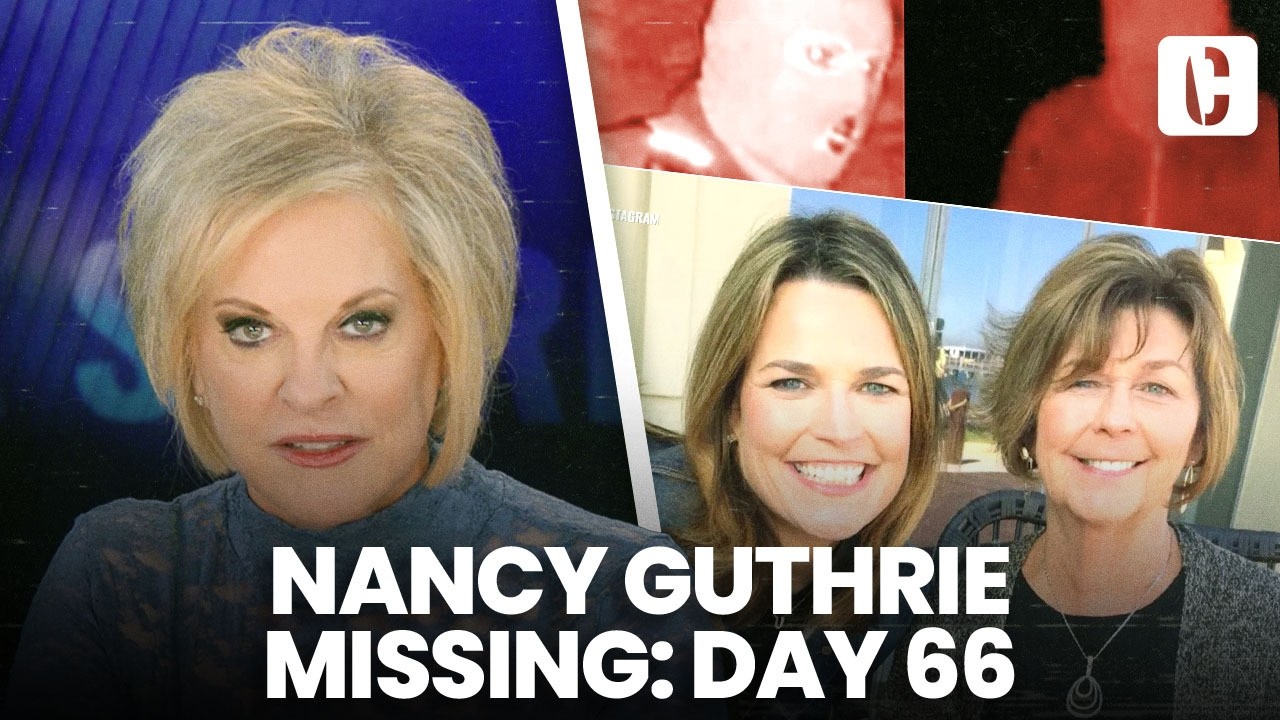
SAVANNAH GUTHRIE'S MOM MISSING: DAY 66
"On day 66 of Nancy Guthrie's disappearance, investigators grapple with two distinct sets of Bitcoin ransom notes, digital tracing challenges, and potential physical evidence like shoe coverings, as new, dubious claims emerge from a 'hyena' seeking payment for information."

True-crime cases with recent developments | 48 Hours Full Episodes
"This episode reconstructs four complex true-crime cases, detailing the harrowing searches for missing persons, the challenges of prosecuting murders without bodies, and the enduring quest for justice in cold cases spanning decades."

TEEN'S DNA REVEALED IN ANNA KEPNER'S R*** KIT
"The investigation into Anna Keaptainner's death on a cruise ship reveals shocking DNA evidence, a previously unknown male minor, and critical questions about evidence handling and family dynamics."