BREAKING: U.S. BLOCKADE Chokes Iran; Navy Stops Gaza Flotilla | TBN Israel
YouTube · zCQgsk3VWbM
Quick Read
Summary
Takeaways
- ❖The US naval blockade on Iran has thwarted 42 attempts to violate sanctions, costing the Iranian regime over $6 billion.
- ❖Iran's oil storage capacity is nearing its limit, forcing the revival of old tankers and risking long-term damage to oil fields if production is halted.
- ❖US President Trump views the naval blockade as potentially more effective than military strikes, but military options, including short powerful strikes and securing the Strait of Hormuz, remain prepared.
- ❖European NATO countries are largely reluctant and militarily unprepared to join a US-led international coalition to secure the Strait of Hormuz.
- ❖The Israeli Navy's Shayetet 13 commando unit intercepted a Gaza-bound flotilla, arresting 180 activists and disabling 21 ships, claiming 'condoms and drugs' were found, not humanitarian aid.
- ❖Hezbollah continues to embed military infrastructure within civilian areas and use medical vehicles as cover for operations in Lebanon.
- ❖A stabbing attack in London, injuring two Jews, is framed as part of a wider, Iran-influenced anti-Semitic campaign extending beyond the Middle East.
Insights
1US Blockade's Economic Impact on Iran
The US naval blockade has created an 'economic chokehold' on Iran, preventing the sale of 69 million barrels of oil worth over $6 billion. This has led to critical oil storage issues, forcing Iran to reactivate old tankers and risking irreversible damage to its oil fields if production is halted. The economic pressure is intended to compel Iran's surrender on its nuclear program.
US military carrying out an economic chokehold; blockade is a massive success against the revolutionary guards; estimated damage to the Iranian regime's treasury is more than $6 billion; Iran's ghost ship has returned; Iran is bringing old ships back to life because it does not have enough space to store the oil that it cannot sell; Iran has only a limited window before this problem becomes an even deeper crisis, around two to three weeks.
2European Reluctance in US-Led Coalitions
Despite US calls for an international coalition to secure the Strait of Hormuz, European NATO allies like France, the UK, and Germany are unwilling or unable to contribute substantial naval forces. This reluctance is attributed to decades of underinvestment in their militaries, internal political opposition to US foreign policy, and a strained US-European relationship, with some European countries even denying US military aircraft overflight rights for Middle East missions.
President Trump has been calling on many countries around the world to be part of this international team; UK's chief of staff said, 'Our ships are not seaworthy'; French, Germans, similar situation; countries have relied on the United States to fight their war, be their policemen; several European countries are preventing US aircraft from flying over their airspace on their way to military missions in the Middle East.
3Gaza Flotilla as Political Provocation
The Israeli Navy intercepted a Gaza-bound flotilla, asserting it was a political provocation designed to serve Hamas and disrupt peace efforts, rather than a genuine humanitarian mission. Israel maintains that humanitarian aid already enters Gaza through established, secure channels, and any attempt to breach the maritime blockade is an act of deliberate friction.
Naval forces took control of the flotilla to Gaza; most of what was found was condoms and drugs; the IDF made clear that Israel is enforcing the maritime security blockade on the Gaza Strip; Israel views it as a provocation designed to serve Hamas and disrupt the transition of President Trump's peace plan; humanitarian aid to Gaza already moves through recognized channels; aid looks for a way to reach the civilians, provocation looks for cameras, confrontation.
4Hezbollah's Civilian Shield Tactics
Hezbollah systematically embeds its military infrastructure, including weapons warehouses and launchers, within civilian communities, homes, and even uses medical vehicles and teams as cover for moving weapons and terrorists. This strategy exploits international law protections to advance terrorism against Israeli forces and civilians, making it a central component of their 'combat space' in Lebanon.
Hezbollah continues to place terrorist infrastructure inside and near civilian assets; IDF also exposed Hezbollah's use of medical vehicles and medical teams as cover for moving weapons and terrorists; in one incident... explosive charges, motor shells, magazines, and a grenade were found inside an ambulance; Hezbollah uses the protections of the international law to advance terrorism.
Bottom Line
The US blockade on Iran is pushing its oil infrastructure to a point of no return, where halting production could cause years of repairs and billions in damages, effectively weaponizing Iran's own geology.
This economic pressure point is a critical leverage for the US, potentially forcing Iran to the negotiating table on nuclear issues before it faces long-term economic collapse and irreparable damage to its primary revenue source.
For energy market analysts, this creates a volatile scenario with potential for significant oil price fluctuations, while for geopolitical strategists, it highlights the effectiveness of non-kinetic warfare in achieving strategic objectives.
European leaders' reluctance to join US-led military coalitions is rooted in decades of underinvestment in their own militaries and internal political opposition, rather than just diplomatic disagreements.
This exposes a fundamental weakness in NATO's collective defense capabilities and highlights the increasing burden on the US to act unilaterally in global security crises, especially when facing adversaries like Iran.
This situation could spur renewed calls for European defense autonomy and increased military spending, potentially creating opportunities for defense contractors and strategic alliances that bypass traditional NATO structures in specific theaters.
Lessons
- Stay informed by seeking out diverse and 'unfiltered' news sources to understand complex geopolitical situations beyond headlines.
- Recognize and critically evaluate propaganda and misinformation, particularly regarding conflicts in the Middle East and instances of anti-Semitism.
- Consider supporting organizations that provide direct aid or advocate for truth in reporting on these conflicts, as a counter to perceived 'spiritual warfare' and misinformation campaigns.
Notable Moments
The hosts mockingly discuss European countries' inability to contribute naval forces, referencing a past 'joke' about a single Dutch soldier defending Greenland from a US takeover, highlighting the perceived weakness and reliance on the US.
This moment underscores the hosts' critical view of European military capabilities and political will, framing it as a key obstacle to forming effective international coalitions and reinforcing their narrative of a US-Israel-centric struggle.
The hosts claim that the Gaza flotilla was found to contain 'condoms and drugs' instead of humanitarian aid, directly contradicting the stated purpose of the mission.
This highly specific and controversial claim serves to discredit the flotilla's humanitarian facade, reinforcing the narrative that such actions are purely political provocations aimed at harming Israel and supporting Hamas.
Quotes
"The blockade is extremely effective and we are committed to full enforcement."
"Iran needs to say, we give up. That's what the Iranians needs to say in order for this war to be over."
"Anti-semitism hasn't gone away. attacks on Israel and flotillas to liberate the people of Gaza, quote unquote. Uh we've seen them time and time again. These convenient idiots, you know, they seem to always miss an opportunity to help other minorities that are being hurt."
"If you're so concerned with the well-being of the people of Gaza, remove Hamas. If you're so concerned with the wellbe of people of Gaza, hand the food to the people in Gaza and not directly to the hands of Hamas who resells it at a premium."
"The naval blockade is in some ways more effective than bombings."
Q&A
Recent Questions
Related Episodes

Patrick Henningsen: Hezbollah JUST Fired Back at Israel - Iran Vows to “Crush” All Attacks
"Patrick Henningsen argues that the US and Israel initiated an illegal war against Iran, driven by Trump's incompetence and Israeli influence, leading to an inevitable escalation with severe global economic repercussions."
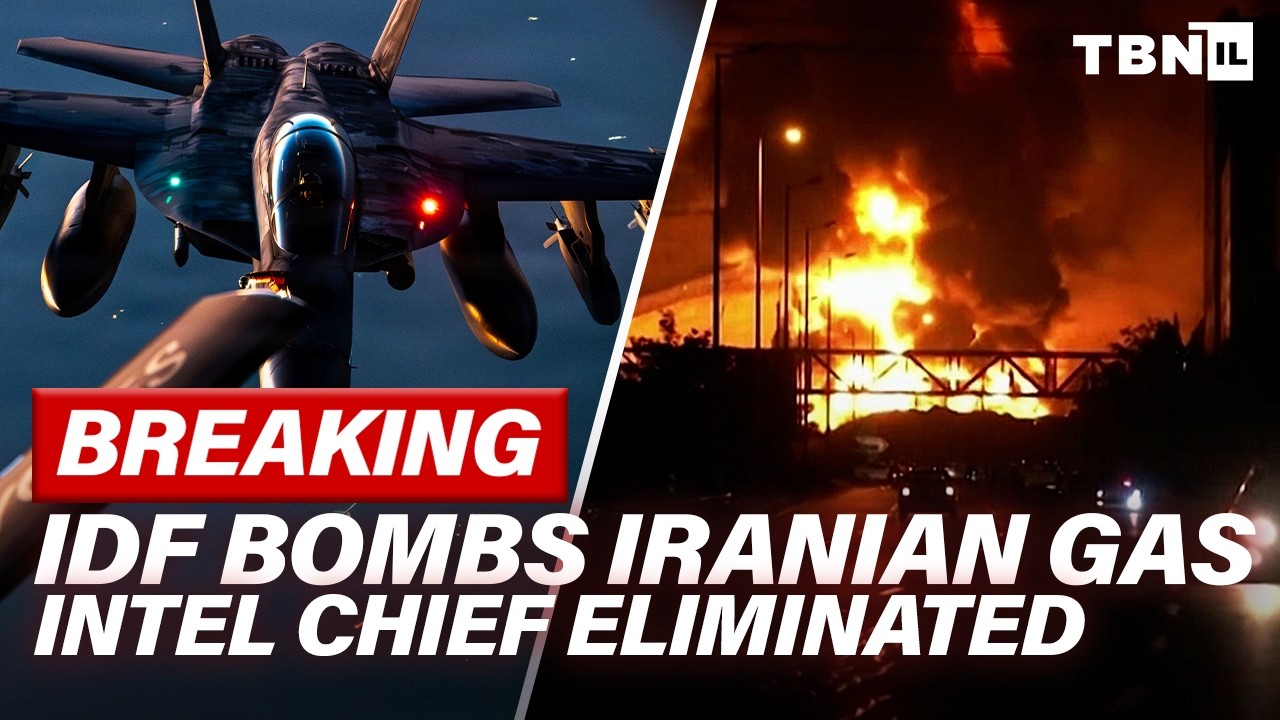
BREAKING: Israel BOMBS Major Iran Gas Site; Top Mullah ELIMINATED; Iran Vows VENGEACE | TBN Israel
"Israel and the United States have escalated their 'Roaring Lion War' against Iran, striking its largest gas facilities, eliminating key intelligence and military figures, and disrupting missile production, while Iran threatens a broader energy war in the Gulf."
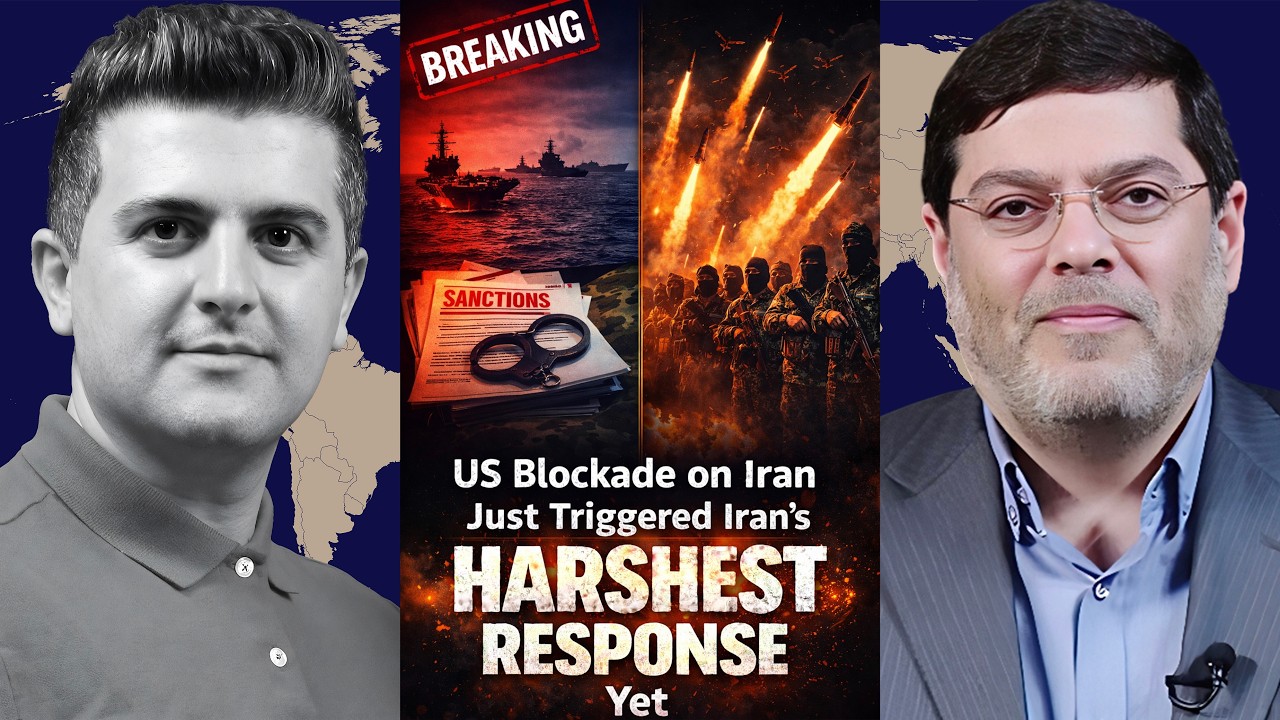
Seyed M. Marandi: US Blockade on Iran Just Triggered Iran’s HARSHEST Response Yet
"An Iranian professor details how US demands and an imposed blockade triggered Iran's harshest response, exposing American strategic missteps and the vulnerability of Gulf Arab states."

🚨 TOTAL F*CKING CHECKMATE 😂😂😂
"The host argues that Trump's 'ceasefire' with Iran was a calculated '5D chess' move to orchestrate a global energy market reshuffle, while simultaneously lambasting 'woke' domestic policies and the 'freefall' of anti-Trump conservative figures."