The Never-ending Iran Negotiation | Shield of the Republic
YouTube · zReDAyVjVRw
Quick Read
Summary
Takeaways
- ❖The US-Iran MOU negotiations are stalled, with both sides hesitant to finalize a deal, leading to prolonged uncertainty.
- ❖Iran views control over the Strait of Hormuz as an 'economic equivalent of an atomic bomb,' potentially imposing disguised tolls.
- ❖US nuclear command and control (NC3) systems are aging and vulnerable to decapitation strikes from Russia and China, necessitating urgent modernization.
- ❖Russian nuclear exercises are increasingly seen as signals for a domestic audience rather than solely international deterrence.
- ❖The US interagency process for national security and pandemic preparedness has significantly deteriorated, as evidenced by the Ebola response challenges.
- ❖The decline of conservative internationalist voices in the Republican Party contributes to a broader trend of political extremism and populism in the US and Europe.
- ❖US pressure on Cuba, including military tools, lacks a clear 'day after' plan, risking a humanitarian crisis that could spill over into the United States.
Insights
1US-Iran Negotiation Stalemate and Iran's Strategic Leverage
The US-Iran negotiations for an MOU to end the Strait of Hormuz blockade and extend a ceasefire are stalled. President Trump has not made a decision despite advertising a 'decision meeting,' and Ayatollah Khamenei has also not signed off. Eliot Cohen suggests Trump is not 'chickening out' but is unwilling to make certain deals, while Eric Edelman argues Trump's postponements signal a reluctance for kinetic military activity, hardening Iran's position. Iran believes its control over the Strait is an 'economic equivalent of an atomic bomb,' potentially leading to 'environmental fees' that act as tolls.
Eric Edelman: 'President still, despite having advertised this as a decision meeting, still has not made a decision.' () Eliot Cohen: 'He has not been nearly as weak-willed as people thought he might be.' () Eric Edelman: 'He's clearly signaling... to the Iranians by these constant postponements that he does not want to go back to kinetic military activity.' () Eric Edelman: 'They've said that... we've now proven that it is, and it's the economic equivalent of an atomic bomb.' () Eric Edelman: 'You're going to see a lot of environmental fees being charged... to ships transiting the the strait.' ()
2Vulnerability and Modernization Needs of US Nuclear Command and Control (NC3)
Eric Edelman's monograph highlights that Russia and China have invested in capabilities for decapitation strikes against US nuclear command and control (NC3), which is aging. Historically, NC3 only received attention during crises like the Cuban Missile Crisis. Modernization is crucial for early warning satellites, survivable presidential aircraft (SAOC), and submarine communication aircraft (TACAMO). Regular, high-level continuity of government exercises involving senior leadership are necessary to deter adversaries and ensure readiness.
Eric Edelman: 'Both of them have begun to invest in a lot of capabilities that could be used... in a decapitation strike against uh US nuclear command and control, which is aging out and is due for modernization.' () Eric Edelman: 'We have to modernize all the early warning satellites, modernize the uh the SAOC... the Navy's uh uh TACAMO aircraft.' () Eric Edelman: 'We need to be refreshing our uh continuity of government... exercises, get the senior leadership of the US government involved.' ()
3Russian Nuclear Saber-Rattling and Domestic Signaling
Russia conducted a major nuclear exercise involving its triad and fired a dual-capable ballistic missile (Oreshnik). While this is typically interpreted as a signal to the US and Europe, Eliot Cohen suggests it may increasingly be aimed at a domestic audience. With Russia facing pressure, such displays by Putin could be a way to project strength and control to Russian elites and the public, rather than solely a deterrent message to the West.
Eric Edelman: 'The Russians... had a major uh Russian nuclear exercise that involved all elements of uh their nuclear triad.' () Eliot Cohen: 'I've begun to wonder if when they do this kind of thing... this is being done as much for a domestic audience as for an international one.' ()
4Breakdown of US Interagency Process and Pandemic Preparedness
The destruction of the interagency process and USAID in the Trump administration has led to a significant loss of emergency epidemic and pandemic preparedness. This breakdown was highlighted by a Kenyan court ruling against the US using a facility for Ebola quarantine, demonstrating a lack of regard for allies and proper consultation, which could lead to a dramatic danger of Ebola spreading globally.
Eric Edelman: 'We've talked a lot about the destruction of the interagency process and national security affairs in the Trump second Trump administration.' () Eric Edelman: 'A loss of the emergency epidemic and pandemic preparedness that the US government had achieved before Trump came back into office.' () Eric Edelman: 'This also betrays the lack of regard for partners and allies that this administration routinely demonstrates.' ()
5Escalating US Pressure on Cuba Without a 'Day After' Plan
The US administration is increasing pressure on Cuba, including the deployment of a carrier strike group, in the hope of forcing a deal. However, there appears to be no clear plan for the 'day after' a potential military intervention or regime change. This approach risks a humanitarian crisis in Cuba, which historically tends to spill over into the United States, as seen with the Mariel boatlift.
Eric Edelman: 'The Nimitz carrier strike group has arrived in the Caribbean, and that gives the administration more political military tools to increase the pressure on um on Cuba.' () Eric Edelman: 'A US military intervention would then require uh some kind of plan for the day after.' () Eric Edelman: 'Humanitarian crisis in Cuba tend to spill over into the United States.' ()
Lessons
- Advocate for increased funding and strategic focus on modernizing US nuclear command and control systems to counter evolving threats from Russia and China.
- Scrutinize diplomatic engagements to ensure robust interagency processes and genuine consultation with allies, especially in global health and crisis response.
- Monitor the rhetoric and actions of populist movements in both domestic and international politics to understand their impact on foreign policy and democratic institutions.
Quotes
"I think the Iranians think they have us by the throat, and I think Trump thinks he has them by the throat."
"He's clearly signaling, whether he intends it or not, to the Iranians by these constant postponements that he does not want to go back to kinetic military activity. And the result, I think, is that he's actually hardened their position."
"The one thing he couldn't bear would be the idea of people laughing at him."
"A decapitation strike... was the only really viable theory of victory in nuclear war, right? It is you decapitate the adversary from the get-go and they can't respond."
"We usually interpret these things as signals to us or to the Europeans, don't push us too far, and so on. What I what I can imagine this is is this is a way of Putin showing that he's a tough guy who's in charge, and this is a way of signaling to Russian elites, you know, we are still a big, strong, and enormously powerful country at a time when they're losing."
Q&A
Recent Questions
Related Episodes

Iran Deal Skepticism. Whoopi Vs Vance. Potomac Park Invasion. Racist Hurls Slurs At Black Boy.
"This episode dissects multiple instances of alleged anti-Black policies and racial injustice, from the Trump administration's legal challenges to reparations and the Iran deal, to police brutality and the erasure of Black history."

Patrick Henningsen: Hezbollah JUST Fired Back at Israel - Iran Vows to “Crush” All Attacks
"Patrick Henningsen argues that the US and Israel initiated an illegal war against Iran, driven by Trump's incompetence and Israeli influence, leading to an inevitable escalation with severe global economic repercussions."
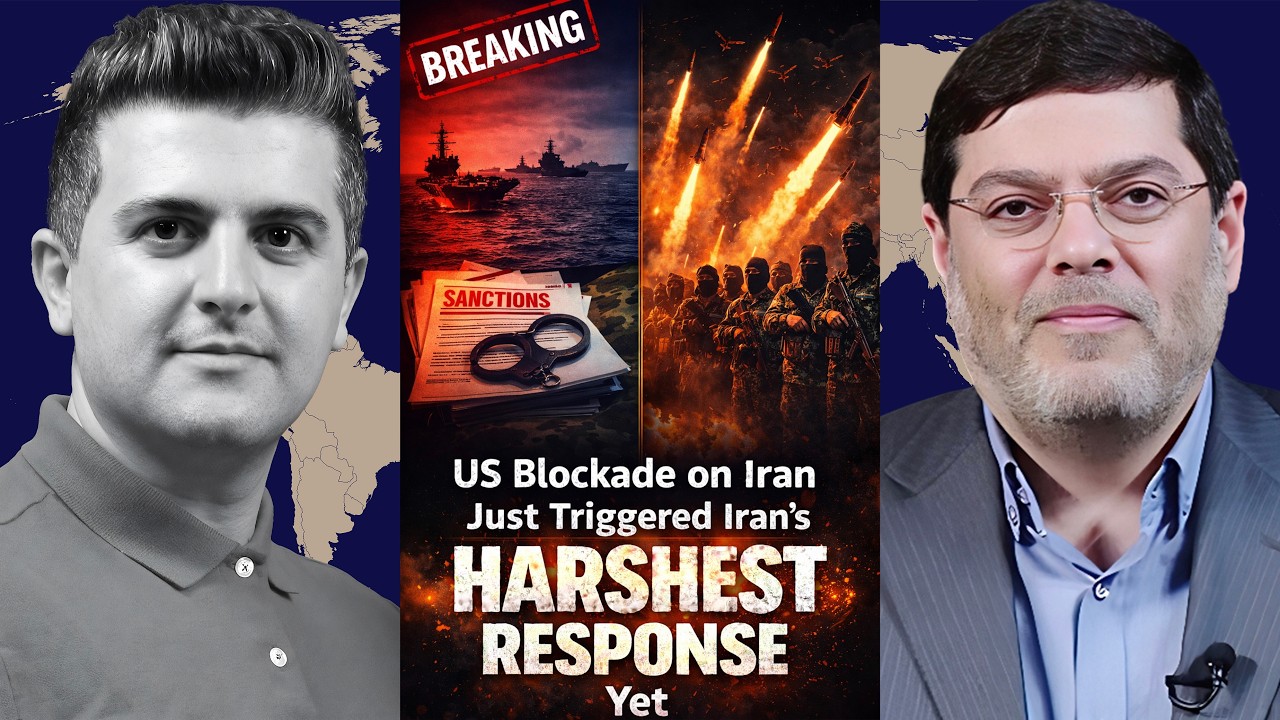
Seyed M. Marandi: US Blockade on Iran Just Triggered Iran’s HARSHEST Response Yet
"An Iranian professor details how US demands and an imposed blockade triggered Iran's harshest response, exposing American strategic missteps and the vulnerability of Gulf Arab states."

🚨 TOTAL F*CKING CHECKMATE 😂😂😂
"The host argues that Trump's 'ceasefire' with Iran was a calculated '5D chess' move to orchestrate a global energy market reshuffle, while simultaneously lambasting 'woke' domestic policies and the 'freefall' of anti-Trump conservative figures."