
Venezuelan Fraudster Exposes Government Scam!
YouTube · z_d5GzyFbFw
Quick Read
Summary
Takeaways
- ❖Juan Sanchez's real estate fraud involved creating fake borrower profiles, inflating property values, and packaging bad loans, generating over $20 million annually.
- ❖Facing financial ruin, he accepted money from a Venezuelan judge, knowingly laundering funds for government officials and drug cartels, using it to sustain his failing Ponzi scheme.
- ❖He was kidnapped in Venezuela by cartel members demanding their money and assets, but managed a daring escape.
- ❖His cooperation with US federal agents, providing detailed information on the Venezuelan judge and his network, was instrumental in high-profile indictments, including that of Nicolás Maduro.
- ❖White-collar criminals, unlike drug dealers, often spend all their illicit gains, believing they are 'bigger than the system' and won't be caught.
- ❖Modern AI tools are making fraud significantly easier to commit (e.g., AI-generated fake documents and property images) and harder to detect.
- ❖Sanchez now educates individuals and businesses on how to use AI for fraud detection and prevention, leveraging his criminal past for good.
Insights
1Real Estate Fraud Mechanics and Scale
Juan Sanchez developed a sophisticated real estate fraud operation in the mid-2000s, leveraging the lax lending environment. He created fake profiles for individuals with 'no income, no assets' to secure 110-120% financing. He manipulated property prices through fake closings and bribed appraisers (some with drug habits) to inflate valuations. These fraudulent mortgages were then packaged and sold to investors, generating over $20 million annually.
He details creating 'fake credit profile, fake income, fake persona' (), buying properties for $39,000 and 'doing some fake closings and say that it's worth 200,000' (), hiring an appraiser who, when 'strung out, how much do you want the house to be a pair store?' (), and selling 'shitty ass loans' in bulk to investors (). A newspaper interview from 2006 estimated his earnings at 'over $20 million a year,' which he confirmed as accurate ().
2Entanglement with Venezuelan Money Laundering and Drug Cartels
Facing financial collapse in 2007, Sanchez was approached by a Venezuelan judge seeking to move illicit money. Sanchez knowingly accepted these funds, which he understood came from the Venezuelan government and later learned were linked to drug cartels. He used this money to pay off his mounting debts and sustain his failing real estate Ponzi scheme, rather than investing it as promised. This led to his kidnapping in Venezuela by cartel members demanding their assets.
A Venezuelan judge approached him in 2007, stating, 'I have money that I need to move' and 'if there is a way that I can give you the money without many questions I'm going to put the money in your' (). Sanchez admitted he 'knew he was moving money from the Venezuelan government' () and later learned it was from a 'Colombian drug lord' and 'cartel de nort' (). He used this money for 'payroll' and to pay 'debts' (). This led to his kidnapping and threats from cartel members ().
3Cooperation Leading to High-Profile Indictments
After his arrest for real estate fraud, Sanchez initially resisted cooperation. However, a new attorney recognized the value of his knowledge regarding the Venezuelan money laundering operation. Sanchez provided extensive details about the Venezuelan judge and his network, including contact information and financial records. This intelligence was crucial for US authorities, leading to the judge's arrest and contributing significantly to the indictment of Nicolás Maduro, then-President of Venezuela.
His attorney discovered the Venezuelan judge was 'the number one most wanted guy right now by the Secret Service' with 'direct connections to the Venezuelan government' (). Sanchez provided 'his passport, I have his ID, I have his visa denial, I have his bank accounts, I have everything on my email' (). This led to the judge's arrest (). His cooperation 'allowed them to obtain the cooperation of other people which led to Maduro's indictment' ().
4AI's Transformative Impact on Fraud
Sanchez highlights how artificial intelligence is drastically changing the landscape of fraud. AI can now generate highly convincing fake documents, manipulate property images, and create deceptive personas with ease, making it significantly harder for traditional detection methods to identify scams. This technological advancement allows for the 'revamping' of old scams into more sophisticated and devastating forms.
He states, 'I'm grateful that we didn't have artificial intelligence in our crime days' (). He explains that 'now they can take a picture online and create the house and fix it and put palm trees and put and nobody can question whether it's real or not real' (). He emphasizes that 'with AI, you can just create new documentation, make it compliant, file it' ().
Bottom Line
AI is enabling a new generation of sophisticated fraud, where old scams are 'revamped' with hyper-realistic fake documents, images, and personas, making them nearly undetectable by conventional means.
Traditional fraud detection methods are rapidly becoming obsolete. Individuals and businesses are increasingly vulnerable to highly convincing digital deceptions that exploit AI's generative capabilities.
Develop and commercialize AI-powered fraud detection and prevention tools specifically designed to identify AI-generated fakes, or offer educational programs that teach critical digital literacy to recognize these advanced scams.
Opportunities
AI-Powered Fraud Detection and Prevention Platform
Develop an application or service that uses AI to scan documents (e.g., real estate closing documents) and digital content (e.g., Instagram videos, property images) to identify inconsistencies, overcharges, or signs of AI manipulation, helping users detect scams.
AI Education and Training for Business and Individuals
Offer summer camps and workshops teaching people, including children, how to leverage AI ethically for business advancement (e.g., website creation, content generation) and how to identify and protect themselves from AI-driven scams.
Faceless YouTube Channel Content Creation Service
Provide a service that uses AI to generate scripts, voiceovers, and animations for 'faceless' YouTube channels on various topics (e.g., finance, true crime), enabling individuals to monetize content without appearing on camera.
Key Concepts
Willful Blindness
The deliberate avoidance of knowledge of a crime, often used by individuals like Sanchez who chose not to ask questions about the source of illicit funds as long as the money kept coming in, believing it would absolve them of complicity.
Arrogance of White-Collar Criminals
The tendency for white-collar criminals to believe they are 'bigger than the system,' leading them to spend all their illicit gains without saving for potential capture, a stark contrast to drug dealers who often plan for eventual arrest or death.
Lessons
- Educate yourself and your family on how AI is being used to create new forms of fraud, particularly in real estate and online interactions, to protect against sophisticated scams.
- Exercise extreme caution with investment opportunities, especially those promising high returns with little to no questions asked, as they often mask Ponzi schemes or money laundering operations.
- If facing legal trouble, consider cooperation with authorities early, as it can significantly impact sentencing, even if it feels like 'snitching' (as highlighted by the 'everybody snitches' phenomenon in prison).
Quotes
"White collar criminals, we spend everything we make because we think we're bigger than the system."
"If you want to learn how to be a crook, go sell time share for CFI."
"You mean to tell me that there was a Venezuelan guy that walked into your office and told you he had some money for you to launder?"
"I'm going to tell you exactly where Maduro is at... That video got 1.8 million views."
Q&A
Recent Questions
Related Episodes

McDonald’s Credit Card Fraud Scheme | BandGang Javar
"BandGang Javar details his journey from a childhood marked by tragedy and crime to orchestrating sophisticated credit card fraud schemes, ultimately transitioning his expertise into legitimate businesses focused on fraud prevention and credit repair."

🚨 Michael Wolff BREAKS HIS SILENCE on New EPSTEIN DEPOSITIONS
"Michael Wolff reveals how Bill Clinton's testimony directly contradicts Donald Trump's account of his split with Jeffrey Epstein, exposing potential money laundering and Melania Trump's deep connections to Epstein's circle."
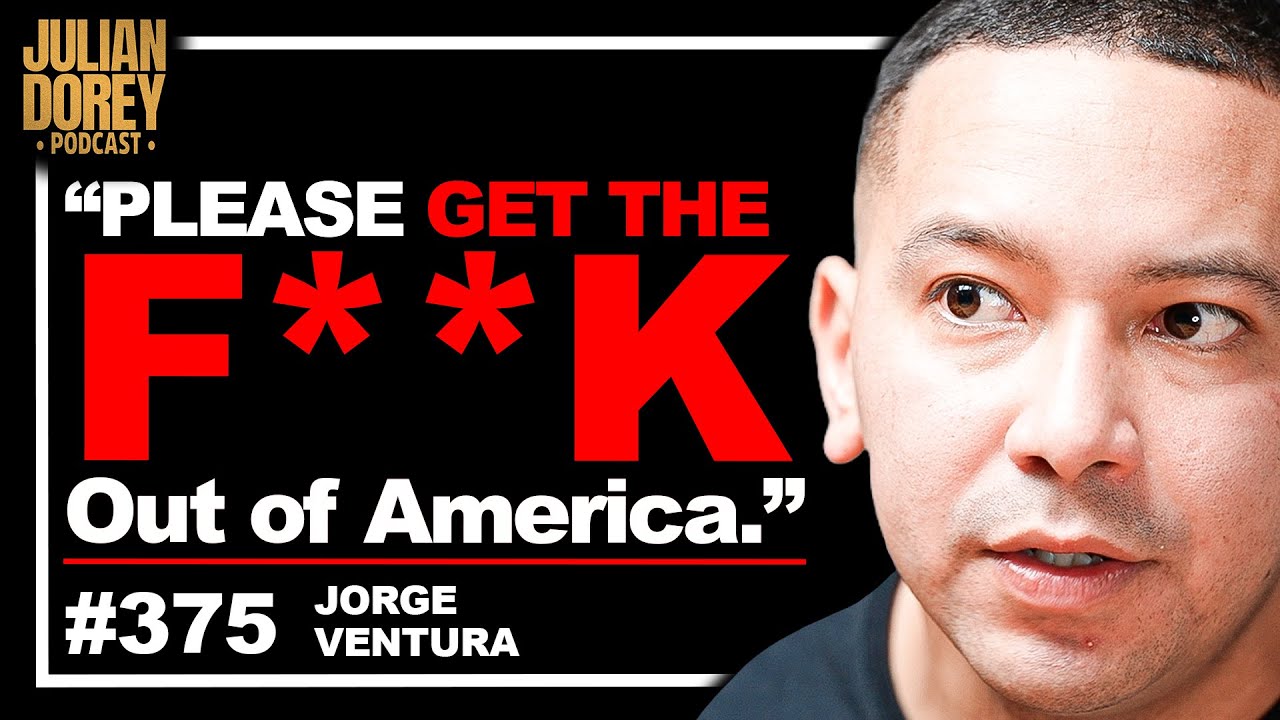
Julian EXPLODES: CIA-backed Cartels, Paid Sell-Outs, China & Direct Energy Weapons | Jorge V. • 375
"Julian Dorey and Jorge Ventura expose alleged CIA involvement in Venezuelan regime change, the escalating Chinese-Mexican cartel alliance, and the calculated manipulation of independent media by political and foreign interests."

PATREON EXCLUSIVE | The Human Experience (feat. Eric Benet and T.I) | The Joe Budden Podcast
"Eric Benét and T.I. offer candid insights into the evolving music industry, the challenges of maintaining authenticity, and their personal philosophies on career longevity, health, and societal changes."