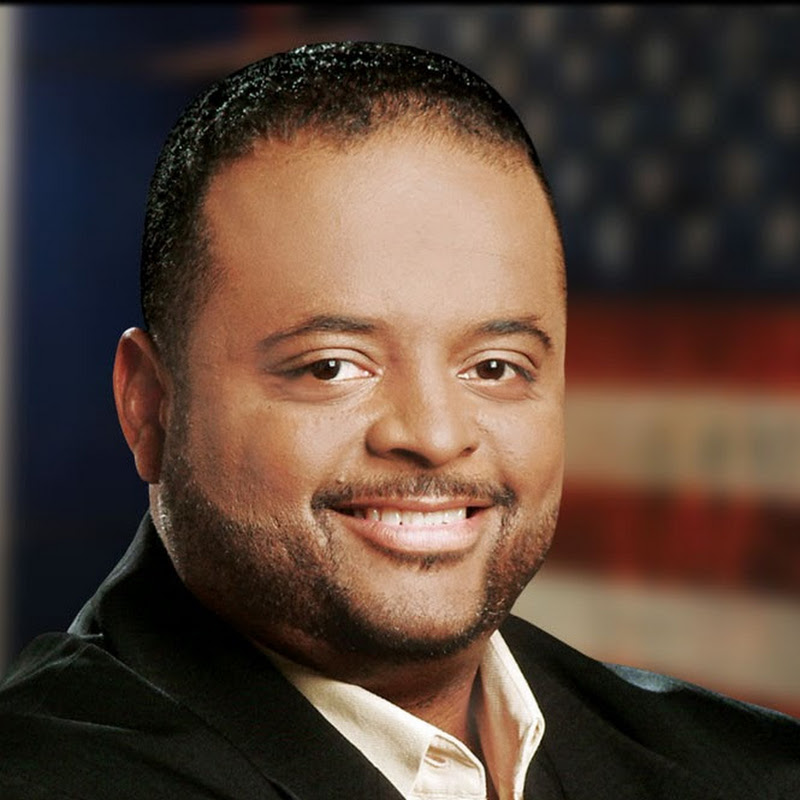
Roland gives MLK address in Dallas, Texas
YouTube · zl6Sg306IWM
Quick Read
Summary
Takeaways
- ❖Dr. King's message is consistently sanitized, ignoring his calls for economic withdrawal and protest against police brutality and voting rights suppression.
- ❖The current political climate reflects a 'white minority resistance' to demographic shifts, leading to systematic attacks on Black American infrastructure.
- ❖MLK Day should be a 'day of protest' challenging institutions like ICE, HUD, and DOJ, rather than a passive 'day of service'.
- ❖Historical patterns show that periods of Black success are consistently met with white backlash, a cycle evident in current legislative and judicial actions.
- ❖Weak political leadership and silent citizens enable fascism and the erosion of civil and economic rights.
- ❖Voter engagement in states like Texas is critical; the state is 'unorganized,' not inherently 'red,' due to eligible but non-voting minority populations.
Insights
1MLK's True Message: Protest and Economic Power, Not Just Dream
Roland Martin contends that Dr. King's legacy is often misrepresented, with public discourse focusing on the 'I Have a Dream' portion of his speeches while ignoring his calls for economic withdrawal, boycotts, and direct action against police brutality and systemic inequality. He notes the 'I Have a Dream' speech was titled 'Normacy No More' and included strong critiques of economic injustice and voting rights suppression.
Martin references King's 'I Have a Dream' speech () and his 'mountaintop' sermon (), highlighting the omitted sections about boycotts and economic withdrawal.
2Historical Pattern of White Backlash to Black Success
The speaker argues that American history consistently shows that periods of Black success are followed by periods of white backlash. He draws parallels between the invalidation of the 1875 Civil Rights Law leading to Plessy v. Ferguson, and current efforts to overturn the 1964 Civil Rights Act, 1965 Voting Rights Act, and 1968 Fair Housing Act.
Martin states, 'If you show me a period of black success, I will show you a period of white backlash that follow it every time.' He cites the invalidation of the 1875 civil rights law in 1883 leading to Plessy v. Ferguson in 1896, and current efforts against foundational civil rights acts.
3Demographic Shifts Fueling 'White Minority Resistance'
Martin posits that current political and social attacks are rooted in a 'white minority resistance' to America's changing demographics. He cites polls showing declining optimism among white Americans despite higher wealth, correlating this with increasing non-white populations and concerns over birth rates and immigration, which are seen as threats to 'whiteness' and power.
He details a 2009 poll on optimism for America's future and a 2016 poll on economic optimism, showing white Americans with the highest wealth but lowest optimism. He connects Elon Musk's tweets on fertility rates to the fact that in 2010, 10 states had white death rates higher than white birth rates, and links this to anti-immigrant sentiment.
4Systematic 'Defunding of Black America' Through Policy Attacks
The speaker asserts that a deliberate effort is underway to 'defund Black America' by undermining its infrastructure. This includes pulling back from lawsuits against discrimination (e.g., Dallas HOA, Hurricane Harvey funds), cutting grants for Black health and mental health, and attacking programs like DEI and the federal DBE program.
Martin cites specific instances: an administration pulling back from a lawsuit against a Dallas HOA (), withdrawing from a lawsuit against Texas for withholding Hurricane Harvey funds from Harris County (), overturning a settlement for sewage issues in Lowndes County, Alabama (), and attacks on the federal DBE program ().
5MLK Day as a 'Day of Protest,' Not Just Service
Martin argues that if Dr. King were alive today, MLK Day would be a 'day of protest,' not a 'day of service.' He challenges the notion that King spent time at shelters passing out food, suggesting King would be actively challenging government departments like ICE, Border Patrol, HUD, Commerce, and DOJ.
Martin states, 'Ain't nobody got a picture or a photo of Dr. King at a shelter passing out food... I can guarantee you Monday would not be a day of service. It would be a day of protest.'
Bottom Line
The current political attacks on DEI, Critical Race Theory, and 'wokeness' are a coordinated strategy to group all racial progress under one umbrella for easier attack, following the surge in support for Black-centered movements post-George Floyd's murder.
This insight reveals the strategic intent behind seemingly disparate cultural and political battles, suggesting they are not organic but rather a deliberate campaign to slow down and reverse gains made by minority groups, particularly Black Americans.
Advocates can counter this by disaggregating issues, educating the public on the specific, tangible benefits of DEI and anti-racist policies, and exposing the coordinated nature of the attacks rather than reacting to each individual 'umbrella' term.
The Supreme Court's potential decision in 'Louisiana versus Cali' could eliminate one-third of the Congressional Black Caucus and wipe out numerous Black state, county, and city officials across the South by dismantling Black-majority districts.
This decision represents a direct, immediate threat to Black political representation, potentially reversing decades of civil rights gains and further entrenching minority rule in states with significant Black populations.
Activists and legal organizations must prepare for a massive voter mobilization and legal defense effort, potentially focusing on state-level legislative changes or new legal strategies to protect voting rights and representation in the event of an adverse Supreme Court ruling.
Key Concepts
Sanitization of Historical Figures
The deliberate process of selectively presenting a historical figure's message to make it more palatable or less challenging, often stripping away their radical or uncomfortable stances. Martin argues MLK's legacy is reduced to 'content of character' while ignoring his critiques of economic injustice and police brutality.
White Minority Resistance
A socio-political phenomenon where a declining white majority reacts to demographic shifts by attempting to maintain power and control through legislative, judicial, and cultural means, often manifesting as backlash against minority progress and rights.
Defunding Black America
A systemic strategy to dismantle the economic and civil rights infrastructure supporting Black communities, achieved through legal challenges (e.g., affirmative action, DBE programs), legislative actions (e.g., voter suppression, anti-DEI laws), and withdrawal of federal support for minority-focused initiatives.
Lessons
- Challenge the sanitization of Dr. King's legacy by emphasizing his radical calls for economic justice, protest, and collective action, rather than just his 'dream' of racial harmony.
- Shift from passive observance of MLK Day to active protest and political engagement, challenging government departments and policies that harm Black communities.
- Engage in direct political action: phone banking, door-to-door canvassing, and financially supporting campaigns that align with civil rights goals.
- Confront weak political leaders and silent institutions, holding them accountable for enabling fascism and attacks on civil and economic rights.
- Challenge individuals within your own circles (e.g., country clubs, churches, political parties) who support or enable discriminatory policies, forcing them to choose between moral principles and political expediency.
- Recognize and counter the 'white minority resistance' by understanding its demographic roots and its coordinated attacks on Black American infrastructure, including DEI, affirmative action, and voting rights.
Reclaiming MLK's Legacy: A Call to Action
**Educate and Unsanitize MLK's Message:** Actively promote the full scope of Dr. King's work, including his critiques of economic injustice, police brutality, and his calls for economic withdrawal and protest, beyond the 'I Have a Dream' narrative.
**Transform MLK Day into a Day of Protest:** Organize and participate in protests and direct actions on MLK Day, targeting institutions and policies that perpetuate injustice (e.g., ICE, HUD, Commerce, DOJ) instead of solely focusing on community service.
**Engage in Sustained Political Mobilization:** Commit to ongoing political engagement beyond elections, including phone banking, door-to-door canvassing, and financial support for campaigns and organizations fighting for civil and economic rights. Challenge the notion of 'being tired' in the fight for justice.
**Confront and Challenge Weak Leadership:** Hold elected officials and institutional leaders accountable for their silence or complicity in attacks on civil rights. Demand courage and integrity in standing up against abuses of power and corrupt practices.
**Build Coalitions and Challenge Internal Divisions:** Work across racial and political lines to challenge discriminatory policies. Encourage white allies to confront racism within their own communities and Republicans to challenge conservative evangelicals who contradict Christ's teachings.
Notable Moments
Roland Martin recounts his experience forcing the White House press pool to include Black media during Hillary Clinton's visit to the MLK Center in Dallas.
This personal anecdote illustrates the ongoing struggle for equitable representation of Black-owned media and sets the stage for his broader argument about the systemic exclusion and undervaluation of Black voices and institutions.
Martin details Coretta Scott King's ultimatum at Dr. King's funeral, demanding Ebony and Jet be allowed into the Jim Crow press pool.
This highlights Coretta Scott King's critical role in preserving Black media's access to historical moments and underscores the persistent racial discrimination even at the funeral of a civil rights icon, reinforcing the need to acknowledge the 'foot soldiers' of the movement.
Martin describes his refusal to call Donald Trump 'Mr. President' during White House media lunches due to Trump's disrespect for the office and denigration of Black women and journalists.
This personal act of defiance exemplifies his call for individuals to refuse compliance with those who undermine democratic values and show contempt for marginalized groups, aligning with his broader message of active resistance.
Quotes
"You cannot sanitize and talk about oh he talked about content of character and he wanted our kids to get along because first of all if you want to recite the I have a dream speech first that was not the name of the speech. It was titled normacy no more."
"If you show me a period of black success, I will show you a period of white backlash that follow it every time."
"Ain't nobody got a picture or a photo of Dr. King at a shelter passing out food, doing stuff. If King was alive... I can guarantee you Monday would not be a day of service. It would be a day of protest."
"Texas is not a red state. Texas is an unorganized state."
"You can't lead an insurrection and think I'mma call you by a title. You can't call black women out their names and think, 'I'mma show you some respect.'"
Q&A
Recent Questions
Related Episodes

MAGA Voting Rights Power Grab. Stacey Abrams Dire Warning. Justin Jones Stripped of All Committees.
"Roland Martin and guests expose a coordinated Republican effort to dismantle Black political power across the South through aggressive gerrymandering, voter suppression, and economic attacks, urging a unified, immediate, and sustained counter-mobilization."
Black Woman Killed in ICE Pursuit. Newsom “Can’t Read” Remark. Tariff Repayment Push. TPS Fight
"This episode dissects multiple critical events, from the tragic deaths during an ICE pursuit and a police shooting, to debunking a viral controversy around Governor Gavin Newsom's remarks, and honoring Reverend Jesse Jackson's enduring legacy in economic and media justice."
George Floyd 6 Years Later. Redistricting War in The South. Talarico Senate Campaign
"This episode exposes the ongoing legislative battles and strategic resistance against efforts to diminish Black political power, from federal policing reform to state-level gerrymandering and calls for economic boycotts by Black athletes."

Trump Impact On Black America. SCOTUS Birthright Citizenship Case. Alabama College DEI probe
"This episode dissects the multifaceted impacts of Trump-era policies on Black America, from economic destabilization and civil rights rollbacks to an inspiring narrative of an entrepreneur rebuilding her life and community."