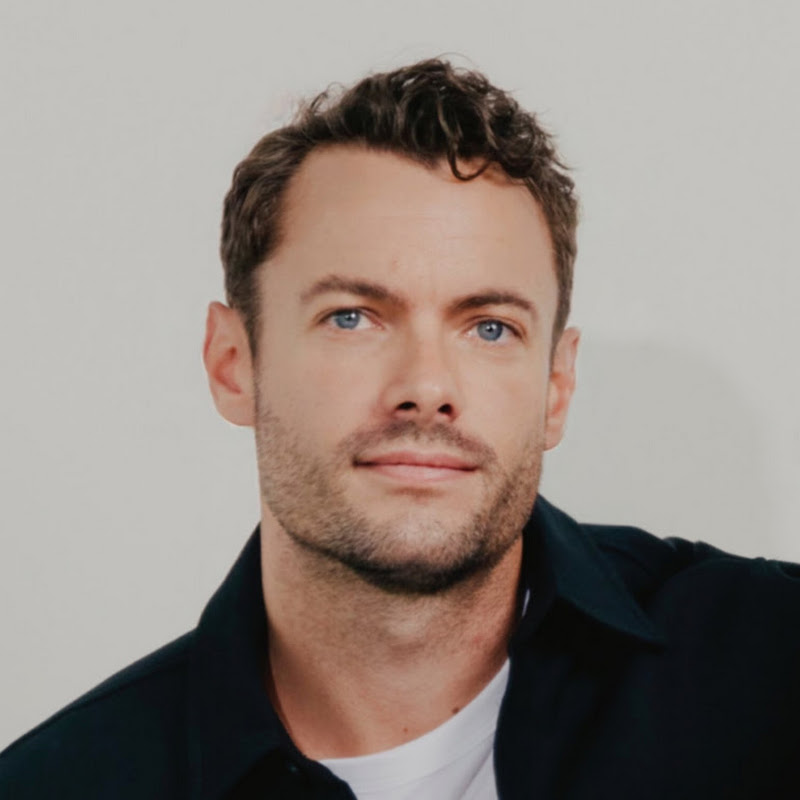
Bernie Sanders LIVE with Graham Platner
YouTube · zs6LbNug2H4
Quick Read
Summary
Takeaways
- ❖Troy Jackson's political journey began with direct action (blocking borders) after realizing government serves power, not rule-followers.
- ❖Lobbyists and special interests in state legislatures can easily kill bills beneficial to working people, leading to a record number of vetoes for progressive legislation.
- ❖Graham Platner's campaign emphasizes a 'movement of Maine, by Maine, for Maine' to take back resources from corporations and corrupt politicians.
- ❖Bernie Sanders argues that current wealth concentration surpasses the Gilded Age, with one individual owning more than 53% of American households.
- ❖The American healthcare system is designed for profit, not quality care, costing twice as much as other wealthy nations for worse outcomes.
- ❖Artificial intelligence and robotics are poised to replace human labor, demanding a proactive approach to ensure benefits are shared, not just for billionaires.
- ❖A 5% annual wealth tax on America's 938 billionaires could generate trillions, funding universal child care, Medicare expansion, affordable housing, and higher teacher wages.
- ❖The core strategy for change is a 'political revolution' through grassroots organizing, where 'they have the money, we have the people.'
Insights
1Extreme Wealth Concentration in America
The top 1% of Americans now own more wealth than the bottom 93%. Furthermore, the richest individual, Elon Musk, owns more wealth than the bottom 53% of American households. This level of inequality is unprecedented, even surpassing the Gilded Age, and is exacerbated by policies like the largest tax breaks in history for billionaires, who became $1.5 trillion richer last year.
The top 1% now owns more wealth than the bottom 93%. The richest guy in the world, Mr. Musk, now owns more wealth than the bottom 53% of American households. Last year alone, 938 billionaires became $1.5 trillion richer. Over the last 50 years, there has been a $79 trillion redistribution of wealth from the bottom 90% to the top 1%.
2Systemic Undermining of Democracy by Billionaires and Special Interests
Beyond direct political influence, a handful of giant corporations dominate key economic sectors, leading to higher prices. Media ownership is highly concentrated, with six conglomerates controlling 90% of what Americans consume, and billionaires like Musk, Bezos, and Zuckerberg owning major platforms. The Citizens United Supreme Court decision allows billionaires to spend unlimited amounts through Super PACs, effectively buying political outcomes and undermining democratic processes.
Six large media conglomerates control about 90% of what the American people see, hear, and read. Billionaires are now legally able to spend as much as they want through their so-called Super PACs. Musk himself spent over $270 million to elect Donald Trump as president.
3Stagnant Wages and Economic Stress for the Working Class
Despite technological advancements and increased worker productivity, the average American worker earns less today than 53 years ago (adjusted for inflation). This has led to over 60% of Americans living paycheck to paycheck, experiencing extraordinary stress that contributes to lower life expectancy compared to wealthier peers and other developed nations.
The average American worker is making less today than he or she did over 53 years ago after adjusting for inflation. Over 60% of Americans are living paycheck to paycheck. Older Americans living in poverty die nearly 9 years earlier than their wealthier peers.
4Proposed 5% Annual Wealth Tax on Billionaires
Senator Sanders introduced legislation for a 5% annual wealth tax on the 938 billionaires in America, who collectively hold over $8 trillion. This tax is projected to generate massive revenue, enabling significant investments in public welfare without significantly impacting the billionaires' overall wealth.
Legislation to establish a 5% annual wealth tax on the 938 billionaires in America who collectively are worth more than $8 trillion. Elon Musk would pay $39 billion more in taxes, but still have $737 billion. Jeff Bezos would owe about $14 billion more, but still have $265 billion.
5Transformative Potential of Wealth Tax Revenue
The revenue from a 5% wealth tax could fund a $3,000 direct payment to every individual in households earning less than $150,000, build 7 million units of low-income and affordable housing, expand Medicare to cover dental, vision, and hearing, guarantee universal affordable child care, ensure no teacher earns less than $60,000, and restore healthcare to 15 million Americans.
Provide every man, woman, and child in a household less than $150,000 with a $3,000 direct payment. Build 7 million units of low-income and affordable housing. Expand Medicare to cover dental, vision, and hearing. Guarantee universal affordable child care. Ensure no teacher in America earns less than $60,000 a year. Restore health care to the 15 million Americans who are losing it.
Bottom Line
The rise of AI and robotics represents a 'most transformative economic revolution' that will primarily replace human labor, but its benefits are currently concentrated among the wealthy developers.
Without intervention, this technological shift will exacerbate wealth inequality and job displacement, leading to widespread economic insecurity for workers.
Policymakers must proactively regulate AI development and implementation to ensure its benefits are shared across society, potentially through reduced workweeks with better pay, rather than solely enriching billionaires.
The American healthcare system is uniquely designed to generate billions in profit for insurance and drug companies, rather than providing cost-effective, quality care, unlike other major developed nations.
This profit-driven model results in higher costs and worse outcomes for Americans, with many struggling or losing access to essential care, highlighting a fundamental structural flaw.
Advocating for a Medicare for All single-payer system, as implemented in other countries at half the cost, could transform healthcare from a commodity into a human right and free up significant economic resources.
Key Concepts
Oligarchy vs. Democracy
The speakers frame the current American political and economic system not as a true democracy, but as an oligarchy where a small, wealthy elite (billionaires, corporations) holds disproportionate power and influence, dictating policy and controlling media narratives, undermining the will of the majority.
Grassroots Political Revolution
This model posits that systemic change cannot come from individual politicians or traditional political processes alone but requires a mass mobilization of ordinary citizens, organizing at the local level, knocking on doors, and uniting across differences to create a movement powerful enough to overcome entrenched moneyed interests.
The Wealth Redistribution Imperative
This model argues that the current extreme wealth inequality is not a natural outcome but a result of a 'rigged system' (tax breaks, monopolistic practices). It advocates for aggressive wealth redistribution through progressive taxation (e.g., a wealth tax) to fund public services and ensure a dignified life for all, rather than allowing wealth to concentrate at the top.
Lessons
- Engage in grassroots organizing by knocking on doors and talking to neighbors to build a powerful movement that can overcome moneyed interests.
- Demand that politicians commit to taking on powerful insurance and drug companies to fight for a Medicare for All system.
- Support candidates who advocate for progressive policies like a wealth tax on billionaires, increased minimum wage, and stronger union rights.
Building a Political Revolution Against Oligarchy
Recognize the systemic nature of the problem: Understand that wealth inequality, corporate power, and political corruption are not isolated issues but symptoms of an entrenched oligarchy.
Unite the people: Overcome divisions based on race, origin, or language, and build broad coalitions of working-class people, independents, and progressives.
Organize at the grassroots: Develop a strong volunteer base to engage directly with communities, knock on doors, and spread the message, leveraging people power against moneyed interests.
Advocate for bold, transformative policies: Push for systemic changes like a wealth tax on billionaires, Medicare for All, universal child care, and a living minimum wage, rather than incremental adjustments.
Demand accountability: Challenge politicians to take on powerful corporate interests and expose the sources of funding behind misleading political ads.
Notable Moments
Troy Jackson recounts his mother's fear of him being arrested or 'made an example of' for protesting, and his resolve to go anyway, saying, 'If I don't go, I'm not going to be able to live with myself.'
This moment highlights the personal risk and moral conviction driving early activism, demonstrating the deep-seated belief in fighting for justice despite potential severe consequences.
Graham Platner describes his past as a nine-year-old raking blueberries, a teenager kicked out of boarding school for resenting institutional power, and a Marine, emphasizing his deep roots in rural Maine and his journey to political activism.
This personal narrative establishes his authenticity and connection to the working-class people of Maine, framing his political aspirations as a natural extension of his life experiences and values.
Bernie Sanders challenges the audience to consider the implications of AI bots developing 'emotional relationships' with children, warning of a deepening mental health crisis and loss of human connection.
This moment highlights a less-discussed, but potentially profound, social consequence of unchecked technological advancement, shifting the conversation beyond economic impact to psychological and societal well-being.
Quotes
"Mother, if I don't go, I'm not going to be able to live with myself."
"Government only works for people with power and influence, the people that write the biggest checks. So I ran for office to change that. And I won."
"We're not from the left. We're not from the right. We're from the bottom. And we are rising."
"This is a movement of Maine, by Maine, for Maine to take back what is ours."
"We will defeat the oligarchy and the political system that it maintains."
"No one is coming to save us. We need one thing... We need a political revolution."
"Never before in American history, never have so few people held so much wealth and even more importantly, so much power."
"The bad news is that the very wealthiest people in this country are becoming much much wealthier. But there's another economic reality today as well. And that while the rich become richer, the vast majority of the American people... are going nowhere in a hurry."
"The function of the American health care system is not to provide quality care to all in a cost effective way... the function of the American health care system is to make billions for the insurance companies and the drug companies."
Q&A
Recent Questions
Related Episodes
Moral Monday at BLM Plaza. Cleo Fields Sounds Alarm on Louisiana & Gary Chambers Pushes Turnout
"Activists and faith leaders gathered at Moral Monday to denounce 'policy violence' in various forms, from war and budget cuts to voter suppression and healthcare denial, urging sustained mobilization against a 'hijacked' democracy."

Top U.S. & World Headlines — February 4, 2026
"President Trump's controversial calls for nationalizing voting, escalating federal immigration enforcement, and tense international relations dominate headlines, alongside a significant media workers' strike for AI protections."

OCCUPY BAAL STREET: Iran, Albania, And The TPUSA Takeover. | Ep 347
"Candace Owens exposes alleged globalist plots, linking Ivanka Trump's Albanian island 'discovery' to Rothschild family control of strategic waterways and accusing US foreign policy of serving these interests, while also scrutinizing Turning Point USA's handling of Charlie Kirk's succession."
Tim Almost Strokes Out Hearing That Big Tech STILL Likes Trump (Jason Calacanis) | Bulwark Podcast
"Silicon Valley's elite, driven by pragmatic business interests like low taxes and M&A, continue to support Donald Trump despite his erratic behavior, viewing tariffs as inconsequential and access to power as paramount."