
BREAKING: Riots ERUPT In Belfast After Migrant Attack
YouTube · -AN92iulTBw
Quick Read
Summary
Takeaways
- ❖Over 80 cities across the United Kingdom experienced flash protests, with some escalating into riots in Belfast and Glasgow.
- ❖The unrest was a direct reaction to a Sudanese migrant's attack on a local man in Belfast, involving multiple stabbings and an attempted beheading.
- ❖The victim of the attack remains in hospital with life-threatening injuries, including to his eyes.
- ❖Security forces deployed water cannons in Belfast to manage the escalating riots, a tactic not permitted in London.
- ❖The host emphasized that the majority of protesters in Belfast and Glasgow were loyalists and unionists, supporting the United Kingdom.
- ❖The host characterized Sinn Féin supporters as 'pro-mass migration, pro-Islam, pro-Palestine, and pro-multiculturalism,' suggesting they would not oppose the current situation.
Insights
1Triggering Incident and Immediate Response
A severe attack by a Sudanese migrant in Belfast, involving stabbings and an attempted beheading, served as the immediate catalyst for widespread protests. This incident quickly mobilized public anger, leading to flash protests across approximately 80 UK cities, with significant riots in Belfast and Glasgow.
The host states, 'A Sudanese invader, a migrant who attacked an innocent civilian, a local man in Belfast. Initially, a multiple obviously stabbings and of course then attempted to behead the man in the middle of the streets.' and 'Flash protests have been organized as a reaction... across the country, across the kingdom, some have now resulted in riots including in Belfast and in Glasgow.'
2Geopolitical Identity and Loyalist Dominance in Protests
The protests in Belfast and Glasgow were predominantly led by loyalist and unionist groups, who strongly identify with the United Kingdom. The host repeatedly corrected viewers on the constitutional status of Belfast and Glasgow as part of the UK, highlighting the deep-seated political divisions and national identity struggles within these regions, particularly concerning Irish and Scottish separatism versus unionism.
The host clarifies, 'legally and constitutionally it is part of the United Kingdom of Great Britain and Northern Ireland.' and 'the vast majority of people out are the loyalists and the unionists. As in, they are pro the United Kingdom.'
3Escalation of Violence and Police Response
The protests quickly escalated into violent confrontations, with rioters targeting public vehicles like buses and engaging with security forces. Water cannons were deployed in Belfast, indicating a significant level of unrest and the authorities' readiness to use force, a measure noted as specific to Northern Ireland compared to London.
Footage shows a bus being targeted by 'angry locals' and 'rioters.' The host mentions, 'the water cannons, all right.' and 'in Belfast, Northern Ireland they are allowed to use the water cannons. In London they're not.'
4Political Polarization and Blame Assignment
The host explicitly linked 'left-wingers' and Sinn Féin supporters to 'pro-mass migration, pro-Islam, pro-Palestine, and pro-multiculturalism,' contrasting them with the 'political right' who are concerned about the situation. This framing suggests a clear ideological divide in how the incident and subsequent protests are perceived and discussed.
The host states, 'These are the left-wingers who come to counter protest.' and 'The Sinn Féin side obviously are pro primarily, overall, pro-mass migration, pro-Islam, pro-Palestine, and pro-multiculturalism. So, they're they're not going to come out. They're they're not going to fight against this. It's it's only the political right who are concerned about the situation on the ground.'
Lessons
- Monitor local news and social media in regions experiencing similar tensions to gauge public sentiment and potential for unrest following significant incidents.
- Understand the historical and political context of regions like Northern Ireland and Scotland to better interpret local reactions to national events, recognizing the nuances between unionist and nationalist perspectives.
- Be aware of how media outlets, particularly those with strong political leanings, frame events, and identify the specific ideological lenses through which information is presented.
Notable Moments
The host corrects a live chat comment regarding Belfast's sovereignty, emphasizing its legal status as part of the United Kingdom despite aspirations for a United Ireland.
This exchange highlights the persistent and sensitive issue of national identity and sovereignty in Northern Ireland, a critical underlying tension that can be exacerbated by current events.
The host repeatedly corrects himself and viewers about Glasgow being the capital of Scotland, clarifying that Edinburgh is the capital.
This recurring error, while minor, underscores the host's focus on the political narrative rather than precise geographical details, and serves as a point of humanizing the live broadcast format.
Discussion of the historical unity between Protestants and Catholics in Ireland against 'mass migration and the corrupt establishment,' contrasting it with current Sinn Féin stances.
This point reveals a perceived shift in alliances or priorities within Irish political discourse, suggesting that anti-migration sentiment can bridge traditional sectarian divides, while also highlighting the host's strong anti-Sinn Féin bias.
Quotes
"A Sudanese invader, a migrant who attacked an innocent civilian, a local man in Belfast. Initially, a multiple obviously stabbings and of course then attempted to behead the man in the middle of the streets. Luckily, he failed."
"Legally and constitutionally it is part of the United Kingdom of Great Britain and Northern Ireland."
"In Belfast, Northern Ireland they are allowed to use the water cannons. In London they're not. So, different rules obviously um in terms of uh devolution."
"The vast majority of people out are the loyalists and the unionists. As in, they are pro the United Kingdom."
"The Sinn Féin side obviously are pro primarily, overall, pro-mass migration, pro-Islam, pro-Palestine, and pro-multiculturalism."
"You don't mess with people in Belfast. They get violent very quickly."
Q&A
Recent Questions
Related Episodes

Liberal Reporter SHOCKED As Pro Trump Migrant Declares The UK IS A DUMP After Deported From The US!
"A British national, deported from the US after living there for decades, expresses strong support for Trump's strict immigration policies and critiques the UK as a 'dump' due to mass migration, aligning with the host's anti-European leftist agenda."

"America, U.S.A.": Eddie Glaude on the 250th Anniv., Race & "Madness at the Heart of the Country"
"Professor Eddie Glaude Jr. argues that as America approaches its 250th anniversary, it must confront its foundational contradiction: the simultaneous pursuit of freedom and maintenance of a white republic, which has led to recurring cycles of 'madness' and historical amnesia."

Heather Cox Richardson on Trump’s Plan for America’s 250th
"Historian Heather Cox Richardson dissects Donald Trump's self-serving plans for America's 250th anniversary, drawing stark historical parallels and highlighting a crucial redefinition of American patriotism."
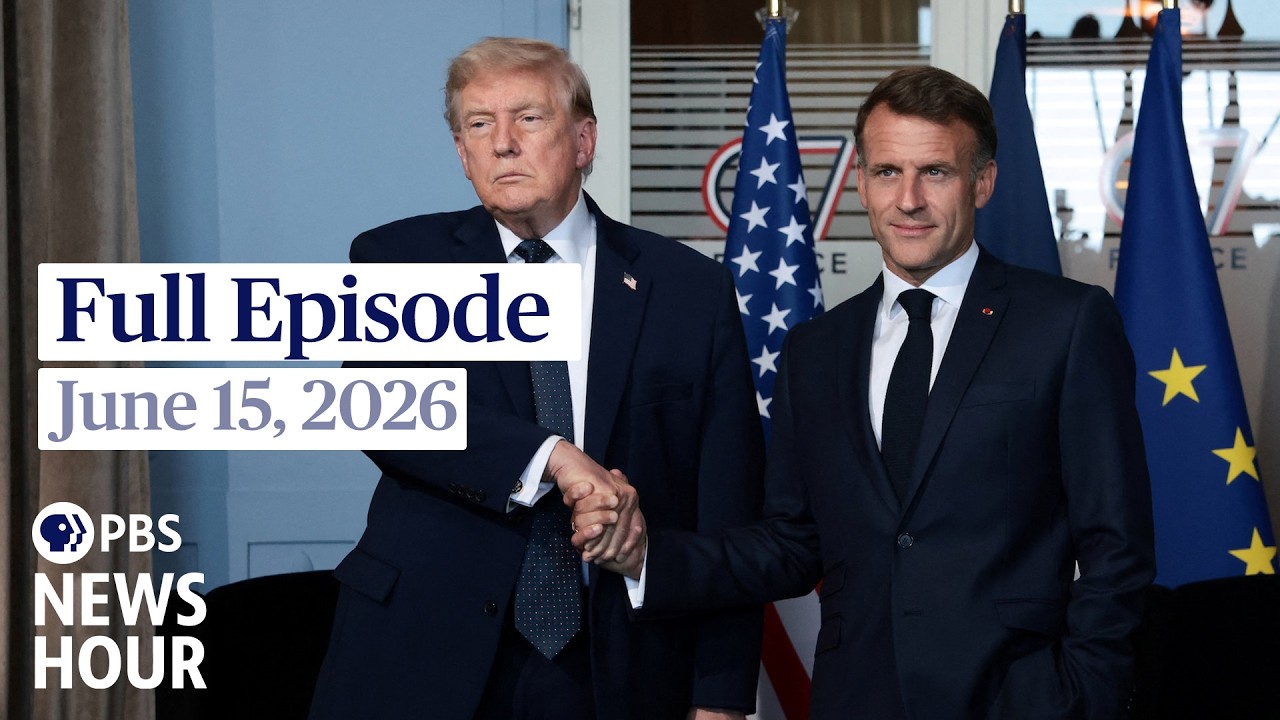
PBS News Hour full episode, June 15, 2026
"President Trump heralds a new, controversial Iran cease-fire deal and a novel sunscreen ingredient gains FDA approval, while a Princeton professor challenges America's self-perception on its 250th anniversary."