
Trump PANICS at SCOTUS as He Gets BRUTALLY REBUKED | Unprecedented
YouTube · -j0E14CnZbQ
Quick Read
Summary
Takeaways
- ❖The Supreme Court's 7-2 decision in *Boes v. Illinois* significantly broadens candidate standing to challenge election laws, particularly mail-in ballots, anticipating a 'flood' of lawsuits.
- ❖States like West Virginia and Idaho have enacted bans on transgender athletes, and the Supreme Court is expected to issue a narrow ruling that may uphold these bans without a national mandate.
- ❖The *Becky Pepper Jackson* case involves a 15-year-old transgender athlete who used puberty blockers and has been a girl her entire life, highlighting the specific circumstances often ignored in broader debates.
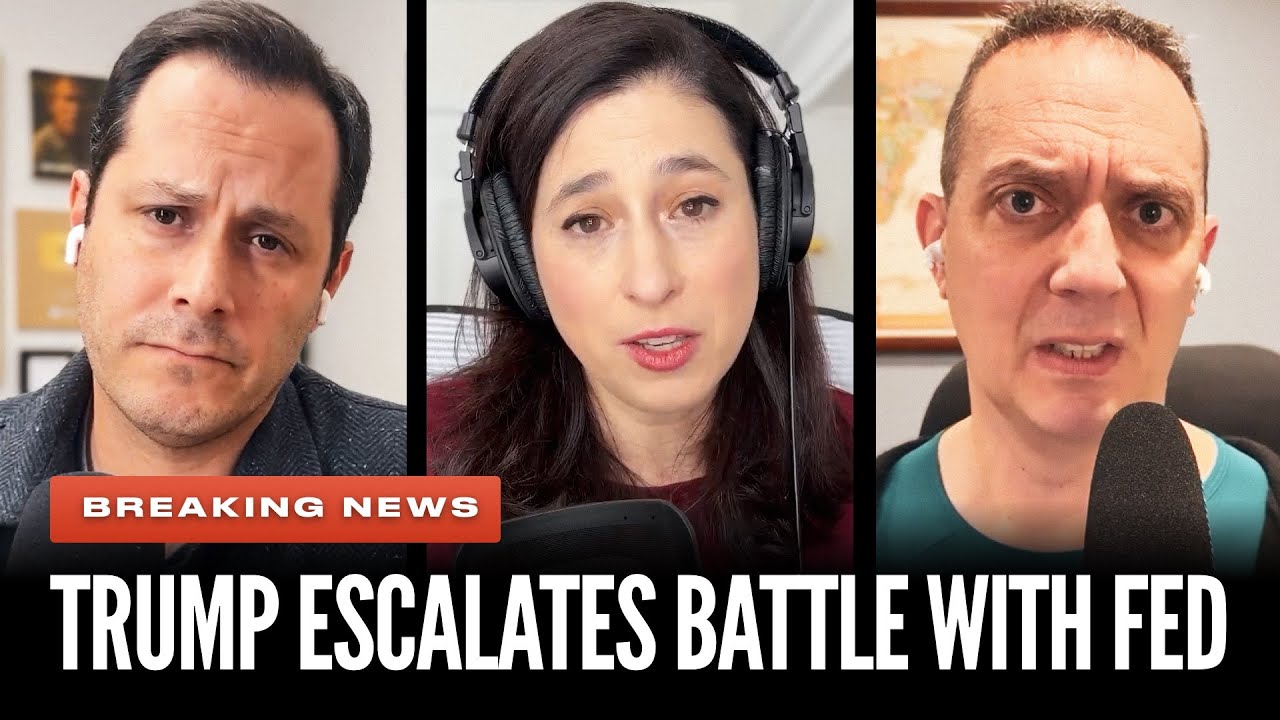
- ❖Donald Trump's administration initiated a criminal investigation against Federal Reserve Chair Jay Powell, which is framed as an attempt to undermine the Fed's independence and control interest rates.
- ❖Jay Powell publicly defended the Federal Reserve's independence, implicitly signaling to the Supreme Court ahead of a crucial hearing on Lisa Cook's position on the Fed Board of Governors.
- ❖The hosts argue that the Supreme Court, particularly its conservative majority, prioritizes business and financial stability over civil rights, influencing its approach to cases involving the Federal Reserve versus transgender rights.
Insights
1SCOTUS Lowers Bar for Election Law Challenges, Anticipating 'Flood' of Lawsuits
The Supreme Court, in a 7-2 decision in *Boes v. Illinois*, ruled that candidates have standing to challenge election laws, even without proving concrete harm (e.g., that they would have won but for the law). This procedural shift is expected to open the floodgates for numerous lawsuits, particularly targeting mail-in ballots, which are favored by Democrats. Chief Justice Roberts cited *Bush v. Gore* to justify pre-election legal clarity, which the hosts criticize as a pretext for enabling voter restriction efforts.
Candidate Boes sued Illinois over its mail-in ballot law. The Supreme Court's decision on standing allows candidates to sue without showing substantial likelihood of harm. Justice Kavanaugh and the majority argued for pre-election legal clarity. Chief Justice Roberts cited *Bush v. Gore* ().
2Narrow SCOTUS Ruling Expected on Transgender Athlete Bans, Upholding State Restrictions
In the *Becky Pepper Jackson* case, the Supreme Court is anticipated to issue a narrow decision that allows states like West Virginia and Idaho to maintain bans on transgender athletes. The hosts predict the Court will 'thread the needle' to give a 'win to MAGA and the Christian right' by upholding state-level bans without issuing a broad ruling that would redefine 'sex' in Title IX or completely overturn existing transgender protections established in *Bostock*.
The case involves Becky Pepper Jackson, a 15-year-old transgender athlete who used puberty blockers. The hosts discuss the conflict between *Bostock* (protecting transgender individuals from workplace discrimination) and *Skiri* (allowing bans on gender-affirming care). Justice Kagan's hypothetical about chess and brain development highlighted the difficulty in defining 'biological basis' for sports. The hosts predict a narrow decision favoring Idaho and West Virginia (, ).
3Trump's Actions Against Jay Powell Highlight Threat to Federal Reserve Independence
Donald Trump's administration initiated a criminal investigation by the Department of Justice into Federal Reserve Chair Jay Powell over alleged construction cost overruns and Senate testimony. This move is framed as a direct attempt to undermine the Federal Reserve's independence and gain control over interest rate policies, which Trump desires for political reasons. Powell's public defense of the Fed's autonomy is seen as a direct message to the Supreme Court ahead of its hearing on Lisa Cook's position, where the Court previously indicated the Fed's unique independence.
Trump's alleged desire to control interest rates and pump out 'free money' (). The DOJ opened a criminal investigation against Jay Powell (). Jay Powell released an 'extraordinary video' defending the Fed's independence (). The Supreme Court's prior ruling in the *Willcox National Labor Relations Board* case () ring-fenced the Federal Reserve's independence.
Lessons
- Monitor state-level election law changes and legal challenges, especially regarding mail-in ballots, as the Supreme Court has made it easier for candidates to initiate such lawsuits.
- Engage with local and state legislative processes concerning transgender rights in sports, as the Supreme Court is likely to allow states significant leeway in setting their own policies.
- Understand the critical importance of the Federal Reserve's independence for economic stability and be aware of political attempts to influence its operations, which could lead to significant economic consequences like hyperinflation.
Quotes
"No one, certainly not the chair of the Federal Reserve, is above the law. But this unprecedented action should be seen in the broader context of the administration's threats and ongoing pressure. This is all part of a bigger story about President Trump's campaign to bend the Fed to his will."
"Public service sometimes requires standing firm in the face of threats. I will continue to do the job the Senate confirmed me to do with integrity and a commitment to serving the American people."
"Trump is always his best worst evidence. I would not be surprised if that came up in oral argument, right? ...He gives real world examples for why he should not have absolute discretion and power."
Q&A
Recent Questions
Related Episodes

PBS News Hour full episode, March 23, 2026
"President Trump's surprise diplomatic signals on the Iran war, a fatal plane collision at LaGuardia amidst a federal shutdown, and a Supreme Court case on mail-in ballots dominate a day of complex national and international developments."

GOP Plots New Trump Supreme Court Pick Before Midterms | Elie Mystal | TMR
"Elie Mystal and Sam Seder discuss the Republican strategy to pressure Justice Samuel Alito into retiring before the midterms to allow Donald Trump to appoint a new, younger conservative justice, and the origins of the Supreme Court's 'shadow docket'."
BREAKING: DOJ Threatens Fed Chair With Criminal Charges
"The Department of Justice's criminal investigation into Fed Chair Jay Powell for alleged false testimony is framed by hosts as a politically motivated attack by Donald Trump, aiming to undermine the Federal Reserve's independence and control interest rate policy."

Pimps, Hoes & Politicians
"This episode dissects the hypocrisy of online culture, political centrism, and corporate influence, arguing that identity politics often masks deeper corruption and that genuine progress requires holding politicians accountable, regardless of their declared affiliation."