BREAKING: U.S.-Iran Talks COLLAPSE; Hormuz Standoff Deepens; Hezbollah Fire | TBN Israel
YouTube · 02P_8d2sSWk
Quick Read
Summary
Takeaways
- ❖US-Iran negotiations in Islamabad concluded without an agreement, with US Vice President J.D. Vance departing abruptly.
- ❖Key disagreements centered on Iran's nuclear program (specifically enriched uranium stockpiles) and the opening/control of the Strait of Hormuz.
- ❖The US is considering a naval blockade strategy, similar to that used against Venezuela, to choke Iran's oil exports.
- ❖Iran has fortified its Isfahan nuclear facility, anticipating potential ground raids or bombings.
- ❖Hezbollah, an Iranian proxy, continues launching rockets into northern Israel, maintaining regional instability.
- ❖Gulf states, exposed as vulnerable in the conflict, are pushing for diplomatic solutions but operating under the radar.
- ❖Israel is preparing for broad strikes on Iranian infrastructure and energy targets if diplomacy fails completely.
Insights
1Collapse of US-Iran Negotiations
Talks between the US and Iran in Islamabad ended without an agreement. US Vice President J.D. Vance (as referred to by the hosts) left Pakistan, stating the US did not achieve its goals, particularly on the nuclear issue. Iran accused the US of 'unreasonable demands'.
The negotiations ended without any agreement. J.D. Vance, the Vice President of the United States, got up and left. (, ) Vice President J.D. Vance explained that the nuclear issue was the one that broke the camel's back from the American side, while the Iranians accused the United States of excessive demands. ()
2Core Disagreements: Nuclear Program and Strait of Hormuz
The primary points of contention were Iran's refusal to commit against developing nuclear weapons, its unwillingness to remove enriched uranium from its soil, and its demand for practical control and transit fees in the Strait of Hormuz. The US demanded an irreversible commitment on the nuclear issue first, while Iran prioritized sanctions relief and control over Hormuz.
The main points of the disagreement in the talks are the Strait of Hormuz and also the nuclear issue. () The Americans want the strait opened immediately, without delays and without Iranian interpretation. The Iranians, on the other hand, they want to turn Hormuz into not just a geographic asset, but a strategic bargaining chip. () From Washington's point of view, the point that broke the talks was Iran's refusal to commit not to develop nuclear weapons in the future and its refusal to accept the American formula demanding that Iran remove its stockpile of enriched uranium from its own soil. ()
3US Strategy: Naval Blockade
Following the talks' collapse, President Trump shared an article suggesting a naval blockade as America's next move against Iran. This strategy aims to choke Tehran's oil reserves and apply diplomatic pressure on major oil buyers like China and India. The USS Gerald R. Ford and Abraham Lincoln aircraft carriers are already in the Persian Gulf.
Trump shared an article claiming that a naval blockade is America's next card against Iran. It appears that the United States may impose a full naval siege on the country. () The massive aircraft carrier Gerald R. Ford... has arrived in the Persian Gulf... It is joining the aircraft carrier Abraham Lincoln and other significant naval assets. ()
4Iranian Fortification of Nuclear Facilities
Iran is reinforcing its nuclear facility in Isfahan with barriers and fortifications, including earth barriers, fences, and rubble blocking tunnel entrances. This preparation is for a scenario of direct confrontation, including potential ground raids or attempts to seize uranium stockpiles.
On the ground, Iran is reinforcing the nuclear facility in Isfahan with barriers and fortifications to block a ground raid against the background of US and Israeli threats. Satellite images point to preparations for a scenario of direct confrontation over the uranium stockpiles. () Iran has reinforced the facility there with earth barriers, fences, and piles of rubble blocking three tunnel entrances. ()
5Hezbollah's Continued Aggression
Despite the ceasefire, Hezbollah continues to launch rockets and drones into northern Israel, causing casualties and damage. Israel maintains operational freedom to strike immediate threats, but political leadership moderates the pace of fire due to American pressure.
Residents of northern Israel ran constantly to shelters because of fire from the Hezbollah terrorist organization. The Israeli Air Force continues to crush Hezbollah's terror network and destroyed more than 200 terror infrastructures. () More than 30 rockets and several drones were launched from Lebanon and one of them even hit a residential house in Shlomi. ()
Bottom Line
Iran's 'shadow fleet' continues to export over a million barrels of oil daily through the Strait of Hormuz, circumventing sanctions and generating substantial revenue during the conflict.
This illicit oil trade undermines international sanctions and provides Iran with critical funds to sustain its military and proxy operations, complicating efforts to pressure the regime economically.
Enhanced intelligence and interdiction efforts could target this shadow fleet more effectively, increasing economic pressure on Iran and potentially forcing greater compliance in negotiations.
Kharg Island, Iran's main oil export artery, is identified as a central strategic target in any potential naval blockade plan, with the US military considering physical capture or destruction.
Targeting Kharg Island would severely cripple Iran's ability to export oil, directly impacting its revenue and potentially escalating the conflict to a new level of direct military engagement.
The threat to Kharg Island serves as a significant deterrent and bargaining chip for the US, potentially forcing Iran to reconsider its stance on the Strait of Hormuz and nuclear program to avoid such a devastating economic blow.
The Gulf states, despite significant defense investments, are exposed as vulnerable to 'cheap small drones' and lack civilian protection, making them reluctant to fully participate in campaigns against Iran.
This vulnerability drives Gulf states to prioritize diplomatic solutions and operate 'under the radar,' highlighting a potential weakness in a broader anti-Iran coalition and influencing regional dynamics.
There is an opportunity for defense technology companies to develop and deploy effective, affordable countermeasures against drone attacks, enhancing regional security and potentially strengthening alliances against state-sponsored terrorism.
The US attempts to 'break the Iranian package' by separating issues like Lebanon, the nuclear program, and maritime routes, while Iran deliberately ties them together to maximize leverage.
This fundamental difference in negotiation strategy makes reaching a comprehensive agreement extremely difficult, as each concession in one area is seen as impacting others, leading to stalemates.
Understanding this strategic divergence is key for future diplomatic efforts. A more nuanced approach might involve targeted, sequential agreements that address Iran's 'package' concerns while still achieving US objectives, or a stronger unified front from allies to prevent Iran from leveraging interconnected issues.
Lessons
- Pray for wisdom for the negotiation teams and political leaders involved in the US-Iran conflict, and for the peace of Jerusalem.
- Share content from TBN Israel and other reliable sources to help spread awareness and understanding of the complex situation in the Middle East.
- Consider visiting Israel to support its tourism industry, which is recovering, and to 'stand with Israel' during this period.
Notable Moments
US Vice President J.D. Vance's dramatic departure from Islamabad, signaling the immediate collapse of negotiations.
This event underscored the failure of diplomatic efforts and the immediate shift back to a more confrontational stance, indicating a high likelihood of escalation.
The arrival of the USS Gerald R. Ford aircraft carrier in the Persian Gulf, joining the USS Abraham Lincoln.
This deployment of significant naval assets directly supports the potential naval blockade strategy, demonstrating the US's capability and intent to apply military pressure.
Quotes
"We did not reach an agreement. And we are returning to the United States immediately."
"We are not rushing to negotiate. If the United States do not agree to a deal, there will be no change in Hormuz."
"It does not matter to me whether there is a deal or not. If China transfer weapons to Iran, it's a big problem, and it is big trouble."
"The Iranians, time and time again, have showed up unprepared to actually make any concessions in the negotiation."
"It only holds if an entity like the US is present in enforcing the agreement. As in US forces are the ones that take possession of nuclear materials, not some international organization."
Q&A
Recent Questions
Related Episodes

Patrick Henningsen: Hezbollah JUST Fired Back at Israel - Iran Vows to “Crush” All Attacks
"Patrick Henningsen argues that the US and Israel initiated an illegal war against Iran, driven by Trump's incompetence and Israeli influence, leading to an inevitable escalation with severe global economic repercussions."

BREAKING: Iran Threatens To END Talks; U.S. Vows Retaliation; Hezbollah Collapsing? | TBN Israel
"Iran is leveraging Hezbollah and the Strait of Hormuz to manipulate US negotiations, while Israel asserts its right to dismantle Hezbollah's eroding but still dangerous infrastructure in Lebanon, independent of international talks."
BREAKING: Protests ERUPT In Iran Over IRGC Surrendering To Trump - Infighting Clashes In Tehran
"Iran is experiencing severe internal infighting and protests as hardline IRGC elements clash with government figures over a perceived 'surrender' to the US, while mainstream Western media misrepresents the situation."
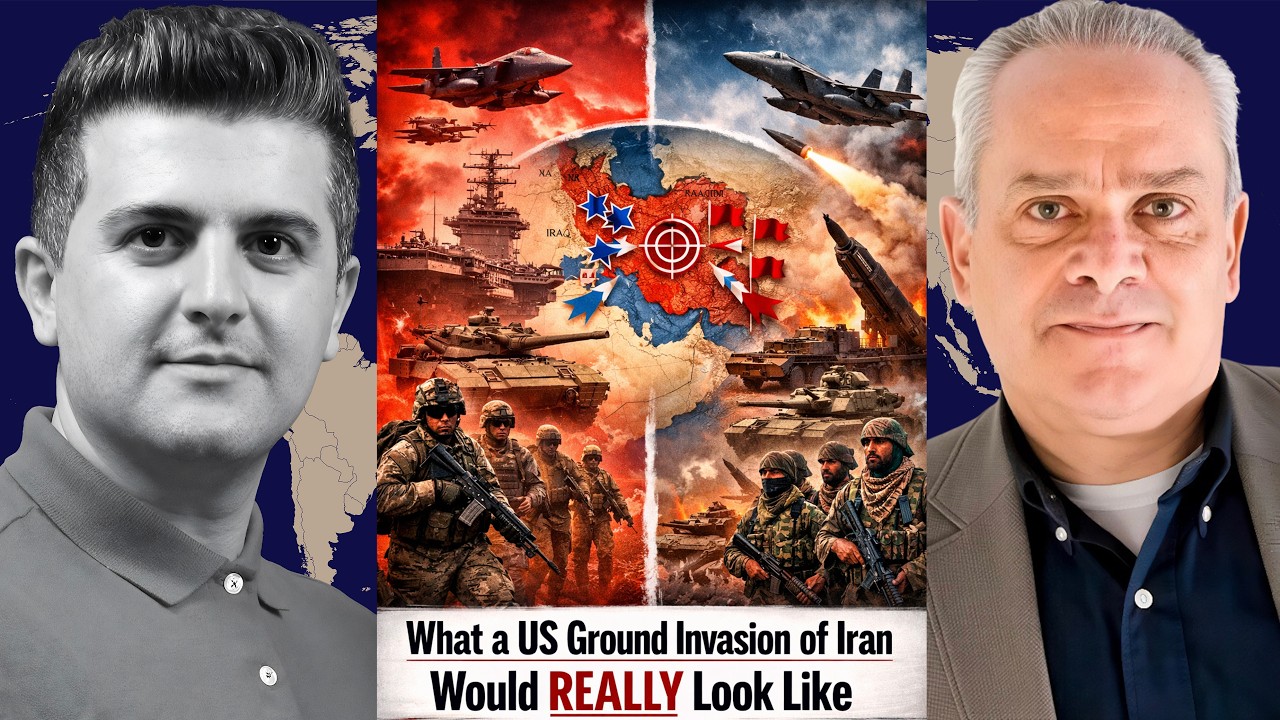
Col. Jacques Baud: What a US Ground Invasion of Iran Would REALLY Look Like
"Colonel Jacques Baud dissects the strategic futility of a US ground invasion of Iran, arguing that current troop levels are insufficient and such an action would backfire, exposing US allies and potentially leading to Iran's nuclearization."