
Laith Marouf: Hezbollah JUST HIT 3 Iron Dome Batteries – Buffer Zone Agenda CRUSHED
YouTube · 08G4JD4bBNg
Quick Read
Summary
Takeaways
- ❖Hezbollah's FPV drones demonstrate unprecedented range and precision, hitting Iron Dome batteries and military sites deep within occupied Palestine.
- ❖Israeli forces are reportedly unable to move in open daylight and have abandoned regular bases, using residential homes as temporary shelters.
- ❖Hezbollah employs night vision, heat vision, and various surveillance drones for comprehensive tracking of Israeli movements and personnel.
- ❖Israeli attempts to counter FPV drones, like using nets, are seen as ineffective and make them easier targets for other Hezbollah munitions.
- ❖The speaker claims Israeli retaliations disproportionately target Lebanese civilians and Syrian refugees, framing it as a sign of battlefield defeat.
- ❖The Syrian government under Al-Julani is described as fragile, with internal rebellions and Turkish/Israeli influence fragmenting the country.
- ❖Syria's oil is allegedly being stolen and exported by Israeli businessmen and Turkey, with Erdogan's son reportedly involved.
- ❖Iran's IRGC has warned that a new war would be 'supra-regional,' targeting NATO bases beyond Western Asia, including Cyprus, Crete, Hungary, Djibouti, and Diego Garcia.
Insights
1Hezbollah's Advanced Drone and Surveillance Capabilities
Hezbollah has developed and deployed FPV (First Person View) drones capable of flying tens of kilometers into occupied Palestine to strike high-value targets like Iron Dome batteries, military sites, and command vehicles. They also utilize night vision, heat vision, and various surveillance drones to track Israeli movements 24/7, even identifying and assassinating battalion commanders.
Videos show FPV drones hitting three Iron Dome batteries and an Israeli base in Napura, flying around inside to hunt soldiers. Hezbollah released a video showing eight attacks on an Israeli command center in Baya, culminating in an FPV drone taking down an Israeli flag after the base was abandoned. Israelis admitted a battalion commander was assassinated by a Hezbollah attack on his car. (, , , , )
2Israeli Military Vulnerabilities and Tactical Shifts
Israeli forces in northern Palestine are reportedly unable to conduct daytime operations in the open and have abandoned their regular bases due to their vulnerability. They are now using residential homes in border colonies as temporary bases, which Hezbollah is actively targeting. Israeli attempts to counter Hezbollah's FPV drones, such as setting up tarps and fishing nets, are deemed ineffective and counterproductive.
Israeli assessments state 80% of their operations had to be halted, with orders for soldiers not to move in the open during daylight. Hezbollah is hunting Israeli soldiers in residential homes in frontline colonies because regular bases are 'easy targets.' Israeli 'stupid solutions' like tarps and nets make them 'easier targets' for Hezbollah's suicide drones and guided missiles. (, , )
3Lebanese Government's Ineffectiveness and Regional Geopolitics
The Lebanese government is portrayed as a 'collaborationist regime' with no real power to influence Hezbollah or implement agreements with Israel. Its negotiations are seen as 'theatrics,' and any attempt to confront Hezbollah militarily would likely lead to a military coup. The broader Syrian conflict sees the Al-Julani government as weak and fragmented, with US policy allowing Turkey and Israel to compete for influence and resources, including stolen Syrian oil.
Hezbollah 'not even caring what the president says' regarding ceasefires. The Lebanese military 'cannot be used to attack Hezbollah' and 'if there is such a thing... there will be a mutiny.' Syria's government 'doesn't exist' if the US acknowledges Israel's right to occupy to the Euphrates and lets Turks occupy Aleppo and Idlib. Erdogan's son is implicated in exporting 'stolen oil of Syria and Iraq to the Zionist colony.' (, , , )
4Potential for Supra-Regional War
The Iranian IRGC has declared that a new round of war would extend beyond Western Asia, targeting NATO bases in the Eastern Mediterranean, Eastern Europe, Eastern Africa, and the Indian Ocean. This strategy aims to prevent NATO from supporting Israel and attacking Iran from regional airfields, as seen in previous conflicts.
The IRGC stated it's 'not going to be a regional war but a supra regional war.' Potential targets include the British base in Cyprus, the Soda base in Crete, air bases in Hungary, NATO bases in Djibouti, and the base in Diego Garcia. Germany admitted its ships fired from the Mediterranean to take down Hezbollah drones. (, )
Bottom Line
Hezbollah's targeting of Israeli construction equipment and contractors suggests a deliberate strategy to impede Israeli ground movements and infrastructure development in contested areas.
This tactic aims to paralyze Israeli mechanized advances, forcing them into vulnerable infantry operations and increasing the human and financial cost of maintaining positions.
Military analysts could study this as a low-cost, high-impact method to counter technologically superior forces attempting to establish or maintain control over terrain.
The alleged involvement of Erdogan's son in the illicit oil trade from Syria and Iraq to Israel, alongside whispers of rebellion in Deir ez-Zor to join Iraq, indicates deep-seated economic and historical grievances fueling regional instability.
This highlights how economic exploitation and historical ties can intersect with current geopolitical conflicts, potentially leading to new fronts or internal fragmentation within states like Syria.
Policymakers and humanitarian organizations should recognize that addressing economic injustices and historical grievances is critical for long-term stability, beyond immediate military solutions.
Lessons
- Analyze the tactical implications of FPV drones and advanced surveillance in asymmetric warfare, particularly their effectiveness against established air defense systems and ground forces.
- Evaluate the stability of proxy governments and the influence of external powers in conflict zones, considering how internal dissent and economic exploitation can undermine their authority.
- Monitor the potential for 'supra-regional' escalation in conflicts involving major powers, as declared by actors like Iran, and assess the vulnerabilities of military bases in extended operational theaters.
Quotes
"Hezbollah is flying these FBVS for tens of kilometers. Um, so I I don't think we've seen that being done in any uh other battle zone. Not the Ukrainians, not the Russians."
"When it comes to the Israeli attacks on Lebanon, they're basically talking about Hezbollah targets or something related to Hezbollah. What is the reality of those targets? Yeah, the reality of those targets is complete families being wiped out."
"Israel in general is uh at the last days of its existence. They're very very violent days, last days, but they are the last days. The throws of a of a mad mad dog that's going to be put down soon."
"That statement by the RGC saying that uh it's not going to be a regional war but a supra regional war meaning uh regions beyond western Asia will be included in in this war."
"Hezbollah is using just a a small part of its uh military capabilities in this battle. It has just you know a few thousand fighters on the ground. It is uh you know it can fight this war of attrition for years if it if this is what the west wants and the west cannot sustain such a war of attrition for years."
Q&A
Recent Questions
Related Episodes
Patrick Henningsen: Hezbollah JUST Fired Back at Israel - Iran Vows to “Crush” All Attacks
"Patrick Henningsen argues that the US and Israel initiated an illegal war against Iran, driven by Trump's incompetence and Israeli influence, leading to an inevitable escalation with severe global economic repercussions."
Col. Jacques Baud: What a US Ground Invasion of Iran Would REALLY Look Like
"Colonel Jacques Baud dissects the strategic futility of a US ground invasion of Iran, arguing that current troop levels are insufficient and such an action would backfire, exposing US allies and potentially leading to Iran's nuclearization."
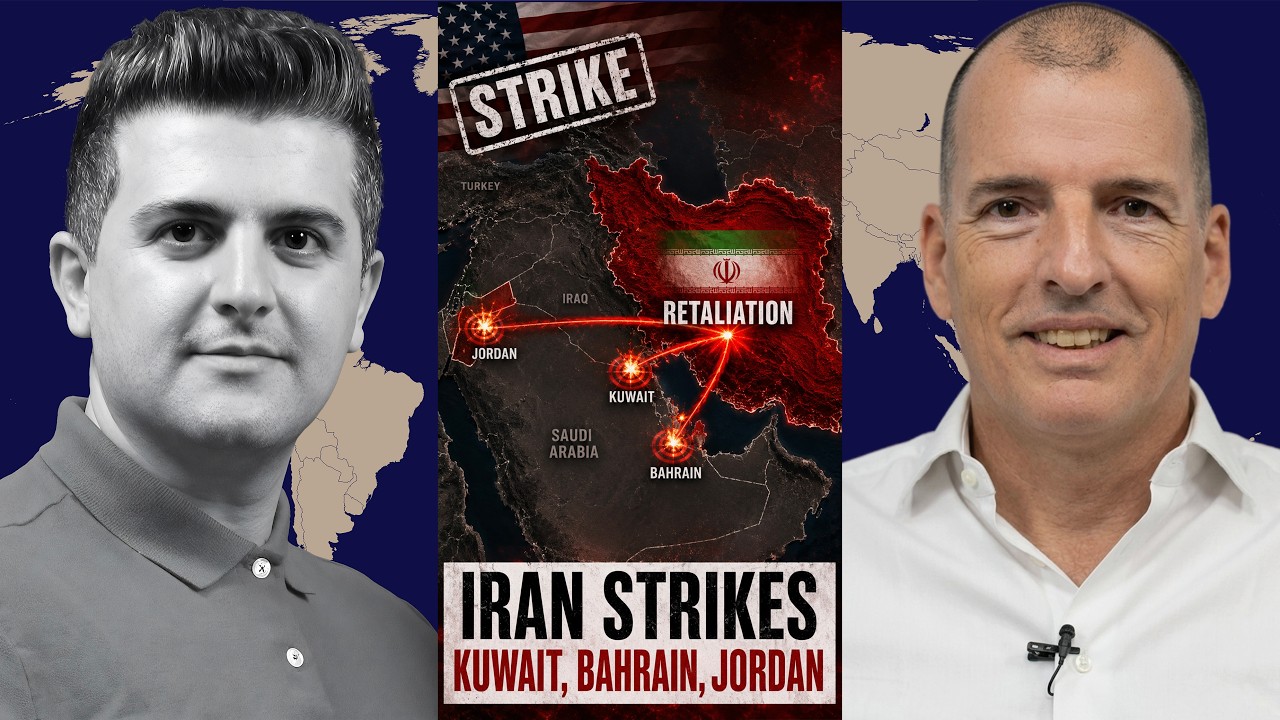
Alex Krainer: US STRIKES Iran – Iran RETALIATES Against Kuwait, Bahrain & Jordan!
"Amidst escalating US-Iran conflict and Iranian retaliation against regional US allies, this episode argues that US foreign policy is deeply controlled by an 'Anglo-Zionist conspiracy' led by the Rothschild banking dynasty, prioritizing Israeli interests over American ones."

🚨 THEY F*CKED AROUND FOR THE LAST TIME 😭😭😭
"This episode unleashes a torrent of highly opinionated commentary on the US-Iran deal, Israel's role, and a scathing critique of 'leftist' policies and immigration, particularly highlighting the UK grooming gang report as evidence of Western societal decay."