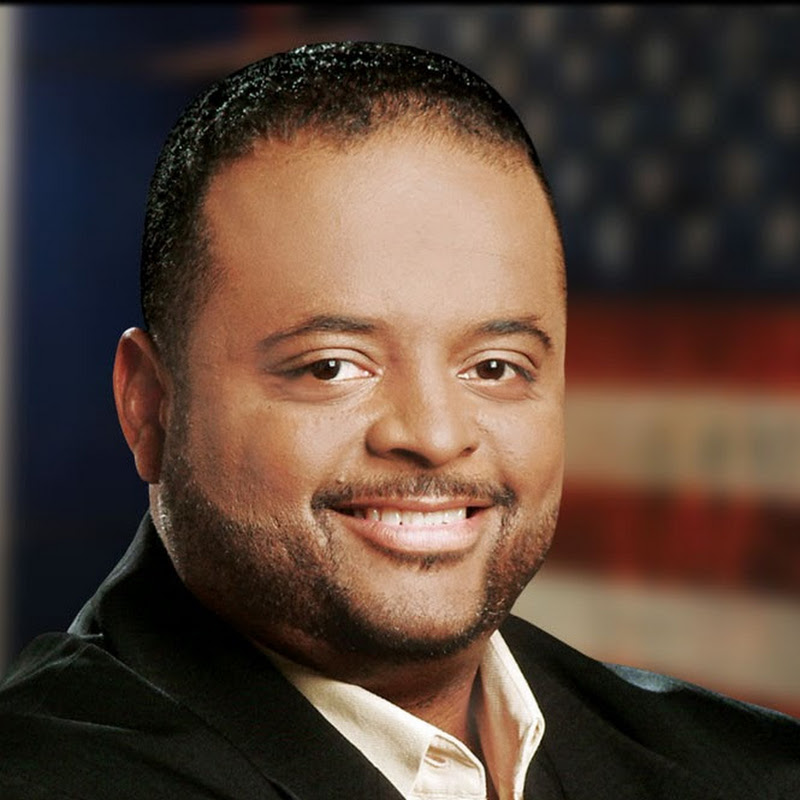
Rev. C.T. Vivian talks MLK and staring death in the face. #MLKDay2026
YouTube · 0F1Oh6P7LXE
Quick Read
Summary
Takeaways
- ❖The resurgence of overt racism post-Obama was an unexpected and disheartening development for Civil Rights veterans.
- ❖The fight for freedom is never completely won; vigilance and continuous struggle are essential.
- ❖Personal fearlessness can be traced back to early life experiences of confronting bullies and standing one's ground.
- ❖The Civil Rights Movement was driven by an inherent moral imperative, not just legal or economic goals.
- ❖The movement's strategy was organic and self-driving, with participants inherently knowing the next steps.
- ❖Martin Luther King Jr.'s assassination was seen by some as a call to intensify the struggle, not to grieve or stop.
- ❖A true movement requires a readiness to die for its principles, a lesson some contemporary activists have yet to fully grasp.
Insights
1The Unexpected Resurgence of Overt Racism
Rev. Vivian expresses profound surprise and disappointment at the rise of figures like Donald Trump, which he views as a regression to the overt racism of the past. He believed that after achieving significant milestones, including a Black president, such a blatant return to divisive racial politics would be impossible, highlighting the cyclical nature of racial struggle in America.
Vivian states, 'I didn't have any idea that we would ever have Trump anywhere in the United States... he is working together with other people... who is now trying to bring back the racism of yesterday.'
2The Continuous Nature of the Freedom Struggle
Vivian asserts that the struggle for freedom is never completely won and requires constant engagement. He criticizes generations for 'resting too long,' emphasizing that until a group is 'completely in charge,' they are not truly free. He draws a parallel to Jewish communities who never consider their struggle over.
Vivian states, 'the struggle is never won completely one and we rested too long to expect it not to happen... until you're completely in charge, you're not in charge at all.'
3The Genesis of Fearlessness: A First-Grade Bully
Vivian attributes his lifelong fearlessness to a formative experience in first grade where he confronted and ultimately deterred a group of bullies. This early lesson in standing his ground and protecting the weaker became a foundational principle for his later activism, directly informing his confrontations with authorities like Jim Clark.
Vivian recounts the story of confronting Theodore Durk and his gang in first grade, stating, 'I looked at Theodore Durk and said, 'Come on in.'... And he decided not to.'
4The Movement Drove Itself: Organic Strategy
Vivian explains that the Civil Rights Movement's strategy was not meticulously planned in every detail but was largely organic and self-propelling. Participants understood their core purpose, and the momentum from events like the Montgomery Bus Boycott naturally led to subsequent actions, requiring less explicit direction.
Vivian states, 'the movement drove itself... you didn't spend all that time trying to find out where should we go now? What should we do? You knew it.'
5MLK's Death as a Catalyst, Not an End
Vivian reveals that for him and others deeply committed to the movement, Martin Luther King Jr.'s assassination was not a moment for grief or cessation of effort, but a call to work harder. He and a colleague immediately focused on fundraising to continue the movement, viewing King's death as an expected sacrifice within the larger struggle.
Vivian states, 'Did his death change everything? No, it no... we kept going as much as we could... I don't remember grieving at all. This was what you always expected.'
6The Necessity of Being Ready to Die for a Movement
Vivian emphasizes that a fundamental requirement for a true social movement is the participants' readiness to die for their cause. He observes that younger generations, while passionate, sometimes lack this understanding, making them susceptible to being 'bluffed' by opposition. This readiness to sacrifice eliminates fear and makes the movement unstoppable.
Vivian states, 'for a movement you got to be ready to die... if you are not is that you can be bluffed.'
Bottom Line
America, in its systemic racism, acts as a 'schoolyard bully' on a national scale, perpetuating dominance over marginalized groups.
This framing shifts the perception of systemic oppression from abstract policy to a tangible, aggressive force, making it easier to understand the psychological and physical toll on those targeted.
Activists can leverage this analogy to communicate the nature of power dynamics and rally support by framing the struggle as standing up to a bully, fostering a sense of collective empowerment against an oppressive entity.
The immediate aftermath of MLK's assassination for core movement leaders was not primarily grief, but an intensified focus on continuing the work, viewing his death as an expected, albeit tragic, part of the struggle.
This perspective challenges the common narrative of widespread despair and highlights the deep, almost stoic, commitment of movement veterans who prioritized the cause above personal mourning, demonstrating extreme resilience and strategic continuity.
Understanding this mindset can inform leadership development in modern movements, emphasizing resilience, strategic foresight, and the ability to maintain momentum even in the face of profound loss, rather than allowing setbacks to halt progress.
Key Concepts
The Perpetual Struggle
The idea that freedom and justice are not static achievements but require continuous vigilance and action. Success often breeds backlash, necessitating ongoing engagement from successive generations.
The Readiness to Die
A core principle for effective social movements, suggesting that true commitment and an unwillingness to be bluffed or deterred require participants to accept the ultimate sacrifice. Without this, a movement can be easily undermined.
Lessons
- Cultivate a mindset of perpetual vigilance: Recognize that gains in freedom and justice are not permanent and require continuous defense and advancement.
- Develop personal courage by confronting smaller injustices: Draw lessons from early life experiences of standing up to bullies or perceived wrongs, as this builds the foundation for larger struggles.
- Prioritize the collective struggle over individual figures: Understand that the movement's mission is paramount, and be prepared to continue the work even in the face of leadership changes or personal loss.
Notable Moments
Vivian recounts a near-drowning incident during a St. Augustine beach desegregation protest, where he was held underwater by an attacker, and he began to laugh, accepting his fate.
This moment vividly illustrates Vivian's profound fearlessness and unwavering commitment to the cause, even in the face of imminent death, showcasing the extraordinary courage required during the movement.
Vivian describes his immediate reaction to hearing about MLK's assassination, not as grief, but as a determination to 'keep moving' and continue the struggle, immediately seeking ways to raise money for the movement's continuation.
This reveals the deep-seated commitment and strategic resilience of core movement leaders, who viewed King's death as a tragic but expected sacrifice, reinforcing the idea that the movement itself was the ultimate priority.
Vivian details how his first-grade experience of confronting and managing school bullies instilled in him a sense of leadership and a commitment to protecting the weaker, which he carried throughout his life.
This personal anecdote provides a powerful origin story for his legendary fearlessness and moral compass, illustrating how early life lessons can shape a lifelong dedication to justice and non-violence.
Quotes
"Until you're completely in charge, you're not in charge at all."
"If you had nearly 400 years of an oppressive system, it might take that long to to end that system."
"You always struggle for your real total freedom, right? In a country that's had slavery and you are the slave."
"Any victory for some of us is a victory for all of us."
"You don't scare people. You don't you don't mess over people at all. Regardless of situation... they're just as human as you are."
"If you were black and a journalist, how did you make create freedom?"
"We had no fear. See you were going you were going to meet it regardless of what it was."
"If you're not ready to die, you can't have a movement."
Q&A
Recent Questions
Related Episodes
Roland speaks at Columbus Educ. Assoc. MLK Dinner
"Roland Martin challenges the audience at an MLK dinner to move beyond passive celebration and engage in active, sustained political and economic struggle, emphasizing that 'rest time is over' for those seeking real societal change."

LEMON DROP | Kamala Harris Speaks Out, Ashley St. Clair Drops Bombshells & Newsom Fires Back
"Kamala Harris, Ashley St. Clair, and Don Lemon dissect the weaponization of the Department of Justice, corporate smear tactics, and the controversial White House invitation for the NBA champions."

Iran Deal Skepticism. Whoopi Vs Vance. Potomac Park Invasion. Racist Hurls Slurs At Black Boy.
"This episode dissects multiple instances of alleged anti-Black policies and racial injustice, from the Trump administration's legal challenges to reparations and the Iran deal, to police brutality and the erasure of Black history."

Unc & Iso Joe COOK De'Aaron Fox PRETENDING he doesn't hear the CHOKING noise after GM4! | Nightcap
"The hosts dissect NBA player De'Aaron Fox's mental state after a critical Game 4 loss, sparking a broader discussion on how professional athletes truly handle public criticism and the impact of old-school coaching methods."