
Col. Jacques Baud: Middle East on Fire — Is This the Start of Something Bigger?
YouTube · 0HZWfVt_Pjg
Quick Read
Summary
Takeaways
- ❖The US and Israel engaged in diplomatic talks with Iran while simultaneously planning joint military strikes, fostering deep distrust.
- ❖The assassination of Iran's Supreme Leader and other commanders failed to trigger regime change, as the West misjudged Iranian societal cohesion and preparedness for leadership transition.
- ❖Iran is strategically compelled to escalate the conflict to force the US and Israel to genuinely seek peace, rather than temporary ceasefires that allow rearmament.
- ❖Arab states are increasingly vulnerable as US allies, realizing they are sacrificial buffers for US-Israeli interests, potentially leading to shifts in regional alliances.
Insights
1Western Duplicity Undermined Diplomacy with Iran
Initial diplomatic efforts, including Russian-brokered non-aggression talks between Iran and Israel, and later US-Iran negotiations in Geneva, were compromised. Colonel Baud states that Israel requested non-aggression talks, and the US systematically increased demands. Simultaneously, the US and Israel were planning a joint military operation against Iran, decided in early February during Netanyahu's visit to Trump. This duplicity has made Iran unable to trust any diplomatic initiatives from the US or Israel.
Early this year you had under the opaces of Russia you had a dialogue established between Iran and Israel... at the request of Israel... in Geneva you had the talks between the United States and Iran... this joint operation was decided in early February... as Netanyahu was visiting Trump in Washington DC.
2Regime Change Attempt in Iran Failed Due to Western Misunderstanding
The US and Israel's objective to overthrow the Iranian regime by killing Supreme Leader Ali Khamenei failed because it was based on a false assumption that the Iranian population hated the regime and would revolt. Baud argues that Western media overemphasized protests in a few large cities, ignoring broader national sentiment. Iran had also prepared for such a scenario, ensuring a smooth leadership transition, negating the intended destabilizing effect.
It has killed Ali Kame, but it's not killing the leader is not overthrowing the regime... the assumption of the west... was that the Iranian population hate the regime... our perception of the Iranian society is false... Iran prepared this transition for months.
3Killing Leaders Degrades Attacker's Strategic Position
Drawing from his work on asymmetric warfare, Colonel Baud explains that assassinating leaders often backfires. The replacements are typically more aggressive, less open to dialogue, and more dynamic. This pattern, observed with Hamas in Palestine, is now repeating with Iran, leading to a stronger, more ruthless response and degrading the strategic posture of the US and Israel.
Each time Israel has killed a Palestinian leader, the next one was always someone who was more... tougher... by killing leaders you degrade your own situation... Israel and the US have in fact degraded their own strategic posture.
4Iran is Forced to Escalate to Achieve Lasting Peace
Given the West's perceived unreliability and obsessive, irrational drive against Iran, the Iranian leadership believes it cannot trust diplomatic initiatives or ceasefires. Iran is compelled to escalate the conflict beyond the point where the US and Israel merely ask for peace, to a point where they desperately need peace, ensuring any future agreement is genuinely respected.
Iran is put in a position that it has to escalate to some extent... the only way is to bring the conflict to the point that both Israel and the US will have to beg for peace... you have to make sure that it's not just that they want peace but they need peace.
5Arab States are Vulnerable and Being Sacrificed by the US
The US has historically used Arab states primarily as deployment points for military bases, with Israel being its true regional ally. These states, dependent on US funding and vulnerable due to their tribal structures and post-colonial borders, are now realizing they are being sacrificed as buffer zones, attracting Iranian missiles. This could lead them to reconsider their alliances.
The Americans had no real interest for the Arab states whatsoever. They just use them as... a point for deployment of US bases... the real ally of the region is Israel... these Arab state were used as a buffer zone... now they are being sacrificed by the Americans just for the sake of protecting Israel.
Bottom Line
The West's persistent failure to understand the cultural and philosophical underpinnings of Middle Eastern societies, particularly their concept of 'victory' as resistance rather than destruction, is a fundamental flaw preventing military success.
This deep cultural disconnect means Western military strategies, like decapitation strikes, are inherently ineffective and often counterproductive, leading to prolonged conflicts and increased animosity rather than desired outcomes.
For strategists and diplomats, a profound investment in cultural and psychological understanding of adversaries is paramount. This could involve integrating more anthropologists, historians, and local experts into policy-making bodies to develop truly effective, rather than merely forceful, approaches.
The perceived unreliability and duplicity of Western powers (US, Europe) in upholding agreements like the JCPOA will have long-term, detrimental effects on their global standing and ability to forge alliances, particularly in the Middle East.
This erosion of trust means non-Western nations will increasingly seek alternative partners or develop self-reliant strategies, diminishing Western influence and potentially accelerating a multipolar world order.
Nations seeking to establish themselves as reliable global partners can leverage this vacuum of trust by consistently adhering to international agreements and demonstrating genuine, non-opportunistic engagement, thereby attracting new allies and strengthening their diplomatic positions.
Key Concepts
Asymmetric Warfare (Degradation of Situation)
Colonel Baud defines asymmetric warfare as a situation where each move made to improve one's situation in fact degrades it. He applies this to Israel's strategy of killing Palestinian leaders, which consistently resulted in tougher, less compromising successors, worsening Israel's position. This model is extended to the US-Israeli actions against Iran.
Cultural Understanding of Victory (Muslim vs. Western)
In Western military thinking, victory is often defined as the destruction of the enemy. In Muslim societies, victory is understood as not giving up, a victory over oneself to resist and maintain dignity, regardless of the enemy's strength. This fundamental difference explains the resilience of Muslim societies and why tactics like killing leaders, effective in a Western context, fail to destabilize them.
Lessons
- Re-evaluate the effectiveness of 'decapitation strikes' and leadership targeting in cultures where resilience and collective identity supersede individual leaders.
- Invest significantly in cultural and psychological intelligence to understand adversary motivations and societal structures, moving beyond ethnocentric assumptions.
- Recognize that diplomatic engagement without genuine intent or while simultaneously planning military action will breed deep distrust and force adversaries into escalation.
- Assess the long-term geopolitical costs of sacrificing allies for short-term strategic objectives, as this erodes trust and can lead to shifts in regional power dynamics.
Quotes
"Iran is put in a position that it has to escalate to some extent. And that's the tragic of the situation because there is no way Iran can now trust any diplomatic initiative coming from the US."
"When you start killing leaders, you put yourself in a situation of uncertainty as how these new leaders will react and how they will respond to the situation. Very often... the next one was always someone who was more... tougher."
"For a Muslim, the victory is not related to the destruction of the enemy. Is related to the fact that you should not give up. Victory is not a victory over the enemy. Victory is a victory over yourself, not to abandon the fight, not to give up."
"If you don't understand your enemy, there is no chance for you to win. And the the principle, the main weakness of the Israelis and of the the Americans is that they fail to understand their enemies."
Q&A
Recent Questions
Related Episodes

Pentagon Prepares For EXTENDED War With Iran
"This episode dissects the geopolitical maneuvers surrounding potential US-Iran conflict, revealing strategic leaks, Netanyahu's diplomatic sabotage playbook, and the true intent behind economic sanctions."

Alex Krainer: US STRIKES Iran – Iran RETALIATES Against Kuwait, Bahrain & Jordan!
"Amidst escalating US-Iran conflict and Iranian retaliation against regional US allies, this episode argues that US foreign policy is deeply controlled by an 'Anglo-Zionist conspiracy' led by the Rothschild banking dynasty, prioritizing Israeli interests over American ones."

Patrick Henningsen: Hezbollah JUST Fired Back at Israel - Iran Vows to “Crush” All Attacks
"Patrick Henningsen argues that the US and Israel initiated an illegal war against Iran, driven by Trump's incompetence and Israeli influence, leading to an inevitable escalation with severe global economic repercussions."
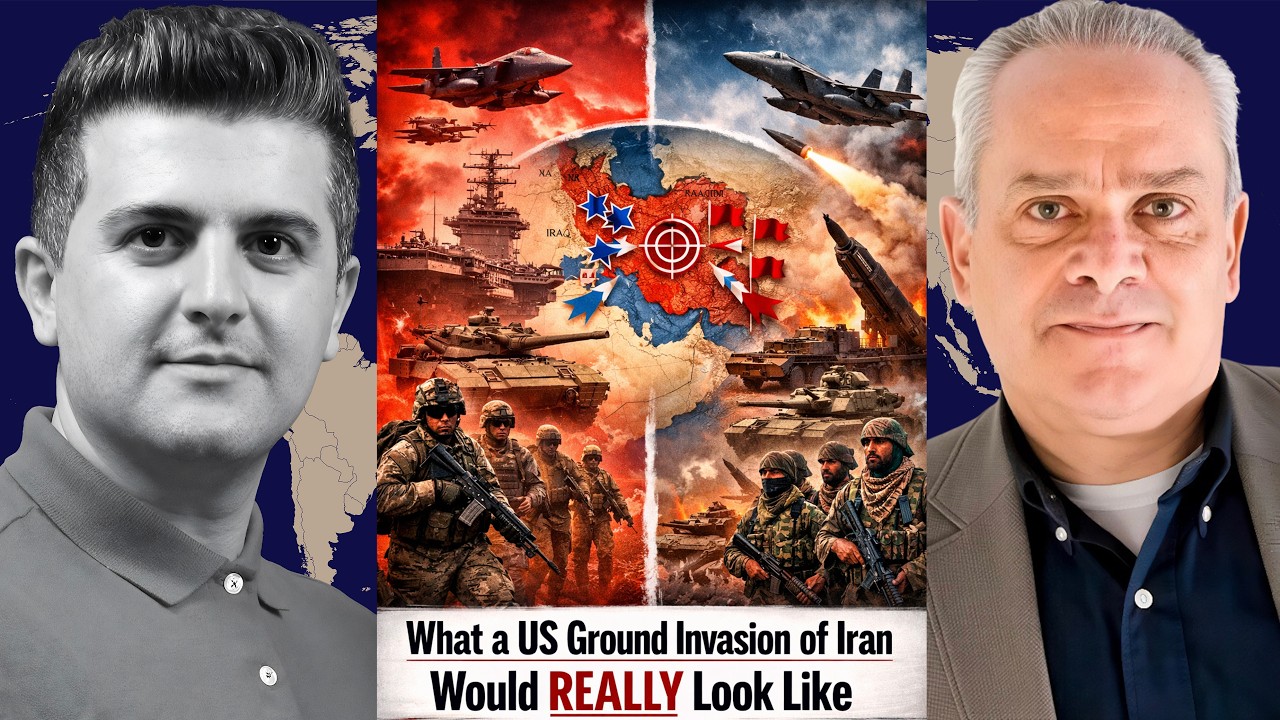
Col. Jacques Baud: What a US Ground Invasion of Iran Would REALLY Look Like
"Colonel Jacques Baud dissects the strategic futility of a US ground invasion of Iran, arguing that current troop levels are insufficient and such an action would backfire, exposing US allies and potentially leading to Iran's nuclearization."