Reckoning With Trump’s Iran Defeat. Plus: The Meaning of Memorial Day (w/ Michael Wood)
YouTube · 0OTuPlbhR5k
Quick Read
Summary
Takeaways
- ❖The Iran conflict, launched by Trump, is viewed as a significant strategic defeat for the U.S., comparable to, or even larger than, the Second Iraq War in strategic implications.
- ❖The administration's focus was on market rhetoric rather than effective war management, leading to a perceived 'negotiation of surrender' with Iran.
- ❖Iran, previously a 'weak pariah country,' was inadvertently elevated to a 'middle power' that demands respect due to U.S. mismanagement.
- ❖U.S. naval forces were reportedly unable to operate close to the Strait of Hormuz due to fear of ship losses, exposing a lack of capabilities to global adversaries like China.
- ❖Concerns exist that U.S. military assets, including planes and bases, sustained more damage than publicly acknowledged during the conflict.
- ❖The Secretary of Defense is criticized for being an 'incompetent' 'media creature' who mismanaged the world's largest bureaucracy.
- ❖The military's non-partisan standing, historically a source of national unity, is at risk of becoming another politicized institution.
- ❖Instances like military helicopters menacing protesters and the Secretary of Defense campaigning for political candidates highlight the erosion of military norms.
- ❖There is a growing concern that promotions within the general officer corps could increasingly be based on political loyalty rather than competence or professionalism.
- ❖The concept of 'moral injury' is emphasized, highlighting the long-term psychological burden on service members when leadership compromises ethical standards or orders questionable actions.
Insights
1Strategic Defeat in Iran and U.S. Deterrence Erosion
The guest, Michael Wood, asserts that the Trump administration's conflict with Iran resulted in a 'giant strategic defeat' for the U.S. Rather than weakening Iran, the mismanagement of the conflict inadvertently elevated Iran to a 'middle power' demanding respect. This outcome exposed U.S. military vulnerabilities, particularly the Navy's inability to operate freely near the Strait of Hormuz due to fear of losing ships, which sends a concerning signal to global adversaries like China, diminishing overall U.S. deterrence.
Michael Wood states, 'I think we lost this war. I think it's going to be a a giant strategic uh defeat for us, even bigger than the the Second Iraq war... it takes a special kind of incompetence to take what is still for all of its uh challenges the the strongest military in the history of the world and so mismanage it that you take a weak pariah country and sort of turn it into uh a middle power that has to be, you know, sort of respected. Uh, which is what he's done with Iran.' He adds, 'our navy couldn't really get close... because they were we were afraid of losing a ship or lo losing multiple ships. And I mean that's got to be communicating things to to leaders in other parts of the world, specifically China.'
2Politicization of the Military and Erosion of Norms
Both the host and guest express profound concern over the politicization of the U.S. military under the current administration. They highlight unprecedented actions by the Secretary of Defense, such as campaigning for political candidates and intervening in military investigations for political reasons. This behavior, coupled with instances like military personnel participating in partisan rallies or helicopter flybys at political events, threatens the military's long-standing non-partisan integrity, potentially transforming it into a 'Republican Guard' and eroding public trust.
Michael Wood criticizes the Secretary of Defense: 'We put a Fox and Friends weekend host with a drinking problem in charge of it. And that is horrible.' Bill Crystal mentions the Secretary campaigning for a candidate, 'I believe unprecedented in our in modern times.' Wood also cites 'helicopter pilots did a flyby on one of the no kings rallies... menacing those who were out there protesting the president' and the Secretary's intervention: 'Pete Hexth stepped in and said, 'No investigation. Carry on Patriots.''
3The Gravity of War and Leadership Responsibility
Reflecting on Memorial Day, Michael Wood emphasizes that war is not merely about 'body counts' but a serious political endeavor with immense human cost. He criticizes the administration's 'callous, indifferent, casual' attitude towards putting service members in harm's way, contrasting it with historical leaders like Lincoln who visibly bore the burden of war. This lack of seriousness, coupled with threats of war crimes and pardons for alleged war criminals, inflicts 'moral injury' on service members and undermines the honor and ethical standards of the military.
Michael Wood states, 'war isn't just body counts. That war truly is just politics by other means.' He adds, 'I feel like they're being uh callous, indifferent, casual with, you know, putting people in the armed forces in harm's way potentially.' He laments, 'It doesn't seem like they feel it. Even if the body counts went up to heaven forbid 100,000 American killed or something like that. I really don't think they would feel it.' He later discusses 'moral injury' and how 'the president of the United States threatening war crimes and then also you know the secretary of defense pardoning people who might have committed' is deeply damaging.
Bottom Line
The long-term consequence of military politicization could be a shift in promotion criteria from competence and professionalism to political loyalty, fundamentally weakening the U.S. military's effectiveness and reliability.
This shift would degrade the military's operational capabilities, strategic planning, and its ability to attract and retain top talent, making it less effective in future conflicts and less trusted by allies.
Advocates for military integrity should push for legislative safeguards and oversight mechanisms to protect promotion processes from political interference and ensure merit-based advancement, potentially through independent review boards or stricter ethical guidelines for military leadership.
The perceived U.S. military weakness and strategic blunders in the Middle East, particularly concerning Iran and the Strait of Hormuz, are being closely observed by major powers like China, potentially emboldening them in their own geopolitical ambitions.
A diminished perception of U.S. military capability and resolve could lead to increased assertiveness from rivals, challenging U.S. interests and global stability in other regions, such as the Indo-Pacific.
Policymakers need to conduct a thorough, non-partisan assessment of U.S. military readiness and strategic posture, investing in critical capabilities (e.g., anti-drone technology, mine countermeasures) and restoring diplomatic credibility to project strength and deter potential adversaries effectively.
Key Concepts
Politics by Other Means (Clausewitz)
War is not merely about body counts or military victories, but an extension of political objectives. The guest argues that the U.S. administration failed to translate military actions in Iran into desired political outcomes, focusing instead on superficial metrics like airstrikes and casualties, akin to McNamara's approach in Vietnam.
Moral Injury
A psychological concept describing the distress caused by perpetrating, failing to prevent, bearing witness to, or learning about acts that transgress deeply held moral beliefs and expectations. The guest applies this to the potential long-term impact on service members when leadership threatens war crimes or pardons those who commit them, compromising their honor.
Lessons
- Engage with elected officials to express concerns about military politicization and advocate for policies that uphold the non-partisan nature of the armed forces, such as strengthening congressional oversight of defense appointments and military conduct.
- Support organizations that promote ethical leadership and professionalism within the military, and those that provide resources for service members experiencing moral injury or other psychological impacts of war.
- Educate yourself and others on the true costs of war beyond casualty counts, understanding the strategic, economic, and human implications, to foster a more informed public discourse on foreign policy and military engagement.
Notable Moments
Michael Wood's comparison of the administration's war metrics to McNamara's Vietnam-era body counts, highlighting a fundamental misunderstanding of strategic objectives.
This comparison underscores a recurring historical error in military leadership: focusing on quantitative metrics (e.g., sorties, kills) rather than qualitative political outcomes, leading to strategic failure despite apparent tactical successes.
The discussion about the Secretary of Defense campaigning for a political candidate and intervening in military investigations.
These actions are presented as unprecedented and a direct threat to the military's long-standing tradition of non-partisanship and civilian control, risking its transformation into a politically aligned force.
Quotes
"I think we lost this war. I think it's going to be a a giant strategic uh defeat for us, even bigger than the the Second Iraq war, even if, thank God, the body count, thank God, hasn't been as high."
"It takes a special kind of incompetence to take what is still for all of its uh challenges the the strongest military in the history of the world and so mismanage it that you take a weak pariah country and sort of turn it into uh a middle power that has to be, you know, sort of respected."
"We put a Fox and Friends weekend host with a drinking problem in charge of it. And that is horrible speaking as an as an American, but also if you're looking at this as an enemy of the United States or somebody who doesn't want the best, I mean, you got to look and say, man, that is one decadent, unserious country."
"War isn't just body counts. That war truly is just politics by other means. Nobody's improved upon class fits."
"It is unforgivable to do that whenever you're talking about uh lives of our service members."
"The only thing that's really bucked that trend has been the military. And there's no guarantee that that's going to stay the case."
"I had a battalion commander who constantly told you know, I want everybody to come back with their honor clean. And I didn't really understand what he was talking about whenever whenever I was an idiot 20s something year old, but looking back on it now, I mean, war crimes are bad in and of themselves, but also it it does something to somebody who's going to have to live with that for the rest of their lives, service members."
Q&A
Recent Questions
Related Episodes
The Fat Electrician Vs Tactically Acquired | Unsubscribe Podcast 267
"This episode features military content creators discussing current geopolitical hotspots, advanced weaponry, and the surprising psychological warfare tactics of modern conflict, alongside their personal journeys building online communities."

Bibi DEMANDS Ground Troops As Marines Rushed to Iran
"Benjamin Netanyahu is pushing for US ground troops in Iran, framing air strikes as insufficient, while the US rushes Marines to the region and struggles to secure the Strait of Hormuz against surprisingly capable Iranian defenses."
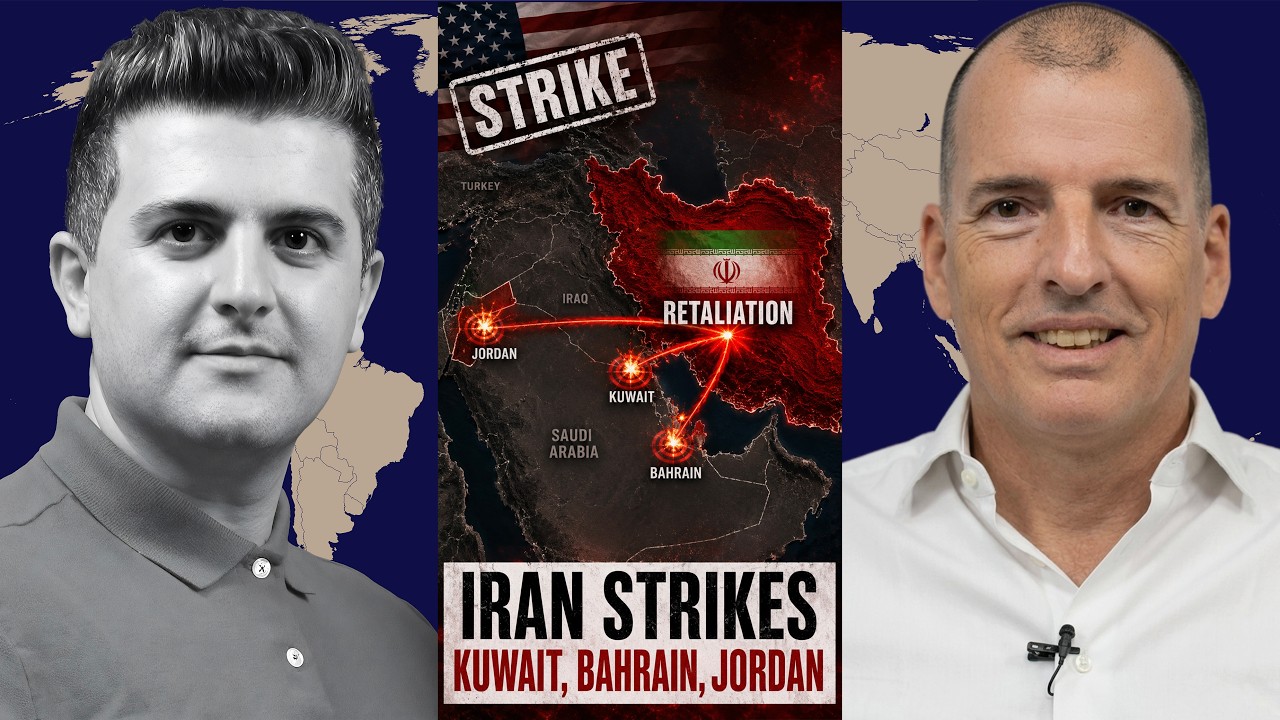
Alex Krainer: US STRIKES Iran – Iran RETALIATES Against Kuwait, Bahrain & Jordan!
"Amidst escalating US-Iran conflict and Iranian retaliation against regional US allies, this episode argues that US foreign policy is deeply controlled by an 'Anglo-Zionist conspiracy' led by the Rothschild banking dynasty, prioritizing Israeli interests over American ones."
Dems Celebrate George Floyd on Memorial Day, and AOC 2028 Rumblings, with Rich Lowry & Charles Cooke
"Megyn Kelly and guests Rich Lowry and Charles Cooke lambaste Democratic politicians for prioritizing George Floyd's commemoration over Memorial Day, expose the 'revisionist history' of BLM riots, and critique the political posturing of Kamala Harris, AOC, and other progressive figures."