BREAKING: TRUMP ATTACKS OIL ISLAND, MARINES CALLED IN, 5 US PLANES HIT
YouTube · 0v51hPERFAs
Quick Read
Summary
Takeaways
- ❖Trump announced a bombing raid on Iran's Karg Island, targeting military sites, but explicitly sparing oil infrastructure.
- ❖Karg Island is crucial, handling 90% of Iran's oil exports, but its oil facilities were confirmed operational post-strike.
- ❖Iran retaliated by hitting oil facilities at Feraport in the UAE and damaging five US Air Force refueling planes at Prince Sultan air base in Saudi Arabia.
- ❖The US is deploying 2,500 Marines and warships to the Middle East, with military analysts suggesting this could precede a ground invasion of Iran.
- ❖David Sacks, a former Trump administration official, warned of catastrophic escalation, including Israel potentially using nuclear weapons if its defenses are exhausted.
- ❖Sacks also highlighted Iran's 'dead man's switch' over Gulf economies and the threat to AI data centers in the region.
- ❖Israel is reportedly planning its largest ground invasion of Lebanon since 2006, aiming to seize the area south of the Litany River.
Insights
1Trump's Strike on Karg Island and Iran's Retaliation
Former President Trump directed a bombing raid on Iran's Karg Island, a critical hub for 90% of Iran's oil exports, explicitly targeting military infrastructure while warning against future interference with the Strait of Hormuz. Despite the strike, Iran's oil infrastructure remained operational. In response, Iran launched drone attacks on oil facilities in Feraport, UAE, and damaged five US Air Force refueling planes at Prince Sultan air base in Saudi Arabia, demonstrating its capacity for asymmetric retaliation.
Trump's True Social post detailing the bombing raid on Karg Island (), confirmation from Iranian government and oil market analysts that oil infrastructure was not impacted (, , , ), Brian Kenstein's report on Iranian drones hitting UAE oil facilities (), and reports of five Air Force refueling planes hit in Saudi Arabia ().
2US Military Buildup and Escalation Trap
The US is deploying 2,500 Marines and additional warships to the Middle East, intensifying its presence in the Strait of Hormuz. Military analysts suggest that escorting tankers through the Strait would be 'impossible' without an overt ground invasion of Iran, leading the host to speculate that the Marine deployment is a precursor to 'boots on the ground'. This is framed as an 'escalation trap' where both sides are compelled to continue escalating, with Iran unlikely to cease attacks if the US declares victory.
Report on Marines and warships heading to the Middle East (), military analysts' assessment of the impossibility of escorting tankers without ground occupation (), and the host's analysis of the 'escalation trap' (, ).
3Warnings of Catastrophic Escalation and Nuclear Threat
David Sacks, a former Trump administration official, issued a stark warning about the potential for catastrophic escalation. He suggested that Israel, if its air defenses are exhausted by sustained attacks, could consider using a nuclear weapon. Sacks also highlighted Iran's ability to cripple Gulf economies and the vulnerability of massive data centers in the region, which are critical for AI development, to Iranian attacks.
David Sacks' comments on Israel's vulnerability and potential nuclear weapon use (, , ), his statement on Iran's 'dead man's switch' over Gulf economies (), and the host's discussion of threats to AI data centers in Gulf Arab states ().
4Israel's Planned Ground Invasion of Lebanon
Israeli and US officials have revealed plans for Israel to seize the entire area south of Lebanon's Litany River in a massive ground invasion. This would be Israel's largest ground invasion of Lebanon since 2006, significantly widening the conflict and dragging Lebanon into the epicenter of the war with Iran. The host notes that Hezbollah has shown unexpected strength in firing back, complicating Israeli objectives.
Report on Israel's plan to seize area south of Lebanon's Litany River (), Axios's characterization of it as the largest invasion since 2006 (), and the host's comment on Hezbollah's unexpected strength ().
Lessons
- Monitor global oil prices and energy markets closely, as continued escalation in the Middle East could lead to significant price shocks.
- Stay informed on geopolitical developments in the Middle East, particularly regarding US, Iranian, and Israeli military actions and diplomatic efforts.
- Consider the potential impact of regional instability on global supply chains and economic forecasts, especially concerning energy-dependent industries.
Notable Moments
Trump's specific decision to spare Iran's oil infrastructure on Karg Island, while explicitly threatening it if Iran interferes with the Strait of Hormuz.
This reveals a calculated strategy to exert pressure without immediately triggering a global oil crisis, while setting a clear red line for further escalation.
The damage to five US Air Force refueling planes in Saudi Arabia by an Iranian strike.
This demonstrates Iran's continued capability to inflict damage on US military assets, potentially limiting long-range US air operations and signaling a strategic targeting of critical support infrastructure.
David Sacks' warning about Israel potentially using a nuclear weapon if its air defenses are exhausted.
This highlights the extreme and catastrophic potential outcomes of the escalating conflict, raising the stakes beyond conventional warfare and suggesting a 'dead man's switch' scenario for regional stability.
Quotes
"Moments ago at my direction. The United States Central Command executed one of the most powerful bombing raids in the history of the Middle East and totally obliterated every military target in Iran's crown jewel, Carg Island."
"Seizing cargo would block Iran oil exports but means more oil off the global market further increasing oil prices and inflation on US consumers. It will not prevent Iran's drone from hitting tankers. Escalation continues to favor Iran and its long war strategy."
"If this war continues for weeks or months, then Israel could just be destroyed... And then you have to worry about Israel escalating the war by contemplating using a nuclear weapon, which would truly be catastrophic."
Q&A
Recent Questions
Related Episodes
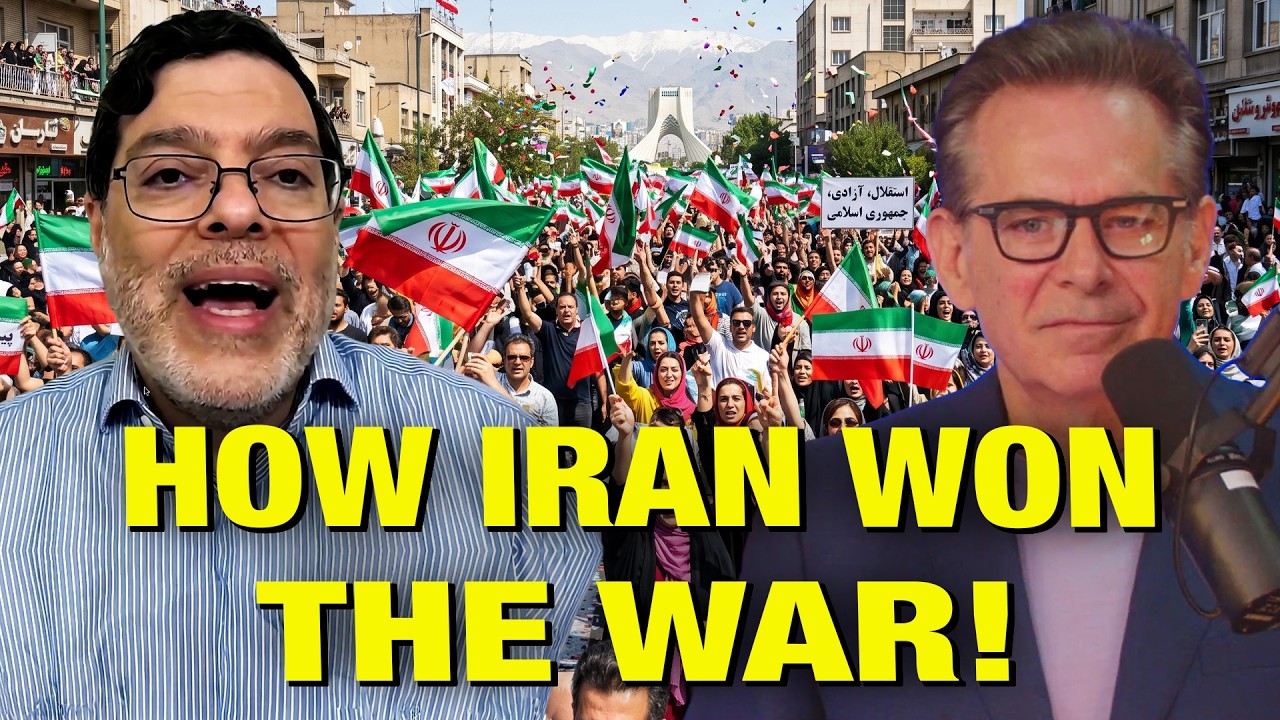
The REAL Story About The War From INSIDE IRAN! – Jimmy Interviews Prof. Marandi
"Professor Marandi, an Iranian academic, details how Iran emerged stronger from recent conflicts, now controlling the Strait of Hormuz and possessing a credible deterrent against its adversaries, despite facing economic siege and Western-backed regional proxies."

Larry Johnson & Col. Wilkerson: 4 US Warships Tried to Enter Strait of Hormuz – Then Iran Launched
"A critical analysis reveals escalating US-Iran military confrontations in the Strait of Hormuz, a stark disconnect in diplomatic rhetoric, and a significant geopolitical realignment in the Middle East away from US influence."

BREAKING: U.S. SINKS Iranian Boats; Iran Talks Stall; Israel Hits Beirut | TBN Israel
"The U.S. and Israel escalate military actions against Iran and its proxies, while diplomatic talks stall over Iran's nuclear program, Strait of Hormuz fees, and the future of Hezbollah."

Iran Update: Israel’s Newest Bombing Campaign, the Oncoming War With China and How to Avoid It
"Colonel Wilerson reveals how the US and Israel are actively bombing China's strategic infrastructure in Iran, escalating a covert economic war that Beijing intends to win without direct military conflict by dismantling the dollar's global dominance."